 thesilkroadtoday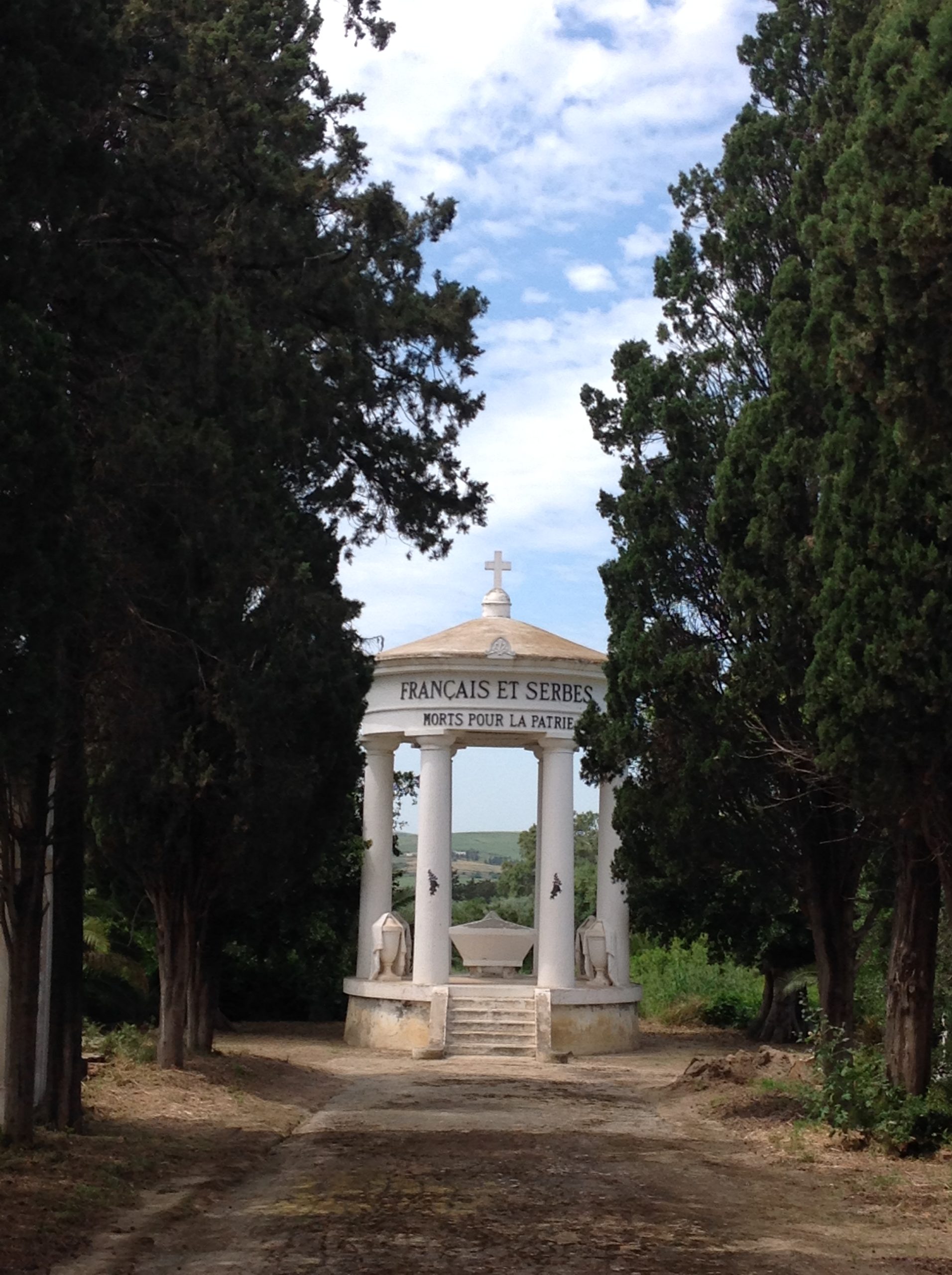
Source: Wikipedia
Prepared by Dr. Ana Stjelja
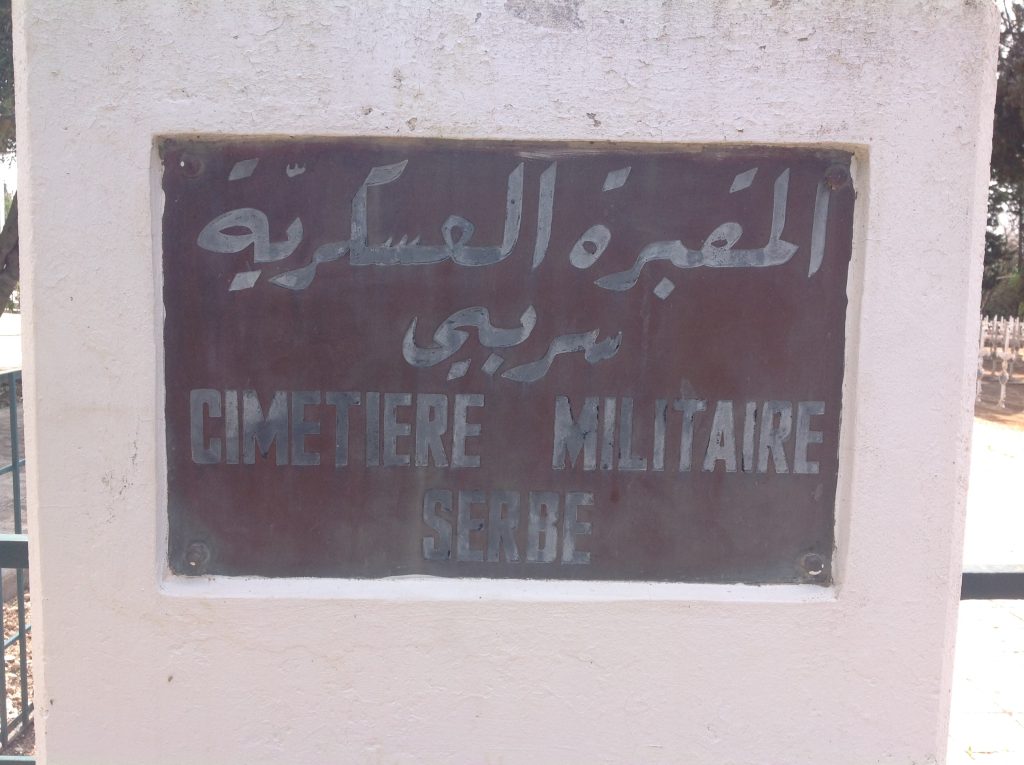
Hidden near the shores of Lake Bizerte in Menzel Bourguiba, about twenty kilometers from Bizerte, lies one of the lesser-known yet profoundly moving memorials of the World War I — the Serbian Military Cemetery, a silent testimony to suffering, refuge, and remembrance.
Its story begins with the tragic retreat of the Serbian army during the winter of 1915, remembered as the Great Retreat of the Serbian Army. After crossing Albania under catastrophic conditions, thousands of exhausted and wounded Serbian soldiers were evacuated by Allied forces to North Africa, including camps and hospitals in Tunisia. Many never recovered. Far from their homeland, they found their final resting place in Menzel Bourguiba.
The cemetery contains more than a thousand graves and is believed to hold the remains of nearly 1,800 Serbian soldiers, making it the largest Serbian military burial ground in Tunisia. Ordered rows of distinctive metal crosses stretch across the site, each shaped like a stylized sword driven into the earth — a striking symbol of sacrifice. Many bear the names, military units, dates of death, and even birthplaces of the fallen, restoring individuality to those history might otherwise have reduced to numbers.
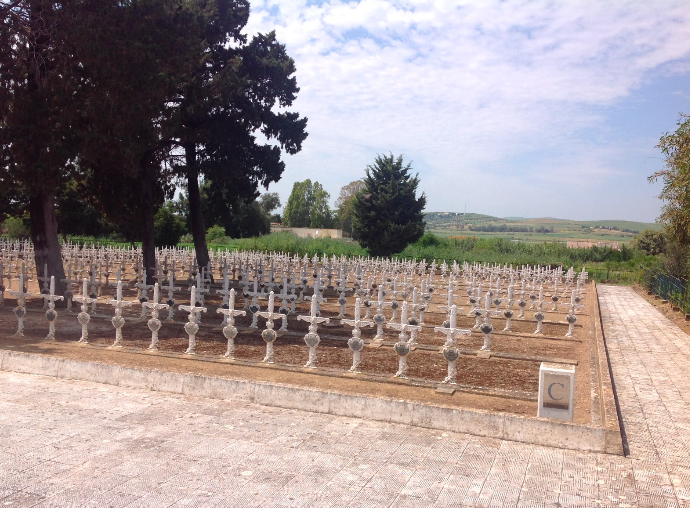
At the heart of the cemetery stands a memorial inscribed with a dedication to Serbian soldiers who died for freedom between 1914 and 1918. Serbian and Tunisian flags rise above the central plateau, underscoring a memory shared across nations.
What makes this place especially remarkable is not only the scale of loss it commemorates, but the story of solidarity it preserves. Nearby stands a mausoleum-ossuary where French and Serbian soldiers are honored together beneath the inscription “Français et Serbes morts pour la patrie” — “French and Serbs who died for the fatherland.” Built in the aftermath of war and inaugurated in 1920, it reflects the wartime alliance between France and Serbia, but also a deeper bond forged in shared sacrifice.
For decades the cemetery remained neglected, largely forgotten outside specialist historical circles, until major restoration works were undertaken in the late twentieth century. Through careful preservation, the crosses, pathways, cypress trees, mausoleum, and ceremonial spaces were renewed, allowing the site to endure not only as a burial ground, but as a place of historical conscience.
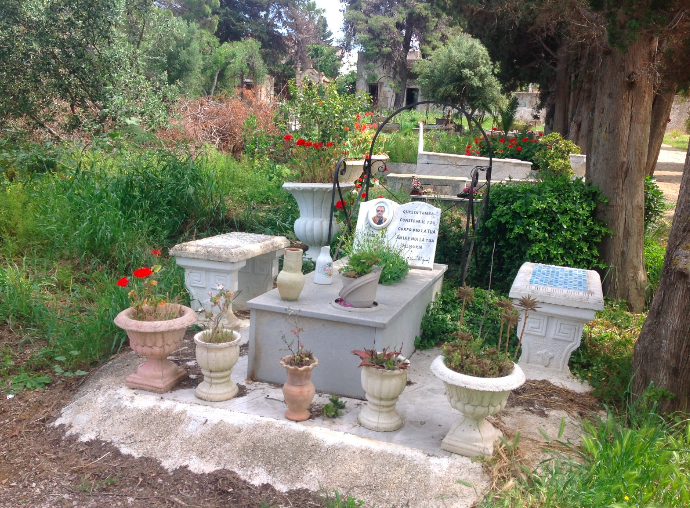
Though rarely visited compared to more famous Serbian memorial sites such as Vido Mausoleum or Zejtinlik Military Cemetery, the cemetery in Menzel Bourguiba occupies an essential place in the geography of Serbian memory. It tells a chapter of the war written not on battlefields, but in hospitals, refugee camps, and graves in foreign soil.
This is more than a military cemetery. It is a monument to exile, endurance, and gratitude — a Serbian memory rooted in Tunisian earth. In its quiet rows of crosses survives the story of soldiers who, though they died far from home, were not abandoned by history.
The story of the cemetery is also one of living guardianship. During the restoration of 1980, caretakers were appointed to preserve and watch over the site, ensuring that memory would not fade once the restoration was complete. Among them were Wagdia Hamdi and her son Majoub, whose home stands beside the cemetery. Wagdia inherited this responsibility from her late husband, continuing a quiet, multigenerational act of devotion. Their presence adds a deeply human dimension to the memorial: beyond stone crosses and historical records, the cemetery endures through the care of those who have made remembrance part of everyday life. In this way, the Serbian soldiers buried in Tunisian soil are guarded not only by history, but by friendship, gratitude, and the living ethics of memory.
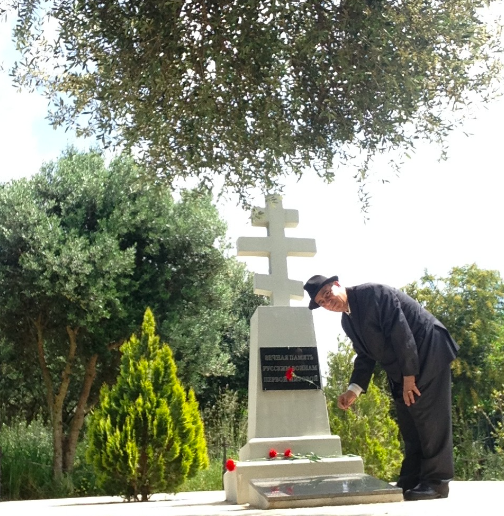
Photos by: Dr. Ashraf Aboul-Yazid