 thesilkroadtoday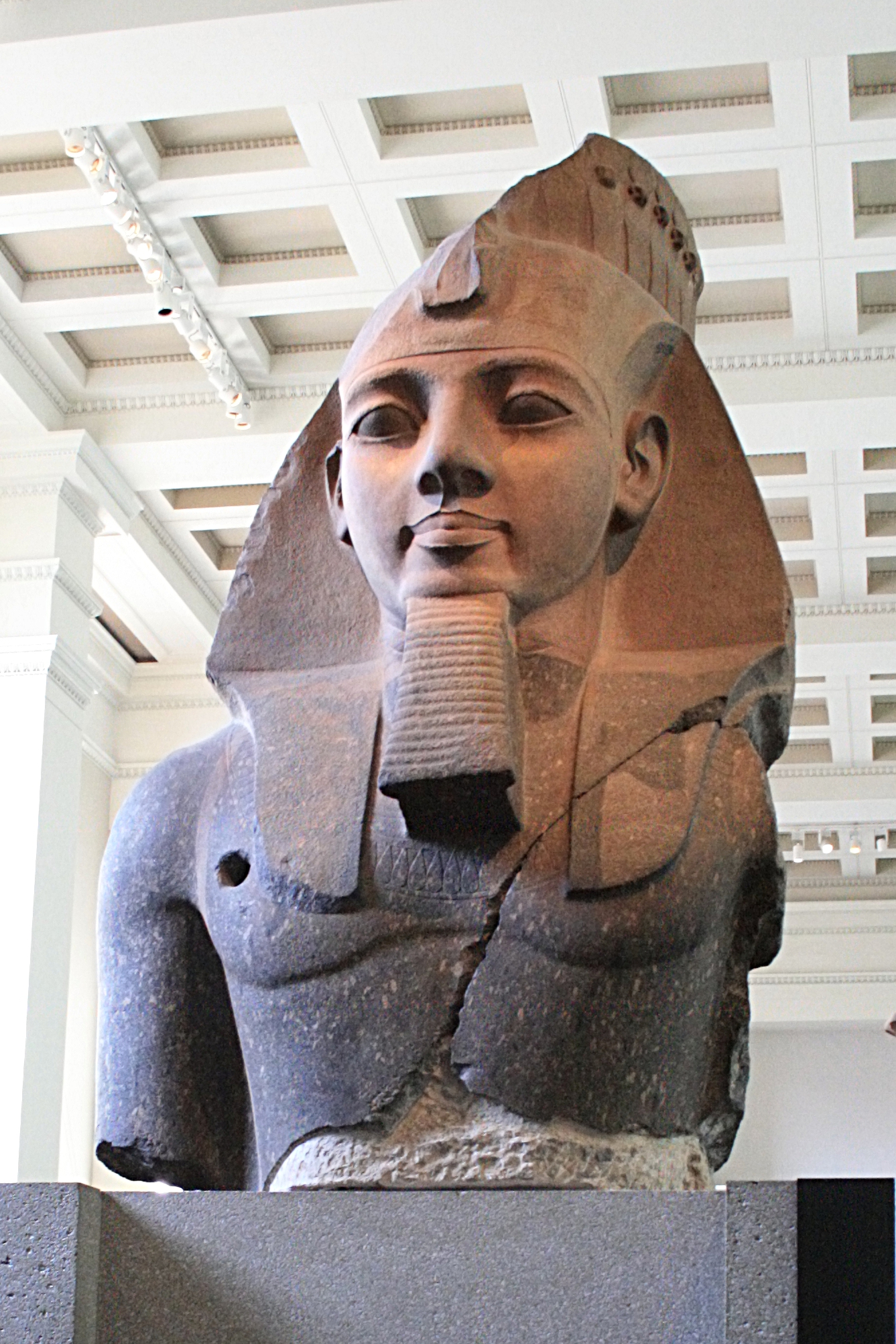
The figure of Pharaoh Moses is one of the most controversial in both historical and religious studies. For centuries, scholars have tried to identify the Pharaoh who lived during the time of the prophet Moses and led the Israelites in the story of the Exodus from Egypt. Yet, to this day, researchers have not reached a definitive consensus regarding his name or the exact period of his reign. This uncertainty stems from the nature of the available sources and the differences between religious narratives and ancient Egyptian historical records.
In religious texts, whether in the Quran or the Torah, the title “Pharaoh” is used as a designation for the ruler of Egypt, not as a specific personal name. Therefore, these texts do not provide a precise name for this king but instead focus on the moral and spiritual aspects of the story, highlighting the struggle between faith and tyranny.
From the perspective of Egyptian archaeology, the texts left by the ancient Egyptians were mostly royal inscriptions with a propagandistic character, aimed at portraying the king as a strong, victorious ruler who protected order and justice in the cosmos. The Egyptians expressed this order through the concept of Maat, representing balance and cosmic harmony. For this reason, it was uncommon for these texts to record events that might be perceived as national defeats or major disturbances.
Thus far, archaeology has not uncovered an ancient Egyptian text explicitly describing the Exodus as it appears in religious accounts. However, some researchers have tried to use chronological and geographical clues to identify the Pharaoh in question.
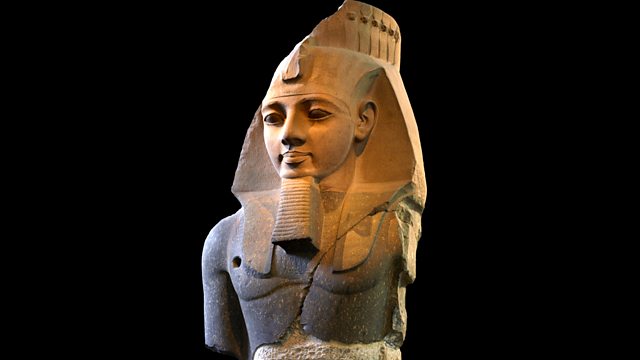 Among the kings suggested in this context is the famous , one of the greatest rulers of the Nineteenth Dynasty during the New Kingdom period. Ramesses II ruled Egypt for approximately sixty-seven years and left behind monumental architectural works across the country, including temples, statues, and large-scale projects reflecting the strength and power of the state during his reign.
Some scholars believe that the mention of the city of Rameses in biblical texts may refer to the royal capital established by Ramesses II in the eastern Nile Delta, the city of Pi-Ramesses. However, this connection is not considered conclusive, as the names of cities in ancient texts may sometimes be used anachronistically or for literary purposes.
Other scholars suggest that the Pharaoh of the Exodus might have been Merneptah, the son and successor of Ramesses II. This theory is partly based on the famous Merneptah Stele, which is the oldest Egyptian text to mention “Israel.” However, the stele refers to the presence of a group called Israel in Canaan, not in Egypt, leaving room for multiple interpretations among researchers.
There are also hypotheses linking the Exodus story to earlier periods, such as the Hyksos era or the early New Kingdom. These hypotheses face significant chronological and archaeological challenges, keeping the discussion open and ongoing.
The consensus among most Egyptologists today is that identifying the Pharaoh of Moses remains an open question for scientific research. The available archaeological evidence does not allow for a definitive conclusion, and religious and historical texts belong to different contexts in nature and purpose.
Nevertheless, this issue remains a compelling example of the complex relationship between history, religion, and archaeology. Each new archaeological discovery in Egypt can open new avenues for understanding the past and may eventually reveal information previously unknown.
The history of Egyptology has shown that the land of Egypt still hides many secrets beneath its sands. New archaeological findings can continually raise old questions in light of new knowledge, bringing us closer to a deeper and more nuanced understanding of ancient Egypt’s history.