 thesilkroadtoday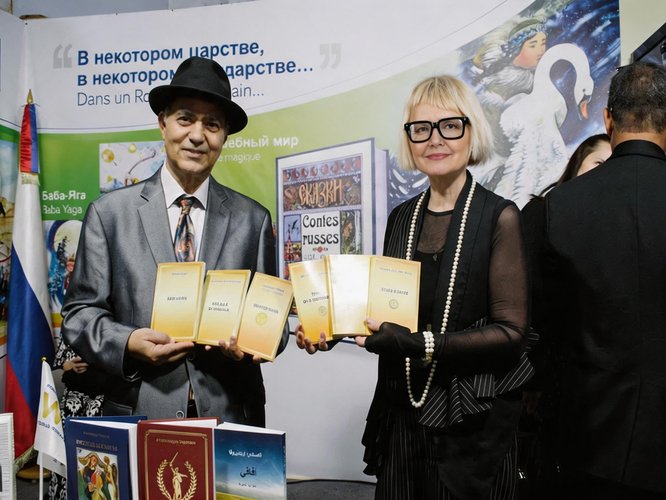
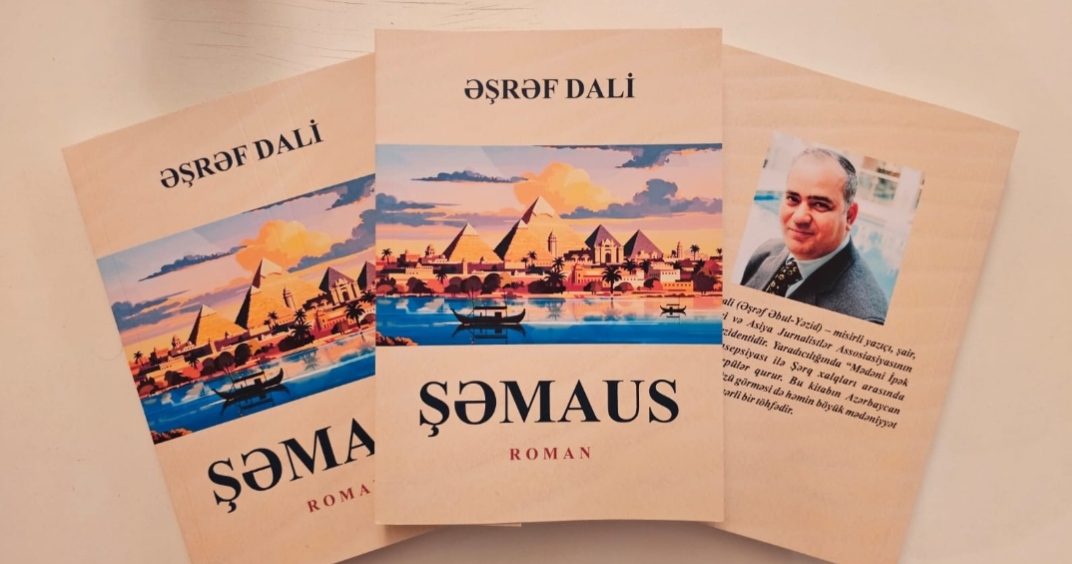
During the vibrant cultural atmosphere of the Days of the World Peoples Assembly in Tunisia, the literary presence of Egyptian writer, poet, translator, and journalist Dr. Ashraf Aboul-Yazid—widely known in literary circles as Ashraf Dali—became one of the most distinguished highlights of the celebrations. His books, displayed both at the pavilion of the Russian House in Tunisia during the Tunis International Book Fair and at the headquarters of the Russian House in downtown Tunis, formed a rich literary bridge connecting Arabic culture with Russian, Tatar, Korean, Azerbaijani, African, and global literary traditions.
The presentation offered visitors an exceptional opportunity to explore the multifaceted literary universe of Ashraf Dali—not only as an original creative writer, but also as one of the Arab world’s most active literary translators and cultural mediators. At the heart of the exhibition stood three of his original works, each representing a different creative dimension.
The first was A Street in Cairo, presented in Russian translation. This poetic work carries readers into the intimate streets of Cairo, where memory, urban rhythm, and human encounters become lyrical moments. Through vivid imagery and emotional precision, the collection introduces Russian readers to a deeply Egyptian sensibility while revealing the universal language of poetry.
Alongside it appeared 31, an Arabic novel that demonstrates Dali’s narrative mastery. The novel explores human complexity, identity, and the often invisible intersections between destiny and choice. With its layered storytelling and psychological depth, 31 reflects the author’s commitment to literary experimentation.
Completing this trio was Damascus Days, a travel narrative written in Arabic. More than a travel memoir, the book serves as a cultural document, preserving impressions of one of the Arab world’s oldest capitals through personal observation, historical reflection, and literary sensitivity.
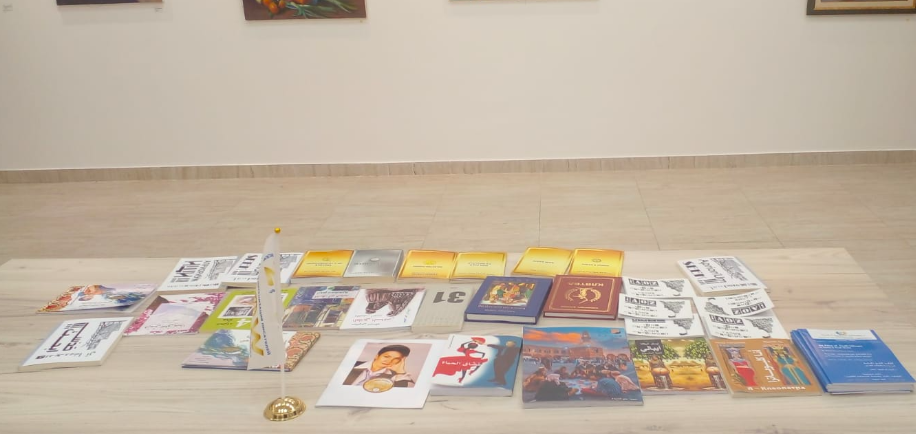
Yet the exhibition also celebrated another equally important side of Ashraf Dali’s career—his remarkable achievements as a translator who has introduced world literature to Arabic readers.
Among the translated works was I, Cleopatra by Russian author Inna Nacharova, a literary reimagining of one of history’s most iconic queens.
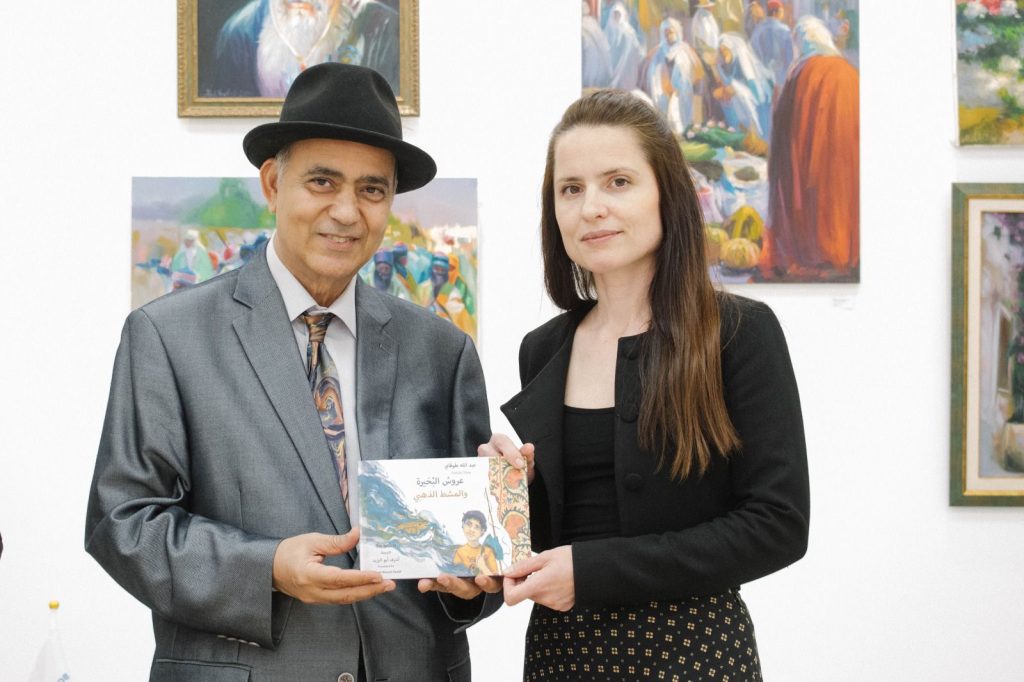
Also featured was The Mermaid of the Lake and the Golden Comb by the great Tatar poet Abdulla Tukay, whose folkloric imagination and national symbolism found a new Arabic voice through Dali’s translation.
From East Asia came Far Away Saint by Korean poet Chou Oh-hyun, introducing Arabic readers to meditative poetic traditions shaped by spirituality and philosophical introspection.
Africa was represented through The Broken Pot by Nigerian author Ester Adelana, a dramatic work reflecting social tensions, cultural memory, and contemporary African realities.
The Caucasus entered the exhibition through The Sixth Floor by Azerbaijani writer Meyxoś Abdulla, while Egyptian artistic heritage was represented in The Lovers of Life, on Stage and on Screen by Farimaa Al-Zahraa Hassan.
Further enriching the collection was the booklet dedicated to the winner of the Silk Road Literature Award 2025, Alexandra Ochirova, as well as the Yemeni literary periodical Solaf Magazine featuring a commemorative article marking the 140th anniversary of Abdulla Tukay.
Taken together, these books reveal the true scope of Ashraf Dali’s literary mission. Whether through his own poetry, fiction, and travel writing, or through his translations that carry voices across continents and languages, he continues to build cultural dialogues where literature becomes diplomacy, translation becomes friendship, and books become ambassadors between peoples.
At the Days of the World Peoples Assembly in Tunisia, the works of Ashraf Dali did more than occupy shelves or exhibition tables—they created a living map of world literature, with Cairo at its heart and humanity as its destination.
Margarita Al, President of the World Organization of Writers (WOW), spoke of Ashraf Aboul-Yazid with the admiration reserved for voices that cross borders through the power of literature. She recalled that Dali, one of WOW’s distinguished laureates, reached a remarkable milestone when his poetic collection A Street in Cairo—translated into Russian by Eldar Akhadov and published in Moscow by LIFFT Publishing House—earned him the Gold Medal at the 5th Eurasian Literary Festival, held in Istanbul in 2021—an honor that affirmed the poem’s ability to transform the streets of Cairo into a universal landscape of memory, loss, and human endurance:
“In A Street in Cairo, and even more strikingly in its cinematic reimagining, Ashraf Aboul-Yazid constructs a poetics of return that ultimately denies the possibility of return itself. What appears at first to be a simple narrative—a soldier arriving in Cairo for two brief days of leave—gradually unfolds into a meditation on war as an irreversible condition of consciousness. The street is not merely an urban location; it becomes a psychic corridor through which memory, trauma, and history move with spectral persistence.
The poem’s greatest achievement lies in its dismantling of temporal certainty. Arrival is inseparable from departure, reunion from mourning, and presence from absence. The protagonist does not “come back” to Cairo in any conventional sense; rather, he enters a city already occupied by the ruins he carries within him. Cairo, in this text, is neither nostalgic homeland nor political symbol. It is an organism of memory—ancient, wounded, and eerily aware. Through this transformation, Aboul-Yazid elevates the local street into a universal geography of postwar existence.
Stylistically, the work embraces fragmentation as both form and meaning. The sparse dialogue, reliance on voice-over, and the interplay of silence with mechanical echoes reproduce the psychology of trauma more effectively than direct narration ever could. Silence here is not emptiness but an acoustic archive, interrupted by explosions, fading news broadcasts, and unfinished sentences. The poem’s cinematic adaptation extends this aesthetic by transforming visual realism into surreal dislocation, allowing streets, faces, and shadows to function as emotional symbols rather than physical objects.
Most devastating is the final question—“How many last wars will be enough?”—which shifts the poem from personal testimony to collective indictment. A Street in Cairo is therefore not simply an anti-war poem; it is an exploration of how war survives its own endings, inhabiting cities, language, and the human body long after the guns fall silent.”