 thesilkroadtoday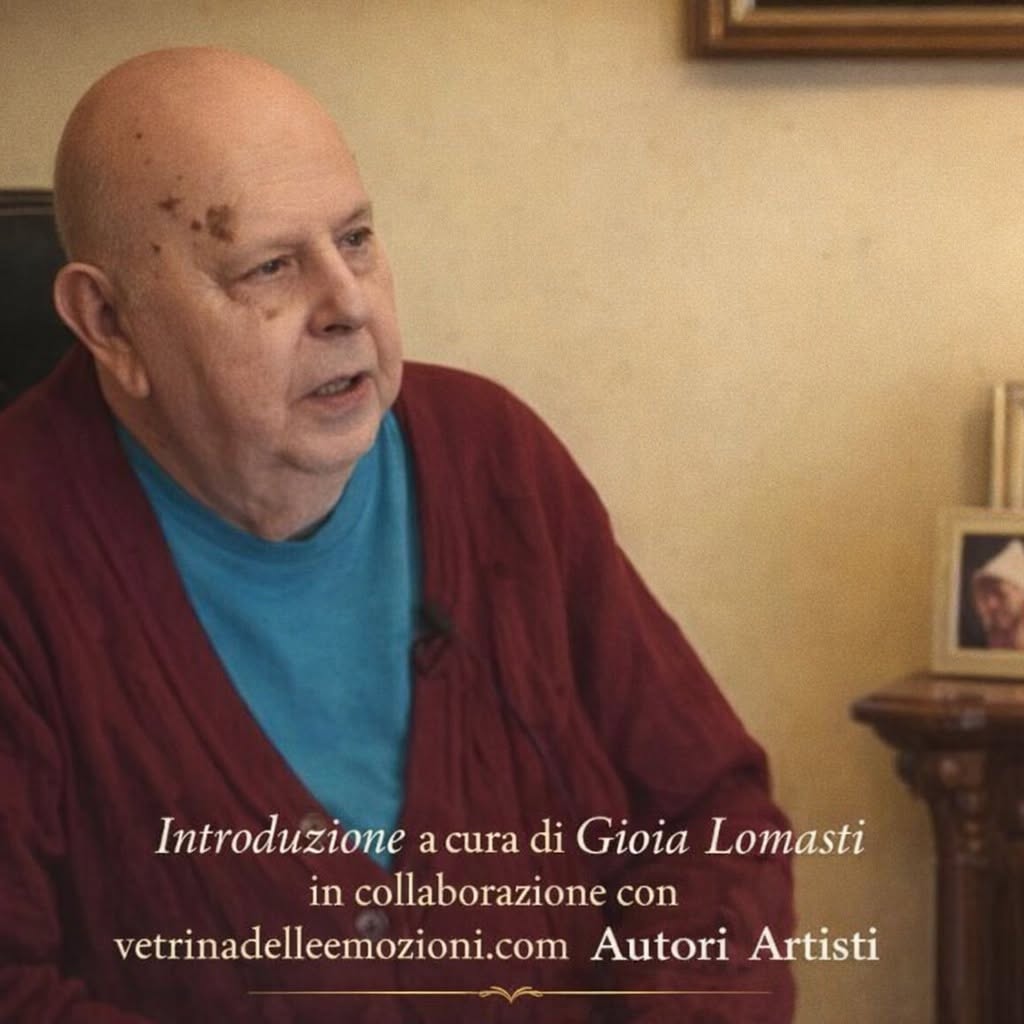
Italy Bids Farewell to the Poet of Naples
By Dr. Ashraf Aboul-Yazid
When a poet departs, words do not disappear; rather, the silence of language grows wider. And when the one departing is Luciano Somma, Naples loses not only a poet, but one of its most devoted voices—a man who dedicated more than seventy years to poetry, song, and Italian culture, until he himself became part of its living memory.
Born in Naples on March 18, 1940, Luciano Somma began writing poetry at the age of thirteen. From that moment onward, he never ceased listening to the heartbeat of his city, transforming the details of everyday life into poems and songs preserved in the collective memory. He was a poet of the people, writing about the sea, narrow alleys, love, the poor, children, and dreams that never die.
Somma was far more than a poet; he was a complete cultural institution. He wrote thousands of poems and more than 2,000 songs, collaborating with distinguished composers and performers, among them Antonio Altieri, Peter Ciani, Gianni Drudi, and Dario Rustichelli. His lyrics became songs that entered the heart of Italian culture, particularly the soul of Naples.
The literary world recognized him as a tireless poet. He received hundreds of literary awards, including the Silver Medal of the President of the Italian Republic on two occasions, and his name was included in the most prestigious Italian poetry anthologies and dictionaries. His work also found a place in the renowned Russian anthology Born for Life, alongside immortal figures such as Salvatore Quasimodo, Pier Paolo Pasolini, Umberto Saba, and Eduardo De Filippo.
He was also a journalist whose writings appeared in more than 150 newspapers and magazines, an artistic director, a talent scout, a permanent member of literary prize juries, and a presenter of cultural programs on radio and television. Yet none of these titles ever overshadowed his first and truest identity: the poet.
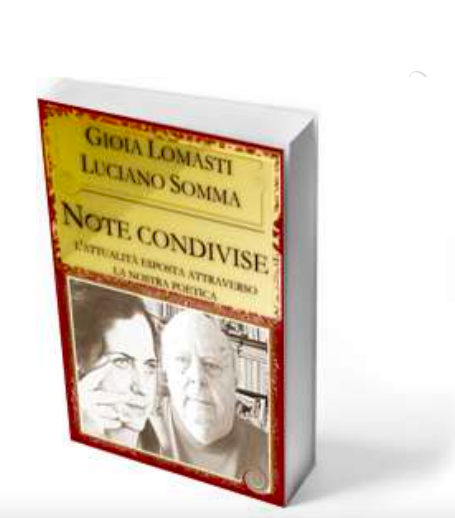
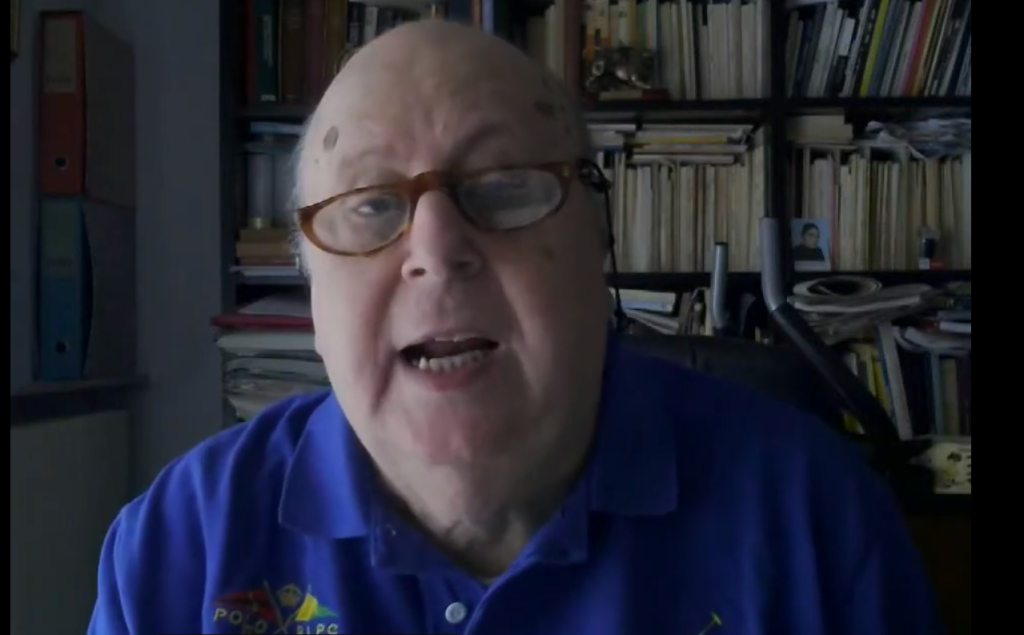
I came to know Luciano Somma through the bridges that literature builds beyond borders, and through our mutual friends, foremost among them the Italian poet and writer Gioia Lomasti, with whom he collaborated on numerous cultural projects through Vetrina delle Emozioni. His humanity always preceded his literary reputation. He was humble, generous, and deeply convinced that poetry is a mission before it is a profession.
In his poems, Naples was always the central character—a city alive with the sea, music, and nostalgia. He wrote about its hardships as much as its beauty, its earthquakes as much as its celebrations, and its ordinary people, who remained the true heroes of his verses. For this reason, he fully deserved the title “The Poet of Naples.”
His influence reached far beyond Italy. His texts traveled between languages, appeared in international festivals and anthologies, and flourished on digital platforms. The Italian press even described him as one of the poets most present on the Internet, without ever losing the warmth of the printed page or the sincerity of personal encounters with readers.
With his passing, we bid farewell not only to a poet but to a generation that believed literature could resist oblivion, that a song could preserve the history of a city, and that a poem could cross time just as ships cross the sea.
Farewell, Luciano…
Your poems will continue walking through the streets of Naples, looking out from its ancient windows, accompanying the waves of its sea. Your words will remain testimony that true poetry never dies with its creator but continues to live in the hearts of those who loved it.
It is difficult for a poet to compress a lifetime into a single poem; even more difficult is for an entire life to become an open poem. Luciano Somma achieved precisely that, leaving behind more than seven decades of unwavering devotion to poetry, songwriting, Italian culture, and to the cities he loved above all—especially Naples, which proudly called him “The Poet of Naples.”
In the first hours after his passing, Italian poet and writer Gioia Lomasti recalled his humanity before his literary achievements. She spoke of the vast archive they had shared, of their joint book, and of her search for the digital collection containing his finest poems, as though she instinctively understood that, in moments of farewell, poetry becomes the only memory capable of resisting absence.
Luciano Somma never wrote for prizes, although honors came to him in abundance. In 1987, he was awarded an Honorary Doctorate in Literature and Philosophy in recognition of his literary achievements. Yet the true value of his career lay in his daily fidelity to the written word and his conviction that poetry is first and foremost a human endeavor.
He began writing poems and song lyrics before he turned thirteen, and from then on he never stopped. His life became a journey extending across more than six decades of words, music, and memory.
His reputation crossed Italy’s borders. His works appeared in school anthologies and literary collections, while the prestigious Russian anthology Born for Life, published in Moscow, placed him beside the giants of Italian literature—Quasimodo, Pasolini, Saba, and Eduardo De Filippo. This was more than an honor; it was recognition that his poetry had become part of our shared human heritage.
Songwriting represented another remarkable facet of his talent. He wrote the lyrics for hundreds of songs loved by Neapolitans and Italians alike, collaborating with leading composers and performers until his words became woven into Italy’s musical memory just as firmly as his poems entered its literary tradition.
Gioia Lomasti also recalls another dimension of his personality. To her, he was not merely a poet but a constant source of inspiration for her cultural platform, Vetrina delle Emozioni. In an interview conducted only months before his passing, he appeared exactly as everyone had always known him—a poet who continued “to sow poetry” in others with quiet faith, rare sincerity, and a passion untouched by time.
Perhaps the finest tribute one can offer Luciano Somma is this: he never sought the spotlight; he sought people. That is why he remained close to readers, to young writers, to cultural initiatives, and to projects that believe literature is a message transcending language and geography.
Italian culture knew him as a poet, journalism knew him as a writer, music knew him as a lyricist. But those who knew him personally speak first of the human being—the man who believed that a poem could add a little more beauty to the world and that sincere words unite humanity far more than they divide it.
Luciano Somma’s departure does not signify the end of his presence. True poets never disappear with their bodies. They continue living in the voices of those who read them, in the songs people continue to sing, and in the cities that preserve their names as faithfully as they preserve their oldest streets.
In the book The Literature Traveler, published this very week, Luciano Somma contributed a deeply moving tribute to me among its testimonials and critical reflections. It was as though he wished to leave behind one final autograph—a friend’s signature from the opposite shore of the Mediterranean.
Farewell, Poet of Naples…
You planted poetry in countless hearts, and your human harvest will continue to blossom whenever a reader opens one of your books, whenever a singer performs one of your lyrics, or whenever a friend remembers your gentle smile and your unwavering faith in the power of words.
May God have mercy on Luciano Somma, who proved that a true poet does not merely write poems—he writes his entire life as a poem without end.
May God grant eternal peace to Luciano Somma, the Poet of Naples, and may his words remain an undying light in the memory of Italian and world literature.