 thesilkroadtoday
The Leader of the Nation
President and Martyr Yasser Arafat —
In the Journey of Culture and the Free Word
By Dr. Hanan Awwad, Poet, Palestine
Moments define the history of a nation’s leader — a history that is extraordinary and difficult to capture in a few short pages. It is an ever-flowing current, where the intellectual, political, and cultural dimensions intertwine in a language uniquely his own, drawing the tree of a dream — a lofty culture that embraces the vast horizon.
To stand before it is to ascend into luminous realms where the flames of struggle, revolution, and arms merge with the creative power of the committed word, and where the revolutionary intellectual presence of the leader sanctifies the word and honors its bearers — the writers of the revolution who became defining milestones in our national struggle.
He was the one who, in his first address to the United Nations, declared the union of the writer and the fighter, of the revolutionary and the militant word — within the very fabric of the revolution.
It was he who planned and encouraged the founding of the Palestinian Writers’ Union, ensuring its intellectual depth and revolutionary spirit.
He also decided to establish the Palestinian Studies Center as an intellectual, political, and cultural foundation for the struggle of the free word, fully aware of its power and its responsibility.
He read and followed the works of resistance literature, which formed a creative school of thought worthy of emulation.
He gave artists and writers special spaces of freedom that they might never have found elsewhere.
How could it be otherwise, when he held in such esteem the great and incomparable poet Mahmoud Darwish, honoring him with the nation’s highest ranks and granting him the complete freedom to soar?
He founded the Palestine Prize for Creativity, and was always present at its ceremonies. In one of those celebrations, attended by Samih al-Qasim and other intellectual figures, he concluded his speech saying:
“I give you full freedom to criticize me — if you find anything that strays from the rhythm of the text. Here is my pistol — fire at me!”
He personally followed every step in the establishment of the Palestinian Writers and Journalists Union, and later the creation of its main branch in the occupied land. We maintained communication with him from Jerusalem throughout every phase of this work.
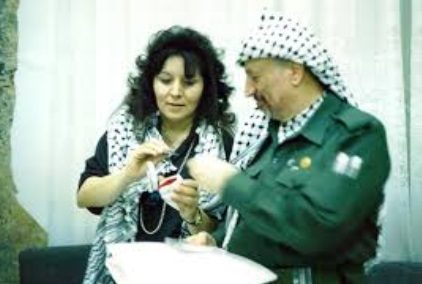
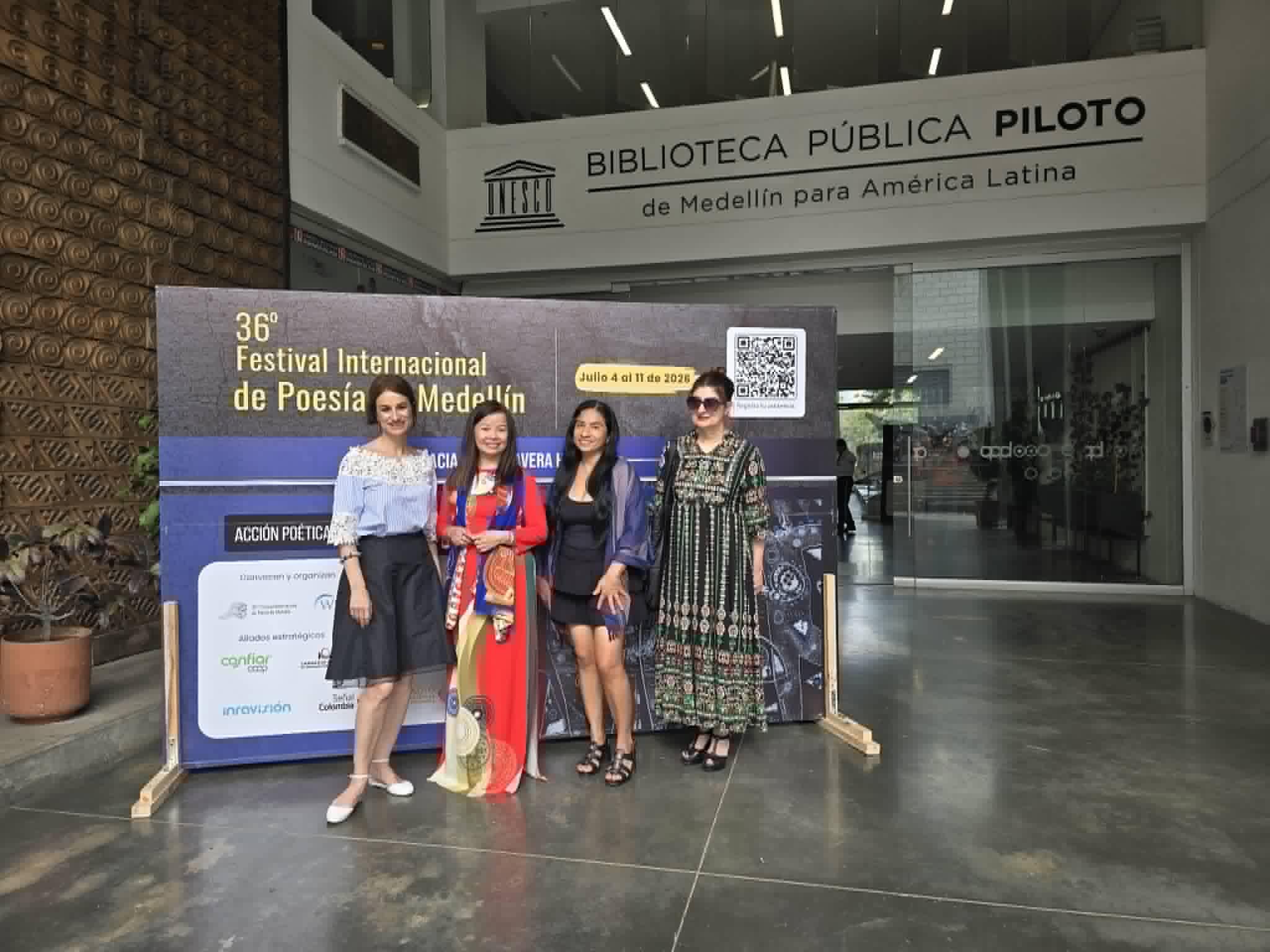
He also supported the founding of The Palestinian PEN Center, a task that was not easy, for there had been no Arab presence in that global institution. When I informed him of the initial steps, he was sitting with Abu Jihad, who said to me, “This will be a difficult mission.” Then Abu Ammar asked, “Can you manage it?” I replied, “I will try.” Indeed, it was a tough battle, but we overcame all obstacles, and today the Palestinian PEN stands as an official branch under the name of Palestine, with a distinctive presence in the international literary arena.
President Arafat supported all its activities and international festivals, received visiting writers with affection, and often opened their conferences with his words.
In recognition of the PEN’s outstanding performance, he presented several letters of appreciation to the organization.
Alongside its seven major festivals, we cooperated with the University of Murcia — one of Spain’s oldest universities — to grant President Arafat an honorary doctorate in recognition of his exceptional character. The ceremony was prepared in the city of Murcia, where the public awaited him with open arms. Yet, under siege at the time, he could not attend to receive the degree.
We later set a new date, the 15th of November, for the university’s leadership to visit Palestine and present it to him — but destiny intervened, and the event could not take place.
Professor Barthia, the University President, had prepared a historic address, describing Yasser Arafat as a messenger of freedom and a creator of a new kind of peace, the Peace of the Brave, marked by the noblest diplomacy and the grandest of human stances.
I truly hope that Palestine TV and all broadcasting stations will share that speech, for it carries immense intellectual depth and words worthy of the Leader Arafat.
This is but a glimpse from the vast river of generosity that defined the President’s Palestinian, Arab, and global relations — with fellow revolutionaries such as Che Guevara, Castro, and Chávez, who once told me:
“I consider Abu Ammar my leader and role model; I follow his path.”
He even wrote a preface for my book Diaries of the Siege with words befitting Abu Ammar.
Arafat, who always began his speeches addressing his people “My family, my people, my kin…” —
never ceased visiting Palestinian cities and refugee camps, comforting the wounded in hospitals, and visiting the families of martyrs.
He was a man of resistance in the fullest sense of the word, a steadfast supporter of the Palestinian woman, especially the writer, granting her every opportunity to thrive.
Once, as we were leaving the Muqata’a, his guards were eager to move quickly, but Arafat noticed an elderly woman standing before the Office of Presidential Aid. He immediately stopped the convoy, stepped out, embraced her, and gave her financial support — that was Abu Ammar, the leader of the nation.
During the siege, numerous solidarity festivals were held worldwide in his honor. The Voice of the Arabs Radio requested to speak with him from behind the walls of confinement. I arranged the communication from Cairo; the station’s director posed several critical political questions, and Arafat responded with an exceptional spirit and brilliance.
At the end of the interview, the broadcaster said:
“In truth, Abu Ammar, it is we who are besieged — not you.”
He dedicated special attention to Jerusalem, never rejecting a request from its people, regardless of its nature. For him, Jerusalem — its thinkers and citizens — was a red line.
He also showed constant care for our people in historical Palestine, often reminding me to look after them. He welcomed writers and politicians with open affection.
I remember when Tawfiq Zayyad visited him in Jericho; we sat and talked, then he left — and half an hour later, news of his passing reached us.
What I wish to say is that we, as writers, intellectuals, and as a nation, did not fulfill our duty toward him as a revolutionary people should, when their president was under siege and poisoned. Silence became our speech; we did not break the walls of the siege nor ignite the full-scale uprising that moment required.
We settled for grand speeches and modest gatherings.
To this day, the investigation’s truth remains unresolved.
Finally, before this towering figure, this great man, free pens across the world glowed with his name, and the hearts of the world’s free people beat for him.
Yet, I am astonished that, to this day, no creative work of true excellence has been produced to match his stature — this immortal human miracle that must be presented to future generations.
There is still no serious film about him, nor about other figures like Abu Jihad and Ghassan Kanafani.
In other words, the Palestinian revolution, with its men and sacrifices, is a legendary act that deserves to be immortalized.
I hope that filmmakers and documentarians across the world will take up this task — to create a work worthy of the President and our people.
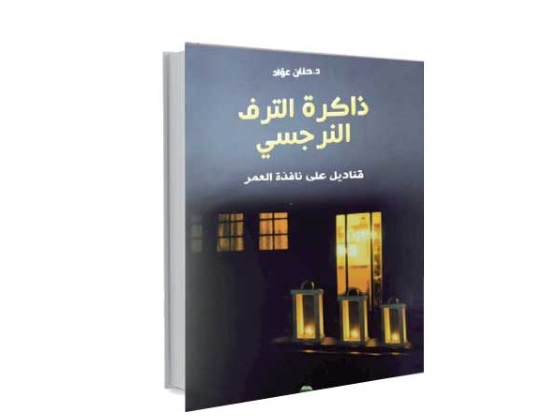
And I conclude with this passage from my book “The Eidetic Memory of the Opulence of Narcissism“:
I bid farewell to the President, and to an entire era —
with all its reality, pulse, and radiant souls,
with its ocean of generosity and its erupting volcano of revolution.
I still live in its echo to this very moment,
as though time itself had stopped there — and I with it.
I placed it in my heart, in my mind, in my pen,
and hung it upon the branches of the eternal tree.
Farewell, O Knight of Palestine — farewell, farewell, farewell.