 thesilkroadtoday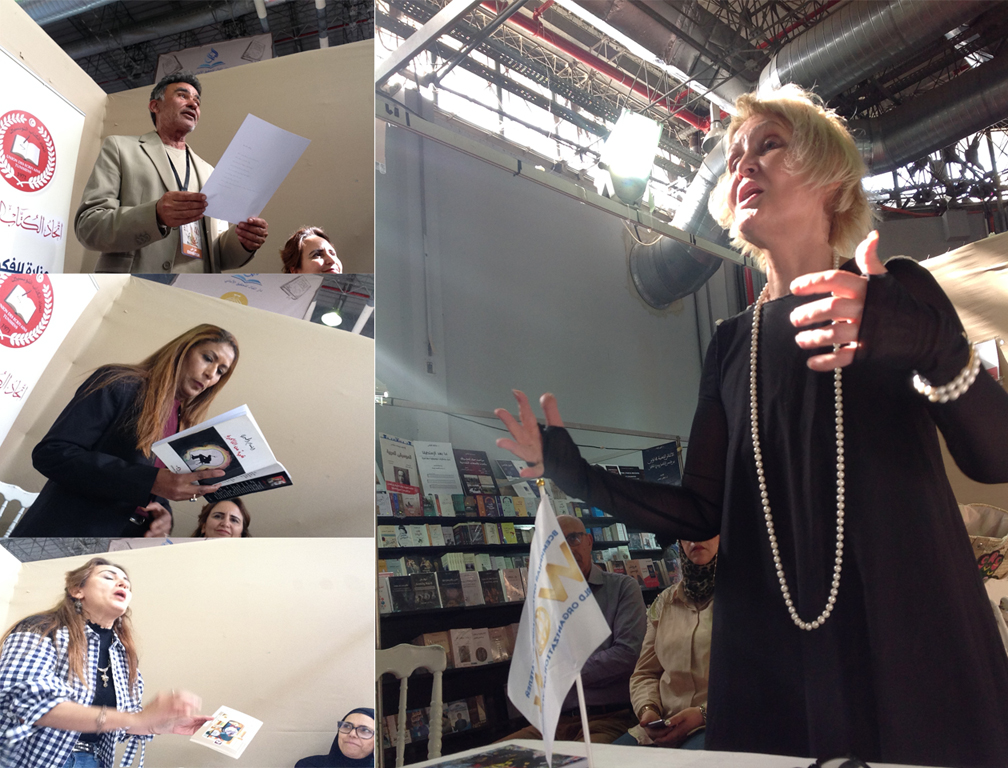
In Africa, poetic performance is not considered a supplementary element to the text; rather, it is an essential part of its very nature and existence. African poetry was born in the embrace of orality long before it found its way onto paper. Over centuries, it was shaped on the tongues of storytellers, chanters, and sages across the western regions of the continent—those who carried the memory of communities, their dreams, and their wounds. Thus, when an African poet steps onto the stage, they do not merely recite a poem—they embody it: through voice, rhythm, body movement, the intonation of silence, and direct interaction with the audience. Words intertwine with gestures, chanting accompanies the beat of drums or the inner music of language, and the text transforms into a living event that is only complete in the presence of its listeners. In contemporary performance poetry—particularly slam poetry, flourishing in cities such as Dakar, Ouagadougou, Nairobi, and Kinshasa—performance has become both an aesthetic medium and a social stance, carrying questions of identity, justice, memory, migration, and freedom, rooted in Africa’s rich oral heritage while renewing it within the spaces of the modern city.
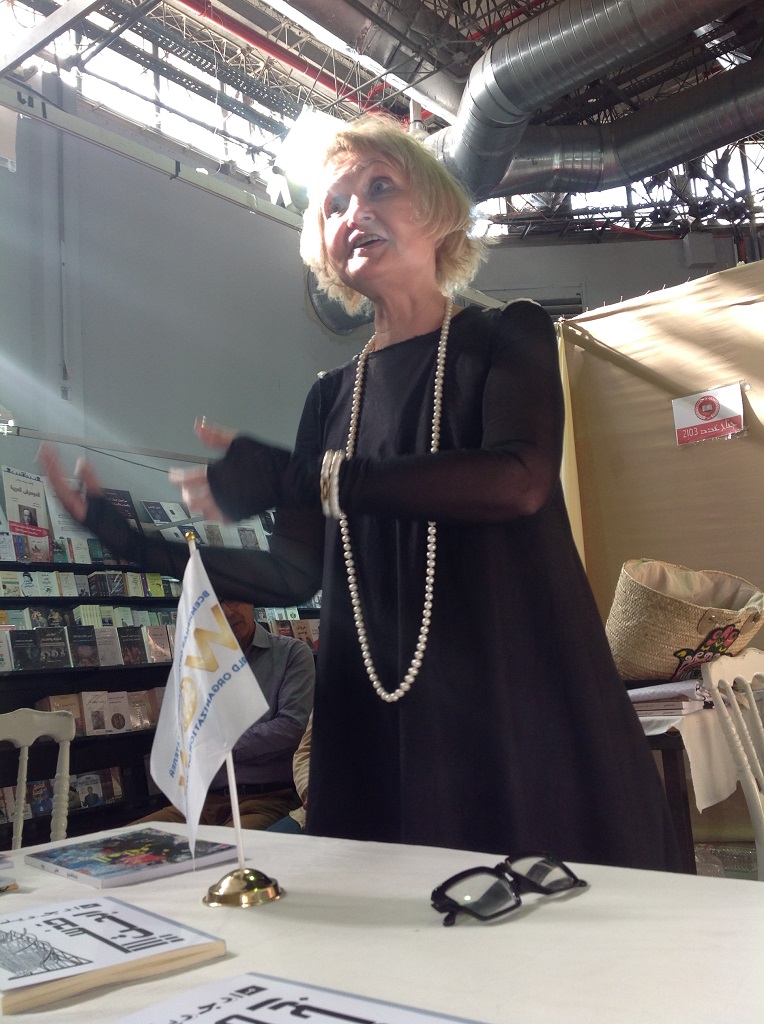
I remembered all of this as I watched my friend, the poet and artist Margarita Al, President of the World Organization of Writers, performing her poems during a poetry symposium organized for us by the Tunisian Writers Union at its pavilion during the Tunis International Book Fair, as part of the Days of the World Peoples Assembly in Tunisia. That symposium gave us the opportunity to listen to poetry in Arabic, English, French, and Russian. With her characteristic enthusiasm, Margarita needed no microphone for her voice to rise above the crowd, turning the audience into a chorus repeating some of her lines after her. Thus, with the spirit and energy of an African performer, Margarita merged avant-garde poetry with the Tunisian cultural space.
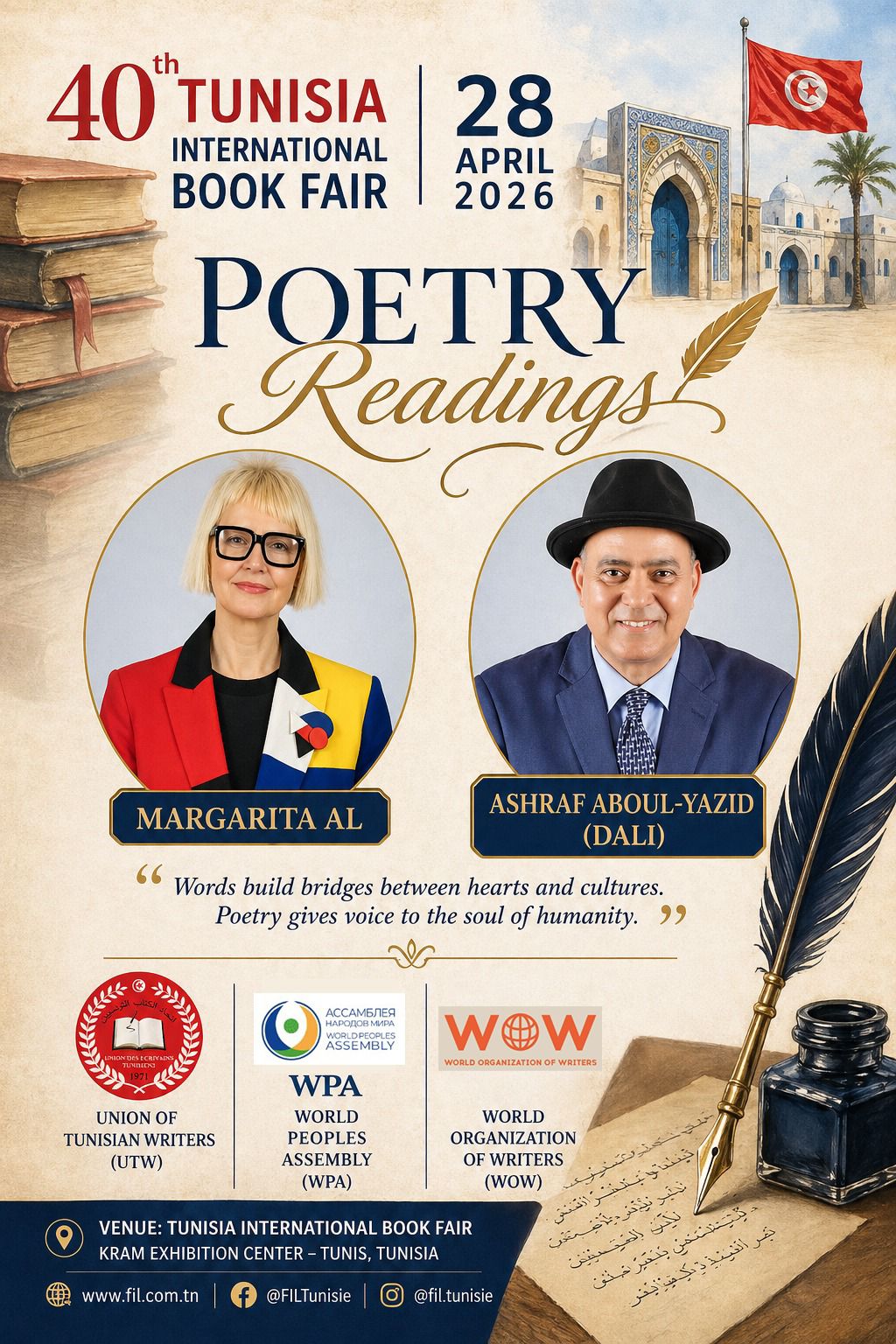 When I later read Margarita Al’s poems translated into Arabic—published in Cairo as part of the Silk Road Creativity Series—it became clear to me that avant-garde poetry demands attentive and contemplative reading. Linguistically, Margarita Al’s style leans toward compression and incantation. Her syntax often flows in long, breath-like sequences, where clauses accumulate rather than conclude. This creates a sensation of continuity, as though the poem resists closure. There is little interest in conventional narrative structure. Instead, meaning arises through repetition, sonic echoes, and the layering of images. Words burn, years are exposed, hours approach—time itself becomes animate. Her poems frequently anthropomorphize abstract forces, making temporality, memory, and longing tangible and almost touchable.
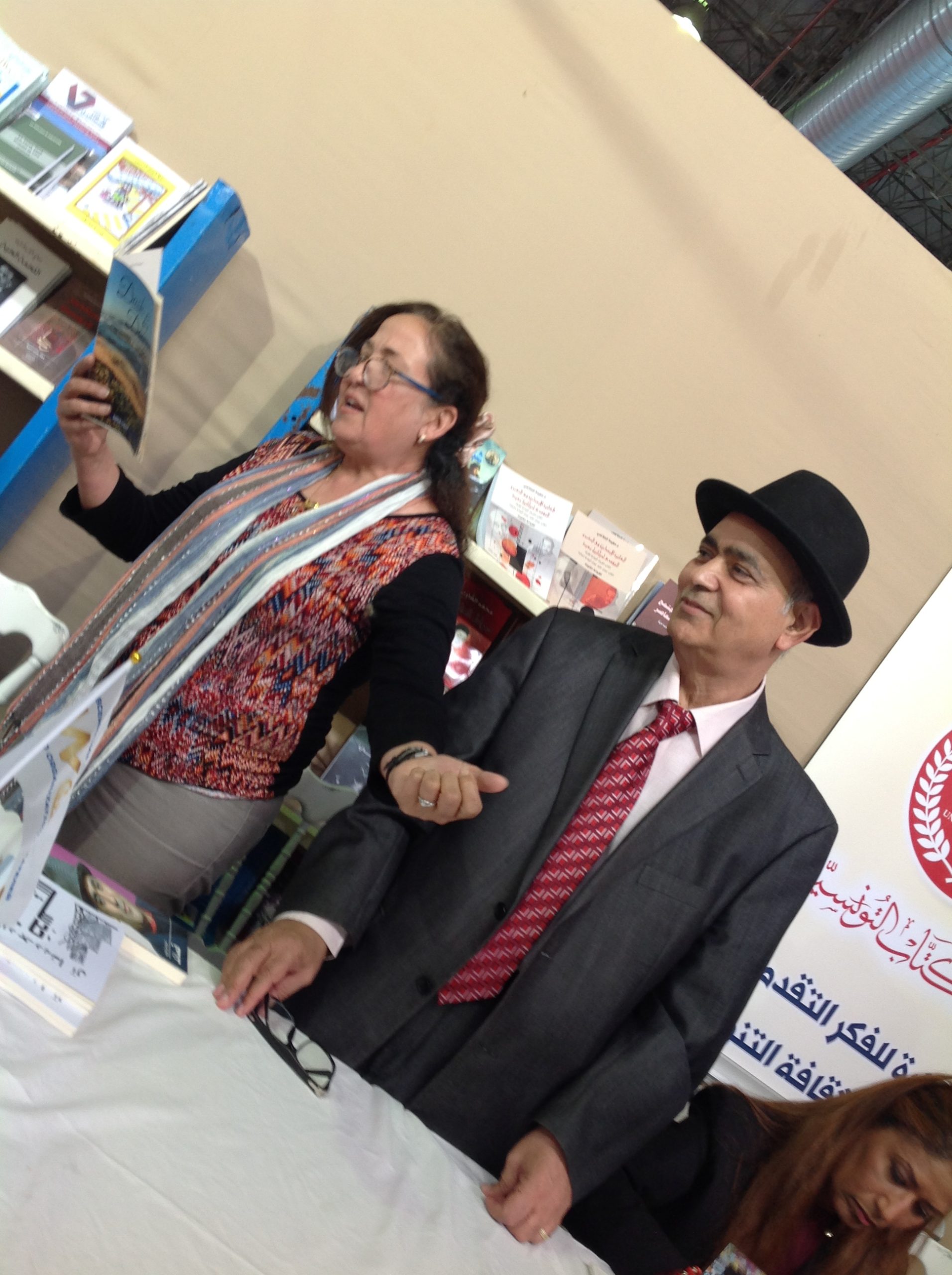
What was most beautiful was that although we initially thought the symposium was ours alone, the appetite of poets soon awakened. Even novelists began searching through drawers for an old collection, or digging into their bags for a forgotten poem, eager to join this international poetic gathering. Ironically, in a country long associated with Francophonie, the English language came to assert its presence as well, when the poet Sihem Cherif read her poem in English, while I read my poem A Street in Cairo in Arabic. Writers such as Mohamed Saad Borghol, Mohamed Charni, Hajer Mansouri—with revolutionary poems matured in the kitchen of metaphor—and Ibtisam Khamiri, among others, also chose to read in their mother tongue. We also listened to French poems by the poet Safia سليمان, while the pavilion pulsed with enthusiasm.
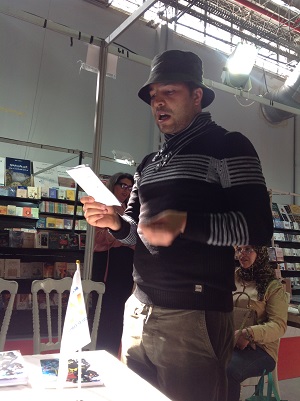
Thus, that evening was far more than a passing poetry symposium in the corridors of the Tunis International Book Fair. It felt like a living laboratory, testing poetry’s ability to cross borders, transcend languages, and redefine aesthetic belonging. In that Arab-African arena, Russian avant-garde sensibility met the warmth of African performance, while Arabic, English, French, and Russian embraced one another without the need for complete translation—because rhythm was the first language, and human presence was the deepest text. There we realized that poetry, regardless of its geography or cultural references, can find a home in any land that believes in the power of the word.
And what Margarita Al offered was not merely a performance of avant-garde Russian poetry, but its rebirth within a vibrant Arab-African space, where the poem acquired a new voice, a new body, and a new audience. Perhaps it is in such moments that we truly understand that poetry does not belong to any single language, but rather to that rare moment when voice becomes a bridge, and the word becomes a shared homeland.