 thesilkroadtoday
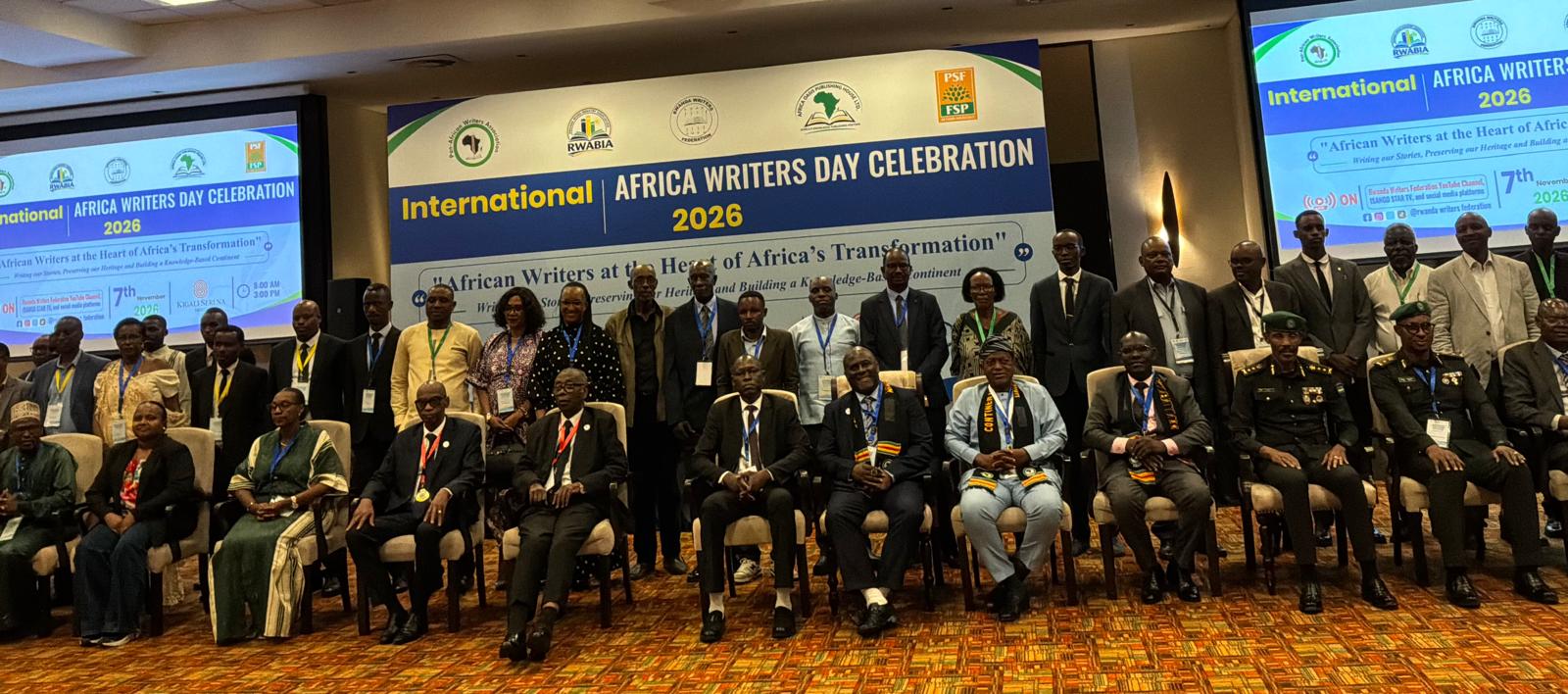
A Keynote Address Delivered to African Writers on Writers’ Day 2026, in Kigali Rwanda, November 7, 2026
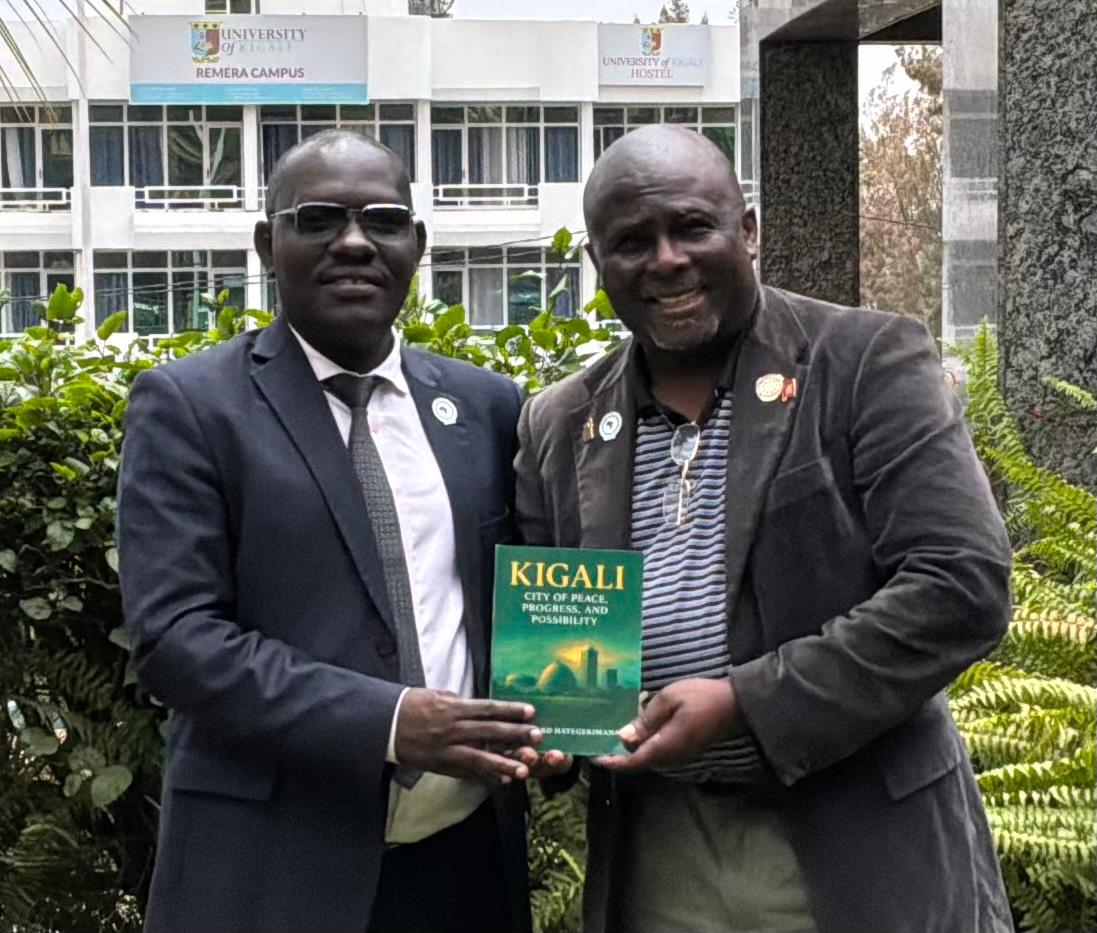
By Bill F. Ndi, (right above) President of The Pan African Writers Association and Full Tenured American University Professor at Tuskegee University, Alabama, USA
Your Excellencies, distinguished authors, poets, playwrights, publishers, scholars, literary activists, young writers, and lovers of the written word,
I bring you warm and hearty greetings from the Pan African Writers Association; I also bring you greetings from Tuskegee University, the place of the conception of the Pan African ideals and an institution that as we speak is holding sky high the flag of renaissance heralded by its 10th President, General (Retired) Mark A. Brown.
Today, we gather not merely to celebrate writers, but to celebrate a calling, a vocation that predates kingdoms, outlives governments, and transcends generations. We celebrate those who transform silence into speech, memory into history, and imagination into destiny.
There can’t be any Revolution or Renaissance Without the Writer. Don’t hear me say revolution and immediately think subversion for the same who would want you believe our revolutionary call is bad, are the same who are proud to tout their own revolutions: history reminds us of the American Revolution, The English Revolution, The French Revolution, the 1830 and 1848 Revolutions, etc.
I am honored to join you on this Writers’ Day, today, November 7th, 2026, under a theme that speaks directly to the aspirations of our continent:
NO REVOLUTION OR RENAISSANCE WITHOUT WRITERS
Imagine a world without writers.
No scriptures.
No constitutions.
No novels.
No poems.
No declarations of independence.
No speeches preserved for future generations.
No letters from prison.
No memoirs of struggle.
No stories telling a people who they are.
Imagine an Africa without the words of Chinua Achebe.
A South Africa without the voice of Nelson Mandela’s writings from prison.
A Ghana without the speeches and books of Kwame Nkrumah.
A Senegal without Léopold Sédar Senghor.
A Kenya without Ngũgĩ wa Thiong’o.
A world without Shakespeare, Dante, Victor Hugo, James Baldwin, Toni Morrison, Gabriel García Márquez, or Maya Angelou.
Would our civilizations even recognize themselves?
Because before every revolution of politics, there is a revolution of ideas.
Before every renaissance of a people, there is a renaissance of imagination.
And imagination is the territory and province of writers.
Today, I stand before you with a conviction that history repeatedly confirms:
When writers disappear, societies stop dreaming.
When societies stop dreaming, they stop advancing.
The First Battlefield is the Human Mind
Most revolutions are remembered through images:
The storming of the Bastille.
The American War of Independence.
The anti-apartheid struggle.
The liberation movements of Africa.
But history often forgets the first battlefield.
The first battlefield is not a city.
It is not a parliament.
It is not a palace.
It is the human mind.
And writers are the first soldiers to enter that battlefield.
The pen does not merely record reality.
The pen creates possibilities.
A writer whispers an idea.
A reader embraces it.
A generation adopts it.
And eventually nations reorganize themselves around it.
The revolution begins long before the crowds gather.
It begins when one woman or one man dares to write:
“The world does not have to remain this way.”
Africa’s Freedom Was Written Before It Was Won
Too often, discussions of revolution focus exclusively on generals and politicians.
But Africa’s liberation movements were also literary movements.
Before independence, colonial powers controlled territory.
More dangerously, they controlled narrative.
Colonized peoples were told:
You have no history.
You have no civilization.
You have no contribution to humanity.
Then came the writers.
When Aimé Césaire wrote, he restored Black dignity.
When Léopold Sédar Senghor celebrated African identity, he challenged centuries of cultural contempt.
When Chinua Achebe published Things Fall Apart, he shattered distorted portrayals of African societies.
When Ngũgĩ wa Thiong’o insisted on writing in African languages, he transformed language itself into an act of resistance.
When Wole Soyinka spoke truth to power, he reminded us that intellectual freedom is inseparable from political freedom.
These writers accomplished something remarkable.
They liberated minds before politicians liberated nations.
And every lasting freedom struggle requires both.
Because a people cannot permanently free their territory until they first free their imagination.
The Writer as the Keeper of Human Dignity
What does a writer truly defend?
Not paper.
Not language.
Not literature.
A writer defends human dignity and he is the universal man of peace.
Harriet Beecher Stowe and many quaker journalists helped humanize enslaved people.
Aleksandr Solzhenitsyn exposed the hidden horrors of authoritarianism.
Elie Wiesel ensured the victims of the Holocaust would never be forgotten.
Toni Morrison restored voices omitted from official histories.
Likewise, African writers have defended the humanity of people too often rendered invisible.
Every time a writer tells the story of the poor, the marginalized, the displaced, the forgotten, or the silenced, a small revolution occurs.
Because dignity begins when someone’s story becomes visible.
Why Dictators Fear Poets
Think about this paradox.
No dictator fears a poet because of physical strength.
No government bans novels because novels possess armies.
No tyrant imprisons journalists because journalists own tanks.
Yet throughout history, writers have been censored, exiled, imprisoned, and sometimes killed.
Why?
Because those who control power understand something many citizens forget:
Ideas are more dangerous than weapons.
Weapons can defeat a government.
Ideas can make an entire system obsolete.
A prison can hold a writer.
It cannot imprison a sentence once it enters the public imagination.
That is why writers matter.
Words travel farther than walls.
The Renaissance Begins with Storytellers
Nations are not built by roads and buildings alone; they are built by ideas, imagination, and identity. Let us not forget space exploration is born of the imagination of Jules Verne, fame author of round the world in 80 days.
A nation may possess highways, airports, skyscrapers, and digital infrastructure. Yet without stories, without memory, without vision, it becomes merely a geographical expression.
Show me any civilization that has endured and I will bring you proof it was first imagined before being constructed.
Before there were monuments, there were myths. Before there were constitutions, there were narratives. Before there were revolutions, there were words.
And therefore, before Africa’s renaissance can be fully realized, it must first be written.
Every renaissance begins when people rediscover confidence in themselves.
Europe’s Renaissance emerged when thinkers rediscovered forgotten knowledge and reimagined humanity’s potential.
Africa’s ongoing renaissance similarly depends on recovering stories that were neglected, distorted, or suppressed.
Who will tell the stories of African innovation?
Who will preserve indigenous wisdom?
Who will describe the emerging identities of African youth?
Who will document the aspirations of a rising continent?
Writers.
Always writers.
Because nations do not rise merely through infrastructure.
They rise through imagination.
Roads connect places.
Stories connect people.
And it is people, not roads, who build civilizations.
Contemporary Writers and the New African Renaissance
The story continues today.
Across Africa and the diaspora, contemporary authors, scholars, journalists, and public intellectuals are shaping the narrative of the twenty-first century.
Among them are writers who serve not only as creators of literature but as builders of bridges across cultures, institutions, and nations.
Consider the work of Professor Bill F. Ndi.
Whether through scholarship, public engagement, international partnerships, literary contributions, or intellectual diplomacy, his work reflects a tradition deeply rooted in Africa’s history: the writer as connector, educator, and catalyst.
This tradition reminds us that writing is not merely an artistic activity.
Writing is leadership.
Writing is memory.
Writing is cultural preservation.
Writing is institution-building.
Writing is nation-building.
The writer’s responsibility does not end with publishing a book.
It extends to helping communities imagine a larger future.
A Personal Challenge to Writers
Permit me to speak directly to young writers.
You may never command an army.
You may never become president.
You may never possess enormous wealth.
But never underestimate your influence.
The novel you write may change how a child sees herself.
The article you publish may challenge corruption.
The poem you compose may inspire courage.
The essay you write may launch a movement.
History repeatedly shows that people with pens often outlive people with power.
The throne disappears.
The book remains.
The empire falls.
The story survives.
A Powerful Conclusion
Ladies and gentlemen,
When Nelson Mandela entered prison, a government believed it could silence a man.
It could not silence an idea.
When Chinua Achebe wrote his first novel, he could not know that it would help restore dignity to millions.
When Martin Luther King Jr. drafted speeches and letters, he was not merely writing words.
He was shaping history.
When unknown writers sit tonight in villages, towns, universities, and cities across Africa and the world, quietly writing into the darkness, they too may be preparing tomorrow’s renaissance.
Somewhere tonight, a writer is creating a future.
Somewhere tonight, a poet is giving voice to a people.
Somewhere tonight, a young student is writing words that may one day outlive governments, institutions, and generations.
That is why writers matter.
That is why every renaissance needs writers.
That is why every revolution begins with writers.
Because before there is a new society, there must first be a new vision.
Before there is a new vision, there must first be a new story.
And before there is a new story,
there is always a writer.
So let us honor the writers.
The dreamers.
The witnesses.
The truth tellers.
The memory keepers.
The conscience of humanity.
For when writers flourish, civilizations flourish.
When writers are silent, societies lose their compass.
And when writers dare to imagine boldly, entire nations discover that a different future is possible.
Thank you.
And may we never forget:
The politician governs the present.
The entrepreneur builds the economy.
The soldier defends the nation.
But the writer invents the future.