 thesilkroadtoday
CB
By Cao Bo(China)
Everything Fucked, Everything Golden: On Cao Bo’s C·B
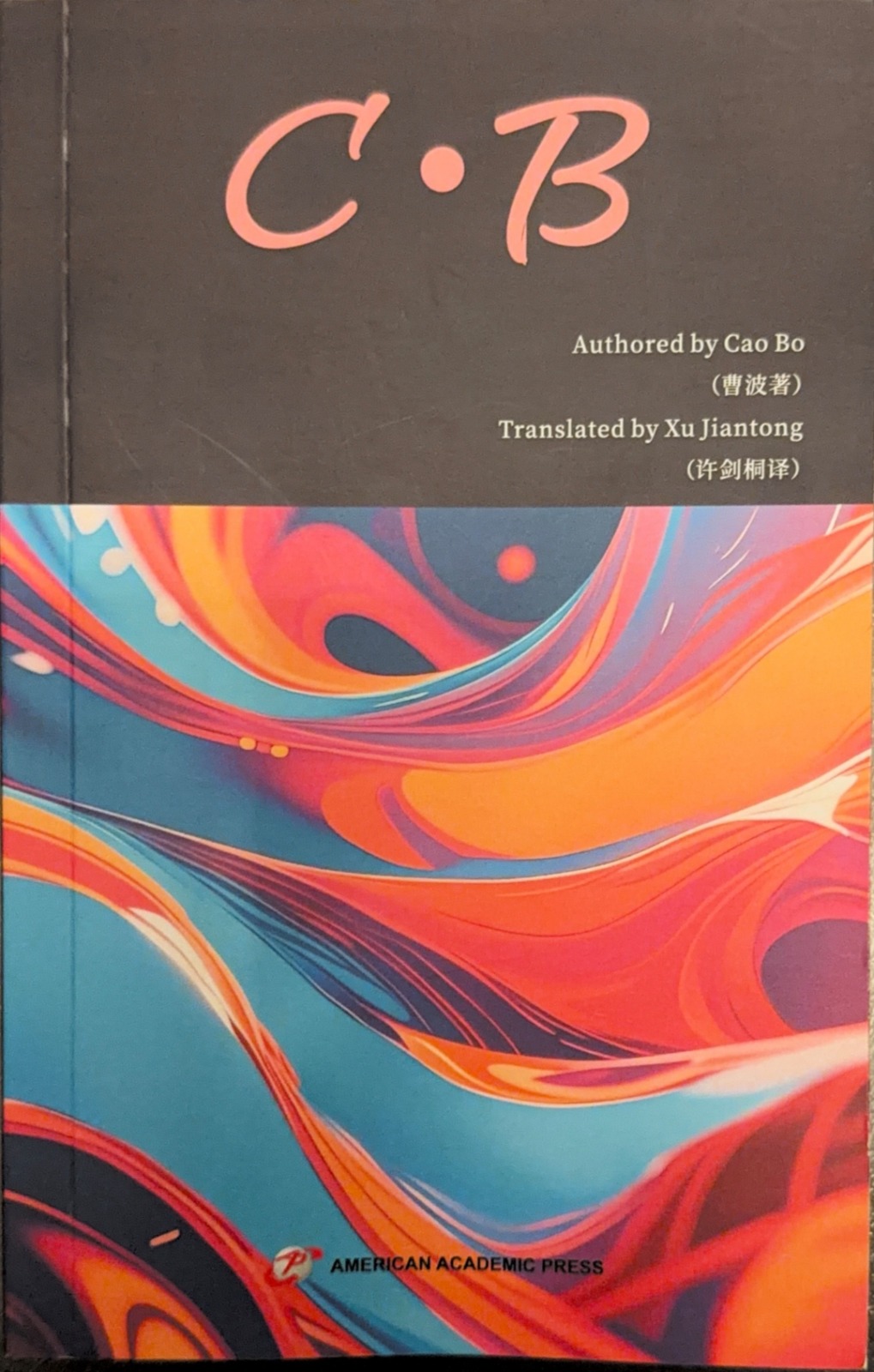
Cao Bo’s C·B arrives with a bilingual dedication — “This book is dedicated to Charles Bukowski” — and the gesture is at once a promise and a warning. This is a poetry of hangovers and bad phone calls, arthritic legs, dead cats, blocked drains and villas lit up behind a quarantine fence. Cao Bo (b. 1979, Xi’an), already the author of five collections, has no interest in making any of it beautiful.
The opening manifesto, “A Preface to C·B”, sets the terms. The words he cannot say “form fractures, are precisely, at this very moment — literature,” he writes; he can only “vent my fury at non-literature with literature.” The preface ends with a vow to endure “this mortal world” in order to achieve “fucking / immortal / Chinese / characters.” That is the whole book in miniature: obscenity as the only honest form of reverence, and the Chinese character itself as the thing worth suffering for.
Across roughly fifty poems, printed with the Chinese originals facing Xu Jiantong’s English, Cao Bo works in a deliberately flattened register. “Jack (A Cat)” is typical: the animal’s eyes “have some soul / Meaningless, though,” and the speaker hopes the cat is “a little poetic / to make it up to me, but it isn’t.” The refusal of consolation is the method. “February 14th” watches a wealthy villa district through its bright windows on a locked-down Valentine’s night and concludes that the dignified and the intelligent “can do nothing but fuck around” — class, quarantine and libido compressed into fifteen lines. “Mortal Master” compares the speculation about one’s own death to eating a bowl of hulutou, Xi’an’s pork-intestine soup, before turning to address “Diego” directly. The best poem, “Wheat Is Still Golden After Being Harvested,” gives us the Qinling Mountains in dark azure, a fat man jogging past to remark that “it’s only torture / that makes a man relatively able to climb,” and a closing definition — “Art is a pair of eyes / with half a gesture added at most” — that could serve as this book’s ars poetica.
The most moving piece is saved for last. In “Bukowski Was Here as a Guest,” the idol arrives in a dream as a shy, mild-mannered old man who never speaks; the poet’s mother sits at the table, and the backlit face across from him “felt rather like / My / Father.” The dedication is retroactively explained: Bukowski is not a literary model here so much as a father-shaped absence.
Xu Jiantong’s line-by-line fidelity preserves the bluntness — “Fuck you / In Chinese there is / 操 / 你” — and the facing-page design lets the bilingual reader hear both texts at once. The cost is rhythm. English sometimes reads as transcription rather than verse: “This is a / Good / Wall”; “I should devour / Us / And the delicate, charming, and juicy karst cave / Golden / Death.” Where the Chinese relies on hard enjambment and abrupt monosyllables, the English occasionally stacks articles and prepositions and loses the punch. Cao Bo’s line is built from short declaratives; the English needs more compression and more nerve in the verbs.
C·B is not a comfortable book, and does not want to be. It is the record of a poet who would rather be coarse and accurate than refined and false. Readers of Bukowski, of the plain-speech lineage that runs from Howl through the New York School to the Romanian dissidents, will recognize the weather here. So will anyone curious about what Chinese poetry sounds like when it refuses moonlight and lychees and insists, instead, on the wheat field after the harvest — still golden, and no consolation at all.
Bio of Cao Bo
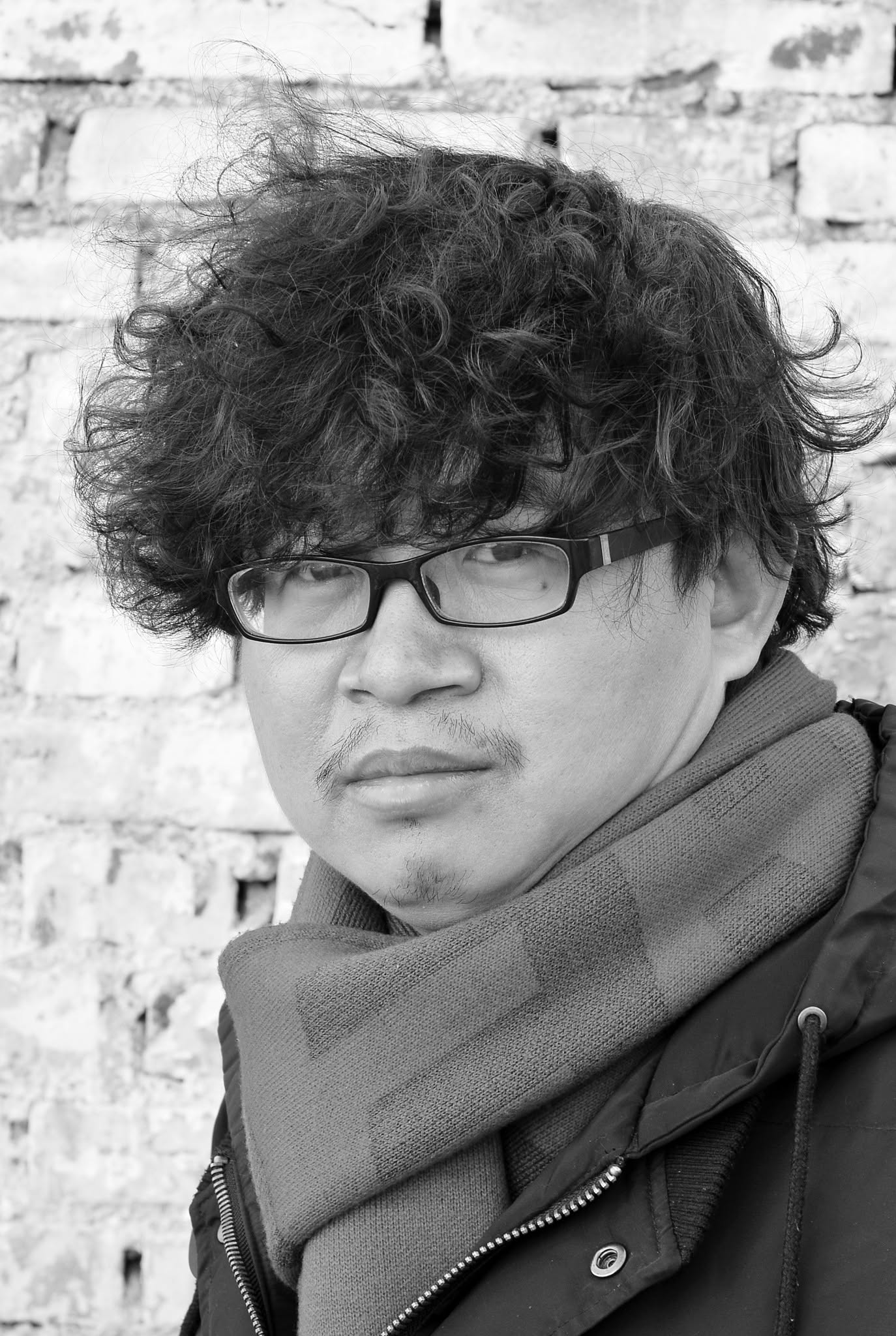
Cao Bo, a Han Chinese poet born in November 1979, is one of China’s postmodernist and avant-garde poets and lives in Xi’an. He began writing at twenty, and his poems have appeared in journals such as Shikan (Poetry Periodical) and Xingxing (Stars), as well as in a number of anthologies. He has published four poetry collections: Yesterday (2017), You Are a Cat (2019), The One at Sea (2020) and Vermilion Bird (2023). His honours include the Chinese Young Poet Award, Poetry Tide‘s Top Ten Poetry Collections, the Golden Camel Award of the Silk Road International Poetry Festival, the Boao International Poetry Award, and selection among the Top Ten Poets of the Chinese Poetry Spring Festival Gala. In 2024 he was invited to the 34th Medellín International Poetry Festival in Colombia. He currently serves as Executive Chairman of the International Poetry Committee of the UN World Silk Road Forum, Secretary-General of the Silk Road International Poets Federation, Executive Editor-in-Chief of World Poets, and Deputy Director of the Silk Road International Poetry Research Centre at the Institute of Area Studies and Translation of Northwest University.
一切操蛋,一切金黄:读曹波的《C・B》
曹波的《C・B》一开篇就用双语写着献词 ——“献给查尔斯・布考斯基”—— 这个举动既是许诺,也是警告。这是一本关于宿醉、骚扰电话、风湿的腿、死掉的猫、堵住的下水道,以及隔离围栏后面灯火通明的别墅的诗集。曹波(1979 年生,西安)此前已出版五部诗集,而他完全没有把这些材料写得好看的兴趣。
开篇的《给〈C・B〉的序》先把规矩立下。他说那些说不出口的话 “形成断裂,此刻就是 —— 文学”,他只能 “用文学表达对非文学的怒火”。序的结尾是一句誓言:忍受 “此刻/此世”,以达成 “他妈的/不朽的/中文/汉字”。这就是整本书的缩影:用粗话作为敬畏的唯一诚实形式,而汉字本身,就是值得为之受苦的东西。
全书约五十首,中文原作与许剑桐的英译对照排版,曹波用一种刻意压平的语调写作。《Jack(一只猫)》很典型:那只猫 “眼睛有些灵魂/但没什么意义”,诗人 “但愿它有点诗意/来弥补我,但是没有”。拒绝安慰,就是这本书的方法。《2.14》写封锁中的情人节,隔着明亮的窗看别墅区,最后断定那些体面而聪明的人 “只能互相操来操去”—— 阶级、隔离与欲望,压进十五行。而《人间大师》把自己死亡的揣测,比作吃一碗葫芦头(西安的猪肠猪肚泡馍),随后直接向 “迭戈” 说话。最好的一首是《麦子割完也是金黄的》:秦岭是墨黛色,一个胖子慢跑经过,说 “这并不赖伙计,人只有在折磨里/才相对能攀登”,结尾给出一个定义 ——“艺术就是一双眼睛/最多加半个姿态”—— 这几乎可以当作整本书的诗学纲领。
最动人的一首留在最后。《布考斯基来此做客》里,偶像以梦中一位羞涩寡言、文质彬彬的老者出现,始终不开口;母亲也坐在桌边,而对面那张逆光的脸 “这感觉很像/我的/父亲”。至此,那句献词才被反向解释清楚:这里的布考斯基与其说是文学榜样,不如说是一个父亲形状的空缺。
许剑桐逐行贴译的做法保住了那股粗粝 ——“Fuck you/中国也有/操/你”—— 对照排版也让双语读者同时听见两种文本。代价是节奏。英文有时读起来像誊写而不是诗:“这是一道/好/墙。”;“我应将我们/吞噬/还有娇艳欲滴的溶洞/金色的/死亡。” 中文靠硬断行和突兀的单音节发力,英文却常常堆上冠词和介词,力道就散了。曹波的诗行由短促的陈述句构成,英文需要更多压缩,动词也需要更硬的胆量。
《C・B》不是一本让人舒服的书,它也不想让人舒服。它是一个宁愿粗鲁而准确、也不愿精致而虚假的诗人的记录。布考斯基的读者,以及从《嚎叫》经纽约派一路到东欧异议诗人的 “大白话” 谱系的读者,会认得出这里的气候。那些好奇中文诗在拒绝月光和荔枝、转而坚持一片收割后的麦田时是什么声音的人,也会认得出 —— 那片麦田依旧金黄,而且不提供任何安慰。