 thesilkroadtoday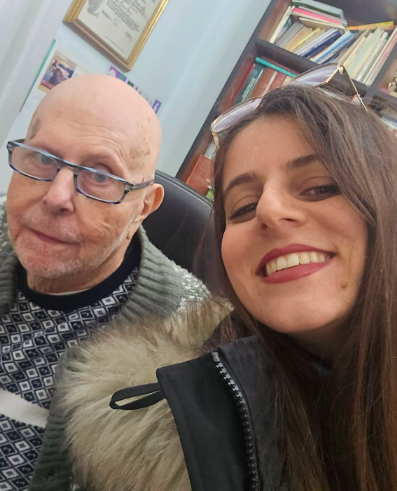
By Dr. Ashraf Aboul-Yazid
When a poet departs, tributes are usually written by fellow poets, critics, and readers. Yet sometimes the most unforgettable elegy comes not from literature itself, but from the heart of a granddaughter.
After the passing of Luciano Somma, affectionately known as The Poet of Naples, his granddaughter Cristina shared an intimate farewell that quickly became more than a family message. It emerged as a deeply human testimony, revealing the man behind the poems and the songs, the grandfather behind the public figure.
She begins with a sentence that immediately places his departure in the memory of a nation:
“Naples today loses one of the last contemporary poets of the old school still alive. I miss a great grandfather.”
For Cristina, Luciano Somma was never merely the celebrated poet honored with hundreds of literary awards or the lyricist who wrote more than two thousand songs. He was the grandfather who taught her that love was expressed through verses more often than through embraces.
Addressing him directly, she writes:
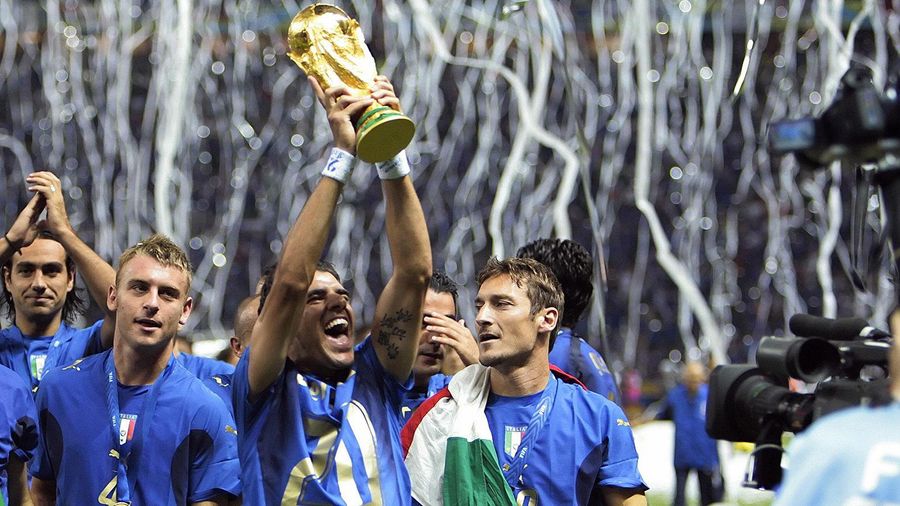
“Hi Grandpa, you passed away on the anniversary of Italy’s 2006 World Cup victory.”
The coincidence transforms a national celebration into a personal day of mourning. Instead of writing a commemorative poem—as he had taught her throughout her childhood—she offers something even more moving: memories.
She recalls how the internet became his second home. Social media was not simply a technological tool for Luciano Somma; it was a living literary square where he maintained friendships with thousands of readers around the world. With several online profiles and an extraordinary digital presence, he continued sharing poems, songs, interviews, and reflections well into his later years.
Cristina understood this perfectly.
She writes that the web became his fortress—a place where life continued to flourish, where age and illness could not silence creativity. He followed her journeys with genuine curiosity, always asking for more photographs—not merely of monuments but of streets, neighborhoods, landscapes, and ordinary people.
Even during their final meeting, only days before his death, he asked to see pictures of her new home.
She had none.
She promised she would take him there after he left the clinic.
He promised he would come.
That promise now survives only in memory.
She also remembers his affectionate request for photographs of the family’s youngest children, admiring how beautiful they were and how quickly little Lucianino was growing. These simple conversations reveal a grandfather who never stopped celebrating life through the smallest family moments.
Perhaps the most touching part of Cristina’s testimony is her description of his final days.
He never wanted anyone to notice how seriously ill he was.
Although illness had become visible on his face, he refused to surrender. Like a mischievous child reluctant to finish a meal, he would ask:
“How much more is there?”
Then he insisted on eating everything—not because he was hungry, but because he simply did not want to leave life.
During the isolation of the COVID-19 pandemic, Luciano entrusted Cristina with the story of his own life. He handed her a manuscript, asking her to preserve it. When he returned it completed a few weeks later, she discovered not only her family’s history but something even more profound:
“I discovered how incredibly alike we were.”
That realization transformed the bond between grandfather and granddaughter into a literary inheritance.
Whenever people asked where Cristina had inherited her gift for writing, her parents answered simply:
“From her paternal grandfather. He is a poet.”
As she grew older, she entered his world more deeply. She met his friends, attended cultural events beside him, and witnessed the immense network of relationships he had built through literature. Yet she feels that even this shared journey was not enough.
Every day he continued sending her his newly published articles and radio interviews. Recognition from newspapers or literary institutions mattered little to her compared with the man she knew personally.
She remembers him proudly saying:
“I’m included in the books of the University of Federico II, among the last contemporary poets still alive.”
But for Cristina, his greatest achievement was never his place in literary history.
It was every poem he dedicated to her.
Every comment he left beneath her social media posts.
Every gesture of tenderness hidden behind his reserved personality.
She recognizes that both of them used writing for the same reason:
to make the world brighter.
As she mourns him today, when everything appears dark, she turns once again to words, exactly as he taught her.
Her farewell concludes with a promise that transcends grief:
“Come visit me in my dreams, perhaps in my new house. Tell me if you like it. Don’t worry. On my next journey I’ll post a million photographs. I’ll share your songs and your poems with all your Facebook friends whenever I can. I promise they will travel around the world. I love you, Grandpa. You’re part of my heart.”
Few literary memorials possess such authenticity.
Cristina’s words remind us that the true legacy of a poet is not measured only by awards, anthologies, or songs, but by the love that continues to speak in the voices of those who remain.
Luciano Somma spent a lifetime planting poetry in people’s hearts.
Now, through his granddaughter’s moving farewell, one realizes that his most beautiful poem may not have been written on paper at all.
It continues to live—in memory, in family, and in the quiet hope that one day, somewhere beyond time, a beloved grandfather will indeed come to visit in a dream.
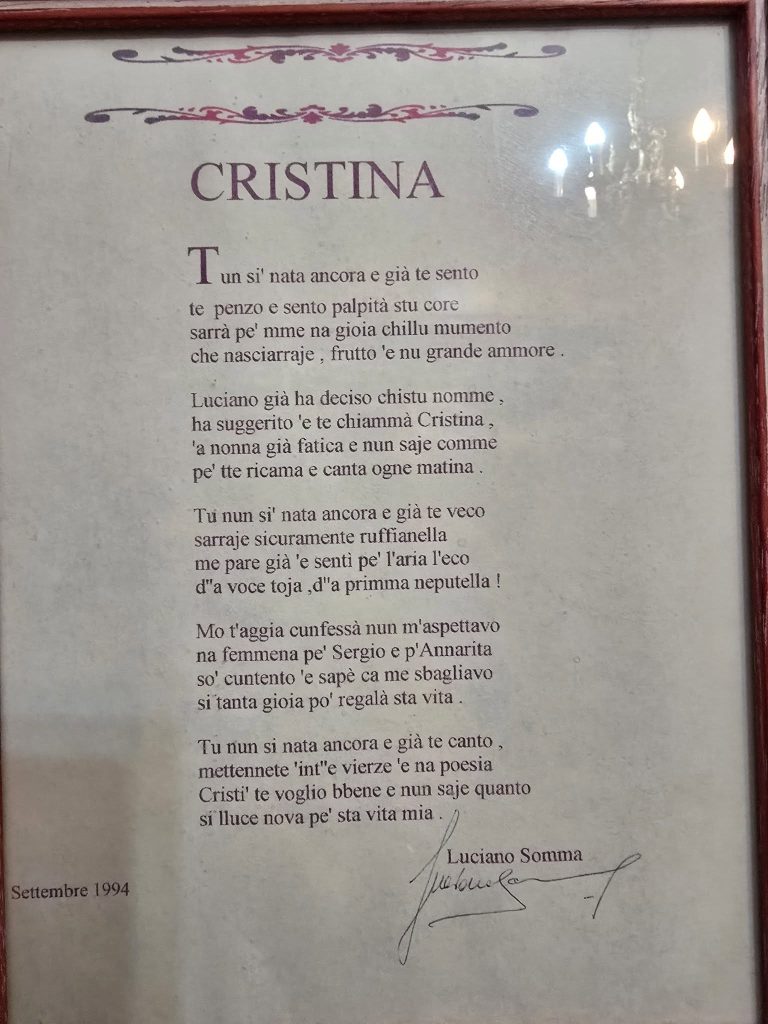
To Cristina
You are not yet born, yet I already feel you.
I think of you, and my heart begins to beat faster.
For me, that moment will be pure joy,
when you are born, the fruit of a great love.
Luciano has already chosen your name;
he suggested that you be called Cristina.
Your grandmother is already busy—you cannot imagine how—
embroidering for you and singing every morning.
You are not yet born, yet I can already see you.
Surely you will be a beautiful little girl.
It seems to me I can already hear
the echo of your voice, my very first granddaughter.
But I must confess I never expected
that Sergio and Annarita would have a daughter.
How happy I am to know I was mistaken,
for you have brought such great joy into this life.
You are not yet born, yet I already sing to you,
turning my feelings into verses and poetry.
Cristina, I love you so much,
and I cannot imagine how much new light
you will bring into my life.
September 1994
Luciano Somma