The Pyramids Were Tombs… Not Power Stations

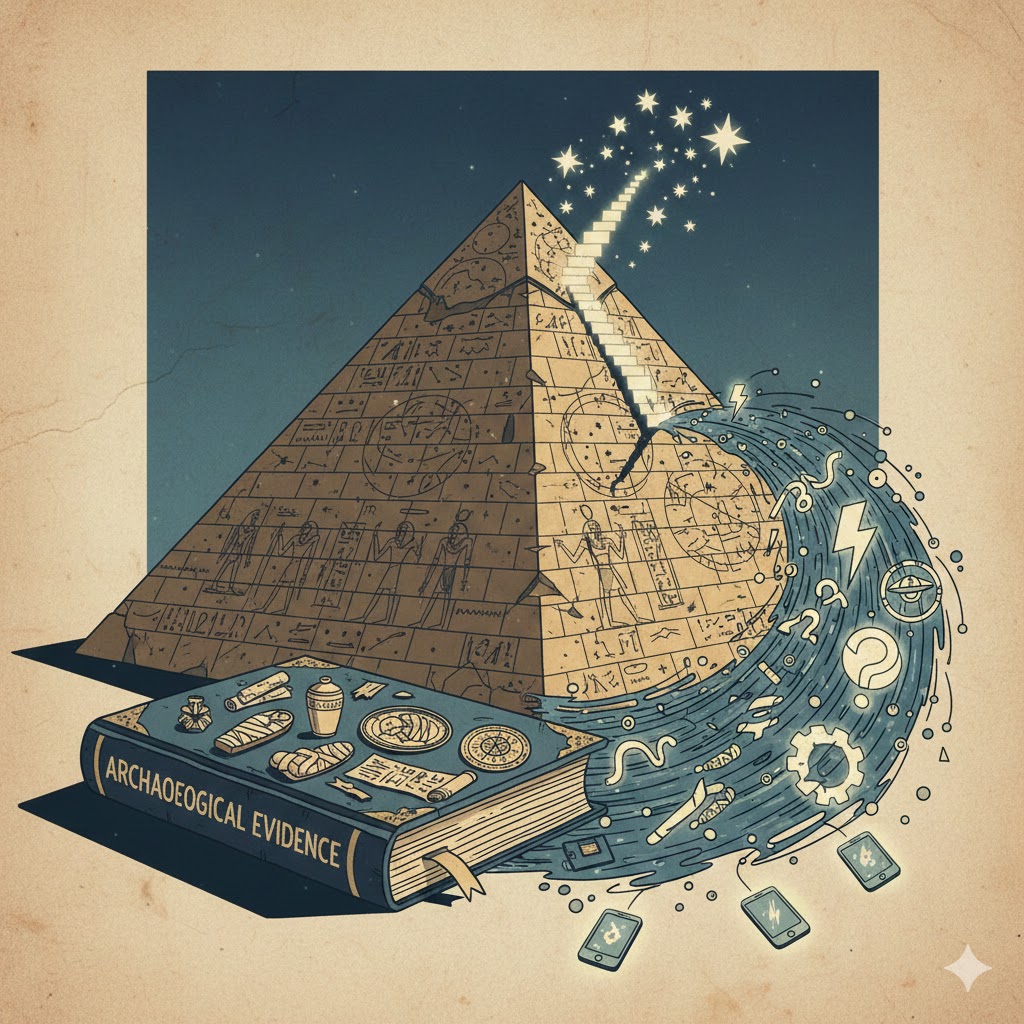
For thousands of years, the Egyptian pyramids have stood as timeless monuments, astonishing the world with their grandeur and engineering mastery. Yet today, the greatest threat to their history is not their mystery, but the flood of unscientific claims spreading rapidly across social media—claims suggesting that the pyramids were never tombs, but “power stations,” “energy generators,” or products of lost or extraterrestrial civilizations. Such ideas, however sensational, collapse instantly under the weight of genuine archaeological evidence. They replace science with myth and rob the ancient Egyptians of their own achievements.
All reliable archaeological discoveries confirm that the pyramids—especially the Great Pyramid of Khufu—were constructed as royal tombs designed to preserve the king’s body and ensure his eternal life. The ancient Egyptians believed that the king became a divine, celestial being after death, rising to live forever among the stars. The pyramid’s sloping sides symbolized this ascent, acting as a spiritual staircase to the heavens. Inside some pyramids, especially from the reign of King Unas onward, the Pyramid Texts were inscribed—these are the oldest religious writings in human history. They describe the king’s journey to the afterlife and contain sacred spells to guide and protect him. There is no reference whatsoever to energy, machinery, or anything resembling modern technology.


The archaeological layout of the Giza Plateau further confirms the funerary purpose of the pyramids. The entire area was designed as a massive funerary complex: temples, causeways, mastabas for nobles, cemetery zones for workers, administrative buildings, and harbors. Excavations have revealed the tombs of the workers who built the pyramids—ordinary Egyptian laborers, not slaves, and certainly not extraterrestrial “technicians.” They lived near the pyramids, worked there, died there, and were buried with honor. No “power plant” in history has been surrounded by cemeteries for its own builders. This alone refutes the entire myth.
Perhaps the most decisive evidence is the discovery of the Wadi el-Jarf Papyri—specifically the diary of Merer, an overseer who lived during Khufu’s reign. These papyri, the oldest administrative documents ever discovered, detail the transportation of limestone blocks from the quarries of Tura to the construction site of the Great Pyramid. Merer describes the workday, the delivery system, and even mentions Khufu’s pyramid directly. This is a real-time account, written by someone who participated in the project. No theory invented in the 21st century can override testimony written by the builder himself.

Artifacts found inside and around the pyramids provide further proof: funerary boats, ritual vessels, statues, offering equipment—all objects intimately tied to burial rites and the journey to the afterlife. None of these items belong in a power plant. Even the architectural features that some conspiracy theorists interpret as “energy chambers” are, in reality, engineering solutions designed to relieve pressure on the burial chamber. Modern laser scans, structural studies, and archaeological analyses have confirmed this repeatedly.

Why, then, do such myths spread? Because mystery appeals to the imagination, and many people find it easier to believe in extraterrestrial intervention than in the genius of ancient Egyptians. Sensational claims spread faster than scientific facts. In some cases, these myths reflect a subtle cultural bias—an inability to accept that a non-Western ancient civilization achieved such mastery in architecture, mathematics, astronomy, and engineering.
Defending the truth about the pyramids is not only a scientific duty; it is also a cultural responsibility. The pyramids are not silent stones—they are the narrative of a nation, the memory of a civilization that shaped human history. Undermining that history is an attempt, whether intentional or not, to steal Egypt’s legacy and attribute its greatness to imaginary forces.
It is therefore essential that scholars, writers, and educators present the scientific reality clearly and confidently. The pyramids were built by Egyptians, for Egyptian kings, to fulfill the deepest and most sacred belief of the ancient world: the belief in eternal life.
The pyramids do not need “energy” to justify their magnificence. Their power is cultural, symbolic, and human. They radiate the brilliance of a civilization that believed in immortality and built monuments worthy of eternity. Despite every myth that circulates today, the historical truth stands firm: the pyramids were—and will forever remain—majestic royal tombs, not power stations or alien constructs

Related Posts

A Look at Alfred Nyagaka Nyamwange’s Collection of Books

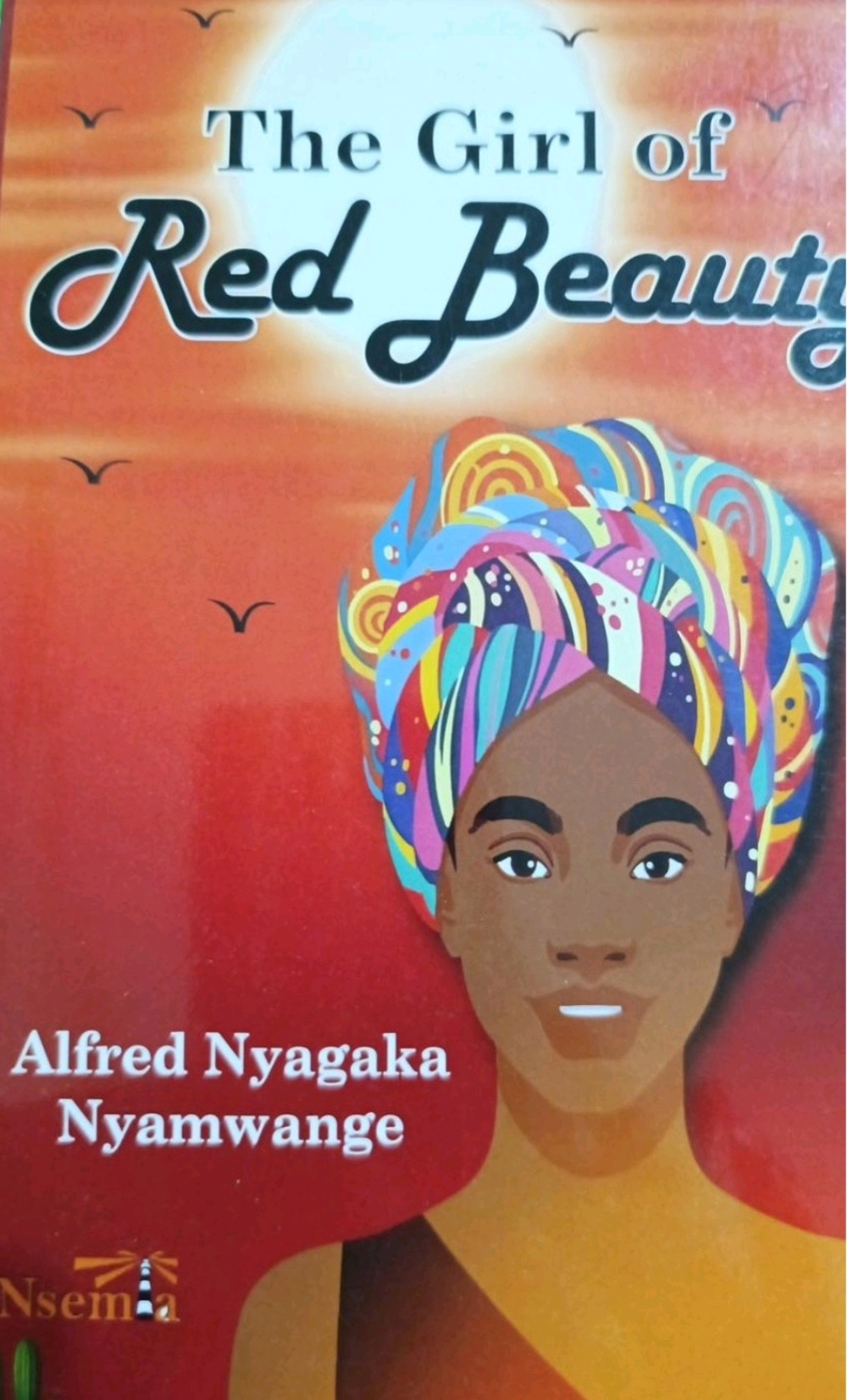
  THE GIRL OF RED BEAUTY  What does it mean to belong to a people, and how can a community preserve its identity when the voices of its ancestors begin to fade beneath the pressures of modernity? In The Girl of Red Beauty, Alfred Nyagaka Nyamwange invites readers into the cultural universe of the AbaGusii through a sustained poetic engagement with the community’s oral traditions, beliefs, social practices and philosophies. Presented in thirteen chapters of verse, the work draws upon songs, proverbs, sayings, stories, play games and the rhythms of everyday life in the Gusii highlands. Its poetic world follows the human journey from birth and childhood through initiation and marriage to old age and death. Along the way, it evokes relationships between individuals, families, the land, the ancestors and the divine. The girl at the centre of the work becomes a poetic point of entry into a much wider cultural landscape: a world shaped by communal memory, inherited wisdom, social expectations and changing relationships. The collection is distinctive in its creative negotiation between written poetry and African orature. Its language draws on indigenous expressions and direct translations from EkeGusii, bringing local imagery and proverbial thought into English. Songs, performance rhythms and the imagined presence of the lyre and drum give the written verse an oral energy, inviting readers not merely to observe the culture but to hear, sing and imaginatively participate in it. The Girl of Red Beauty is both a literary work and an act of cultural remembrance. It does not present tradition as a museum piece; rather, it opens a space for considering cultural continuity, the tensions between inherited practices and contemporary life, and the responsibility of transmitting indigenous knowledge to future generations. Rooted in Gusii experience yet attentive to wider questions of identity and belonging, the book offers international readers an encounter with the imaginative resources of an African community. A poetic celebration of identity, a preservation of memory and an invitation to return to the living sources of cultural knowledge. THE FOOTFALLS OF MY HEART  Love may begin with attraction, but in a traditional community its consequences reach far beyond two individuals. In The Footfalls of My Heart, Alfred Nyagaka Nyamwange presents a narrative poem that explores courtship and marriage in the cultural world of the AbaGusii, giving particular prominence to the voice, perspective and agency of the bride. The poem centres on Gechemba and Rimura. Rimura is a celebrated warrior and prospective groom whose reputation, strength and determination do not automatically guarantee success in love. Gechemba is a young woman who observes, questions, teases and responds to the man seeking her affection. Through her perspective, the reader encounters the emotional play of attraction, hesitation, playful resistance and growing attachment. The courtship becomes a spirited exchange in which wit and persuasion matter alongside status and material wealth. Beyond the romantic encounter, the work traces the social processes through which marriage connects families and lineages. It evokes the meeting between prospective partners, family introductions, negotiations over bride wealth, preparations, marriage rituals, songs, communal celebrations and the incorporation of the bride into a new household. Cattle and other forms of bride wealth carry meanings that extend beyond payment: they express commitment and create networks of relationships between families. The poem is rich in EkeGusii expressions, proverbs, indigenous imagery, humour and the rhythms of oral performance. It draws on cultural memory while allowing readers to consider the values and tensions embedded in marriage practices. The bride’s voice is especially important: she is not simply an object of pursuit but a participant whose response, judgement and choice shape the unfolding relationship. As a companion to The Girl of Red Beauty, this work extends Nyamwange’s poetic exploration of Gusii cultural life. Where the earlier poem approaches the community through a girl’s growth and the wider cycle of life, The Footfalls of My Heart foregrounds the woman’s perspective in the journey towards marriage and family continuity. A warrior pursues; a woman responds and chooses; families negotiate; a community gathers. The Footfalls of My Heart is a poetic exploration of love as both an intimate emotion and a communal bond. THE BROKEN COLUMN  What happens when a society’s established ways of life encounter forces that challenge its institutions, beliefs and sense of identity? The Broken Column by Alfred Nyagaka Nyamwange is a historical and cultural novel set in the world of the AbaGusii, tracing the experiences of a warrior and the wider transformations of his community. At the centre of the narrative is Okeyo, a young man renowned for courage, physical strength and exceptional skill. His reputation as a warrior places him within a social order that values protection, honour, responsibility and service to the community. Yet Okeyo’s life is not a simple succession of heroic achievements. His relationships, personal struggles, choices and encounters with adversity expose the vulnerabilities beneath the public image of the fearless warrior. His destiny is shaped by the demands of his calling and by the changing circumstances of the society around him. The novel evokes a community organised through kinship, village life, ancestral expectations, warrior traditions and collective obligations. Its landscape is not merely a backdrop: it is a lived environment in which cattle, homesteads, social relations and communal security carry cultural significance. Okeyo’s experiences intersect with those of other people, particularly the women whose presence and decisions influence his path. A profound historical change gathers around this personal story. The arrival of foreign authority, missionary Christianity and colonial power unsettles the foundations of the community. Established loyalties are questioned; inherited practices encounter new religious and political claims; and individuals must negotiate the competing demands of continuity, resistance and accommodation. The meaning of courage itself becomes uncertain as the society confronts a future it cannot fully control. The Broken Column therefore operates on two connected levels: it is the story of a man whose life contains both achievement and vulnerability, and the story of a people experiencing a difficult historical transition. Through its engagement with masculinity, identity, power, faith, tradition and colonial encounter, the novel invites readers to consider what happens when the structures that sustain a community begin to fracture.…

Dance in Silence, Poem by Anwar Rahim

They speak without a sound Their steps upon the ground No music needs to play Their hearts still find the way Two shadows in the light They hold each other…

اترك تعليقاً

لن يتم نشر عنوان بريدك الإلكتروني. الحقول الإلزامية مشار إليها بـ *