 thesilkroadtoday
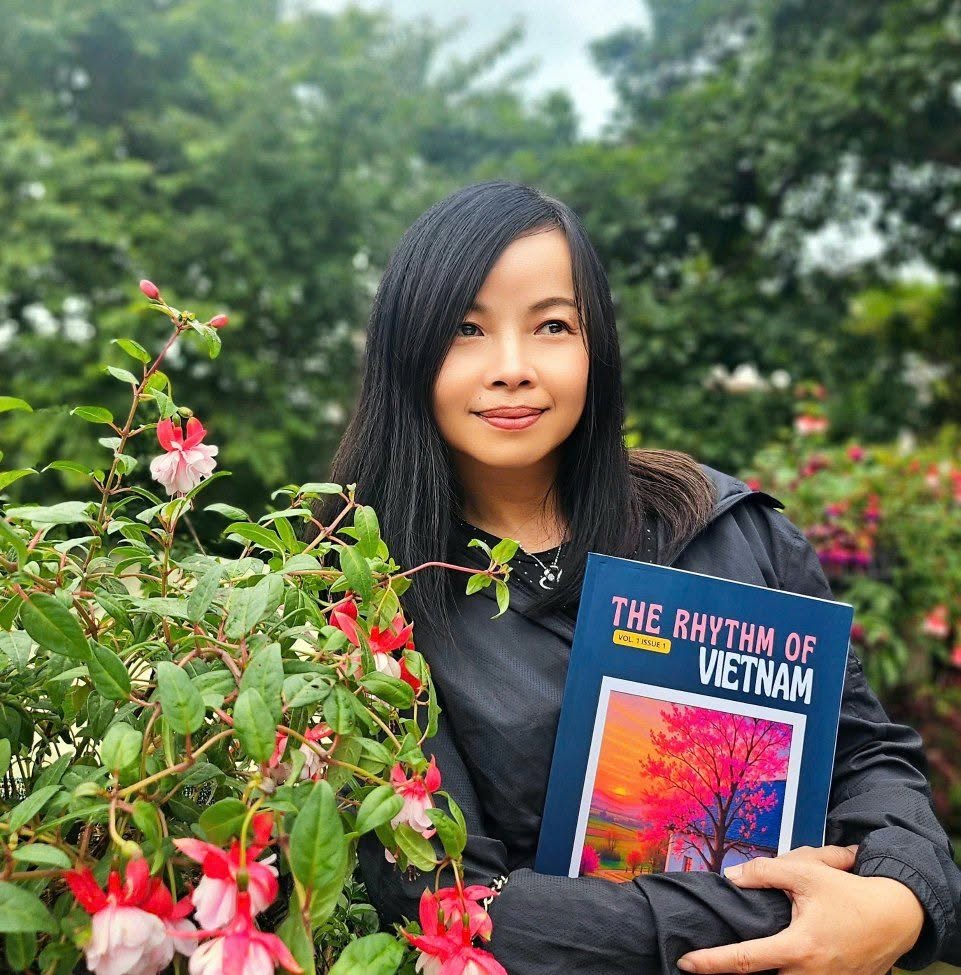
The Nuclear Explosion opens a bold poetic series that brings together selected voices from the three major poetry movements shaping the world today: the World Poetry Movement, the Beijing Postmodernism Poetry Movement, and the Great Poetry Movement. Conceived as a space of convergence rather than confrontation, this series presents poetry as a dynamic force capable of capturing the shocks, hopes, and transformations of contemporary humanity. By placing these movements side by side, the publication affirms that despite differences in language, aesthetics, and cultural roots, world poetry shares a common urgency: to respond to the moral, existential, and imaginative challenges of our time through the power of the word. Prepare for THE SILK ROAD TODAY BY CAO SHUI
|3|
Beijing Poetry School: The Birth of Postmodern Poetics in China
By Qiao Damo
Chinese poetry in the 20th century underwent significant changes in language and form starting from Hu Shi’s “attempt”. From the perspective of literary history, the vast majority of the so-called century old Chinese poetry is garbage. This landscape is very shocking. In Yi Sha’s words, many people have written many good poems, but these “many people” are not poets because they were not born poets. This is indeed the case. Only a few people in the century old Chinese new poetry have a profound understanding and can quickly enter the sequence of modernity, such as Li Jinfa, Shi Zhecun, Mu Dan, Huang Xiang, Bei Dao, Han Dong, Zhou Lunyou, Hai Zi, Xi Chuan, I and Yi Sha, Xu Jiang.
Almost all interpreters of modernity emphasize the central position of individualism. Regardless of the explanation, modernity always implies a significant shift in the understanding of oneself from collectivism to individualism. Since modernity revolves around individualism, postmodernism primarily emphasizes the reality of internal relationships. According to modern perspectives, the relationship between people and others and other things is external, accidental, and derived. On the contrary, postmodern poets describe these relationships as intrinsic, essential, and constitutive. Modernity used to be glorious and flourishing, but now it is entering museums of philosophy, history, literature, art, and various similar fields.
The previous stagnation of the Chinese poetry scene should be mainly attributed to the decline and inevitable decline of modernity. In the blink of an eye, we have entered the 21st century. In the first 20 years of the 21st century, the only major event in the Chinese poetry scene was the birth of the Beijing Poetry School. On June 9, 2016, the fifth day of the fifth lunar month, the Loong Boat Festival, the Beijing Poetry School was officially launched to pay tribute to the great poet Qu Yuan. In the following days, I invited the famous poet Yi Sha to complete a unique calligraphy work called ‘Beijing Poetry School’ for the Beijing Poetry School. Soon, I invited Kong Qingdong, a professor at Peking University who enjoys the reputation of “contemporary Lu Xun,” to serve as the chief advisor of the Beijing Poetry School. The birth of the Beijing Poetry School is mainly due to three factors: firstly, Yi Sha and I co-edited a poetry collection titled “The Light of Postmodernism – Selected Poems of Representative Figures of the Chinese New Poetry Movement in the Past 40 Years” (published by Kyushu Publishing House in May 2016), which selected the works of eight poets, including Bei Dao, Yan Li, Han Dong, Zhou Lunyou, Xi Chuan, Yi Sha, Xu Jiang, and Qiao Damo, and for the first time clarified the position of the term “postmodern” in the history of Chinese new poetry. Furthermore, the overall value orientation of our era has completely overturned poets and poetry. The Chinese poetry world must save itself, pull itself out of the quagmire of modern poetics, completely shatter the fragmented fragments of modern poetry studies, and steadfastly move towards postmodern poetics. Thirdly, the advent of the WeChat era quickly gave rise to the emergence of the Beijing Poetry School. So far, the Beijing Poetry School has 10 WeChat groups with an estimated 2000+poets. The instantaneous involvement of so many poets from all over the country in a poetry school is unprecedented in the history of world poetry. Overnight, the postmodern poetic movement in China suddenly entered a stage of vigorous and large-scale development.
On December 13, 2016, I completed the “Beijing Poetry School: Charter of Postmodernist Poetics”, which includes the following contents: 1. Beijing Poetry School: the first postmodern poetry school in China in the 21st century; 2. Official launch time: Loong Boat Festival, June 9, 2016; 3. Opening the curtain of Chinese postmodern poetry with Yi Sha’s “Burst Fire” series, Xu Jiang’s “Temple” series, and Qiao Damo’s “Little Li Sao” series; 4. Embracing tradition and modernity, while steadfastly moving towards postmodern poetics; 5. Boldly take, boldly digest, boldly surpass; 6. Building great classics; 7. Restore the true face of the great poet, legislate for humanity, legislate for the world, legislate for the universe; 8. Beijing Poetry School: The number one in China today and the number one in the world today. On December 18, 2016, the Beijing Poetry School WeChat public platform was launched. Poets who participated in the editing work of this platform include Qiao Damo, Thumb de God (Zhang Yanwen), Yu Zihan, Zhao Xiaohu, Lin Maoyu, Chengchun Caomu, Yang Tuofu, Ren Zhen, Luo Xue, Yu Xiaosi, Zhang Yanbo, Ye Bing, Junxi, Zhang Shu, Yong Ying, Qing Mei, Yang Yeye, Yu Lei, Ji Zhijun, Mo Lang, Bai Ruo, Gu Shasha, Huang Fufang, Yan Jingliang, Shao Jun, Chen Bingxian, Cui Rongde, Deng Xiujun, Sheng Xin, and Wei Yang. The main work is undertaken by poets such as Lin Maoyu, Chengchun Caomu, Luo Xue, and Qing Mei. On December 28, 2016, another Beijing Poetry School WeChat public platform was launched, which was mainly managed by me. So far, these two WeChat public platforms have released many works by poets, causing a sensation in the entire poetry world. On January 14, 2017, a series of poems titled “Long Live Chairman Qiao” (a humorous work) by poets such as Ye Bing, Chengchun Caocao, Luo Xue, Zhang Yanbo, Lin Maoyu, Ru Qiu, Jia Lin, Yu Xiaosi, and Ji Huifang, with a strong postmodern spirit, caught the attention of the entire poetry world.
The comprehensive and thorough transformation of concepts from modernity to postmodernism has finally saved the current Chinese poetry scene. Yes, the birth of the Beijing Poetry School marked the birth of Chinese postmodern poetics and the emergence of the Chinese postmodern poetry school. The naming of the Beijing Poetry School can easily lead people to misunderstand that the poets of this school all lived in Beijing. Actually, it’s not. This name comes from my research on the New York School of Poetry in the 1950s and 1960s in the United States. Not all poets of the New York School lived or wrote in New York. Similar to the “New York” of the New York Poetry School, the “Beijing” of the Beijing Poetry School represents not only a geographical term, but also a cultural spirit, becoming a symbol and metaphor to some extent. The poets of the Beijing Poetry School currently living in Beijing mainly include myself, Wen Haoran, Deng Jian, Ru Qiu (Tian Longbin), Liu Wenxuan, Han Shan, and Huang Changjiang. I have invited two outstanding poets from today’s poetry scene, my friends Yi Sha and Xu Jiang, who live outside of Beijing, to join the Beijing Poetry School to enhance their influence. Most of the representative poets of the Beijing Poetry School lived outside of Beijing, including Yu Zihan, Thumbs de God (Zhang Yanwen), Zhao Xiaohu, Lin Maoyu, Chengchun Caomu, Yang Tuofu, Ren Zhen, Luo Xue, Yu Xiaosi, Zhang Yanbo, Ye Bing, Jun Xi, Zhang Shu, Yong Ying, Qing Mei, Yang Shuye, Yu Lei, Ji Zhijun, Mo Lang, Bai Ruo, Gu Shasha, Huang Fufang, Yan Jingliang, Shao Jun, Chen Bingxian, Cui Rongde, Deng Xiujun, Sheng Xin, and Wei Yang.
As the first postmodern poetry school in 21st century China, the most active core poets of the Beijing Poetry School currently include: Chengchun Caomu, Luo Xue, Lin Maoyu, Junxi, Yu Xiaosi, Ye Bing, Ruqiu, Zhang Yanbo, Zhang Shu, Deng Jian, Ji Huifang, Jia Lin, Ban Linli, Feng Guoguo, Yu Lei, Yan Jingliang, Yongying, Yue Yaer, Bei Shan, and Ji Zhijun. In just six months, the Beijing Poetry School has been full of vitality and passion; Radiant and inseparable from the efforts of over 20 core poets mentioned above. Of course, everything is just the beginning now. Next, several great, outstanding, and excellent poetry texts belonging to the Beijing Poetry School will shine brightly.
(Translated by Cao Shui)