 thesilkroadtoday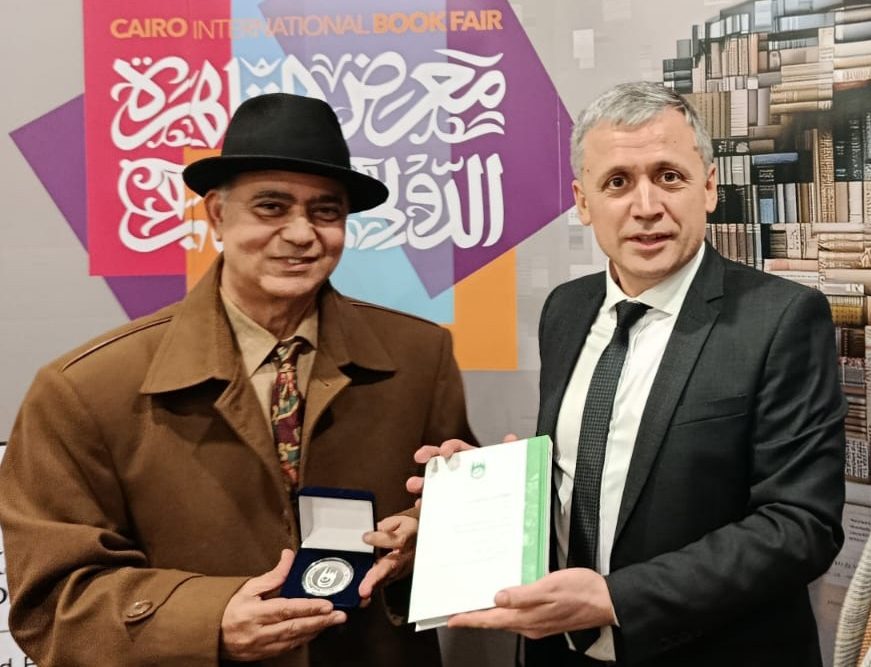
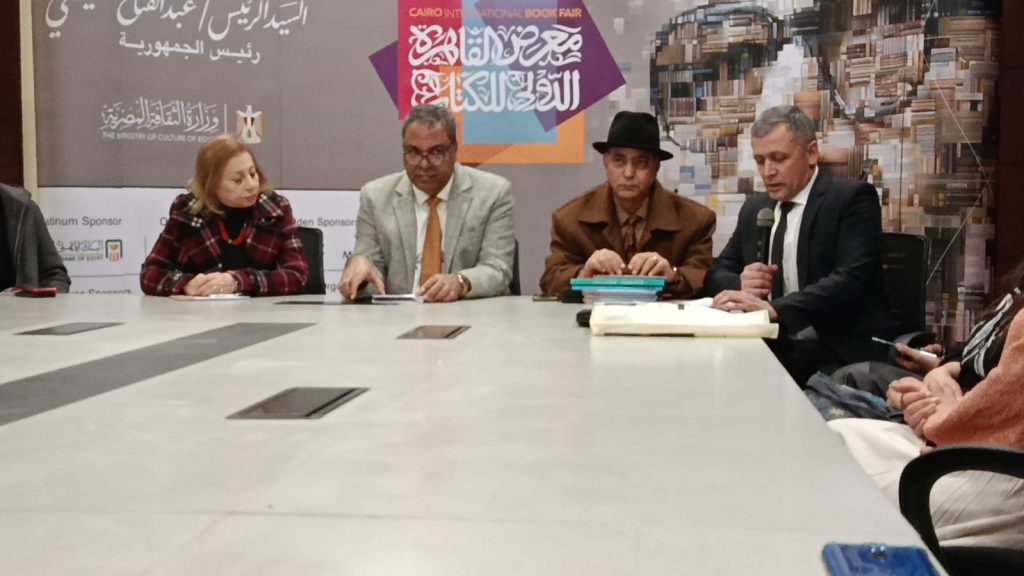 Eric Shamgunov, Head of the External Relations Department of the Strategic Vision Group “Russia – Islamic World,” opened the roundtable held as part of the 57th Cairo International Book Fair. The event was dedicated to celebrating the Arabic translation of the Tatar folk tale The Bride of the Lake and the Golden Comb by the great Tatar poet Abdullah Tukay, translated by Dr. Ashraf Aboul-Yazid.
 In his opening remarks, Shamgunov emphasized the importance of Tatar folklore as a living bridge for cultural communication between Russia and the Islamic world, praising Egypt’s pivotal role as a civilizational and spiritual center in this dialogue. He also expressed his deep appreciation for Dr. Ashraf Aboul-Yazid’s efforts in conveying Tatar literature into Arabic, considering this translation a significant step in strengthening cultural diplomacy and consolidating the values of mutual understanding and friendship among peoples—especially through children’s literature, with its shared educational and humanistic dimensions.
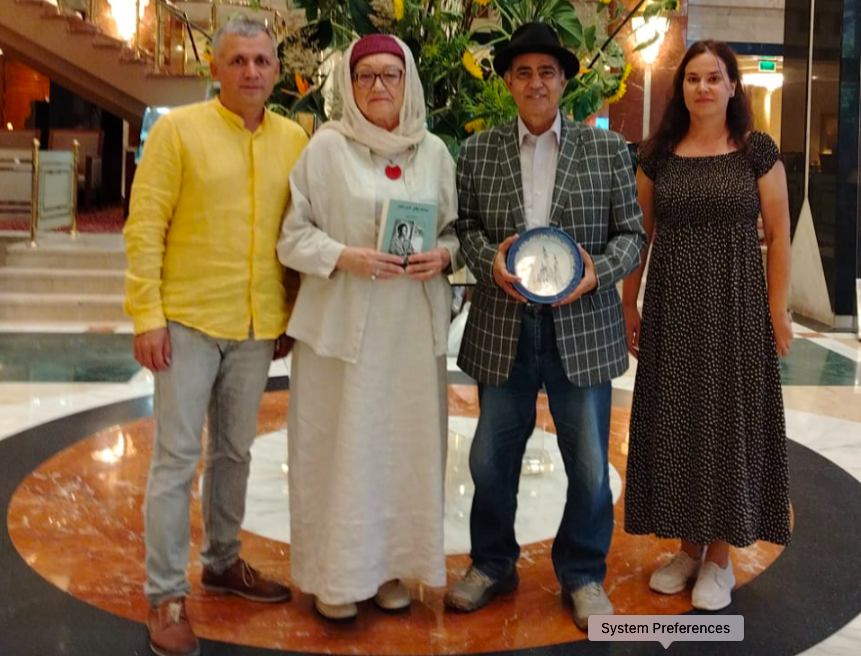
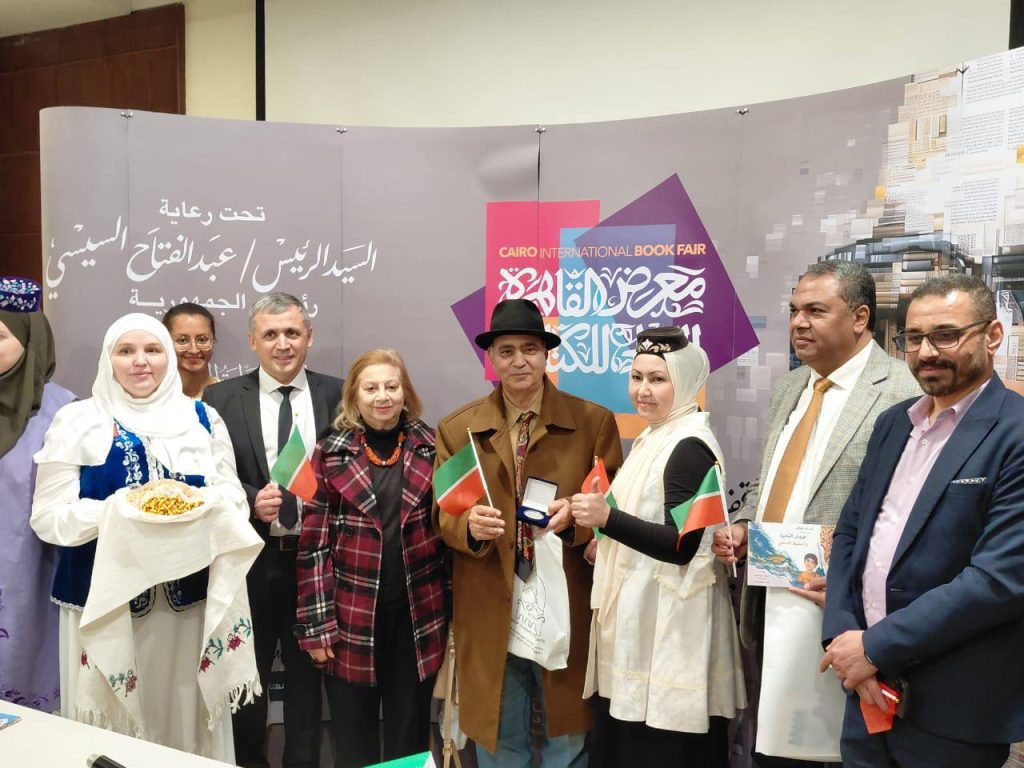
At the conclusion of this important cultural event, Eric Shamgunov honored the translator, Dr. Ashraf Aboul-Yazid, by awarding him the Silver Medal of the Strategic Vision Group “Russia – Islamic World,” in recognition of his role in introducing Tatar culture through translation. The translator also presented signed copies of the book to the guests of the roundtable, including writers and members of the Tatar community in Egypt.
Text of the Speech:
“Dear organizers, distinguished guests, and colleagues,
On behalf of the Strategic Vision Group ‘Russia – Islamic World,’ allow me to welcome you to this important event held within the framework of the largest book fair in the Middle East and Africa.
First and foremost, I would like to express my sincere gratitude to all those present for your interest in Tatar literature and in the creative legacy of Abdullah Tukay. Your attention is the best acknowledgment of the importance of our joint work. I hope that our meeting today will be fruitful and will represent another step toward the mutual enrichment of our cultures.
Our group works consistently to strengthen humanitarian ties between Russia and the countries of the Islamic world. Egypt occupies a special place in this effort—a country with an ancient culture whose authority and spiritual influence cannot be denied. For this reason, we pay particular attention to developing dialogue with Egyptian intellectual and creative circles.
Our goal is to reveal the rich cultural heritage of the peoples of the Russian Federation to the Arab reader. Just a week ago, we presented here the poetry of the Chechen poet Suleiman Khaji Othaev. Today, our discussion is devoted to a classic Tatar poet—what we call the ‘Pushkin of the Tatars,’ Abdullah Tukay. This meeting is especially symbolic, as we will celebrate the 140th anniversary of his birth next April.
The presentation of the poem Su Anasy (The Bride of the Lake and the Golden Comb) in Arabic has become possible thanks to the diligent and inspiring work of our dear friend, the well-known Egyptian writer and translator Ashraf Aboul-Yazid. His deep interest in Tatar culture, his previous works—such as the translation of Shurale—and his active participation in events like the Kazan International Film Festival ‘The Golden Minbar’ deserve the highest appreciation.
We sincerely thank him for this important initiative, thanks to which the magic of Tukay’s words will now resonate with millions of Arabic-speaking readers.
The purpose of Abdullah Tukay’s work The Bride of the Lake and the Golden Comb (Su Anasy) lies in its educational character and in highlighting the image of the water spirit Su Anasy, drawn from Tatar mythology. Tukay reinterpreted the traditional tale, adding elements related to moral education.
According to the legend on which the poem is based, a young boy, while playing on the riverbank, saw the golden comb of Su Anasy (the Bride of the Lake). He grabbed it and began to run away. Su Anasy chased him, because all her magical power resided in the comb and she could not do without it. She was about to catch the boy, but she was frightened by the dogs that began to bark loudly. Nevertheless, Su Anasy appeared at midnight to retrieve her comb. The boy’s mother returned the comb to her, and from that moment on, the boy never took anything that did not belong to him.
The aim of this story, as I mentioned earlier, is educational: one must not take what is not one’s own, for such an act is wrong.
Thus, today’s event goes beyond a mere literary presentation. It represents an important step in deepening cultural diplomacy and constitutes a meaningful dialogue between Arab civilization and the diverse cultures of the peoples of the Russian Federation.
We are convinced that such projects lay a solid foundation for understanding and friendship between our peoples. Thank you very much for your presence and for sharing with us in this important occasion, which reflects the cultural interaction between the civilizations of our two countries, Russia and Egypt.
Peace be upon you.”