 thesilkroadtoday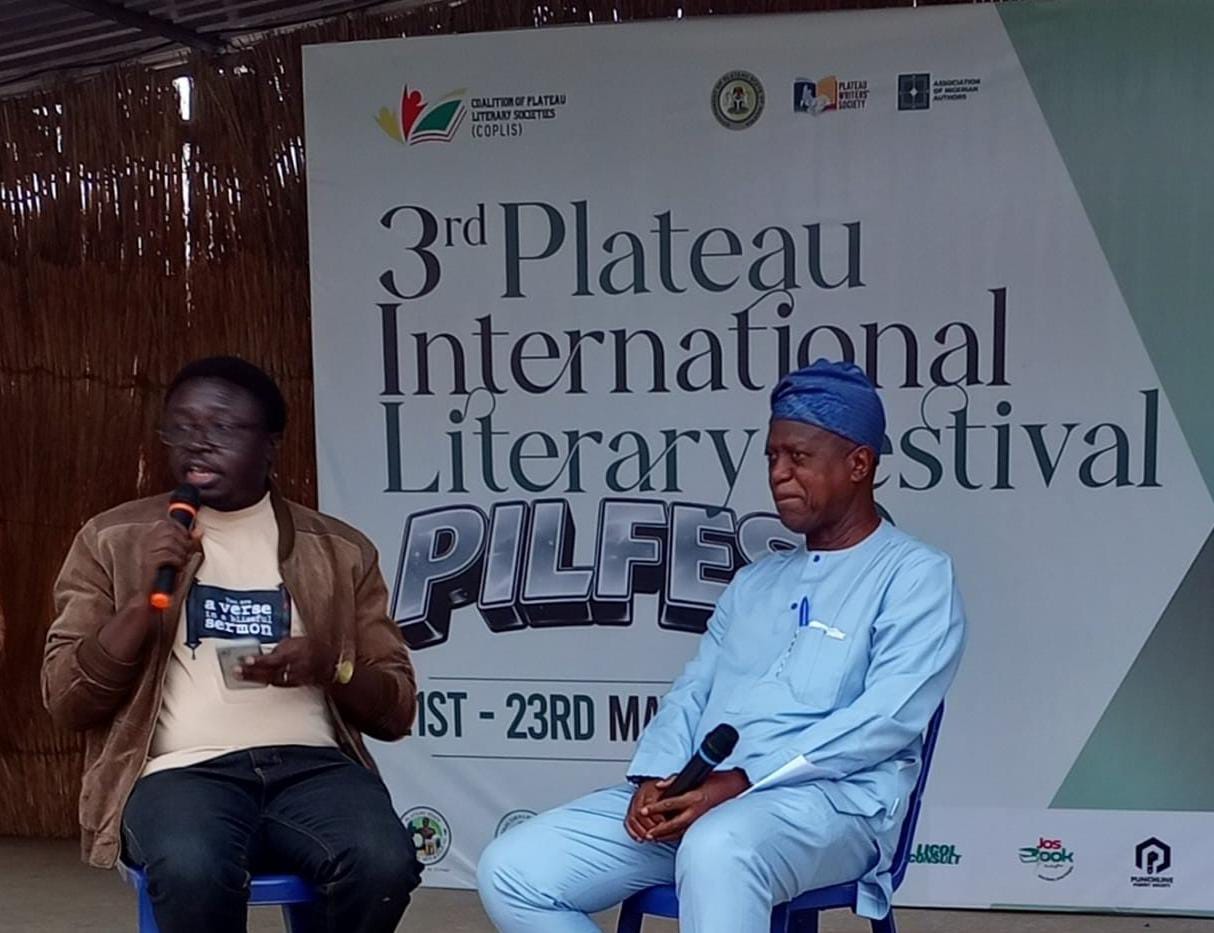
” Paper Presented By Dr Wale Okediran, Secretary General, Pan African Writers Association At The 3rd Plateau International Literary Festival Between May 20 to May 23 2026 In Jos, Plateau State, Nigeria”
Your Excellency, Barrister Caleb Manasseh Mutfwang, Governor of Plateau State, distinguished guests, writers, ladies and gentlemen. I bring you greetings from African writers under our organization, the Pan African Writers Association (PAWA) which is the umbrella body for all the Writers Associations in Africa.
Even though our headquarters is in Accra, Ghana where I have been based for the past six years, our activities extend to all the 54 African writers on the continent.
It gives me a great pleasure to be back in Jos, after a ten-year absence. I have a long history of association with Jos, dating back to the 1990s when my good friend, Professor Dul Johnson first brought me to this beautiful and hospitable state as a guest of the Nigerian Television Authority ( NTA) Jos, when he was then a Manager at the station.
Since then, I have been coming to Plateau State in many positions as a Writer, Medical Consultant as well as a Member of the House of Representatives on official and private visits.
Since my arrival in Jos in the past 36 hours, I have been impressed with the improvement in the city’s infrastructural development. On this note, I wish to congratulate His Excellency and his team for a job well done.
I also wish to thank the Governor for his kind support to the Plateau State Chapter of the Association of Nigerian Writers, especially towards the hosting of the ongoing Literary Fair.
It is a thing of joy to see Plateau State joining the league of the various states in the country that are organizing annual Book Fairs. It is my hope and prayer that the Fair will continue to wax stronger year, after year.
It is also important for me to congratulate His Excellency on his emergence as his party’s gubernatorial candidate for the forthcoming 2027 General Elections.
I sincerely wish you God’s abundant blessings in all your endeavors.
Plateau State, as we know, was named after the enchanting Jos Plateau, with its captivating unique geographical features.
Established in February 1976, it emerged independently from the former Benue Plateau State, before witnessing the creation of Nasarawa State in 1996. Even though, the State which has been officially nicknamed ’The Home of Peace and Tourism.’
Although the state which has been having some challenges with tourism due to perennial security issues with its natural endowments, still remains till today, the tourism destination for many Nigerians.
Let me at this point thank the organizers of the 3rd edition of the Plateau International Literary Festival for the invitation to headline this important and historic event.
The theme of the festival; LITERATURE AND IDENTITY; TOWARDS A PEACEFUL COEXISTENCE ON THE PLATEAU AND BEYOND could not have come at a better time when our country and by extension, many parts of the world are currently engulfed in turmoil and various forms of insurgencies.
According to the United Nations, SDG 16 is about the promotion of peaceful and inclusive societies for sustainable development, the provision of access to justice for all and the building of effective, accountable and inclusive institutions at all levels. SDG 16 also focuses on how to significantly reduce all forms of violence and related death rates everywhere.
In addition, SDG 16 is very relevant in a global age beset by wars, insecurity, human displacement, coups and insurgency.
It was in view of the above that the Pan African Writers Association (PAWA) in 2022, organized an international conference where writers, statesmen and policy makers from about 40 African countries gathered to proffer solutions to security challenges under the theme: The Role of the Writer in a Pan African Agenda for Peace and Security.
The Conference took place at the Conference Centre, University Of Ibadan, Nigeria, June 23rd – June 26th 2022.
Throughout history, writers have been more than just storytellers and wordsmiths; they have been powerful agents of social change.
The pen, often considered mightier than the sword, has been wielded by writers to challenge the status quo, to advocate for justice, and to inspire movements that have reshaped societies.
In addition, writers also have the ability to effect social change, as well to influence public opinion, challenge injustice, and ignite collective support to fight insurgency.
Historical examples of literature promoting peace include Leo Tolstoy’s “War and Peace” which explores the futility of war and advocates for understanding and compassion among nations.
In addition, from the abolitionist writings of Frederick Douglass and Harriet Beecher Stowe to the civil rights literature of Martin Luther King Jr. and James Baldwin, writers have provided a voice for those who have been silenced and a vision for a better future.
Literature also helps in breaking down barriers in a way that stories have the unique ability to put readers in the shoes of others, helping them understand perspectives they might never encounter in real life.
For instance, Chinua Achebe’s “Things Fall Apart” reveals the impact of colonialism on African communities, fostering a dialogue on cultural respect and mutual understanding. Similarly, poetry such as Kofi Awoonor’s ‘The Weaver Bird’ critiques societal fragmentation, urging readers to reflect on reconciliation and unity.
In addition, Literature also significantly influence the promotion of peace by fostering empathy, understanding and dialogue among diverse communities.
Through storytelling and visual representation, art and literature can challenge stereotypes, highlight social injustices and inspire collective action for peace.Through novels, poetry, and essays, writers can create empathy in their readers, compelling them to see the world through the eyes of those who suffer.
This empathy is a powerful force for social change, as it can lead to a deeper understanding of injustice and a greater willingness to fight against it.
At the heart of a writer’s power to effect social change is the art of storytelling. Stories have the ability to capture the imagination, to convey complex ideas, and to move people emotionally.
By telling the stories of marginalized communities, writers can bring attention to their struggles and inspire a broader audience to care about their cause.
Storytelling is a powerful tool for building solidarity and for creating a shared vision of a more just and equitable world.
In carrying out all the above activities, it is also important for writers not to ignore children and the youth who statistically in Africa, constitute a large percentage of the population.
In addition to involving the children in storytelling and reading activities, we should also endeavour to make books available and affordable to them. This is because it is a well known aphorism that; “A book placed in a child’s hand is a small but powerful act which does not subsidize dependency nor feed the machinery of perpetual conflict but opens up a fantastic horizon to the child.”
Writers have the unique ability to shape public opinion, to challenge injustice, and to inspire social change. Through their words, writers can ignite movements, shift cultural norms, and challenge institutional power.
As agents of social change, writers can also effect a lot of changes in the society through policy makers and elected leaders.
These changes expected will be a gradual reduction in the spate of unrest and insurgencies through the use of dialogue rather than violence among the key actors in the troubled areas in solving their problems.
Also expected is a concomitant improvement in the quality of governance by the political leaders as pre-requisite for a more peaceful relationship between the Government and the governed. This will encourage more dialogue in the resolution of issues, for a reduction in the level of social problems such as poverty and the promotion of good governance in the land.
As we all gather to writer, read and discuss at this important Literary event, let us be encouraged to use our pens, not only to entertain and educate, but to also promote peaceful co existence within our various societies.
I wish you all a successful deliberation.
Thank you for reading