 thesilkroadtoday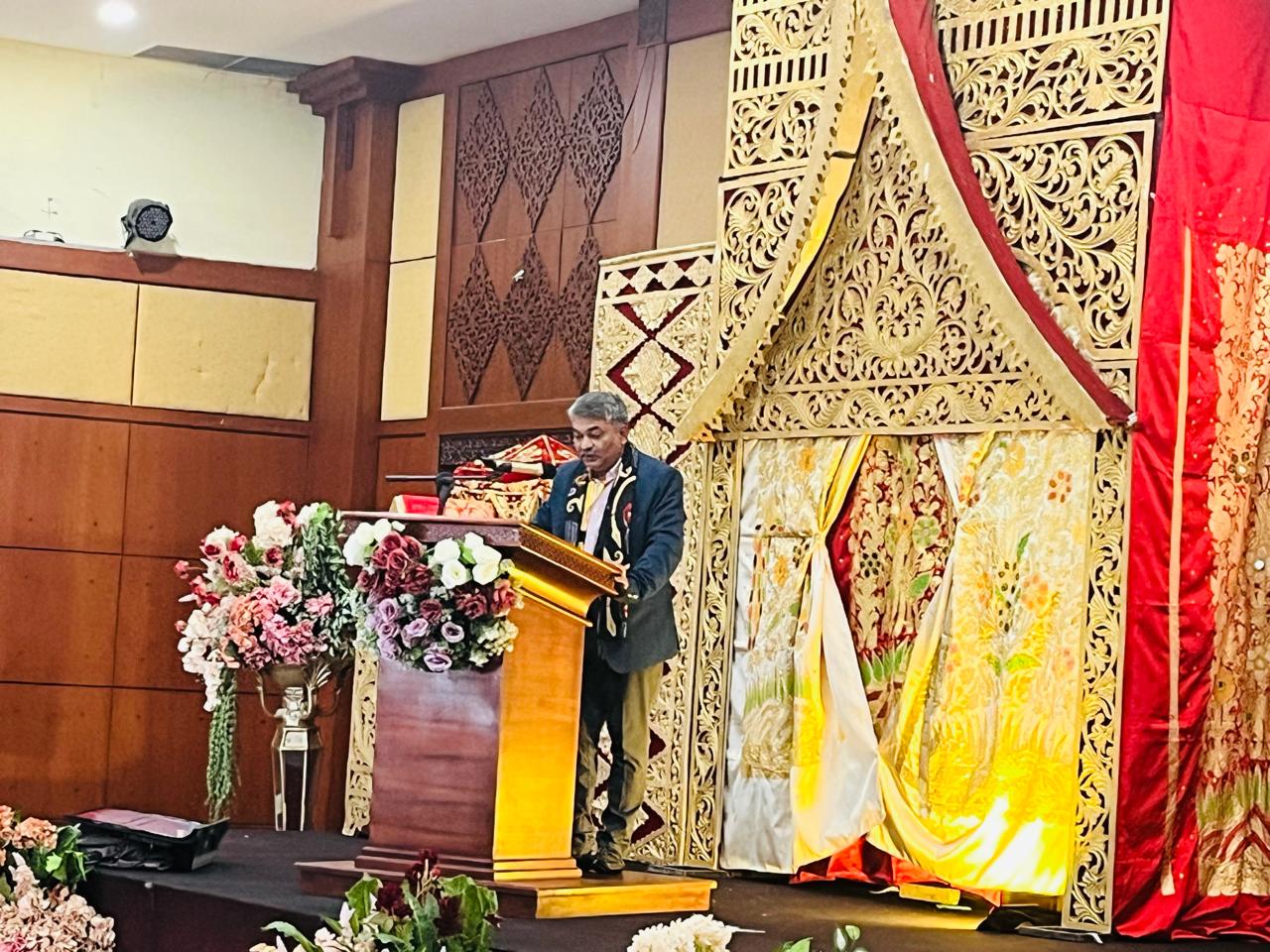
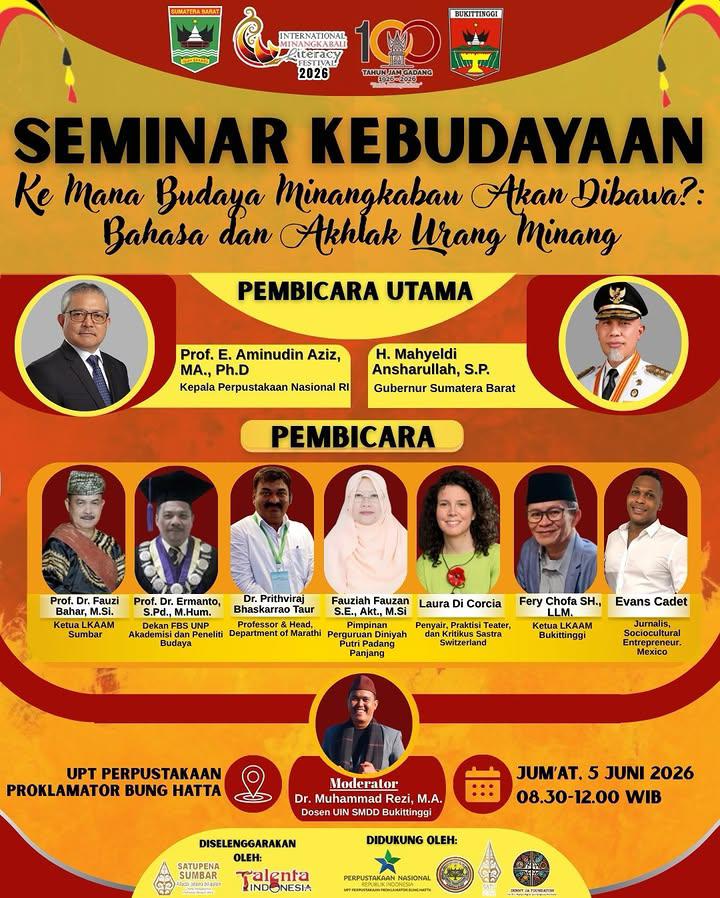
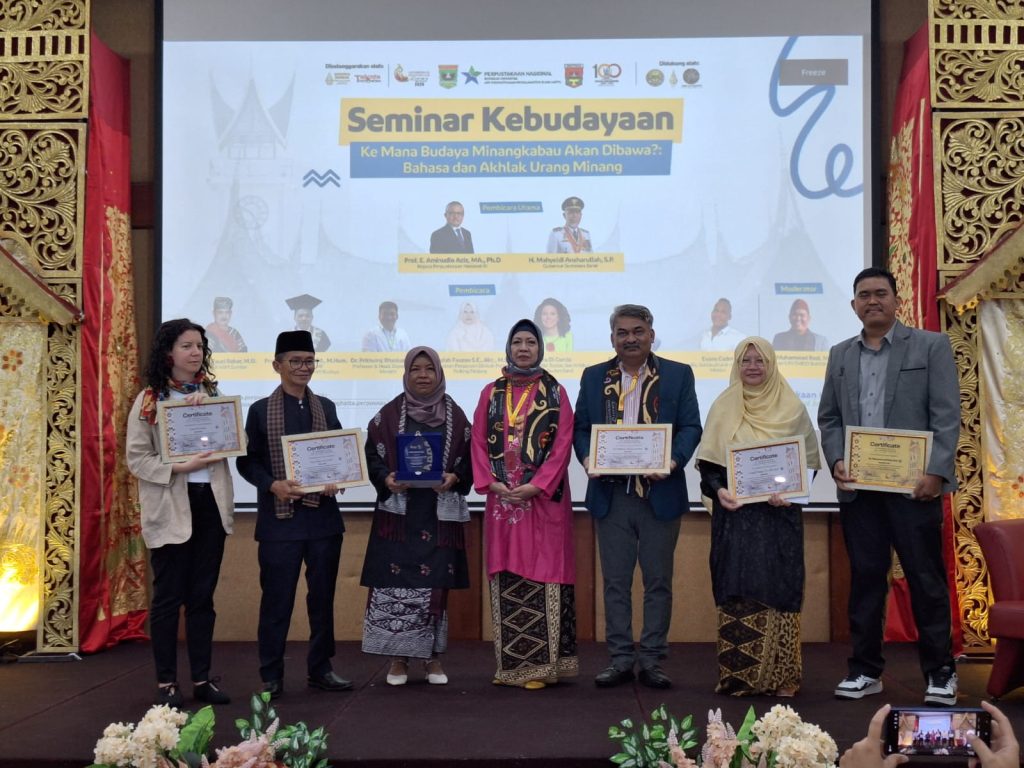
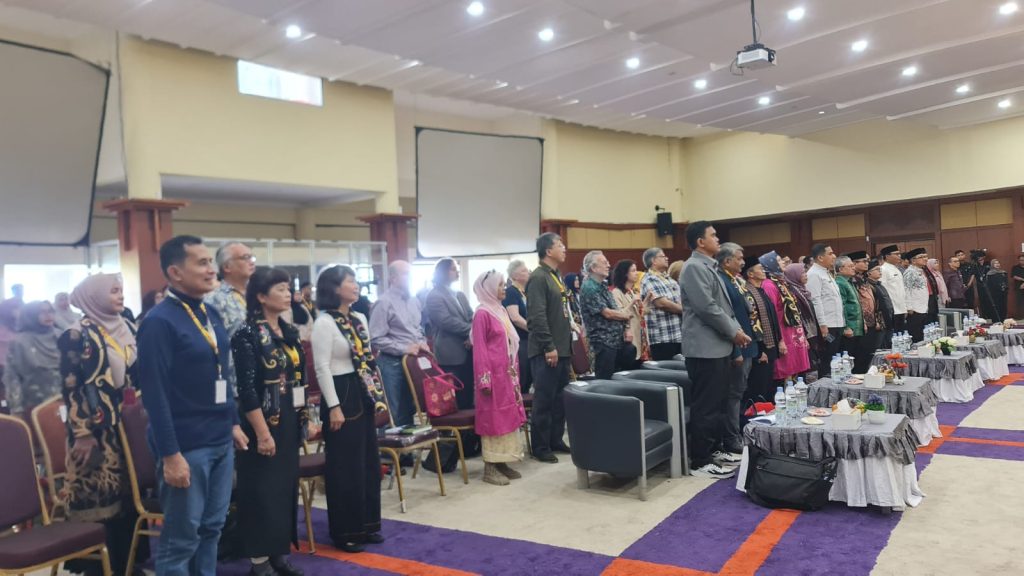
A special session on “Minangkabau Culture and Language” was organized today at IMLF 4, currently being held in the city of Padang, West Sumatra, Indonesia. During this session, Dr. Prithviraj Taur, Head of the Department of Marathi at Swami Ramanand Teerth Marathwada University, presented his views on the contemporary status and challenges of the Minangkabau and Marathi languages (5 June 2026). We are sharing the presentation delivered by Dr. Prithviraj Taur.
*Nurturing Mother Tongue & Character in the Digital Age — Marathi Reflections for Minangkabau*
There is not merely a similarity in a few letters of the alphabets of our two countries, India and Indonesia; we also realize that both our nations are among the world’s ancient civilizations and cultures. We share nearly two-and-a-half thousand years of commercial and cultural interaction. We have absorbed many things from one another. We have exchanged not only words, but also religions and philosophies. Even today, our tastes and preferences are quite similar. Just as Indonesian people enjoy spicy and flavorful food, ordinary people from our Marathi region also relish such cuisine.
In particular, both our countries are multilingual nations. Indonesia has more than seven hundred and fifty listed languages and dialects. India too has more than a thousand languages and dialects. I recently learned that in the state of Maharashtra, where I live, around 214 dialects are spoken. Not all of these are dialects of Marathi spoken by the majority population. It is difficult to classify the dialects of tribal and nomadic communities merely as dialects of Marathi. Moreover, regional dialects such as Ahirani are striving to establish themselves as independent languages, and they are succeeding in doing so. Some dialects are closer to southern languages like Telugu and Tamil, while others are considered related to Gujarati or Hindi. In short, even at the smallest social level, we live within multilingual communities.
 We Marathi people reside on the border between North and South India. Therefore, both the patriarchal traditions of the North and the matriarchal family traditions of the South have influenced Marathi culture. Naturally, countless traces of matriarchal traditions can be found in our speech, behavior, customs, traditions, and social practices.
For example, when we casually meet any woman on the road, we address her as “Mavshi” (maternal aunt), and any man as “Mama” (maternal uncle). “Mavshi” means mother’s sister, and “Mama” means mother’s brother. Through these forms of address, we attempt to connect ourselves to every person through the bond of motherhood. Many of our principal family deities also emerge from matriarchal traditions.
The reason I mention so many similarities between us is that our contemporary problems are also similar. If we come together and reflect collectively, the solutions we discover may apply equally to both our societies.
We have gathered here to discuss language. Language is not merely one aspect of culture; language itself is culture. It performs the organic function of preserving, nurturing, and transmitting the many forms of culture. Language is so important that when a language dies, the culture associated with that language—and consequently with that region—also disappears. This reality is now being felt intensely not only by us, but by communities all over the world. The reason is that many languages across the globe have vanished completely in recent decades, while thousands of languages in different countries are on the verge of extinction. Many survive only precariously at the dangerous edge of disappearance.
About six years ago, the Government of India announced the National Education Policy 2020. After a long period, the central government introduced a new and contemporary educational policy. In doing so, the government clearly acknowledged a significant reality:
“Unfortunately, Indian languages have not received the attention and care they deserve. In the last fifty years, the country has lost more than 220 languages, and according to UNESCO, 197 Indian languages are endangered. No substantial action or concrete measures were undertaken for the preservation of languages.”
After making this serious observation, the National Education Policy 2020 proposed several initiatives regarding languages. In fact, language has been given the highest priority in India’s National Education Policy. The policy emphasizes that mother tongues, dialects, and local languages are essential for building a strong educational foundation, and that education should be imparted through the mother tongue at least until Grade 5, and preferably until Grade 8, because this enhances students’ conceptual understanding. This step taken by the government is visionary, pathbreaking, and highly welcome. As a result, the situation is likely to gradually improve in the near future.
In the letter sent to me regarding this seminar by the respected coordinator of IMLF 4, Hon.Sastri Bakry, concern was expressed about the Minang language and the younger generation. Hon. Sastri Mam expressed this concern with motherly affection. She asked: What can we do to ensure that our youth continue to speak our language?
On this occasion, I would like to share an experience with you. Two years ago, I was invited to Beijing, China, to participate in a conference of young poets from BRICS countries organized by the China Writers Association. Around one hundred young poets from ten or eleven BRICS nations participated. Most of the participants passionately discussed the linguistic and cultural problems caused by the growing dominance of English over their mother tongues. There is an illusion being created that certain global languages alone are languages of knowledge, and that without proficiency in these specific languages, life itself has little meaning.
For decades, Indians have been made to believe that there is no alternative to English if one wishes to live with dignity, establish a successful business, or secure good employment. In the state where I live, English education from the first grade was introduced in the academic year 2000. Twenty-five years have now passed since English entered from Grade 1, and when we look back, we realize that students educated in English from the beginning often developed weak foundations for many reasons. Their concepts are unclear. They struggle to express themselves properly.
A person stands firmly on the foundation of the mother tongue because it is spoken not only within the family but throughout the society in which one lives. Cultural transactions occur through the mother tongue. And when we attempt to live through a foreign language—a language that lacks our concepts, lacks equivalent words for our values and ways of life, and lacks words for our relationships—we do not merely lose words from our own language; with every lost word, we also lose our relationships and our culture.
This awareness is gradually emerging everywhere. Consequently, many Indian students are now returning to their mother tongues. Parents are beginning to realize their mistake and are increasingly insisting on local languages, dialects, and mother tongues. But by then, enormous damage had already occurred. Thousands of government schools had to be closed due to a lack of students. Earlier there were schools without students; now there are students but no schools.
In the 1970s, linguist Dr. Ashok Kelkar reflected deeply on the education of tribal children. He argued that tribal children should first be educated in their mother tongue and then gradually in Marathi, the regional language. In 1972, he insisted that textbooks for tribal children should be bilingual. Some steps were indeed taken in that direction, but later policies changed, and Kelkar’s vision remained confined to paper.
To all the brothers and sisters present here who love the Minang dialect, I want to say this: we have corrected our mistake. We have reformed ourselves. Through the National Education Policy 2020, we envision a new, prosperous, employment-rich, and industry-oriented India. We have begun taking steps in that direction. Our footsteps are once again falling upon the soil of our mother tongue.
“Zadiboli” is a dialect spoken in the forest regions of Maharashtra known as Zadipatti. It is spoken only in two or three districts, yet this linguistic community has preserved all its cultural traditions with remarkable dedication through its dialect.
Drama is the favorite art form of Marathi people; theatre is their first love. In the Zadiboli region, local people have preserved an independent theatre tradition called “Zadipatti Rangabhoomi.” I proudly tell you that the annual turnover of this theatre tradition exceeds one hundred crore rupees. If we truly wish to nurture local dialects and attract young people toward them, we must discover how they can earn their livelihood through these dialects. The economic success of Zadipatti theatre should be viewed from this perspective.
Ordinary people speaking Malvani and Ahirani dialects are taking initiatives to preserve their languages. New young scholars from tribal communities are emerging and thinking about how to generate economic opportunities through language. Today, the information and entertainment industry involves transactions worth billions. Films, television serials, and advertisements are all connected to the market, and the market wants consumers. These consumers speak diverse languages. If linguistic communities insist on watching serials, films, and advertisements in their own dialects, global industries will be compelled to create content in local dialects. As a result, enormous employment opportunities will emerge for our youth in these fields. Once the issue of livelihood is addressed, other issues can also be tackled. Society is fundamentally utilitarian; we cannot ignore this truth. Therefore, our efforts must also prove their practical utility.
We must also encourage larger communities to learn our dialects. Non-native speakers should learn our languages. For this purpose, small booklets, concise grammars, and conversational guides need to be created. These should be published bilingually—in both local dialects and wider trade languages. Language scholars in our region have already created booklets like “Let Us Learn Madavi.” Certainly, it is important to learn German, French, Spanish, Chinese, and Japanese, and many books for these languages are available in the market. But alongside them, bookstores in Maharashtra should also display titles such as “Let Us Learn Ahirani,” “Korku Conversation,” and “The Joy of Malvani.” Just as young Indians wish to learn Russian or Korean, they should also feel inspired to learn Minangkabau. The youth present in this hall must take the initiative in this direction.
In India, we proudly teach a subject called the “Indian Knowledge System.” Knowledge exists within language. Just as Sanskrit contains a vast reservoir of knowledge, so too do Gondi, Goramati, and Bhilau. In particular, knowledge about local plants and their medicinal uses survives in local dialects. Likewise, people who predict weather patterns often speak the languages of small communities. A farmer in Maharashtra discovered a new variety of rice known as HMT rice; his knowledge was preserved in his mother tongue. If we begin writing and speaking about our knowledge in our own languages, it will certainly help transform them into languages of knowledge. I urge the youth who speak the Minang language to pay attention to this. We must also establish a place for our mother tongues in the world of artificial intelligence.
Another important aspect is that government attention will eventually turn toward these people-driven efforts, leading to the establishment of separate academies for individual languages. The Maharashtra government is already taking steps toward establishing a “Marathi Language Academy.” Two years ago, the government also created an independent university dedicated to the Marathi language. Efforts are underway to translate 500 classical Marathi books into 50 world languages. Simultaneously, there are efforts to bring classical works from other languages into Marathi. The government has announced plans to establish a separate translation center for this purpose. Maharashtra even has a separate ministry dedicated to the Marathi language. Mr. Uday Samant serves as the Minister for Marathi Language, and Dr. Kiran Kulkarni is the Secretary of the department. Maharashtra has received dynamic leadership with a broad vision regarding language issues through these two individuals. Therefore, one can presently witness a major movement concerning the Marathi language.
Similarly, you too can establish independent departments for local dialects and mother tongues in universities. This naturally fosters pride in one’s language.
We must create literature in our own languages, ensure the availability of dialect literature in schools, colleges, and public libraries, institute separate awards for works in local dialects, include dialect literature in academic curricula, and provide grants and scholarships for literary creation in local dialects. Work at all these levels is necessary.
Of course, scholars cannot rely entirely on governments and administrations for the study and preservation of dialects. This work must continue consistently out of personal dedication and inner commitment. We ourselves must become ambassadors of our languages and dialects and demonstrate their strengths to the world. Mere emotional attachment or identity-based arguments are not enough. We must lay a strong theoretical foundation for the study of dialects, and for that, extensive documentation is essential.
We must integrate artificial intelligence, agriculture, cosmetics, healthcare, and data science to increase employment opportunities in various sectors. Tourism, handicrafts, philosophy, festivals, food culture, music, painting, and other arts should all actively function through local dialects. We must train skilled language teachers and respectfully invite local artists and artisans to teach in schools and colleges. India’s National Education Policy has already hinted at such possibilities. If comprehensive efforts are made, we can certainly build a positive future for our languages.
According to information available on the internet, around six million people on the island of Sumatra speak the Minangkabau language. My Marathi language is spoken by 120 million people, and yet we too are facing a crisis. Therefore, we have begun making efforts at every level to overcome this linguistic crisis.
In fact, I believe language lovers across the world should take inspiration from the efforts of the Maharashtra government and initiate similar movements for the preservation, promotion, and development of their own languages. The Marathi-speaking community has accomplished remarkable work over the past few years. On this occasion, I request the brothers and sisters of the Minang language community to join hands and take the lead in nurturing love for the mother tongue.
My heartfelt wishes to all of you.
Jai Hind! Jai Maharashtra!! Jai Marathi! Jai Minangkabau!!
*Dr. Prithviraj Taur,* *Professor & HOD Marathi*
*Director, School of Language, Literature & Culture Study*
*Swami Ramanand Teerth Marathwada University, Nanded – 431606 Maharashtra, INDIA*