 thesilkroadtoday

Poets from Africa, Europe, Asia, the Americas and the Arab World converge in Kenya
for a celebration of literature, cultural exchange and human connection
KISII, KENYA — October 2026
Poetry is bringing the world together in Kenya as the Kistrech International Poetry Festival continues its tradition of welcoming poets and literary voices from across continents, cultures and languages.
Founded in 2013 by Kenyan poet, scholar and cultural organiser Dr. Christopher Okemwa, Kistrech has developed into an international platform where Kenyan poets meet writers from Africa and the wider world. The festival describes its mission as bringing local and international poets together on one platform while promoting poetry, art and cultural exchange. Its programme embraces poetry in its many forms, including spoken word, oral poetry, song, rap and mashairi, the Swahili poetic tradition.
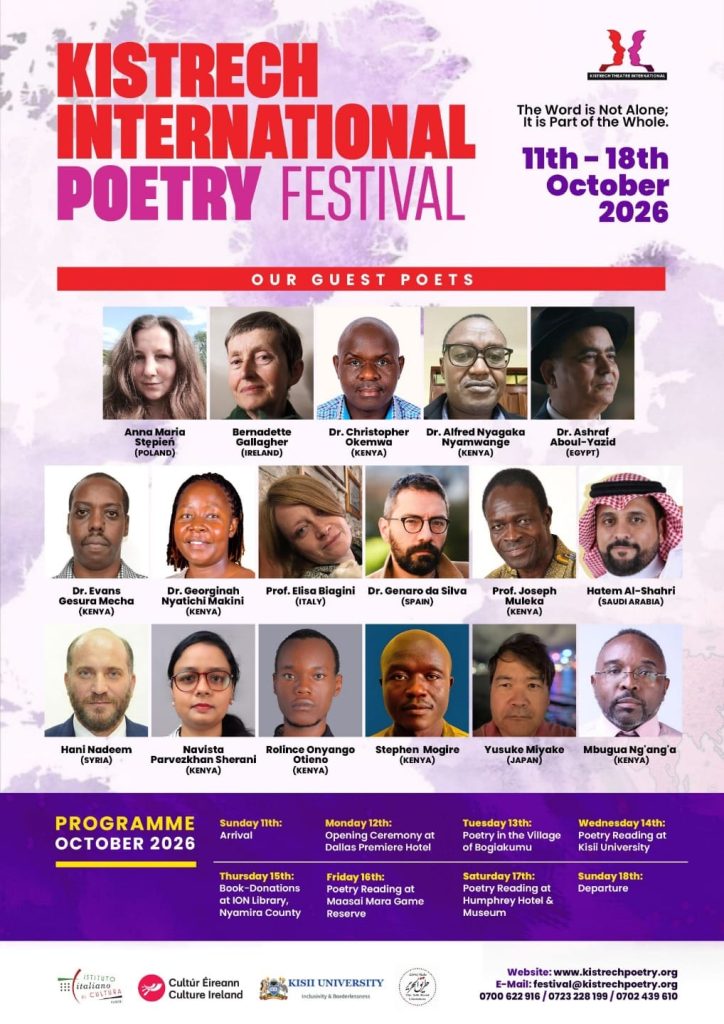
The international character of Kistrech is part of its history from the very beginning
The first Kistrech Poetry Festival in 2013 welcomed an impressive group of international poets and literary figures from India, Thailand, Mexico, Cyprus, Lithuania, South Africa, Zimbabwe and Nigeria. Among them was Professor Arif Khudairi from the University of Cairo, establishing an Egyptian connection with the festival from its inaugural edition. Over the years, the festival has continued to expand its geographical reach. The 2022 edition brought poets from the United States, Spain, Scotland, Hungary, Denmark, and India, alongside Kenyan writers.
The 2023 festival represented an even broader international gathering, with poets from Switzerland, Canada, Austria, Sweden, Norway, the United States and Barbados, in addition to Kenya. The programme included Lucilla Trapazzo and Andrea Grieder from Switzerland, Nora Atalla and Mattia Scarpulla from Canada, Manfred Chobot from Austria, Bengt O. Björklund from Sweden, Fatemeh Ekhtesari and Erlend Wichne from Norway, American poets including Kevin Dublin and Peggy Morrison, and Barbadian poet Winston Farrell.
In 2024, Kistrech welcomed another remarkable international delegation, including poets from Switzerland, Poland and Barbados, as well as a major delegation of Chinese poets — He Lei, Yuemei Chen, Shi Wei, Hefeng Huang and Ye Feng Branthaver.
The 2025 edition continued this international tradition with poets from Barbados, Finland and the Czech Republic, represented by Winston Farrell, Riina Katajavuori and Tereza Riedlbauchová.
Arab voices join the international conversation
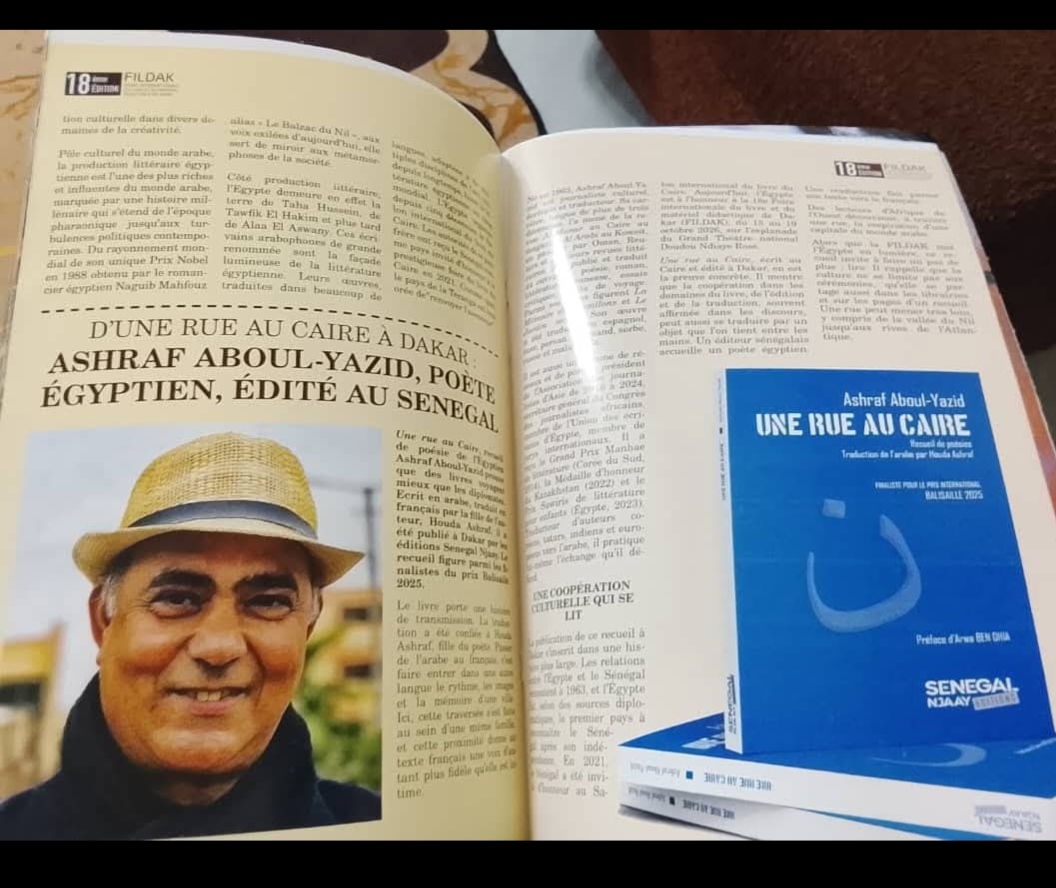
The participation of poets and literary figures from the Arab world — including Egypt, Syria and Saudi Arabia — adds another important dimension to this international gathering.
Their presence connects East African literary traditions with the rich and diverse heritage of Arabic poetry, creating opportunities for dialogue between the Nile Valley, the Levant, the Arabian Peninsula and East Africa.
Egypt’s connection with Kistrech is particularly significant because an Egyptian academic and poet, Professor Arif Khudairi of Cairo University, participated in the festival’s historic first edition in 2013.
The continuing presence of Arab voices demonstrates how Kistrech has evolved beyond a national literary event into a meeting place for poets representing different linguistic and cultural worlds.
A festival of many continents
Kistrech’s international story is therefore not defined by a single region. It stretches from Africa to Asia, Europe to the Americas, and the Arab world to the Caribbean.
Poets have travelled to Kenya from countries and territories including India, Thailand, Mexico, Lithuania, Cyprus, Nigeria, Zimbabwe, South Africa, the United States, Canada, Barbados, Spain, Scotland, Norway, Denmark, Sweden, Austria, Switzerland, Poland, China, Finland and the Czech Republic, among others, while Kenyan poets have shared their own traditions with these visiting writers.
This diversity has helped make Kistrech a forum not only for poetry readings but also for translation, literary scholarship, cultural exchange, education and international friendship.
From international poets to young Kenyan voices
One of the distinctive features of Kistrech is that international participation is closely connected with the development of young Kenyan poets.
The festival provides students and emerging writers with opportunities to read alongside established international poets, meet foreign authors and discover literary traditions that might otherwise remain outside their academic and cultural environment. The festival reports that some young poets have subsequently published their work in international magazines and journals, while others have received invitations to participate in international poetry festivals.
Kistrech has also developed poetry-exchange initiatives linking Kenyan students with writers abroad. One example was the East Oakland to East Africa (EO2EA) poetry exchange, directed by Karla Brundage of the United States and Christopher Okemwa of Kenya, which brought Kenyan student poets into collaboration with established American poets and resulted in the anthology Blackrootedness: 54 Poets from Africa to America.
Dr. Christopher Okemwa: the poet behind the international platform
At the centre of this continuing literary journey is Dr. Christopher Okemwa, poet, scholar, editor and founder of Kistrech. Okemwa himself has an international literary profile. He has participated in poetry festivals in Turkey, Belgium, Vietnam, Colombia, Spain, Northern Ireland and England, while his work as an editor has connected Kenyan and African poets with writers from around the world.
His work with Kistrech reflects a wider philosophy: international poetry should not remain confined to major capitals and cultural institutions. It should travel to communities, universities, schools and villages and create direct encounters between writers and audiences. That philosophy has become one of the defining characteristics of Kistrech.
Kenya as a meeting place for the world’s poets
The significance of Kistrech lies ultimately in the encounter. A poet from Cairo can meet a poet from Kisii. A writer from Beijing can share a stage with a Kenyan poet. Voices from Barbados, Finland, Norway, Switzerland, India, the United States, China, Poland, the Czech Republic, Syria or Saudi Arabia can enter into dialogue through poetry. In this sense, Kistrech represents an important model of literary internationalism rooted in Africa.
It demonstrates that international cultural exchange does not have to move in one direction. Kenya is not simply receiving international literature; Kenyan poets, students and cultural traditions are actively participating in a global literary conversation.
From its first edition in 2013 to its continuing international gatherings, Kistrech has built a network in which poetry becomes a bridge between continents. And in 2026, with African and Arab voices joining the festival alongside its wider international community, that bridge continues to grow.