 thesilkroadtoday
As Lagos prepares to celebrate four decades since Wole Soyinka made history as the first African Nobel laureate in Literature, an exhibition, documentary film, illustrated comic book, and international discussion will invite audiences to look beyond the Nobel Prize and rediscover the journey, struggles, and ideas that shaped one of Africa’s most influential intellectual voices.
LAGOS, NIGERIA — October 18, 2026
What does it take for a writer to move from the memories of childhood to the consciousness of the world? And what remains of a literary journey when its most celebrated destination has already become history?
These questions lie at the heart of Ake to Stockholm, a cultural initiative designed to revisit the life and literary achievements of Nigerian Nobel laureate Wole Soyinka, whose historic recognition in 1986 marked a defining moment for African literature on the international stage.
As the world approaches the fortieth anniversary of that achievement, Lagos is preparing to celebrate not merely the distinction of a Nobel Prize, but also the intellectual struggle, creative imagination, and moral courage behind it.
The programme forms part of the eighth edition of Timeless Memories: Elastic Effects of Wole Soyinka, curated by archivist and cultural curator Oludamola Adebowale in partnership with the Committee for Relevant Art and the 27th Lagos Book and Art Festival.
Launched in 2019, Timeless Memories has developed into a sustained cultural engagement with Soyinka’s life, writings, and ideas. Its latest edition seeks to bring that legacy into conversation with a new generation, using historical documentation and contemporary artistic expression to explore how literature shapes the way societies understand themselves.
Beyond Stockholm: The Journey Matters More Than the Destination
The title Ake to Stockholm evokes a journey that extends far beyond geography. Ake, associated with Soyinka’s childhood memories and the world immortalised in his autobiographical writing, represents the beginnings of an imagination formed by family, community, cultural traditions, and the contradictions of colonial-era Nigeria. Stockholm, by contrast, signifies international recognition and the moment when an African writer’s achievement became part of world literary history.
Between these two points lies a much larger story: the development of an independent intellectual voice, the confrontation with political authority, and the conviction that literature must remain engaged with the realities of human existence.
At a press conference in Lagos, Adebowale emphasised the importance of recovering the experiences and influences that shaped Soyinka’s rise to international recognition.
His approach challenges a familiar tendency in cultural history: to remember the award while forgetting the years of work, uncertainty, resistance, and artistic experimentation that preceded it.
A prize can establish a milestone, but it cannot fully explain a writer. To understand Soyinka, audiences must return to the texts, the historical circumstances, and the questions that made his work consequential.
An Archive That Speaks to the Present
The flagship exhibition will take place from November 16 to 29, 2026, at Kongi’s Harvest Gallery in Freedom Park, Lagos.
Through archival photographs, historical documents, and other visual materials, the exhibition will reconstruct significant moments in Soyinka’s literary journey, offering visitors an opportunity to encounter the history behind the public figure.
Yet an archive is more than a collection of surviving documents. It is a way of preserving the relationship between memory and truth.
Photographs can recover a moment; manuscripts can reveal the development of an idea; historical records can illuminate the circumstances in which a work was created. Together, they help transform cultural memory from a distant recollection into a resource for understanding the present.
This responsibility becomes particularly important when the subject is a writer whose work has engaged with freedom, justice, political power, and human dignity.
Preserving Soyinka’s legacy, therefore, is not simply an exercise in honouring an eminent individual. It is also an opportunity to reconsider the historical experiences and intellectual debates that continue to shape Nigerian and African societies.
Bringing Literature to a New Generation
The initiative will extend beyond the exhibition through a documentary film and an illustrated comic book, two formats intended to make Soyinka’s life and ideas accessible to younger audiences.
The choice is significant. Cultural heritage survives not only when it is carefully preserved, but also when it can be rediscovered by people who did not witness the events that produced it.
For younger readers, the Nobel Prize may appear as a distant historical achievement. A documentary can restore the human and historical dimensions of that achievement, while an illustrated narrative can offer a more immediate entrance into the life of a writer whose intellectual interests extend beyond the boundaries of conventional literary fame.
The challenge is to present Soyinka not merely as a celebrated author, but as a dramatist, thinker, and public intellectual whose work invites readers to question established assumptions and confront uncomfortable realities.
Such an approach also raises a broader question for African cultural institutions: how can the continent’s literary heritage be preserved without turning its greatest writers into untouchable monuments?
The answer may lie in allowing new generations to encounter their work as a living conversation rather than a closed chapter in history.
From the Nobel Prize to Posterity
Another major component of the programme will be an international panel discussion titled From Nobel to Posterity: Archiving Wole Soyinka’s Literary Legacy, hosted by the Section on Literary Archives of the International Council on Archives.
The discussion will examine approaches to preserving Soyinka’s literary legacy and improving public access to archival materials.
Its significance extends beyond the preservation of one writer’s papers. Literary archives help establish how ideas emerge, how texts evolve, and how writers respond to the political and social conditions of their times. They also provide future researchers with evidence through which to reassess established interpretations.
In an age when information circulates rapidly but can disappear just as quickly, the preservation of literary records becomes an essential part of cultural continuity.
The question is not simply whether Soyinka will be remembered. It is whether future generations will have meaningful access to the materials that enable them to understand his work, examine his ideas, and develop their own interpretations.
The Rebel and the Artist
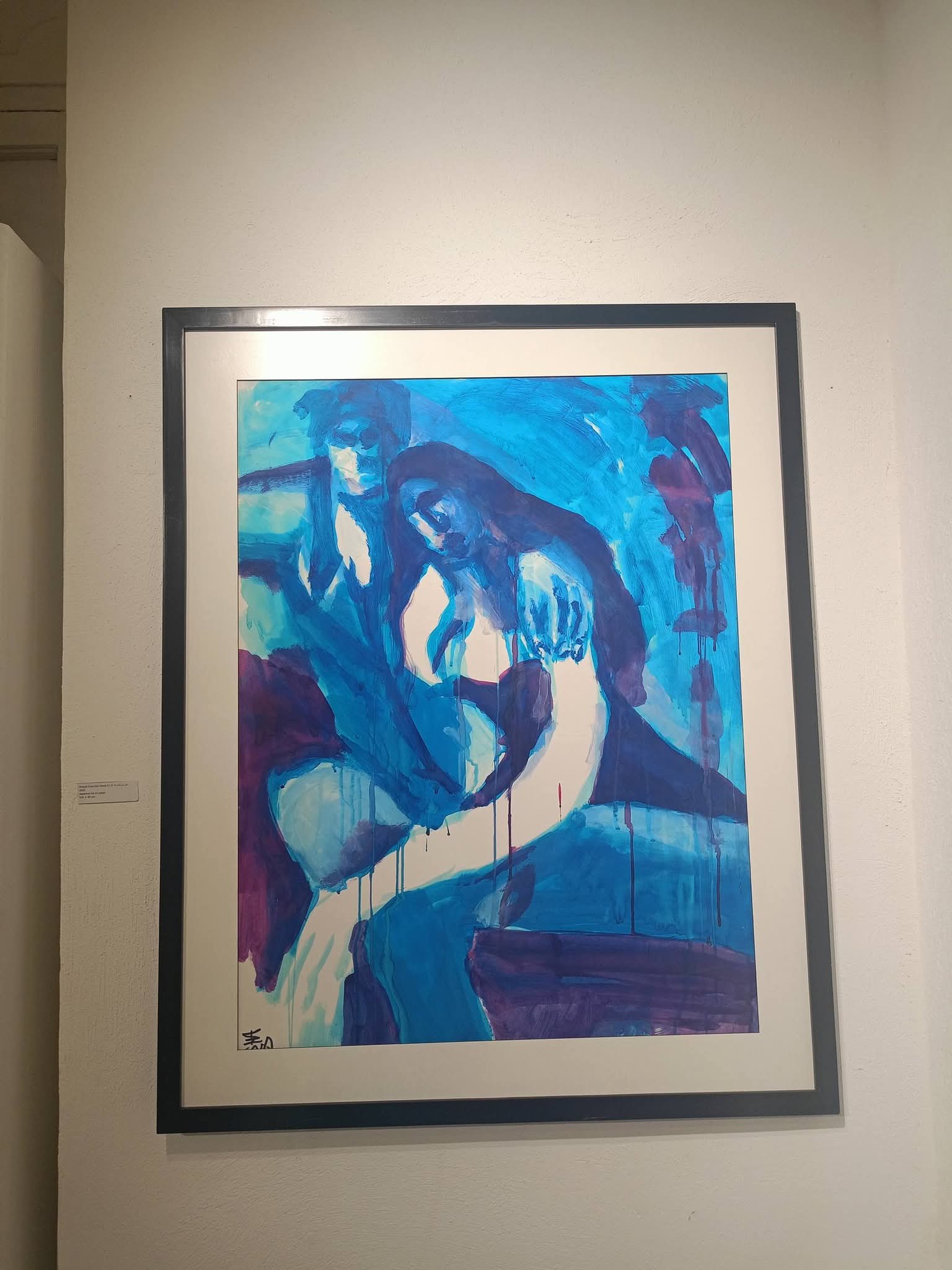
The programme will also feature The Rebel Series (WS in 1986), a contemporary art exhibition presenting the work of Adewale John at Adegbola Gallery, curated by Adebowale.
This artistic component introduces another dimension to the anniversary: the possibility of interpreting a literary legacy through a different creative language.
Soyinka’s writing has never been confined to a single form or intellectual territory. His work as a dramatist, poet, novelist, and public intellectual reflects an enduring engagement with the tensions between individual conscience and collective authority.
By placing contemporary visual art alongside archival documentation, the programme invites a dialogue between historical memory and present-day artistic responses.
The result is potentially more than a retrospective. It is an exploration of how the spirit of rebellion, artistic independence, and critical inquiry can acquire new meanings across generations.
A Legacy That Belongs to the Future
For eight years, Timeless Memories: Elastic Effects of Wole Soyinka has sought to preserve and reinterpret the life and intellectual legacy of one of Africa’s most influential literary figures.
The 2026 edition brings that mission into sharper focus by connecting historical research, public exhibition, film, illustration, and international scholarly discussion.
Adebowale has described the anniversary as an opportunity to reflect on the experiences and struggles behind Soyinka’s achievement. His central argument is that the responsibility of cultural remembrance extends beyond celebrating the destination to telling the story of the journey.
That distinction offers the programme its deepest meaning.
The Nobel Prize in Literature recognised Soyinka in 1986, but the significance of his work cannot be confined to the date of the award or the ceremony in Stockholm. Its continuing value rests in its capacity to provoke thought, challenge injustice, and keep difficult questions alive.
Ultimately, Ake to Stockholm is an invitation to reconsider how literary greatness is made and remembered. It connects the intimate landscape of childhood to the international recognition of an African writer, while reminding audiences that the most important journeys are measured not only by the honours they bring, but also by the ideas they leave behind.
As Lagos prepares to host the commemorative programme, the story of Wole Soyinka returns to the city not as a finished chapter, but as an evolving conversation between generations.
The Nobel Prize was a historic destination. The enduring journey is the life of the mind that continues long after the applause has faded.