 thesilkroadtoday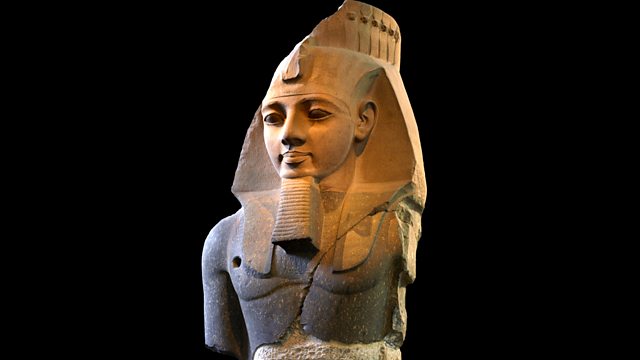
Ancient Egyptian civilization represents one of the longest continuous cultural experiences in human history. Its political and intellectual structure was built upon a deep connection between authority, religion, and philosophy. The Egyptian state was not governed solely by military or economic power but by a worldview that considered harmony between humanity and the cosmos the highest form of political legitimacy. The foundation of this system was the principle of Ma’at, which symbolized truth, balance, justice, and ethical stability. Ma’at was not only a moral idea but also a political philosophy that governed administration, law, and social behavior.
The king of ancient Egypt occupied a unique position in world history because kingship was associated with sacred meaning. The pharaoh was regarded as the earthly representative of the gods and the guardian of universal order. Egyptian political thought did not separate religion from governance. The survival of the state was believed to depend on the moral and ritual responsibility of the king, who was expected to protect agriculture, maintain irrigation systems, defend national borders, and ensure social justice.
Among the most remarkable rulers of ancient Egypt was Khufu, whose architectural legacy is the Great Pyramid at Giza Plateau. The pyramid is one of the most mysterious and scientifically impressive monuments ever built by humanity. It reflects the Egyptian belief in eternal life and the continuation of existence beyond death. The pyramid was not simply a burial structure but a cosmic symbol expressing the relationship between earth and sky.
Women held a distinctive position in ancient Egyptian society compared with many other ancient civilizations. Royal women could exercise political and religious influence, and in some exceptional cases, they ruled the country directly. The reign of Hatshepsut represents one of the most extraordinary examples of female political authority in world history. She adopted royal symbols traditionally associated with male kingship in order to strengthen her legitimacy. During her reign, Egypt organized a famous commercial expedition to the distant Land of Punt, bringing luxury goods, aromatic resins, and valuable resources that enhanced Egypt’s economic prosperity.
Artistic expression during Hatshepsut’s era reflected political ideology and religious symbolism. Temple reliefs depicted abundance, divine protection, and international trade networks. Egyptian art was not merely decorative but carried intellectual and cultural meaning.
Another powerful royal figure was Nefertiti, who lived during the religious transformation initiated by Akhenaten. This period attempted to emphasize the worship of the solar deity and introduced changes in religious representation. Nefertiti’s portrait remains one of the greatest artistic masterpieces of ancient civilization, symbolizing aesthetic perfection and royal dignity.
The last prominent queen of classical Egyptian history was Cleopatra VII. She was a highly educated ruler who mastered diplomacy, language, and political strategy. Her relationships with Roman leaders such as Julius Caesar and Mark Antony represent the intersection of Egyptian and Mediterranean political history during the final phase of independent Egyptian monarchy.
The administrative and noble class formed the backbone of the Egyptian state. The vizier was the highest official after the king and supervised justice, agriculture, taxation, and public works. Egyptian bureaucracy was highly advanced, relying on written documentation, record keeping, and organized state archives.
One of the greatest intellectual figures of ancient Egypt was Imhotep, who served as vizier and designed the Step Pyramid complex at Saqqara. Imhotep later became a legendary figure associated with medicine and wisdom.
The administrative inscriptions of Rekhmire provide valuable information about government organization during the reign of Thutmose III. These inscriptions describe taxation systems, trade management, and judicial responsibilities.
Nobility in ancient Egypt was not completely closed or rigid. Social mobility was possible through education, administrative competence, religious knowledge, and loyalty to the state. Many noble families controlled large agricultural estates and temple economies. Temples functioned as both religious and economic institutions, storing grain, organizing labor, and supporting intellectual activities.
Religion, knowledge, and political authority were deeply connected in Egyptian civilization. The priesthood preserved astronomical knowledge that helped develop the Egyptian calendar and agricultural planning. Observations of celestial movement were essential for predicting the annual Nile flooding cycle, which determined agricultural productivity.
Social ethics played a fundamental role in maintaining state stability. Egyptian tomb inscriptions frequently emphasized moral behavior, honesty, and social responsibility. The ideal official was expected to serve society with integrity and wisdom.
The longevity of ancient Egyptian civilization was partly due to this integration between political authority and ethical philosophy. The state was perceived as a living structure that must preserve order against chaos.
The legacy of Egyptian royal civilization continues to influence modern human thought. Egyptian monuments are not only archaeological artifacts but also philosophical symbols expressing humanity’s eternal search for meaning. The pyramids and temples represent the dialogue between mortality and eternity.
Ancient Egyptian royalty embodies a civilization that combined power with morality, knowledge with spirituality, and political authority with cosmic philosophy. The story of Egyptian kings, queens, and nobility is ultimately a story of humanity’s aspiration to transcend time and achieve permanence through culture, architecture, and ethical order.