 thesilkroadtoday
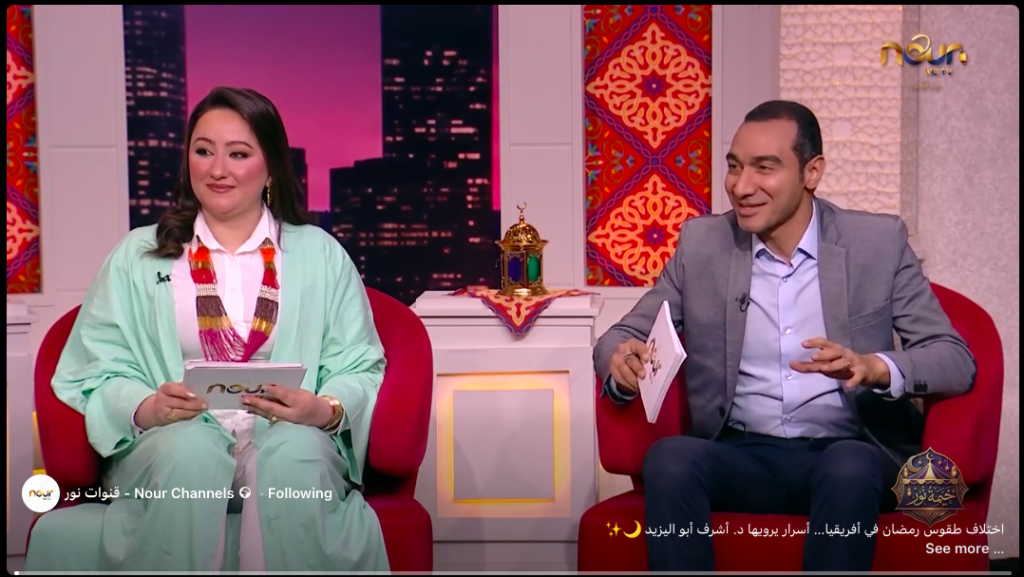
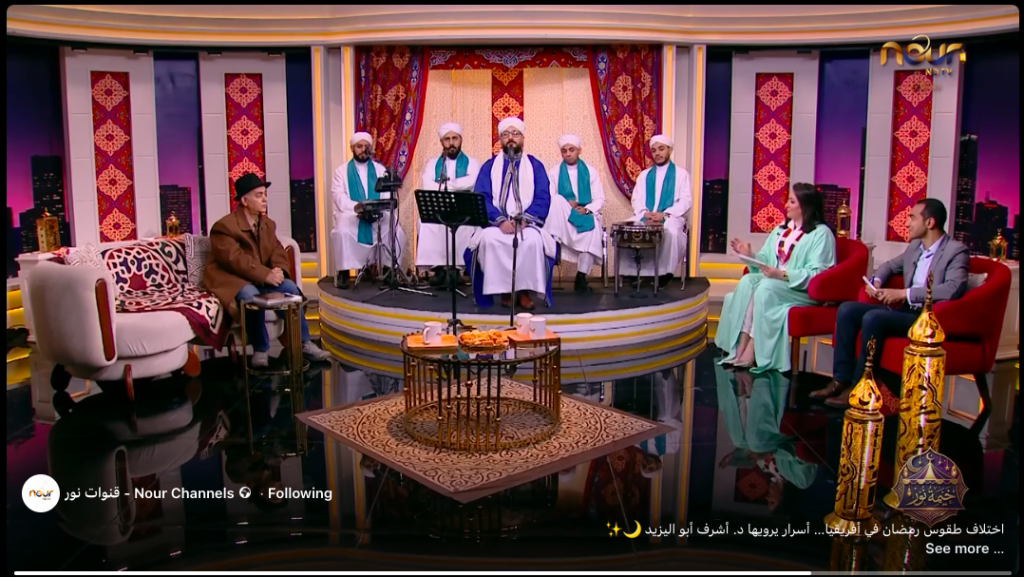
In a special episode of the program “Khaymat Noor” (A Tent of Light), presented by the media host Wael Suleiman and journalist Christina Ezzat, and prepared by writer Hossam Al-Awa’i, viewers were invited on a Ramadan journey around the world with the novelist, poet, and traveler Dr. Ashraf Aboul-Yazid. He recalled memories from his travels across Asia, Africa, and Europe, revealing how the holy month manifests itself in diverse cultures, and how the spirit of fasting can unite peoples who differ in language, color, and customs, yet meet at the moment of the call to prayer and in the shared meaning of abstaining in devotion and hope. Here are highlights from the evening of Khaymat Noor, both on air and behind the scenes.
The conversation began with a striking African stop in Togo, the small country stretching like a narrow ribbon from the Gulf of Guinea in the south to Burkina Faso in the north—like a domino piece between its neighbors Ghana and Benin. It was once divided among German, French, and British colonial powers before gaining independence in 1960.
The guest recounted his amazement when he stayed at a hotel near the border: moving from one room to another, his mobile phone would suddenly receive a welcome message from neighboring Ghana—an almost symbolic sign of overlapping geographies and intertwined destinies.
 In Togo, where Muslims form an influential minority concentrated in the north, Ramadan appears simple in its outward form yet deep in its meaning. Iftar tables rely on rice, maize, and peanut sauces, and solidarity is the most prominent theme. Sometimes the Tarawih prayers are held on sidewalks outside conference halls, creating a scene where official settings blend with spontaneous spirituality. Eid becomes a festive moment when villages wear their traditional garments and folk chants fill the air.
The guest also noted that the chanting segment in the studio reminded him of independence celebrations there, when groups representing different ethnicities performed cultural shows expressing their diverse roots—including Islamic roots linked to the legacy of the Mali Empire in West Africa.
From West Africa the discussion moved to Nigeria, the vast country of many ethnicities and religions. Christina asked whether Ramadan rituals there are more popular or more religious. The answer was that the Muslim-majority north turns Ramadan into a unifying season: cities like Kano and Sokoto glow at night, mosques fill with worshippers, and dishes such as kosai and porridge dominate the iftar tables, while charities become active in distributing zakat and food.
In the south, Muslims maintain their rituals within a multi-faith society where the Qur’anic recitation stands beside church bells. The Eid prayer in open squares becomes a majestic scene gathering thousands.
 The dialogue then paused at the experience of Muslims in South Africa, especially in Cape Town and Durban, where Malay heritage blends with African culture. Islamic influence arrived from the East through the Malay world and India, and a large Indian community also settled there. Among the notable figures who once lived in South Africa was Mahatma Gandhi. Tarawih prayers are held in historic mosques, and the tables feature foods influenced by curry and Eastern spices—reflecting Islam’s ability to interact with different cultures without losing its essence.
In Libya, Dr. Ashraf recalled a story of fasting thirty-one days, due to the different beginnings of lunar months between the countries he was traveling through—an experience that doubled the meaning of patience. He also noticed the close resemblance between Libyan and Egyptian customs: soup, couscous, and burek dominate the tables, family ties are an essential part of the month’s daily life, and mosques are filled with worshippers. The atmosphere becomes even more devout in the last ten days with spiritual retreat (i‘tikaf) and night prayers.
In Central Asia, Uzbekistan seemed to revive its Islamic past in Samarkand and Bukhara, where mosques are crowded with worshippers, simple meals of Uzbek bread and plov are served, and the reading of the Qur’an and helping the poor become central acts—spirituality extending from a deep civilizational memory.
In China, particularly in Xinjiang, some Muslims call Ramadan “Batchai.” Preparations begin with cleaning homes, decorating them with Qur’anic calligraphy, and covering mosques with new carpets. Fasting people often break their fast with dates, sweets, sweet tea, and watermelon, then perform the Maghrib prayer in the mosque before returning home to complete the meal with family. Despite different contexts, Ramadan among Muslim communities there appears close in spirit to its celebration in other Islamic countries, while maintaining clear cultural uniqueness.
In India, the guest recalled what Prof. Dr. Syed Jahangir described about Ramadan nights in Hyderabad: mosques are renovated and decorated, the sighting of the crescent moon is announced by specialized committees, and Tarawih prayers are filled with worshippers as various methods of completing the Qur’an are practiced. The famous dish Haleem dominates the iftar tables, alongside traditional foods and popular drinks. Nights—especially in the last ten days—turn into vibrant spaces of worship and life until the night of Eid, with its rituals of milk desserts, vermicelli, and festive gifts.
 From Asia and Africa the journey reached Europe, stopping in Tatarstan, where Islamic presence is renewed in Kazan. Mosques are filled with worshippers, and communal iftar tables are organized by both official and civic institutions, blending Islamic identity with Tatar traditions within the Russian Federation.
In Turkey, city rhythms change with the arrival of the month: minarets glow with illuminated messages of welcome, public iftar tents spread across squares, and the traditional mesaharati (drummer who wakes people for suhoor) echoes through old streets—combining popular joy with spiritual serenity.
Thus, the meeting was not merely a recounting of travel memories, but a wide human panorama affirming that Ramadan—despite differences in languages, cuisines, and rituals—remains a month that returns humanity to its essence: to family, solidarity, and tranquility. It is also that invisible thread connecting the hearts of fasting people from Togo to Tatarstan, from Kashgar in Xinjiang to Hyderabad in India, forming a spiritual unity that transcends borders and geography.