 thesilkroadtoday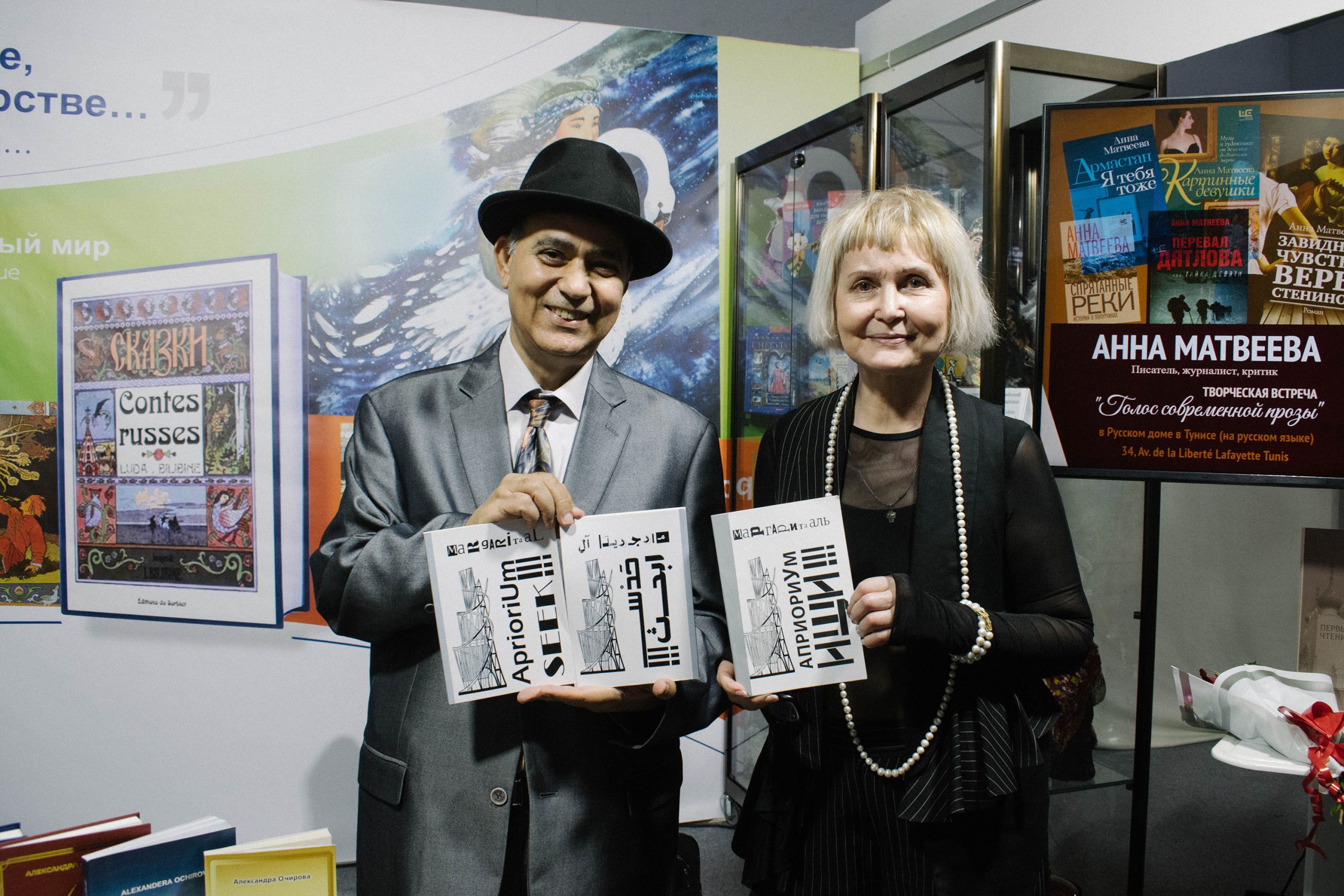
Literary Criticism Essay by Dr. Ashraf Dali, Poet, Translator, Publisher
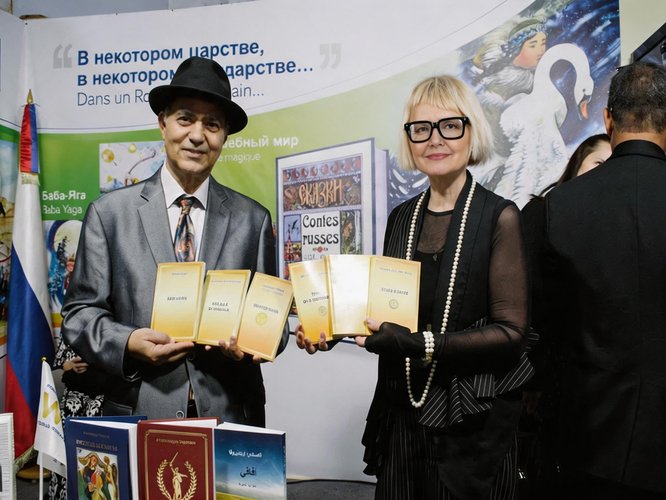
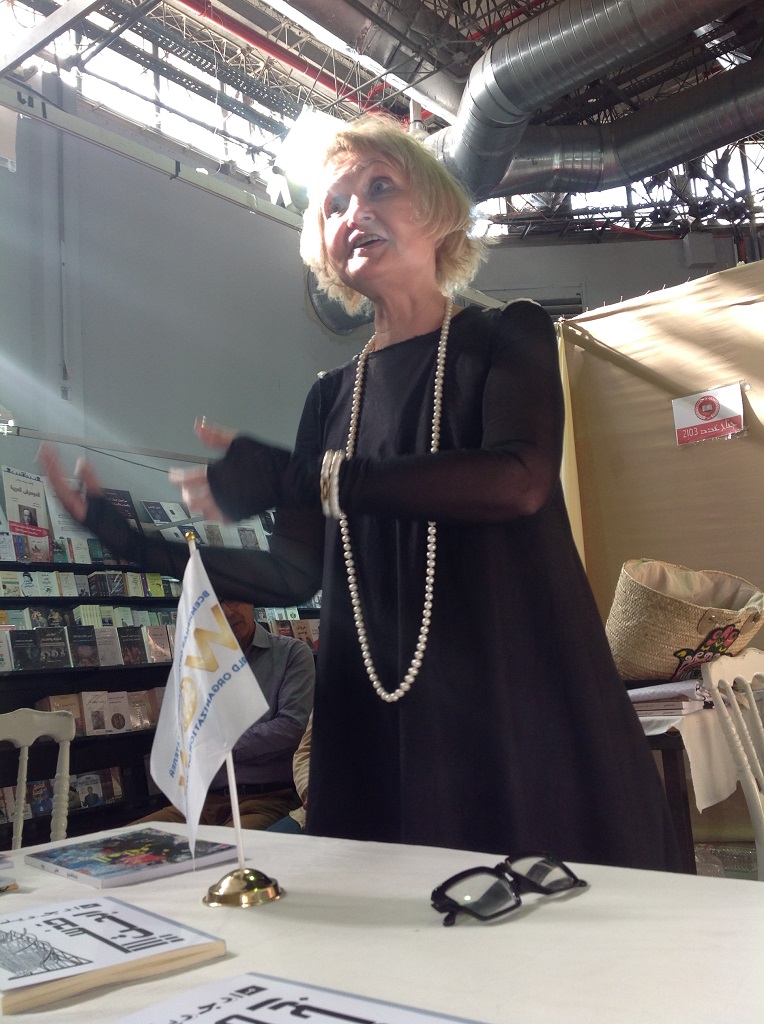
The presentations of Margarita Al’s book “Find. AprioriUm” were held as part of the Decade of World Languages (2026–2035) and the Year of the Russian Language (2026), proclaimed by the World Organization of Writers with the support of the Assembly of the Peoples of the World, at venues of the “World Literature Lounge” program: Russia (II Congress of the World Organization of Writers), Ghana (Ghana Writers’ Association, Russian House), Egypt (Russian House, British University in Cairo), and Tunisia (Tunis International Book Fair, Tunisian Writers’ Union, Russian House).
In the current cultural landscape, poetic texts gain special significance as an experience of overcoming the boundaries of traditional thinking, shaping new types of philosophy, language, and artistic communication. The book “Find AprioriUm” by Margarita Al is a striking example of such experience. This work unites the traditions of Russian avant-garde, the discoveries of the Silver Age, the philosophy of cosmism, and the experiments of poetic performance, and its emergence has become an event of both national and international scale. The book received a unique international fate: it has been translated into English and Arabic, published by the Egyptian publishing house Silk Road, and presented at key venues in Russia, Ghana, Egypt, and Tunisia, corresponding to the broad dialogue of cultures within the framework of the Decade of World Languages.
From the very first pages, it becomes clear that the reader encounters a genre innovation: poetic performance becomes an integral part of the content and form of the book. In “AprioriUm” form transforms into a space of bold experimentation at the level of sound, rhythm, graphics, deconstruction and reconstruction of layers of meaning. This model relates Margarita Al’s poetics to the original line of Russian avant-garde—for example, to the practices of Khlebnikov, Burliuk, and Mayakovsky—though Al’s unique artistic intention reaches a level of individual ontological transformation of the subject, constructing a personal trajectory of modernization of consciousness and worldview.
The composition of the book is built on the principle of the five fundamental states of matter: solid, liquid, gas, plasma, and Bose–Einstein condensate. At the same time, the eight-chapter structure—Phantasmagoria, Frustration, Demassification, Discord, Metamorphoses, Agape, Epiphany, Synergy—is filled with stages of poetic and mental evolution, where each chapter becomes an energetic level through which the author’s creative intent moves. Each of these categories becomes a distinct poetic state, in which the reader undergoes a personal transmutation, a vector of inner and outer search, philosophical reflection, and a striving toward the integration of scattered meanings.
Within Margarita Al’s poetic system, the word assumes the function of creation, forming a new point of support within a person’s consciousness. Through the use of the Archimedes motif—the search for a fulcrum to transform reality—the poet puts forward the idea that the basis of any cosmos is an inner vertical, support on oneself, a personal algorithm for the movement toward truth. The ladder of transformations self-organizing in the book moves through the stages of trust in the world and the first spark (phantasmagoria), pain and shattered illusions (frustration), solitude as the condition of authenticity (demassification), energy of dissent (discord), tempering of transitions (metamorphoses), a universe of love (agape), epiphany of being (epiphany), and ultimate union with eternity (synergy).
In these explorations, there occurs an encounter of traditions from East and West, a juxtaposition of human will with the stratum of the eternal, and the rise of new meanings through association and intuition. Language echoes the trajectory of matter, moving from uncertainty to complex internal structure, from the primary element to a metaphysical form of dialogue between the human and destiny.
Margarita Al’s style is based on constant splitting and reassembling of words, meanings, and rhythms. The minimalism of the outer form is only a surface layer, hiding a complex work of decomposing the core of the language into minimal semantic units. The key neologism “apriorium” becomes a term that combines both apriorism, intellectual discipline, and a special state of spirit, serving as the source code for all new poetry. This is a living language laboratory, where aesthetics are continually enriched by the experience of subsequent generations of avant-garde artists who learned to perceive poetry as a dynamic field of collision for semantic, sonic, and visual energies.
The influence of Khlebnikov is not felt in direct imitation but in the profound internal development of his strategies: the avant-garde is shifted from the social realm into the sphere of individual emotional and philosophical experience.
The phrase “and I scream out words / blasting sound through space / scream as death screams / through the heavens…” highlights the expressive, sonic, and emotional power of the avant-garde poetic act. The expressive verb “scream” is repeated multiple times, creating the inner rhythm of the line and amplifying the sound, generating the sense of a rising wave. This is typical for free verse and poetic performance—repetition marks not only intonation but is also an acoustic marker of breaking through conventional poetic structure.
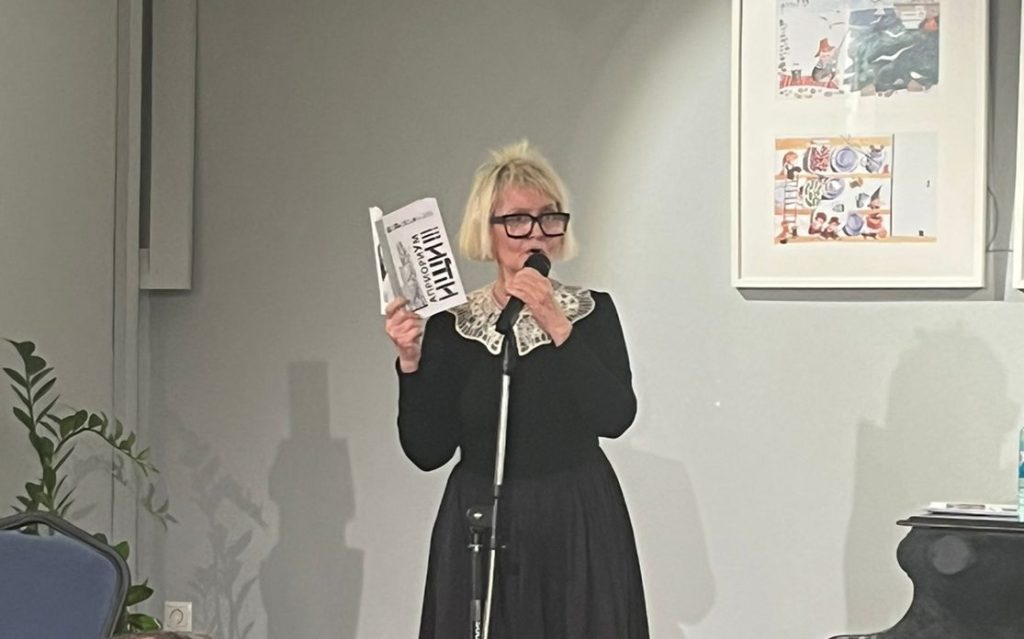 The combination “blasting sound through space” is a vivid metaphor in which “sound” is depicted as a physical element that can be destroyed, pierced, expanded. In Margarita Al’s poetics, sound becomes an independent substance, carrying an energetic charge, inherently linked to perception at the level of feeling, hearing, pain, and inner impulse. Here, poetry crosses the boundary of the text, acquires the qualities of a total artistic act, where the word materializes in space, literally “breaking into” it.
The image “I scream as death screams / through the heavens…” carries ambivalent meanings: on one hand, the scream here is likened to the ultimate, transcendent sound not limited by the human body; on the other, it is the poet’s attempt to break through to the highest, fundamental existence using pain, protest, ecstatic outcry. The phrase “as death screams” transfers the poetic act to the existential plane, raising speech to utmost confessionality, where the voice is not a private expression, but a voice at the edge, the voice of the cosmos itself. The symbolism of “the heavens” supplements this line, pulling the image into a higher, almost metaphysical dimension.
Thus, this fragment demonstrates the organic connection between poetic outcry, the corporeality of speech, the manner of performance, and deep metaphysical meaning. Margarita Al’s poetic word here becomes not merely a means of communication but an energy of overcoming the laws of reality