 thesilkroadtoday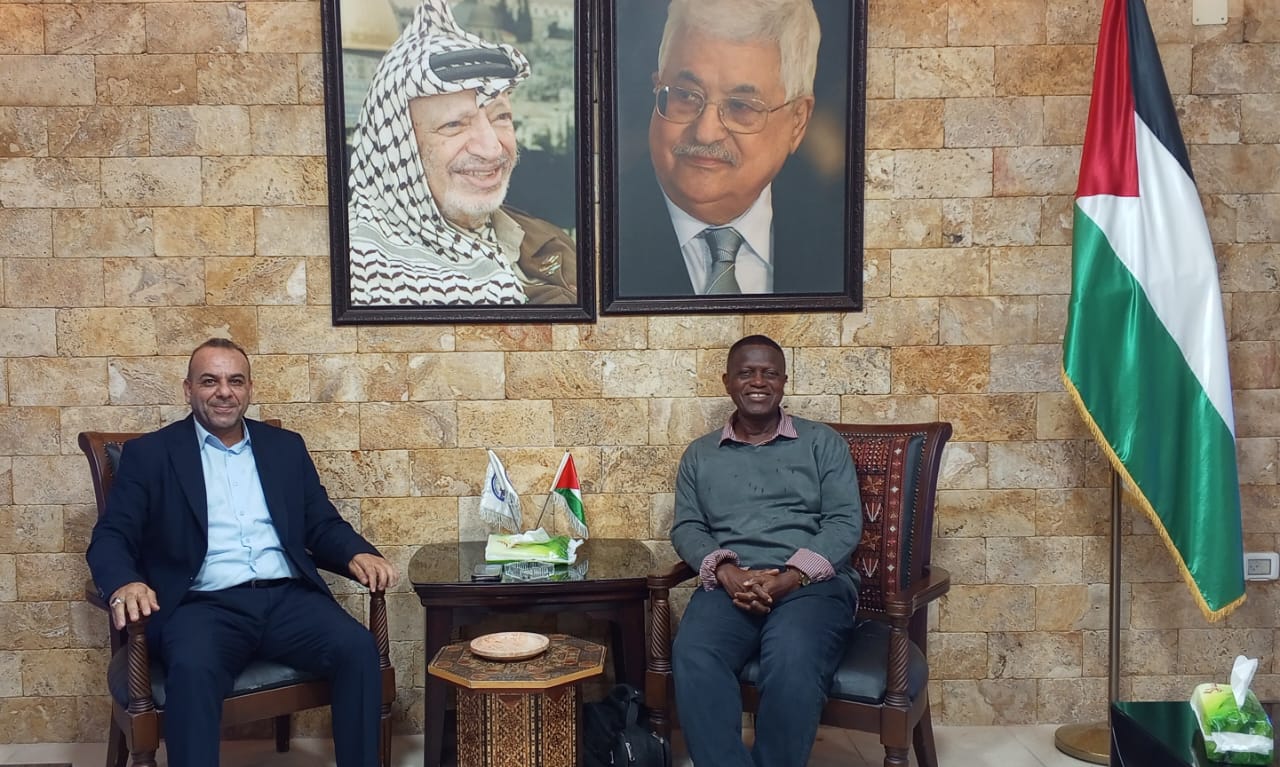
The young Israeli female soldier, who interrogated me at the Israeli/Palestinian border on that fateful day, was obviously in good spirits.
After a few questions bordering on my profession, my mission in Palestine, the status of my host among others, she flashed me a smile and said; “I will give you an extra month for your visit because you are a writer. I like writers.”
I thanked her as I collected the visa which came in the form of a printed entry slip which was not stamped in my passport. “Make sure you keep your entry slip with your passport. You will need it at the checkpoints inside Palestine.” she added.
As I waited for my luggage, I wondered why a visitor to Palestine would have to be issued a visa by Israel before being allowed into Palestine.
As an answer, my host, Mourad Al Amin, the Secretary General of the Palestinian Writers Union said; “Palestine is not allowed to issue her own entry visas. That’s because the only way to enter the West Bank or Gaza Strip is through Israeli or Jordanian border control points. Our airport has been demolished by Israel. We are a country under occupation by Israel.” my friend sighed.
“What about the check points inside Palestine as alluded to by the Israeli lady soldier?” I asked.
My friend shook his head again; “ That is another terrible development. The Israelis have erected multiple gates which we call ‘Iron gates’ on our land. These gates, which you will see during your trip, have deprived Palestinians free movement from one community to the other as the Israelis usually close the gates as they like” Mourad said.
After a while, I noticed that unlike other luggage that had already been released to their owners, mine was still being scanned by one huge scanning machine for the umpteenth time.
Obviously worried about the development, Mourad asked me what was in my bag.
“Books, personal wears and some souvenirs” I replied. Suddenly, I remembered the small package of gari and groundnut which I always packed on my trips as a ‘stop gap’ for delayed or unfavourable meals. I wondered if that was the cause of the extra scanning. Luckily after another round of scanning, my luggage was finally released. I heaved a sigh of relief; glad that my gari was not confiscated as had been the case on a few occasions.
We encountered more youthful armed Israeli soldiers of both genders as we later crossed the King Hussein/Allenby Bridge on the River Jordan into Palestine. “Those soldiers are mostly students undergoing compulsory military training years.” Mourad said.
I was made to understand that in Israel, military training is compulsory for able bodied male and female students. When Israeli students finish high school, most must serve two or three years in the country’s defence forces. The basic training lasts about four months and participants learn the values and fundamentals of combat soldiers, including routine and military discipline, physical training, field weeks, weapons training and shooting. Once the training is complete, they officially join the ranks of the military. From that point, the new conscripts are assigned a role in a brigade from combat to intelligence to medical, drivers, cooks or administration.
I had come to Palestine as a guest of the Palestinian Writers Union which has as far back as November 7 2022 signed an agreement with the Pan African Writers Association (PAWA). In the agreement, both organizations agreed among other things, to foster mutual literary and cultural awareness between African and Palestinian writers.
In addition to visits to some Palestinian government and NGO officials including the Prime Minister, H.E. Dr Mohammad Mustafa, my itinerary would also take me to the West Bank, including Palestinian cities such as Jericho, Ramallah, Bethlehem, Hebron, Nablus, and Jenin.
“What about Gaza?” I asked my friend, eager to also have first hand information about the alleged horrors in the largest Palestinian city. I was however informed that Gaza was at that time closed to all Palestinians and visitors for security reasons. “The only people permitted to visit the place at this time are relief organizations and war correspondents with special permits. ” Mourad said.
I was welcomed on my arrival at the Queen Alia International Airport, Amman, Jordan, after my flight from Accra, Ghana via Dubai by Mourad. From there, an official from the Palestinian embassy in Jordan had hurriedly driven us to the King Hussein/Allenby Bridge which connects Jordan with the Israeli-occupied West bank in a bid to reach the bridge before its closure. “The Israelis usually close the bridge by two in the afternoon after which, nobody can enter Palestine until the following day.” Mourad said.
It was drizzling as we descended below sea level into the Jordan valley, and then into Jericho where the afternoon sun shimmered over the lowland; a storied threshold between desert and hill country, a city first conquered by Joshua and forever etched into biblical history.
Considered the oldest city in the world because it has been continuously inhabited for over 11,000 years, Jericho is also the lowest continuously inhabited city on Earth, sitting 258 part-meters (846 feet) below sea level.
According to UNESCO archives, Jericho’s fertile land and natural springs have supported human habitation for millennia, making it a key agricultural hub and a crossroads for trade routes connecting Africa, Asia, and Arabia.
“Welcome to Palestine” Mourad said as we hugged each other. After four years of intensive efforts, his dream of bringing me to his native Palestine had now materialized and he was beside himself with joy.
After a short refreshment of coffee and currant pie, Mourad gave me a quick tour of Jericho which included showing me the Sycamore tree where according to biblical accounts, Jesus encountered Zacchaeus the tax collector.
As our vehicle later climbed the beautiful countryside with its rolling hills and cascading valleys, on our way to Ramallah, it was easy to feel the rising humidity and the cooler elevation. Far above the golden orange horizon and serene valleys, one could see the awesome line of mountains as they rolled into each other, merging into a bright April afternoon. Suddenly, we were descending again, down, down into a plain of corn, citrus and vegetable fields – and then up again.
From here the road climbed upwards, with deep and sharply inclined canyons on both sides. It is believed that the road with its switchbacks and blind turns, where brigands could vanish into the rocks as quickly as they struck, was the biblical setting of the story of the Good Samaritan.
We encountered check points, ‘Iron Gates’ manned by Israeli soldiers; barriers between Palestinian communities within Palestinian territory. Also encountered were debris of Palestinian houses said to have been demolished by the Israelis who claimed that the houses were on Israeli land.
After gliding down the serpentine cliff hanging road from Jericho for another half an hour, past more Israeli check points and demolished settlers houses, when the last rays of the afternoon was easing off the surrounding hills and valleys,we finally arrived in Ramallah; ‘The Gateway to Palestine’.
To access Ramallah, we had to pass another ‘Iron Gate’ which had been erected by the Israelis. While Ramallah was on the right side of the road from Jericho, the left side had been cut off by a thick concrete wall, on top of which were barbed wire and security lights. Behind the wall were an array of large brown roofed modern buildings. “That is an Israeli settlement which was cut off from our land. Most of the buildings are occupied by Israeli soldiers.” said Mourad.
Ramallah, is a growing and cosmopolitan city, located approximately 16 km north of Jerusalem in the Palestinian West Bank. As the seat of the Government of the State of Palestine, the city is a base for many major organizations, including NGOs and banks.
The day after my arrival in Ramallah was a very busy one. After breakfast at the Millennium Hotel where I had been lodged, I was picked up at 9am for the day’s activities.
These included; visits to the Prime Minister, His Excellency, Dr Mohammad Mustafa, the Governor of Ramallah and Al-Bireh; Dr Laila Ghannam, the Director of the Palestine Research Centre, Dr GM Jarrer and the Director of the Palestine Library Authority, Dr Marwan Awartani.
Other important visits were to the office of the Palestinian Liberation Organization (PLO), the Mahmoud Darwish Museum which was established in memory of the Palestinian Poet laureate; Mahmoud Darwish (13 March 1941- 9 August 2008) as well as Mr Raed Abu Al Homos, Minister of the Affairs of Detainees and Ex Detainees among others.
In his remarks, the Prime Minister, a former World Bank official confirmed that efforts by the Palestine to have its own currency has been frustrated by Israel and her co-conspirators. As he put it; “We have been forced to transact our business in three different currencies; the Israeli’s Shekel, the Jordanian Dinar as well as the American Dollar.”
The Prime Minister also stated that about 80 per cent of Gaza city had been destroyed by the Israelis.
To repair the damage, a conservative estimate of 72 billion dollars would be required. In addition, Dr Mustafa stated that the Israelis had turned Palestine into a ‘Prison’ with the illegal erection of gates and military posts in the country. He also accused the Israelis of destroying the country’s airport, thus effectively cutting off direct access to the international community. Said the Prime Minister; “As you have observed, Palestine is the only country in the world where Visas to visit the country are issued by another country.”
The Minister in charge of Detainees and Ex Detainees also spoke of the deplorable conditions of the detainees and former detainees; “ We currently have about 10,500 Palestinians including 75 women and 25 children in Israeli prisons.” According to the Minister, the average age of detainees who were arrested for fighting for their rights is 15-25 years.
On the erection of ‘Iron Gates’ on Palestinian land, the Minister said; “ It is difficult for us to plan our movement because the gates can be closed at any time by the Israelis. Some of my people usually have to sleep in their vehicles any time they are trapped at the gates when returning from their journeys.”
I was also a victim of the closure of the ‘Iron Gates’ when on the second day of my visit, my trip to Bethlehem which was to commence at 7am had to be postponed till 10am because of the closure of all the gates leading to Ramallah by the Israelis. Even at that time of the day, it took the driver of my vehicle another one hour before he could find an exit from Ramallah through one of the back streets.
On our way to Bethlehem, we passed many Palestinian towns such as Kalandia, Aram, Al-Uebediya among others. In every town, we passed Israeli check points with the ubiquitous ‘Iron Gates’ as well as long stretches of concrete walls that had been erected by the Israelis to cut off Palestinian territory from Jerusalem. The wall which also cut off direct movement from the Palestinian capital of Ramallah to Bethlehem ( a distance of 30 km) had turned the usual 30 minutes journey into a tedious journey that could take 2 hours or more.
It is impossible to miss the separation wall when traveling in the West Bank. It is a hulking, concrete snake that twists and turns its way throughout the land, lining highways, surrounding villages, and cutting through cities.
Although Israel cites the wall as an effective security measure, most Palestinians and anti-occupation advocates view it as a tool of apartheid that undermines the possibility for a future Palestinian state.
The route of the wall was largely determined by the locations of Israeli settlements within the West Bank (and here it is important to note that Israeli settlements in the West Bank are considered illegal by international humanitarian law).
On 9 July 2004, the International Court of Justice (ICJ), which is seated in The Hague, gave its advisory opinion on the question of the legality of the Separation Barrier and its route.
The Court found that Israel must cease construction of the barrier, dismantle the parts of the barrier that were built inside the West Bank, and compensate the Palestinians who suffered losses as a result of the barrier. Despite this legal pronouncement, Israel had continued to build separation walls all over Palestinian territory.
As we continued to climb the winding road to Bethlehem, the precarious cliffs of Wadi Qelt came to sight with the St George’s Monastery, a grey colored ancient building clinging to the rock face.
Deep down to the right was a frighteningly deep canyon that holds significant biblical associations, traditionally identified as the “valley of the shadow of death” referenced in Psalm 23 due to its foreboding gorges and historical dangers from bandits and floods. According to Mourad, the locals call it; ‘The Fire Valley’
We entered Bethlehem, a charming city with great religious and historical significance by midday and headed to the Nativity Church, the birthplace of Jesus and a world heritage site. As I toured the church grounds that oozed with much history and legend, I walked tenderly, stepping gingerly on the stone floors overawed by the aura and spiritual atmosphere of the place.
To enter the crypt where Jesus was born, I had to squeeze through the narrow door; ‘The Humble Door.’ When I informed my hosts of my desire to say a few words of prayer, one of the tour guides, Mathew, a witty middle-aged man, gave me a lighted candle. “This place is very close to God. Pray and ask him to give you two million dollars” he said as we all burst into laughter.
I went back the way I came; past multiple Israeli check points, past ‘Iron Gates’ as well as concrete dividing walls with art works conveying messages of solidarity with the people of Palestine.
My visit to Palestine was more than geography or tourism; it was an emotional journey, a painful experience of an occupied land under the iron grips of a Zionist aggressor