 thesilkroadtoday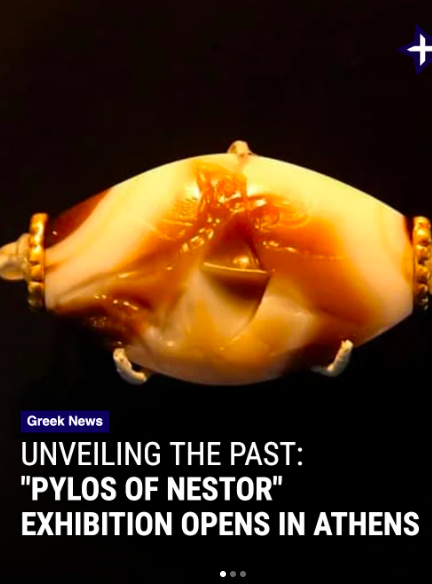
By Dr. Ashraf Aboul-Yazid
A remarkable message from Greek academic and writer Yannis Fikas has shed new light on one of the most fascinating chapters of ancient Mediterranean history, revealing how archaeology continues to confirm the deep cultural connections between Ancient Egypt and Mycenaean Greece.
In his message, Fikas shared an image (SEEN AT TOP) from the exhibition “Pylos of Nestor” at the National Archaeological Museum in Athens, drawing attention to two extraordinary gold pendants discovered in the ancient Mycenaean kingdom of Pylos. The artifacts depict Hathor, one of the most revered goddesses of Ancient Egypt, providing tangible evidence of the interactions that linked the Nile Valley with the Aegean world more than three and a half millennia ago.

“Shows the strong connections between ancient Egypt and Greece,” Fikas wrote, highlighting the significance of the discovery.
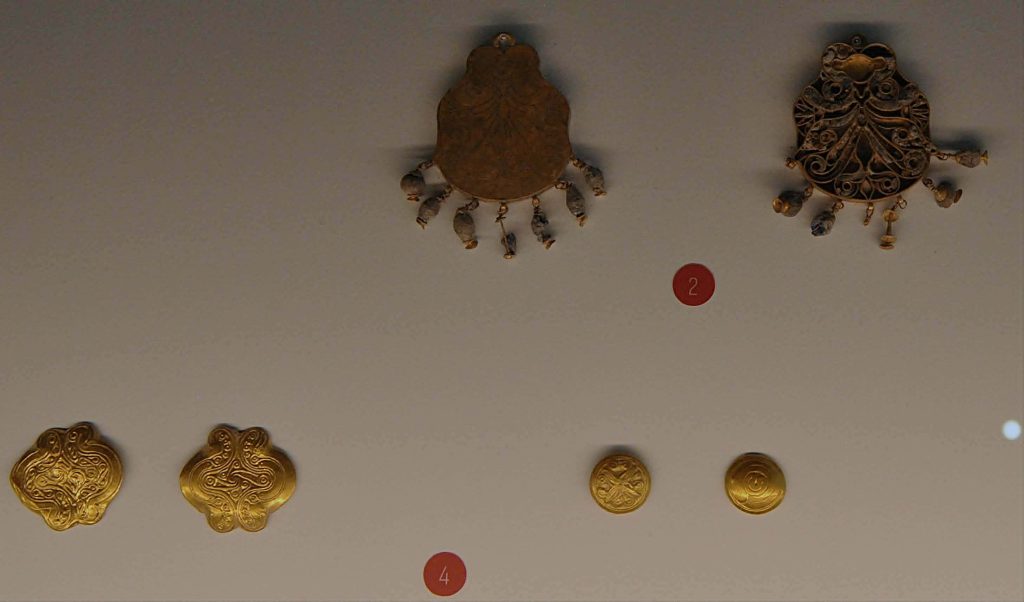
The pendants were unearthed in Tholos Tomb VI, one of the elite burial sites associated with the Mycenaean civilization. Dating from approximately 1630–1450 BCE, the two gold periapta portray the Egyptian goddess Hathor engraved on one side, while the reverse side was crafted using the sophisticated cloisonné technique. Their presence in a royal Mycenaean context demonstrates that Egyptian religious imagery had crossed the Mediterranean and found appreciation among the ruling classes of Bronze Age Greece.
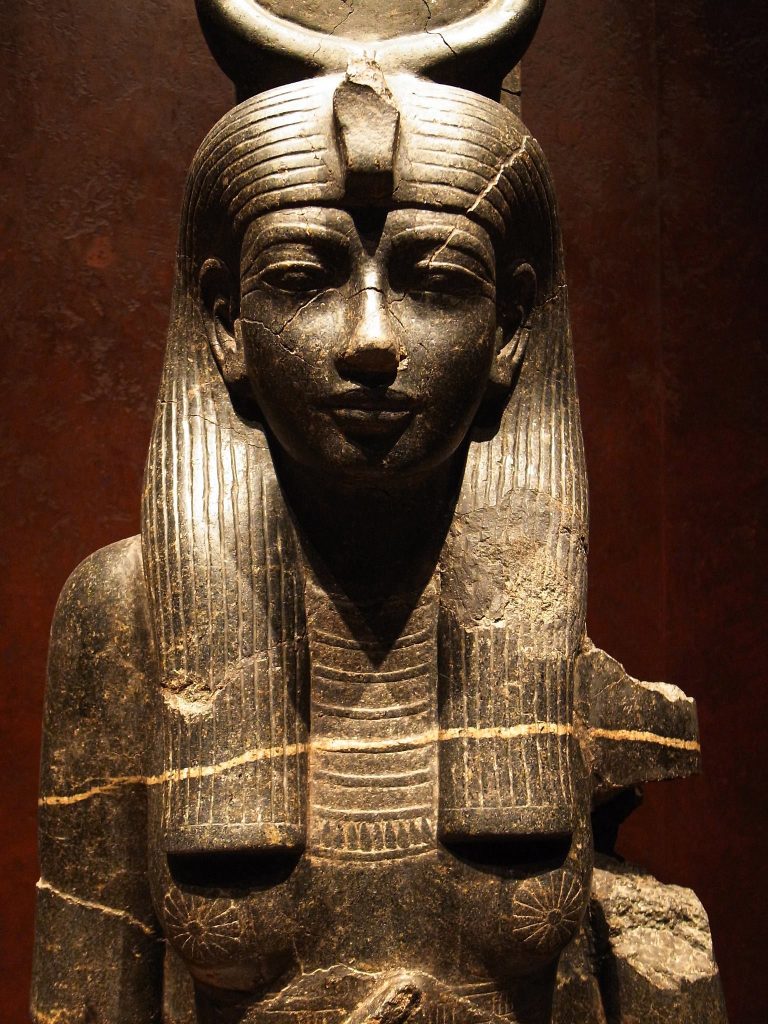
Hathor occupied a central place in Egyptian belief. Goddess of love, beauty, motherhood, music, and joy, she was also regarded as a divine protector and a guide of souls. Her image appearing in a Mycenaean tomb suggests not merely commercial exchange but also the transmission of artistic motifs, religious symbolism, and cultural ideas between two of the ancient world’s greatest civilizations.
The exhibition presents other luxurious objects discovered alongside the Hathor pendants, including a gold pendant with an engraved rosette and lapis lazuli inlay, two gold cloisonné beads similarly decorated with lapis lazuli, four gold-covered bone buttons with incised decoration, and two gold bee-shaped ornaments. The use of lapis lazuli is especially significant, as the precious stone reached the Mediterranean through long-distance trade networks extending across the Near East and beyond.
Together, these objects illustrate a world far more interconnected than often imagined. Long before the rise of classical Greece, merchants, diplomats, artisans, and travelers moved ideas and luxury goods across seas and continents. The kingdom of Pylos, traditionally associated with the legendary King Nestor of Homeric fame, stood at the crossroads of these exchanges.
For Egypt and Greece, the Hathor pendants are more than archaeological treasures. They are symbols of a shared historical heritage that predates the classical age by many centuries. They remind us that the Mediterranean was not a barrier separating civilizations but a bridge that connected them.
Today, as scholars continue to uncover evidence of ancient interactions, discoveries such as the Hathor pendants from Pylos reinforce an enduring truth: the dialogue between Egyptian and Greek civilizations was already flourishing during the Bronze Age, leaving traces in gold that still speak across the millennia.
The message from Yannis Fikas serves as a timely reminder that cultural exchange is not a modern phenomenon. More than 3,500 years ago, the image of an Egyptian goddess found its way into the heart of a Mycenaean kingdom, where it was treasured enough to accompany its owner into eternity.
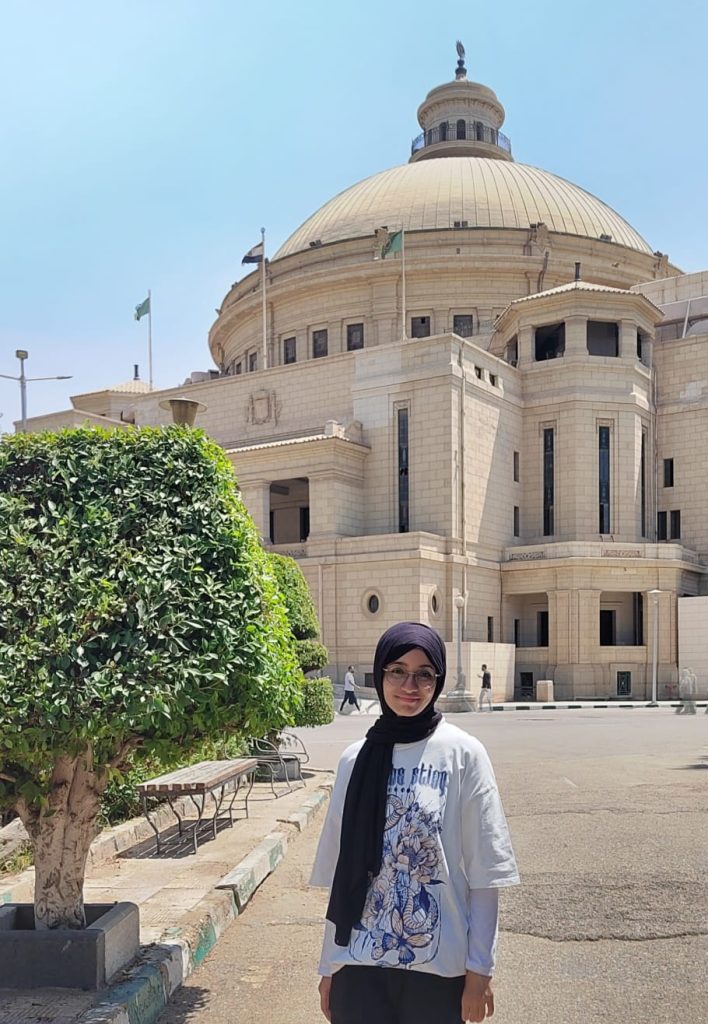
The discovery also resonated with a new generation of Egyptian scholars. Houda Ashraf Aboul-Yazid, a student of Ancient Egyptian Archaeology at Cairo University, expressed her admiration for the Hathor pendants and their historical significance. She noted that finding representations of an Egyptian goddess in a Mycenaean royal burial context provides compelling evidence of the cultural and artistic influence Ancient Egypt exercised across the Mediterranean during the Bronze Age. For her, the artifacts serve as a powerful reminder that the civilizations of Egypt and Greece were connected through networks of exchange, dialogue, and mutual appreciation long before the classical era. Such discoveries, she believes, help modern researchers better understand the shared heritage that linked the ancient peoples of the Mediterranean world