 thesilkroadtoday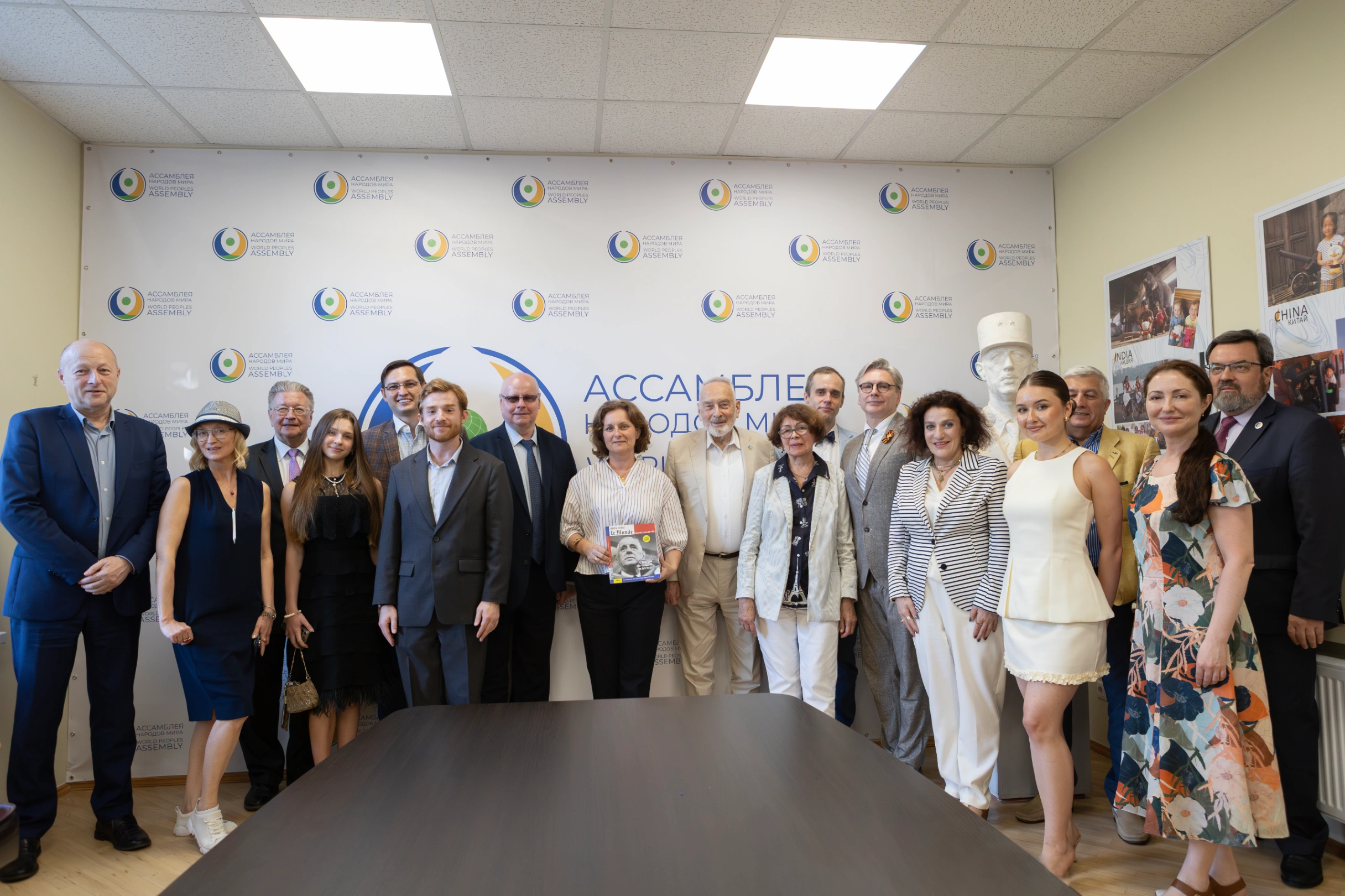
What was Discussed at the International Forum “Charles de Gaulle and the Spirit of Dialogue” at the World Peoples Assembly: National Sovereignty, a Multipolar World, and the Role of Public Diplomacy
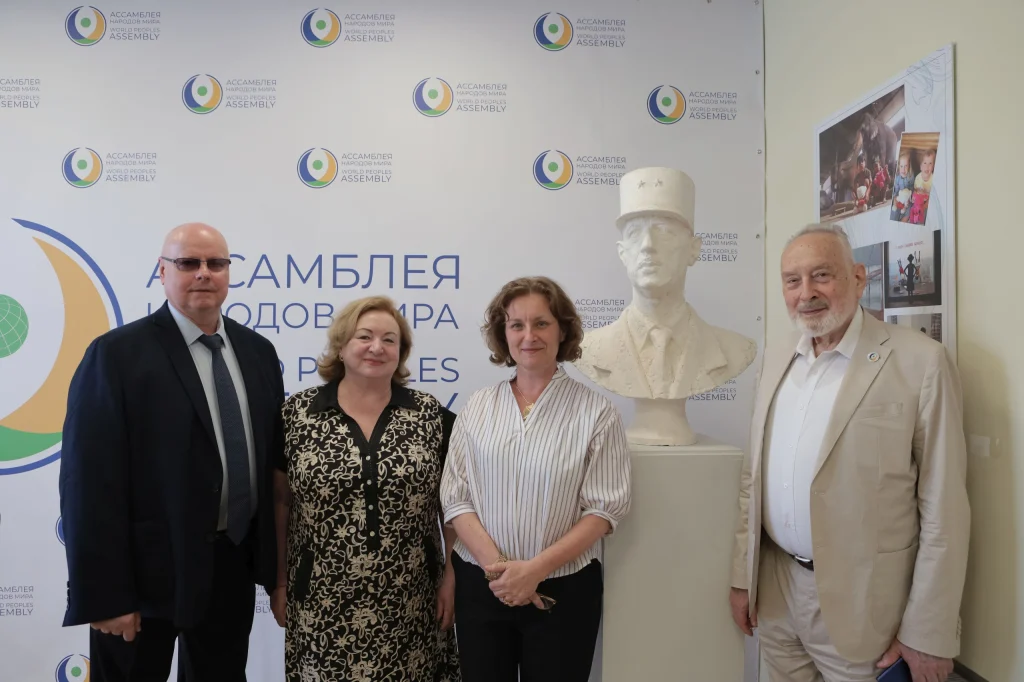
The International public forum “Charles de Gaulle and the Spirit of Dialogue” was held in Moscow at the headquarters of World Peoples Assembly on June 30, 2026. The event, timed to coincide with the 60th anniversary of General Charles de Gaulle’s historic visit to the USSR, brought together over 40 participants from 11 countries — France, the United States, Italy, Bulgaria, Kazakhstan, Kyrgyzstan, Moldova, Belarus, and others.
The main issues discussed at the forum included:
- The geopolitical legacy of Charles de Gaulle: from the idea of a Europe from Lisbon to Vladivostok to the architecture of a multipolar world;
- National sovereignty and the right of peoples to self-determination as inalienable foundations of international law, the promotion of Eurasian dialogue, and a multipolar world;
- Overcoming the remnants of unipolarity: the historical lessons of 1966 and the strategic prospects for equitable cooperation among states in the 21st century;
- The sacred memory of Victory: the combat brotherhood of the anti-Hitler coalition and the phenomenon of the “Normandie-Niemen” fighter regiment as a symbol of unity among peoples in the fight against Nazism;
- The European Resistance movement: lessons in solidarity and preserving the memory of heroes in the fight against Nazism;
- Countering the falsification of World War II history: defending historical truth as a mechanism for strengthening trust between states;
- Cultural and historical heritage as a tool for international mutual understanding: the role of museums, archives, and educational projects in preserving memory;
- Public diplomacy as a tool for creating spaces for open dialogue, peacebuilding, and strengthening mutual understanding among peoples;
- Consolidation of civil society, expert, and youth circles in promoting the ideas of sovereign development and equitable dialogue among civilizations;
- Development of international public initiatives in the sphere of historical memory: prospects and tasks of the new dialogue platform “Eurasian De Gaulle Readings”;
- Humanitarian and cultural cooperation in the Eurasian space: new formats of public diplomacy and the role of non-governmental organizations.
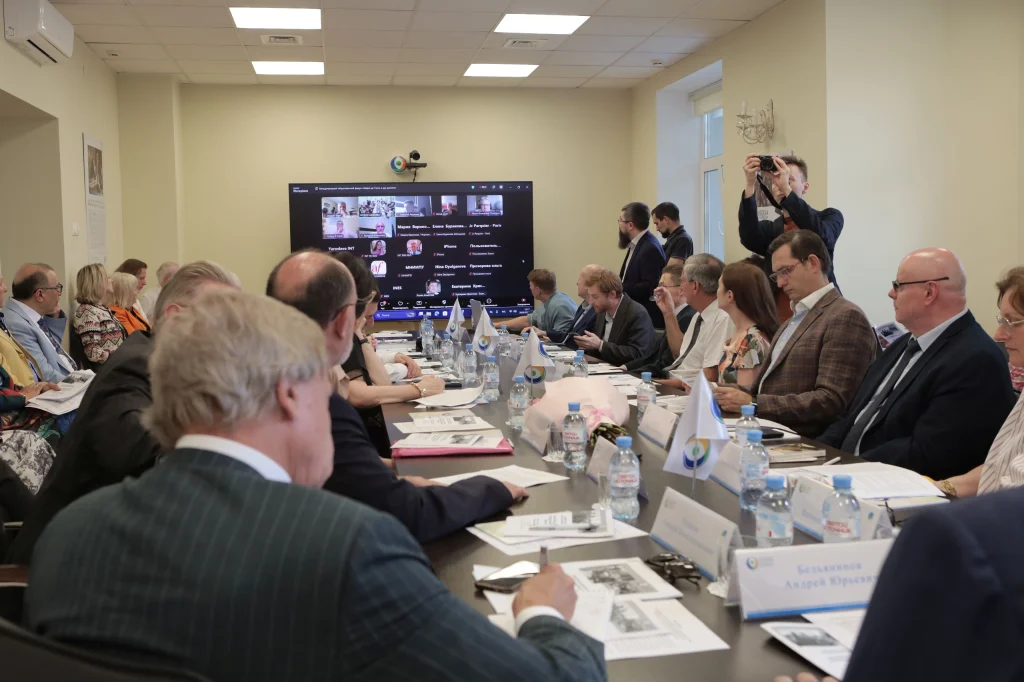
Moderators of the discussion:
- Andrei Belyaninov — Secretary-General of the World Peoples Assembly;
- Elena Perroud — public figure, advisor to French President Jacques Chirac in 1995–2007, expert on Russian-French relations (France);
- Valery Ruzin — Deputy Secretary-General of the World Peoples Assembly.
Opening the forum, Andrei Belyaninov noted:
– The activities of the World Peoples Assembly have traditionally been aimed at creating spaces for open dialogue, exchanging experiences, and promoting international initiatives. In the 21st century, when the objective process of forming a multipolar world encounters resistance from proponents of the unipolar model, the Assembly turns to the historical legacy of Charles de Gaulle.
It was de Gaulle who, 60 years ago, proposed the concept of a Europe from the Atlantic to the Urals, and later from Lisbon to Vladivostok, affirming the possibility of constructive dialogue while respecting national sovereignty and the right of peoples to self-determination. For the Assembly, these ideas become the ideological and value-based foundation for the development of public diplomacy in the Eurasian space. Preserving the memory of the feat of the anti-Hitler coalition, the legendary ‘Normandie-Niemen’ unit, and the European partisan movement is seen by the Assembly not merely as a historical task, but as a crucial mechanism for strengthening trust among peoples and countering the falsification of history.”
At the opening of the forum, a presentation was also made of the special project “General de Gaulle’s Visit to the Soviet Union” on the “History Network” media platform, presented by Igor Gorodnichy — General Director of Alliance Media Center LLC, creator of the “History Network” media platform.
Russian Senator and Chairman of the Commission on Information Policy and Interaction with the Media of the Federation Council of the Federal Assembly of the Russian Federation, Alexey Pushkov, in his speech emphasized that the figure of Charles de Gaulle, in light of Europe’s current policies, acquires particular significance — he is a benchmark of responsible leadership and thereby reminds us of France’s great past, sharply highlighting the contrast with today’s realities. In the speaker’s opinion, a special symbol of the continuity of historical memory was the presence at the forum of public figure Pierre de Gaulle, the grandson of the great French leader.
– The current cohort of European leaders is incapable of fully grasping either the real state of affairs on the continent or the full seriousness of the consequences of their actions. Pierre de Gaulle and his grandfather are the absolute opposite of the negative examples of political leadership we see in Europe today. This compels us to render even greater tribute to true leaders.
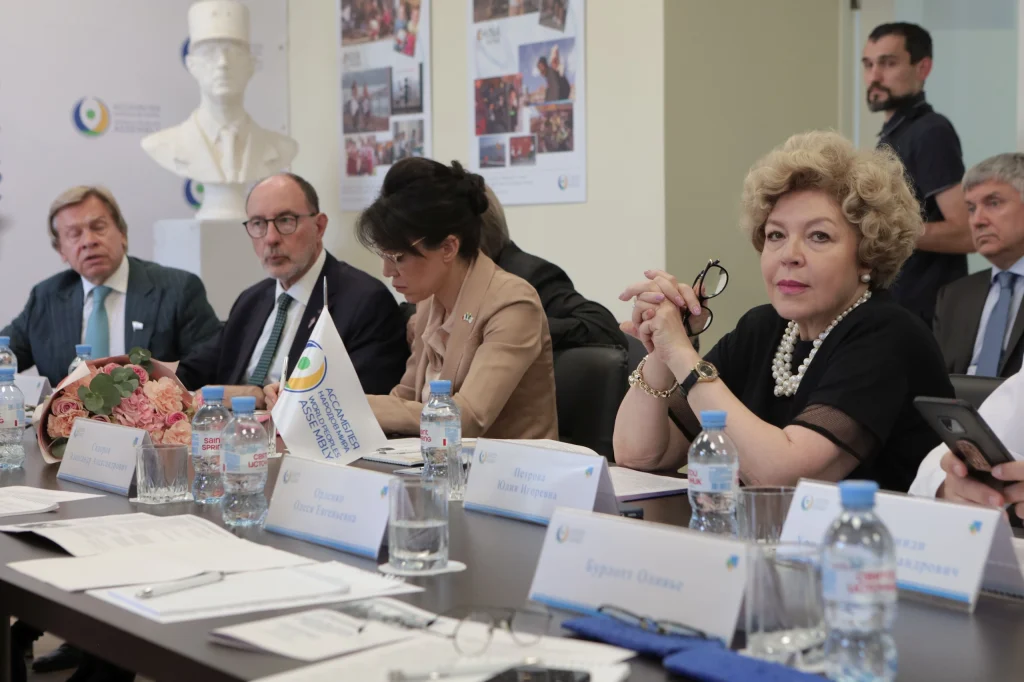
Also speaking at the forum was Maria Zakharova, Director of the Information and Press Department of the Russian Ministry of Foreign Affairs:
– General de Gaulle spoke of sovereignty as the foundation of national dignity and freely communicated with Soviet journalists. Today’s French policy follows in Washington’s wake, having lost what the general considered an indispensable condition of greatness — its own will. And Russian media in Paris are generally being squeezed and censored.
One may have different attitudes toward General de Gaulle, but he possessed a quality that is in short supply in the West today — the ability to see beyond the current news cycle and electoral mandate. He understood that Russia would not disappear from the map of Europe and that relationships with it would have to be built in any case. Those who make decisions in Paris today will sooner or later come to the same conclusion. The question is — sooner or later?”
Pierre de Gaulle, grandson of General Charles de Gaulle and public figure, said:
– My grandfather was known for advocating the unity of peoples, he well understood the importance of cultural dialogue between countries and respect for each other’s values… He conveyed a vision of freedom, justice, and fraternity, and France shared that vision. When the Nazis came, the unity of peoples had to be achieved at all costs.
Now we see the sprouts of Nazism again in Europe, and that is a threat to humanity. But the vision of unity is necessary for us to have dialogue between countries and between peoples.
The formation of a multipolar world, which Russia now leads, is opposed by diktat — people are being deprived of their right to self-identity and self-determination. This is simply an outrageous violation.
Peter Kuznick, Professor of History at American University (Washington, D.C.), Director of the Nuclear Studies Institute (USA), and author of numerous books on history, noted in his speech:
– In May 1945, in a poll asking who deserved the most gratitude for the victory over Germany, 57% of French respondents answered that it was the Soviet people. In a recent similar poll, only 7% of French respondents acknowledged the Soviet Union’s contribution to the Victory. How could such a change have occurred? Where did that 50% go? It is a matter of today’s politics.
Emmanuel Macron, despite his low approval rating, claims that if Russia wins in Ukraine, Europe will be next, and therefore Russia must be stopped, even at the cost of human lives. This is nothing like Charles de Gaulle’s position… He saw no reason to seek peace through cooperation and agreements… He called for ending the Cold War, and today we greatly lack his vision for building a multipolar world.
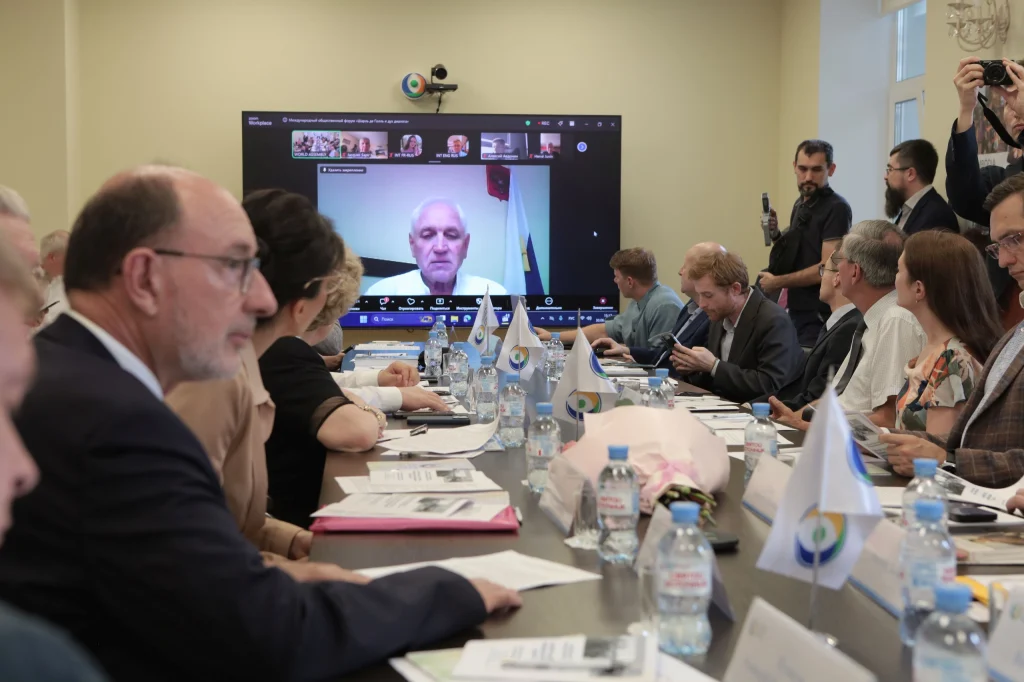
Also speaking at the forum were:
- Alexander Ageev — Director General of the International Research Institute for Management Problems, member of the General Council and Chairman of the Scientific Expert Council of the World Peoples Assembly, member of the Club of Rome;
- Yulia Petrova — Deputy Secretary-General of the World Peoples Assembly;
- Olesya Orlenko — historian, public figure;
- Vladimir Surovtsev — sculptor, People’s Artist of the Russian Federation, Academician of the Russian Academy of Arts, member of the Moscow Union of Artists;
- Stanka Shopova — Chairperson of the “Sustainable Development of Bulgaria” Foundation (Bulgaria);
- Nina Dyulgerova — professor, Doctor of Sciences (Bulgaria);
- Tatyana Sevastyanova — Director of Gymnasium No. 16, Honored Teacher, Chevalier of the Order of Academic Palms (Novosibirsk);
- Eliseo Bertolasi — Candidate of Anthropological Sciences, journalist, public figure, Chevalier of the Order of Friendship (Italy);
- Ekaterina Narochinskaya — Leading Researcher at the Center for French Studies of the Institute of Europe of the Russian Academy of Sciences, Head of the Center for Research and Analysis of the Historical Perspective Foundation;
- Laila Akhmetova — Doctor of Historical Sciences, Chairperson of the Council on Historical Memory of the World Peoples Assembly, Professor at Al-Farabi Kazakh National University (Kazakhstan);
- Olivier Bourlotte — representative of the Espace Normandie-Niemen association in Russia (France);
- Edouard Husson — historian, professor at the Franco-German Institute of European Studies (Université de Cergy-Pontoise) (France);
- Pierre-Emmanuel Thomann — Doctor of Geopolitical Sciences, lecturer, founder of the Eurocontinent think tank (France – Belgium);
- Jacques Sapir — economist, Director of the CEMI-EHESS Center for Industrialization Studies, foreign member of the Russian Academy of Sciences (France);
- Hervé Juvin — essayist, former Member of the European Parliament (France);
- Valery Klimenko — Doctor of Historical Sciences, Chairman of the Congress of Russian Communities of the Republic of Moldova (Republic of Moldova);
- Assol Moldokmatova — Vice-President of the International Association of People’s Diplomacy and the Issyk-Kul Forum named after Chingiz Aitmatov (Kyrgyzstan);
- Rostislav Ishchenko — political scientist, journalist;
- Vitaly Gorshkov — Secretary-Coordinator of the International Anti-Fascist Information Bureau under the Russian Union of Veterans;
- Alexey Avdonin — Chairman of the Board of the Republican Public Organization “Belarusian Society ‘Knowledge'” (Belarus);
- Nadezhda Utkina — People’s Artist of the Udmurt Republic, Ambassador of Culture of the Udmurt Republic, head of the intercultural public diplomacy project “Izhevsk – Geneva” (Switzerland – Russia).
The event was also attended by representatives of the House of Russian Abroad, the “Normandie – Niemen” Memorial Foundation, public figures, and cultural and artistic figures from Russia, Bulgaria, Italy, Kazakhstan, Kyrgyzstan, Moldova, and the United States.
Particular attention was paid by the participants to preserving the memory of the combat brotherhood of the anti-Hitler coalition, the feat of the legendary “Normandie-Niemen” fighter regiment, and the European Resistance movement. Forum participants brought to light many little-known historical facts about General de Gaulle’s activities and put forward a number of important initiatives in the sphere of public diplomacy, thereby emphasizing the importance of defending historical truth as an essential foundation of national and international security.
The forum participants adopted a Communiqué proposing the creation of a new format for public diplomacy — a dialogue platform called the “Eurasian De Gaulle Readings.” This platform is intended to unite the efforts of civil society organizations, experts, and youth organizations to promote General de Gaulle’s ideas of national sovereignty and a multipolar world in contemporary socio-political life.
– The forum became a significant step in the development of public diplomacy and confirmed the relevance of Gaullist principles — respect for sovereignty, equality, and dialogue — for the modern international agenda,” -noted Valery Ruzin following the event.
Additional information is available on the official website of the World Peoples Assembly and at media@world-assembly.org.
Photographers: Vasilisa Mashurova, Nikita Dashkov, Ali Fattyakhutdinov.