 thesilkroadtoday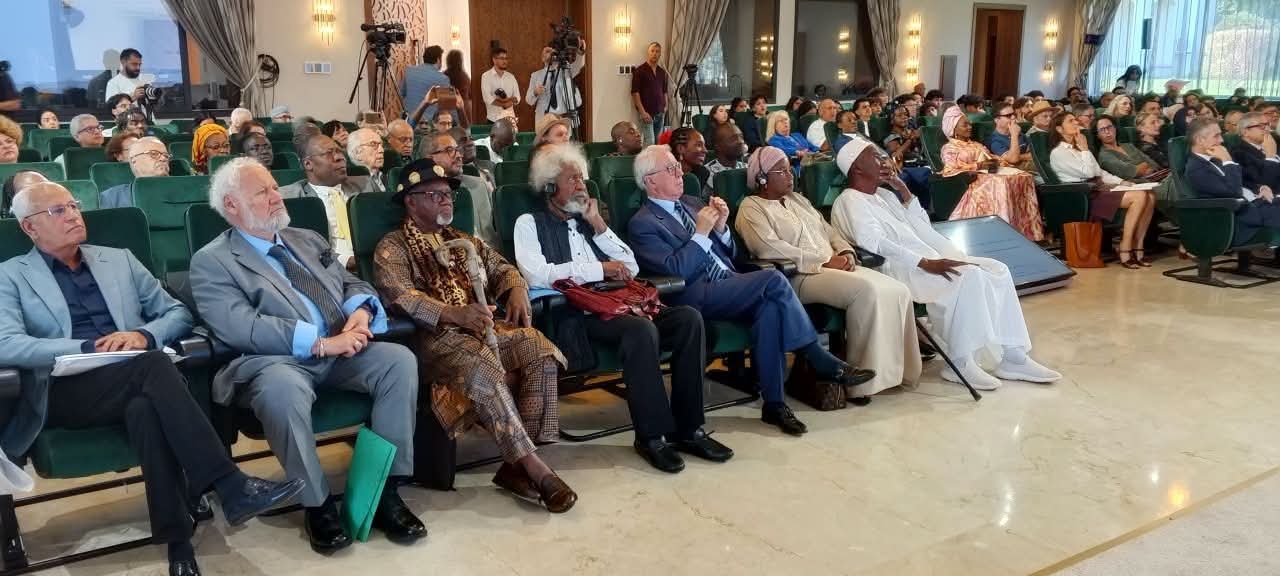
Rabat Celebrates the Worlds of Books: A Dialogue of Cultures, Youth Readings, and a Poetic Tribute to Mahmoud Darwish
The Royal Academy of Morocco launches the House of the Worlds of Books, bringing together writers, thinkers, and artists while commemorating the 40th anniversary of Wole Soyinka’s Nobel Prize and establishing a reference library dedicated to African literature and cultural memory.
RABAT, Morocco — October 16, 2026
In a celebration that brought literature into conversation with philosophy, music, and theatre, the Royal Academy of Morocco officially launched the activities of the House of the Worlds of Books on Friday. The international cultural gathering forms part of the vibrant programme taking place in the Moroccan capital following its designation by UNESCO as the World Book Capital for 2026.
The opening marked the culmination of a cultural programme held from October 14 to 16, bringing together the international symposium “Mediterranean Correspondences: A Sense of History” and a series of literary and artistic encounters celebrating the diversity of human experience and the role of books in building bridges between peoples.
The initiative goes beyond the conventional concept of a library. It proposes a sustainable cultural project that places books at the intersection of reading, translation, creativity, memory, and intercultural dialogue. It also seeks to give younger generations opportunities to engage with world literature as a means of discovering others and re-examining the world.
An African Library of 54 Books: An Open Project Rooted in the Continent’s Cultural Memory
In his opening address, Abdeljalil Lahjomri, Permanent Secretary of the Royal Academy of Morocco, presented the project’s cultural vision, explaining how Rabat’s designation as World Book Capital provides an opportunity to establish an initiative whose impact will extend well beyond the celebrations of 2026.
One of the project’s most significant steps is the creation of a reference library of African literature, beginning with a collection of 54 books representing the continent’s 54 countries. One literary narrative or humanities work has been selected from each country, offering readers an entry point into the diversity of African societies, experiences, and imaginations.
Rather than a closed collection, this initial selection is intended to become the foundation of an expanding library embracing modern and contemporary literature, foundational narratives, oral heritage, sung traditions, manuscripts, and inscriptions. The project aims to illuminate African culture through its many languages and forms of expression.
The initiative also envisages literary residencies and intellectual gatherings in Rabat, encouraging writers and researchers to exchange experiences and establishing partnerships to support translation and the circulation of literary works across borders.
At the heart of this vision lies the understanding of a book as a human relationship connecting writers with readers, linking generations, and transmitting knowledge and experience across cultures and time.
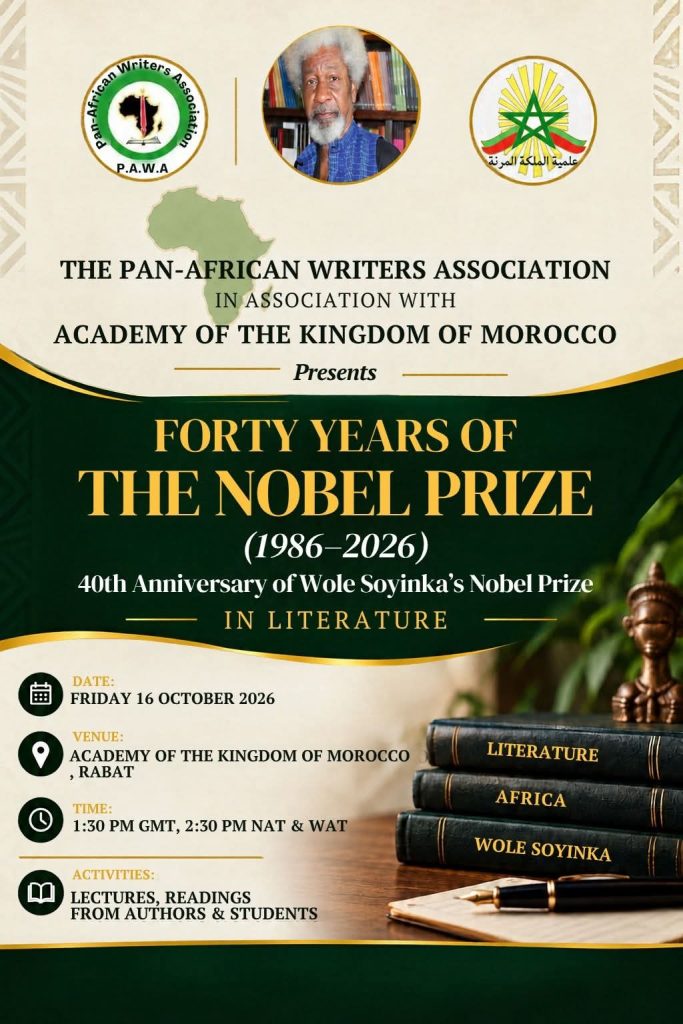
Wole Soyinka and J. M. G. Le Clézio: Books as Pathways to Understanding Others
The humanistic dimension of literature was particularly evident in the contributions of two Nobel laureates in Literature: Nigerian writer Wole Soyinka and French-Mauritian novelist Jean-Marie Gustave Le Clézio.
Soyinka, the first African recipient of the Nobel Prize in Literature, reflected on the significance of the literary gathering in Rabat. He expressed his hope that future generations would remember this day as a moment when Africa came together, at least in the literary sphere.
Le Clézio, meanwhile, emphasised the importance of books in protecting culture against fragility and isolation. He argued that understanding other cultures is not a luxury but a necessity for broadening humanity’s understanding of the world.
Cultures, he observed, do not develop in isolation; they grow through encounters, exchanges, and interactions among different human experiences.
This perspective is central to the mission of the House of the Worlds of Books, which places translation at the heart of cultural communication. The movement of texts between languages becomes a means of discovering worlds that may appear distant but share fundamental human questions.
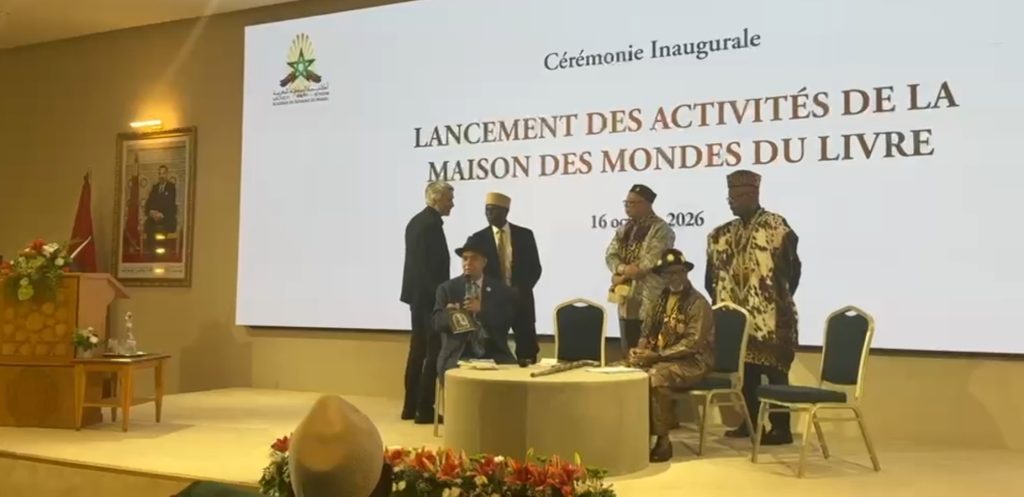
The Roundtable: Literature as a Shared Memory Between the Two Shores of the Mediterranean
The launch of the House of the Worlds of Books built upon discussions held during the international symposium “Mediterranean Correspondences: A Sense of History,” which took place on October 14 and 15 under the moderation of French writer and translator Jean-Noël Schifano.
The symposium presented diverse perspectives on the relationship between literature, memory, and history, exploring the Mediterranean as a space of civilisational exchange, encounters between languages and religions, migration, social transformation, and intersecting identities.
Contributions examined the role of letters, documents, and archives in recovering history, the relationship between writing and individual and collective memory, and the influence of sacred places and shared rituals on consciousness on both sides of the Mediterranean.
Participants also discussed literature’s ability to reinterpret historical events, revive voices absent from official narratives, and highlight human experiences that transcend geographical and political borders.
Among the notable contributions was an intervention by Palestinian poet Najwan Darwish, who explored the transformations of the poem “Identity Card” across two different periods and two poems. Other literary readings examined history, identity, and place.
The diversity of contributions demonstrated that Mediterranean dialogue is not simply about revisiting the past. It also involves questioning the present and reconsidering relationships between societies through literature as a living record of human experience.
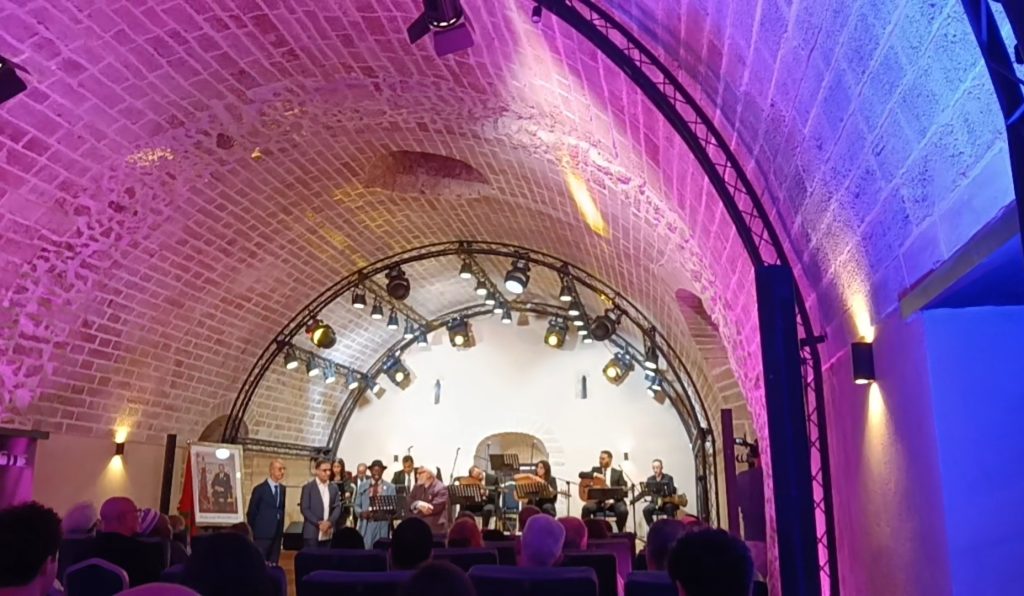
Theatre, Music, and Poetry: An Opening Tribute to Mahmoud Darwish
The programme extended beyond official speeches and intellectual discussions to embrace artistic expression, giving the gathering an emotional dimension and allowing poetry, music, and theatre to become integral parts of the cultural dialogue.
The musical-theatre opening was dedicated to Palestinian poet Mahmoud Darwish, offering an artistic tribute to one of the most prominent voices in Arabic poetry. His work continues to evoke the intertwined themes of memory, identity, exile, and human belonging.
This tribute reflected the spirit of the gathering, which sought to connect literature with other forms of artistic expression and demonstrate poetry’s ability to transcend linguistic and geographical boundaries, transforming local experiences into voices that speak to people everywhere.
Artistic performances brought the events to life by connecting literary texts with performance, sound, and visual expression. They reinforced the idea that books exist beyond their printed pages, extending into theatre, music, collective readings, and other forms of expression that give words renewed life before an audience.
Young Readers Perform Soyinka’s Works in French: A Bridge Between Generations and Languages
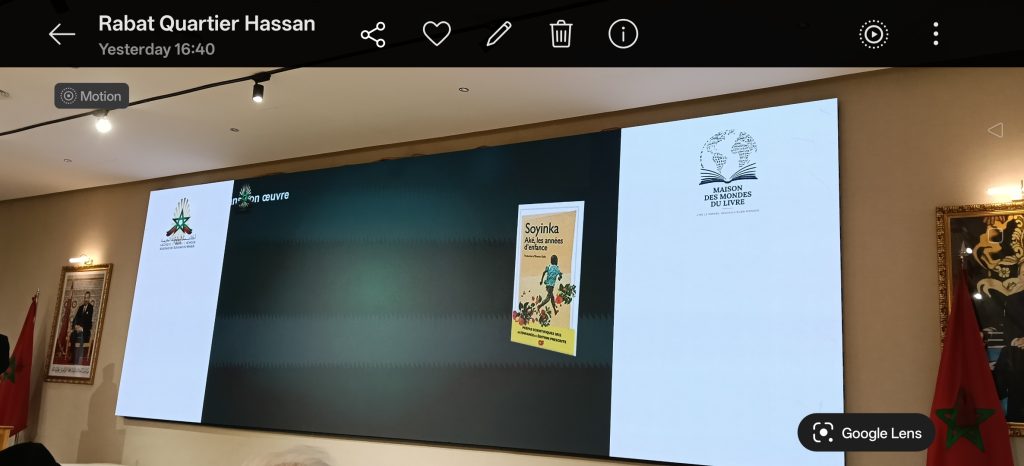
One of the programme’s highlights was a series of readings by young people of Wole Soyinka’s texts in French, connecting the Nigerian writer’s literary legacy with a new generation of readers and demonstrating the importance of multilingualism in bringing African literature to wider audiences.
These readings carried particular significance as the programme marked the 40th anniversary of Soyinka receiving the Nobel Prize in Literature in 1986. The commemoration was not merely an opportunity to revisit a milestone in literary history; it also offered a chance to introduce his works to a new generation that could read, perform, and engage with their intellectual and humanistic questions.
Reading literature in another language embodies one of the essential objectives of the House of the Worlds of Books: ensuring that literary works remain alive across generations and move between languages without losing their power to provoke questions and engage readers.
The participation of young people also demonstrated that celebrating great writers requires more than honouring their achievements. Their work must continue to be read, shared, and incorporated into the experiences of new generations, opening new horizons for knowledge and expression.
This approach reflects the project’s broader vision of reading as a fundamental cultural practice, supporting youth participation in cultural life and connecting literature with education, personal development, and community engagement.
From Library to Literary Residencies and Translation
The announced programmes of the House of the Worlds of Books outline the ambitions of an institution that seeks to move beyond preserving and displaying books to supporting the entire literary cycle—from creativity and research to translation, publishing, and the circulation of works among new audiences.
Future plans include international literary residencies, poetry gatherings, and cultural-exchange initiatives. They also encompass diverse poetic traditions, including Amazigh Izli poetry and Japanese haiku, alongside the development of national and international partnerships.
These initiatives reflect a determination to create a shared space in which writers, translators, researchers, and artists can work together, giving different cultures equitable opportunities to express their experiences without confining literature to a single geographical region or language.
Rabat: A World Book Capital and a Laboratory for Cultural Dialogue
The launch of the House of the Worlds of Books represents an important step towards transforming Rabat’s designation as UNESCO World Book Capital into a lasting cultural project whose impact will extend beyond the events of 2026.
The reference library of African literature, the roundtable on Mediterranean memory, literary readings, artistic performances, and young people’s readings of Soyinka in French all converge around a central idea: books are spaces for dialogue, translation brings cultures closer together, and art gives this dialogue a human language that transcends differences.
Between the poetic voice of Mahmoud Darwish, the literary legacy of Wole Soyinka, and Le Clézio’s vision of cultural exchange, Rabat emerges as a meeting place for memories, experiences, and languages, bringing generations together through literature as a shared resource for knowledge and imagination.
The House of the Worlds of Books is therefore more than a new institution in Morocco’s cultural landscape. It is an ambitious project seeking to make books an active force in building bridges between Africa and the wider world, between heritage and contemporary creativity, and between writers and readers—contributing to a more open, diverse, and interconnected cultural future.
Source: The Silk Road Today, October 17, 2026.
Original Arabic report: