 thesilkroadtoday
The Nuclear Explosion opens a bold poetic series that brings together selected voices from the three major poetry movements shaping the world today: the World Poetry Movement, the Beijing Postmodernism Poetry Movement, and the Great Poetry Movement. Conceived as a space of convergence rather than confrontation, this series presents poetry as a dynamic force capable of capturing the shocks, hopes, and transformations of contemporary humanity. By placing these movements side by side, the publication affirms that despite differences in language, aesthetics, and cultural roots, world poetry shares a common urgency: to respond to the moral, existential, and imaginative challenges of our time through the power of the word. Prepare for THE SILK ROAD TODAY BY CAO SHUI
|2|
The Mission of the Great Poetry Movement
Is to Integrate Western and Eastern Cultures,
Ancient and Modern Cultures, Sacred and Secular Cultures
By Cao Shui
Great Poeticism is a poetic trend in the Chinese poetry world in the 21st century. Great Poeticism can be traced back to the Indian and Greek epics, proposed by Chinese poet Hai Zi in the 1980s. In 2007, poet Cao Shui wrote the “Great Poeticism Manifesto” and co-initiated the Great Poetry Movement with poets such as Xi Yuan and Xi Di. Cao Shui wrote “The Great Poetics” in 2010 and “The Great Literature” in 2017, establishing a literary system of the Great Poetry movement. Advocating the extraction of elements from various civilizations, the integration of Western and Eastern cultures, Ancient and Modern cultures, Sacred and Secular cultures, and the creation of a brand new world of imagery.
At present, various schools of Chinese poetry hold their own views. The urgent task we face is to pay attention to the spirit of poetry that will last forever. What we truly need is to integrate the cultures of past and present, the East and the West, God and human, to achieve a great poetics. In modern Chinese poetics, Hai Zi was the first to propose the concept of “Great Poetry”. He said, “My poetic ideal is to create a great collective poetry in China… I just want to integrate China”s actions to create a great poetry that combines the nation and humanity, poetry and ideals.” We have developed Hai Zi’s concept of “Great Poetry” and systematically proposed “Great Poeticism”. Both Xi Yuan and I came to the Qinghai-Tibet Plateau from the mainland China, and we feel an indescribable sense of “greatness” or “grandeur” here. As Chang Yao, who came from the mainland China, said, “I am a proponent and practitioner of the” Great Poetry View “… The beauty of poetry is shaped by things and cannot be forged.”
Our world is permeated by a vast cosmic spirit that is closely related to our inner selves. We need to discover the great order or Tao within ourselves in order to understand this world. This is the “greatness” of the poetic content. This cosmic spirit will be shaped by things, with its external form being the elements, which are manifested as images or imagery. This imagery system corresponds to the essential spirit of the universe, which is the “greatness” of poetic imagery. We need to use language to describe that image, from words to lines to sections, from words to rhetoric to texts, from words to images to meanings. What we need to do is to express that cosmic spirit in a unique language text, which is the “greatness” of poetic techniques. The characteristics of great poetry are the spiritualism or sacredness of meaning or content, the systematicity or typicality of elements or images, and the coherence or fusion of texts or words. This great poeticism is a concrete and subtle symbolic process from the cosmic spirit (meaning) to the elements (images) and then to language (words). Of course, this process is completed in an instant in the heart, and ultimately the poetic text will reveal the cosmic spirit through the elements.

Our poetry began with epic or epic spirit (Chinese epic seems to have been replaced by developed historical records), entered the era of Regulated Poetry (Gelv Poetry) in the Middle Ages, and finally reached the era of free verse today, facing an unprecedented crisis of legitimacy. However, that epic spirit has been passed down through a mysterious lineage. I specifically explore the legitimacy of the “third epic” or “great poetry” after the “primitive epic” and “literary epic” in the preface of my long poetry volume “Epic of Eurasia” titled “The Legitimacy of Modern Epic Existence: The ‘Third Epic’ of Lyrical Meditation in the Age of Free Poetry”. So in today”s era of free verse without mystery or rhythm, what kind of state will the “third epic” or “great poetry” exist in? I think it can only be internal meditation to construct the world form and external lyricism to maintain the essence of poetry. Today we have no stories of divinity, no clever rhythms, and poetry seems to be deteriorating, facing an unprecedented crisis of legitimacy. However, precisely because of this, poetry returns to the essence of poetry itself. We reconstruct or reveal the essence of that world through meditation, and enter the unique inner rhythm of poetry through lyricism. This is the state of existence of epic poetry today. Today we are not facing a nation, but a Global. Our world needs a great epic so that we can manifest or reveal the spirit of the universe in a tangible and subtle way to the world. Poetry is nothing more than conveying a unique spirit through a single language. For epic poetry, we need to use images, elements, or objective counterparts to construct or reveal a symbolic system to communicate our spirit and the essence of the world. Our spirit and the essence of the world correspond one-to-one through elements, and those elements constitute our metaverse or universe model and its past, present, and future evolution process.
They founded “Great Poetry Magazine” and Great Poetry Movement is listed as one of the twenty avant-garde poetry schools in China. Many of their works, “Dance on the Pen: A Witness to Post-80s Literature” (formerly known as “History of Chinese Post-80s Literature”), have a special chapter in the “Literary Theory” volume, and are known as the three major literary trends initiated by the Post-80s, along with Statism and Emotional Writing. Representative poets include Zhuang Ling, Han Bing, Lei Xun, Shen Jia, Shen Xue, Ye Mo, Shu Xian, Ying Zi, Su Ming, Yue Jian, Peng Shujin, Zhang Housheng, Xu Yanmu, Guo Liangzhong, Lei Xiaoming, Zhao Kangli, Nobu Langjie and many other poets born in the 1980s and 1990s. Poets of Great Poetry Movement extract or represent “elements” from the world itself, using these “elements” to reconstruct their own world. These “elements” correspond internally to the inner spirit and externally to the essence of the world. So great poetry is achieved by each poet themselves, each poet will find their own “element” system, and ultimately form their own style.
From 2018 to 2020, there was a three-year debate between Cao Shui and Yi Sha. Cao Shui represented the “Great Poetry Movement”, and Yi Sha represented “Post Oral Poetry School”. This is known as the “Cao Shui and Yi Sha Debate” in the Chinese poetry circle. Cao Shui wrote an article titled “The Cao Shui and Yi Sha Debate and the Ten Major Problems of the Chinese Literary World” as a cover figure in the first issue of “Literary Freedom Talk” in 2023, summarizing that the “Cao Shui and Yi Sha Debate” broke out a hundred years after Hu Shi wrote “The Trial Collection”, probably due to a series of factors. At that time, many people interpreted it as the “Hundred Year Road Debate of Chinese New Poetry” and believed it to be the biggest debate in the Chinese poetry circle since the “Panfeng Debate” (a famous debate between the Intellectual School and the Folk Poetry School in the history of Chinese poetry in 1998). The debate is also called the most modern debate of the 21st century. The core of this debate is the question of the direction of Chinese new poetry, whether it is the Post Oral Poetry advocated by Yi Sha, the
Great Poetry Movement advocated by Cao Shui, or other writing methods. But in this process, he saw through the various strange situations in the literary world, and literature called for a deep “Literary Reform Movement”.
The Selected Poems of the Eighteen Armies in the Cao Shui and Yi Sha Debate was published by the Chinese Culture Publishing House in July 2024. The book was edited by Cao Shui as honorary editor, Lei Xiaoming and Zhang Housheng as editors in chief, Yue Jian, Dapeng Kanhai, Li Xiaoya, and Yingzi as deputy editors in chief, Wu Chen and Pei Ying as chief planners. The book title was written by the famous poet Mr. Ouyang Jianghe. This selection was formed during the Cao Shui and Yi Sha Debate as a rallying point for the members of the “Poetry War Eighteen Armies” who supported Cao Shui. It selected representative works from 24 members, fully reflecting the style of this poetry group, and is an interpretation of the “Hundred Years of Chinese Poetry Road Debate”. The poets who supported Cao Shui in the Cao Shui and Yi Sha Debate formed the “Poetry War Eighteen Armies”, which underwent four major changes in personnel at different times. In addition to Cao Shui, the last 24 core members were compiled and published in this book: Cao Shui, Lei Xiaoming, Zhang Housheng, Yue Jian, Dapeng Kanhai, Bei Shan, Mu Ziwen, Hong Liang, Xing Shun, Zi Chu, Ye Mo, Mei Puliu, Yi Jia, Jiang Jubo, Xu Yanmu, Ying Zi, Beike Hangmu, Ximen Chudi, Qin Zhen, Li Xiaoya, Peng Shujin, Wang Chengjia, Ye Po, Wang Wuchen, Lei Ming.
Since 2017, with Cao Shui joining the World Poetry Movement, the Great Poetry Movement has gradually spread to countries around the world. In 2023, with the expansion of international dissemination, the Great Poetry Movement Committee established the Great Poetry Movement Medal, which will be awarded annually to two international poets who have made significant contributions to great poetry and epic poetry. On the front is the portrait of Cao Shui, the initiator of the Great Poetic Movement, written in both Chinese and English: Great Poetic Movement; On the back is an ancient three leaf clover map of Asia, Europe, and Africa, annotated with the English words ASIA, EUROPE, and AFRICA. The map was drawn by German geographer Heinrich Bunting in 1581 and represents the ancient world known at the time. It symbolizes the common home of humanity and is surrounded by carvings of the core ideas of the great poetry movement, which are “the integration of ancient and modern, the integration of East and West, and the integration of God and man”.
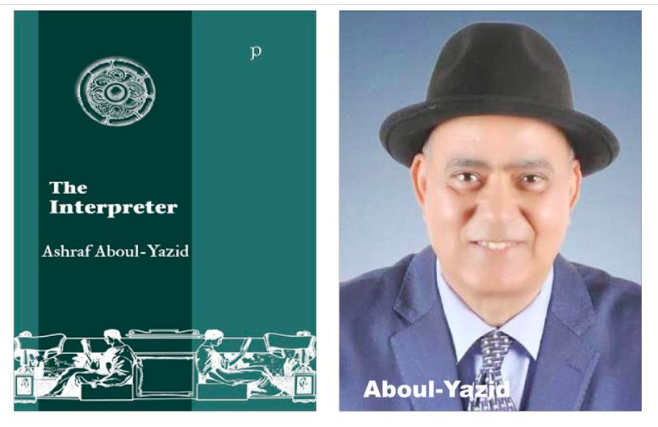
The medal of 2023 was awarded to Turkish poet Nurduran Duman, Haluk Sahin, chairman of Homer International Poetry Festival, and Ulugbek Yesdaulet, former chairman of Kazakhstan Writers Association. The 2024 Medal was awarded to Fernando Rendon, President of the Medellin International Poetry Festival, American poet George Wallace, and Emirati poet Adel Khozam. The medal for the year 2025 was awarded to Vadim Terekhin, the chairman of Federation of Russian Writers, Ana Maria Oviedo, the president of the World Poetry Festival in Venezuela and Natalia Kharlapieva, President of the Yakut Writers Association of Russia. Italian poet Lamberto Garzia, Egyptian poet Ashraf Aboul Yazid, and French poet Francis Combes are also potential candidates for the future. These representative poets spread across the four continents of Asia, Europe, Africa, and Americas, promoting the spread of the great poetry movement in various countries around the world.
The core viewpoint in Cao Shuis “Great Literature” is Integration. Each era has its own literature. According to the development process of literature, the agricultural society is a lyrical literature era dominated by poetry, the industrial society is a narrative literature era dominated by novels, and the information society is a dramatic literature era dominated by screenplay literature. Considering the relationship between poetry, novels, and plays, poetry is drawn out because of its rhyme, novels are drawn out because of fiction, and plays are drawn out because of performance. However, their spirits are all interconnected. They both take “elements” from our world to construct a world. These elements need to be in harmony with our inner spirit and with the essence of the world externally. For poetry, these elements are “imagery” elements, for novels, they are “story” elements, and for scripts, they are “action” elements. Because I have been writing poetry, I feel that the jumping scenes of poetry are the montage of images. As for novels and scripts, they are both narratives, and they basically have a transformative relationship.
Based on the concept of “Great Literature”, in 2017, Cao Shui created the “Manifesto of Poetry Film Movement” and “Manifesto of Dramatized Novel Movement” on the basis of the “Great Poeticism Manifesto”, proposing the Poetry Film Movement and Dramatized Novel Movement. In 2023, Cao Shui, Zhang Jianjun, and Fan Qun signed the “Manifesto of the Poetry Film Movement” in Beijing and established the Beijing International Poetry Film Festival. In 2024, the “Manifesto of the Dramatized Fiction Movement” was published in “Silk Road Crossing”, and the “Cao Shui Media” studio was established to initiate the Dramatized Novel Movement. Today, the ideas of the Great Poetry Movement have been translated into English, Russian, French, Arabic, Spanish, Turkish, Italian, Kazakh, Persian and other languages. Together with the World Poetry Movement (WPM) and the Poets of Planet Movement (PoP), they are called the three major poetry movements in the world, and the Arab world media call them “the great contribution of Chinese poetic trend to the world”. The book “Nuclear Explosion” co-edited by Fernando Rendon, Qiao Damo, and Cao Shui in 2025 will be the latest showcase of the World Poetry Movement, Beijing Postmodernism Poetry Movement, and Great Poetry Movement, and will have a profound impact on the development of global literature.