Palestine | A Poem Every Day

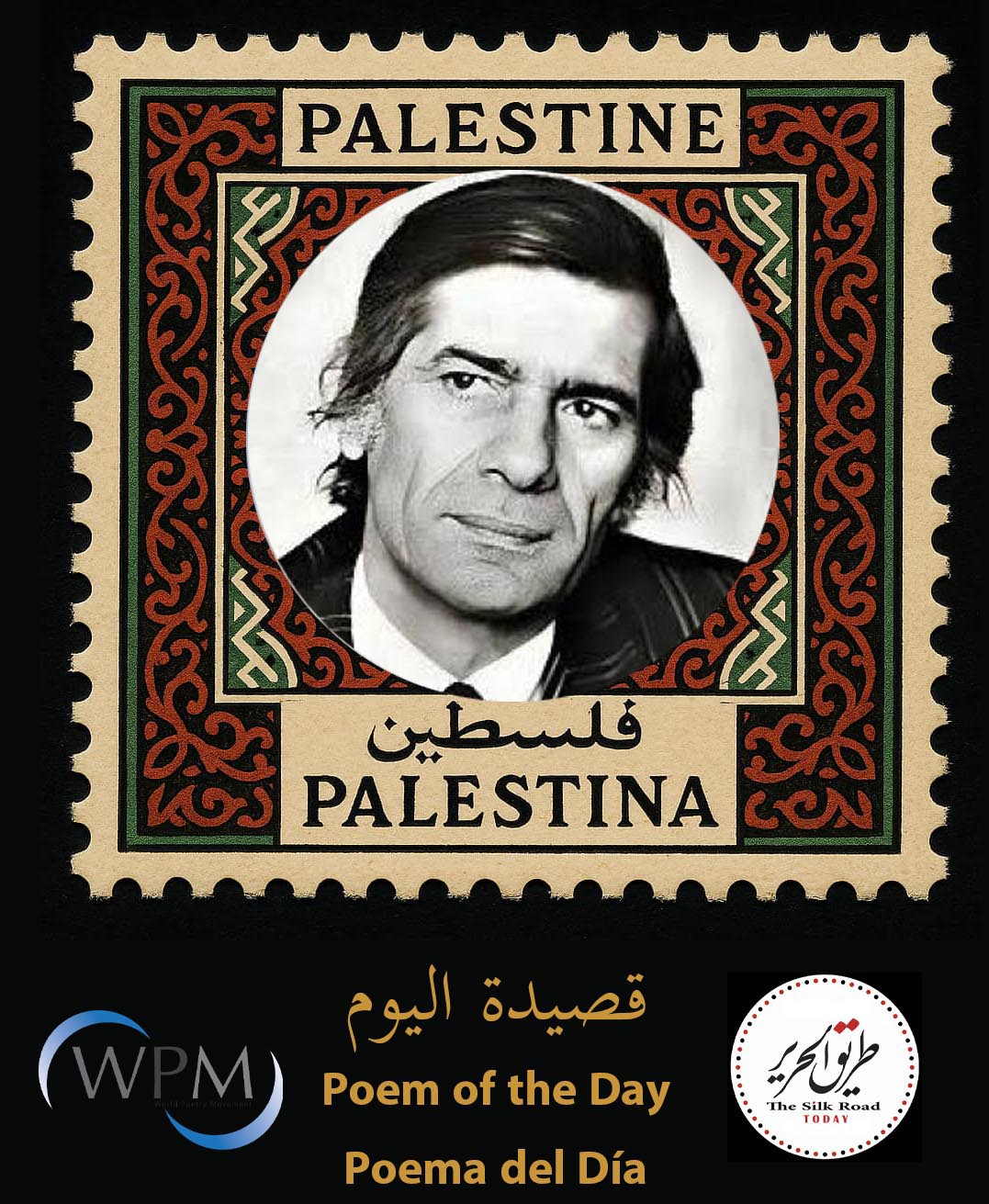
Mu’in Tawfiq Bseiso

Mu’in Tawfiq Bseiso (1926 – January 23, 1984)) was a Palestinian poet who lived in Egypt. He finished his primary and secondary education in Gaza in 1948. On January 27, 1952, he published his first work titled Al-Ma’raka  (translated: The Battle). He published several other volumes of poetry: Palestine in the Heart, (1964), Trees Die Standing (1966). He was imprisoned in jails in Gaza twice: 1955 to 1957 and 1959 to 1963. He died due to heart failure in London in 1984.

His works have been translated into English, French, German, Russian, Azeri, Uzbek, Italian, Spanish, Japanese, Vietnamese, and Persian. Mu’in Bseiso was awarded the Afro-Asian Lotus Prize for Literature and was the vice Editor in Chief of the Lotus magazine issued by the Afro-Asian Writers’ Association. Additionally, he was the recipient of the Palestinian Revolution Shield.)

Translated  by Dr.Salwa Gouda

Dr Salwa Gouda is an accomplished Egyptian literary translator, critic, and academic affiliated with the English Language and Literature Department at Ain Shams University. Holding a PhD in English literature and criticism, Dr. Gouda pursued her education at both Ain Shams University and California State University, San Bernardino. She has authored several academic works, including Lectures in English Poetry and Introduction to Modern Literary Criticism, among others. Dr. Gouda also played a significant role in translating The Arab Encyclopedia for Pioneers, a comprehensive project featuring poets, philosophers, historians, and literary figures, conducted under the auspices of UNESCO. Recently, her poetry translations have been featured in a poetry anthology published by Alien Buddha Press in Arizona, USA. Her work has also appeared in numerous international literary magazines, further solidifying her contributions to the field of literary translation and criticism.

We will not die

We will eradicate death from our land

There… there… far away

The soldiers will carry me, my comrades

They will throw me into terrible darkness

They will throw me into the hell of restrictions

Yes, we will not die, but…

We will uproot death from our land

They searched my room, brother

They found nothing but some books

And piles of bones that are my brothers

They groan between a mother and a father

They woke them up with their kicks

They ignited anger in the eyes

Yes, we will not die, but…

We will uproot death from our land

I am now among the soldiers of tyrants

I am now being dragged into detention

My father’s face is still there

In front of me

Arming me with hope

And my mother moans

A long moan

And around her, my brothers were screaming

And around them, some of our neighbors

And each of them has a child in prison

Yes, we will not die, but…

We will uproot death from our land

But despite the brutality of the soldiers

I raised a hand weighed down by chains

And I shouted to them: I am coming back

With the army of comrades

With the army of thunder

Yes, we will not die, but…

We will uproot death from our land

There I see a worker on the road

I see the victorious leader of the revolution

He waves an iron hand at me

And another had sparks flying from it

Yes, we will not die, but…

We will uproot death from our land

I am now among hundreds of comrades

I tighten their fists with my fist

I now feel strong

And I will defeat my cell

Yes, we will not die, but…

We will uproot death from our land

Yes we will not die, yes we will live

Even if the shackle ate from our bones

And even if the whips of tyrants tear us apart

Even if they set fire to our bodies

Yes, we will not die, but we will

Eradicate death from our land.

Related Posts

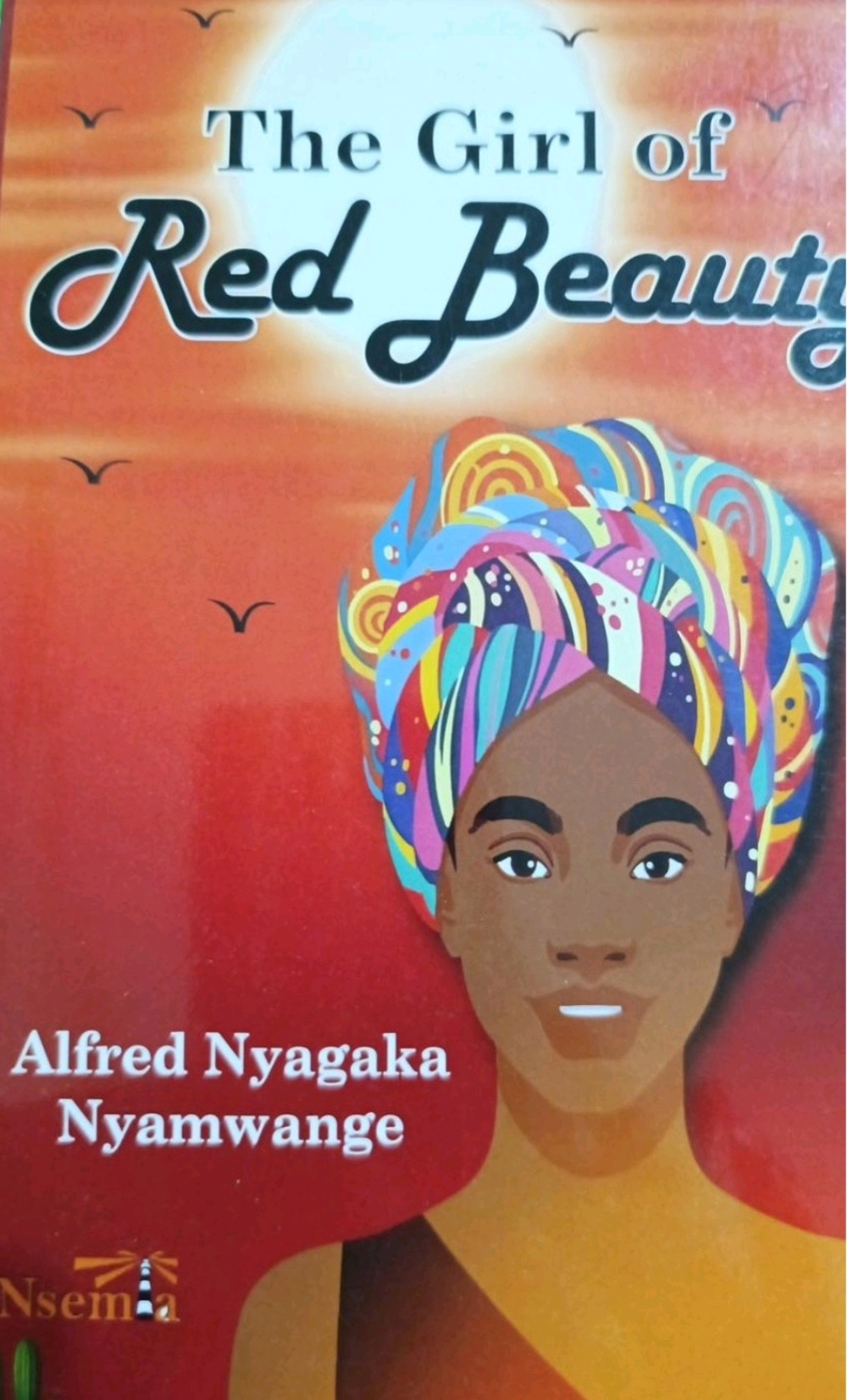
A Look at Alfred Nyagaka Nyamwange’s Collection of Books

  THE GIRL OF RED BEAUTY  What does it mean to belong to a people, and how can a community preserve its identity when the voices of its ancestors begin to fade beneath the pressures of modernity? In The Girl of Red Beauty, Alfred Nyagaka Nyamwange invites readers into the cultural universe of the AbaGusii through a sustained poetic engagement with the community’s oral traditions, beliefs, social practices and philosophies. Presented in thirteen chapters of verse, the work draws upon songs, proverbs, sayings, stories, play games and the rhythms of everyday life in the Gusii highlands. Its poetic world follows the human journey from birth and childhood through initiation and marriage to old age and death. Along the way, it evokes relationships between individuals, families, the land, the ancestors and the divine. The girl at the centre of the work becomes a poetic point of entry into a much wider cultural landscape: a world shaped by communal memory, inherited wisdom, social expectations and changing relationships. The collection is distinctive in its creative negotiation between written poetry and African orature. Its language draws on indigenous expressions and direct translations from EkeGusii, bringing local imagery and proverbial thought into English. Songs, performance rhythms and the imagined presence of the lyre and drum give the written verse an oral energy, inviting readers not merely to observe the culture but to hear, sing and imaginatively participate in it. The Girl of Red Beauty is both a literary work and an act of cultural remembrance. It does not present tradition as a museum piece; rather, it opens a space for considering cultural continuity, the tensions between inherited practices and contemporary life, and the responsibility of transmitting indigenous knowledge to future generations. Rooted in Gusii experience yet attentive to wider questions of identity and belonging, the book offers international readers an encounter with the imaginative resources of an African community. A poetic celebration of identity, a preservation of memory and an invitation to return to the living sources of cultural knowledge. Description length: 329 words (maximum: 500). THEFOOTFALLS OF MY HEART  Love may begin with attraction, but in a traditional community its consequences reach far beyond two individuals. In The Footfalls of My Heart, Alfred Nyagaka Nyamwange presents a narrative poem that explores courtship and marriage in the cultural world of the AbaGusii, giving particular prominence to the voice, perspective and agency of the bride. The poem centres on Gechemba and Rimura. Rimura is a celebrated warrior and prospective groom whose reputation, strength and determination do not automatically guarantee success in love. Gechemba is a young woman who observes, questions, teases and responds to the man seeking her affection. Through her perspective, the reader encounters the emotional play of attraction, hesitation, playful resistance and growing attachment. The courtship becomes a spirited exchange in which wit and persuasion matter alongside status and material wealth. Beyond the romantic encounter, the work traces the social processes through which marriage connects families and lineages. It evokes the meeting between prospective partners, family introductions, negotiations over bride wealth, preparations, marriage rituals, songs, communal celebrations and the incorporation of the bride into a new household. Cattle and other forms of bride wealth carry meanings that extend beyond payment: they express commitment and create networks of relationships between families. The poem is rich in EkeGusii expressions, proverbs, indigenous imagery, humour and the rhythms of oral performance. It draws on cultural memory while allowing readers to consider the values and tensions embedded in marriage practices. The bride’s voice is especially important: she is not simply an object of pursuit but a participant whose response, judgement and choice shape the unfolding relationship. As a companion to The Girl of Red Beauty, this work extends Nyamwange’s poetic exploration of Gusii cultural life. Where the earlier poem approaches the community through a girl’s growth and the wider cycle of life, The Footfalls of My Heart foregrounds the woman’s perspective in the journey towards marriage and family continuity. A warrior pursues; a woman responds and chooses; families negotiate; a community gathers. The Footfalls of My Heart is a poetic exploration of love as both an intimate emotion and a communal bond. Description length: 348 words (maximum: 500). THEBROKEN COLUMN  What happens when a society’s established ways of life encounter forces that challenge its institutions, beliefs and sense of identity? The Broken Column by Alfred Nyagaka Nyamwange is a historical and cultural novel set in the world of the AbaGusii, tracing the experiences of a warrior and the wider transformations of his community. At the centre of the narrative is Okeyo, a young man renowned for courage, physical strength and exceptional skill. His reputation as a warrior places him within a social order that values protection, honour, responsibility and service to the community. Yet Okeyo’s life is not a simple succession of heroic achievements. His relationships, personal struggles, choices and encounters with adversity expose the vulnerabilities beneath the public image of the fearless warrior. His destiny is shaped by the demands of his calling and by the changing circumstances of the society around him. The novel evokes a community organised through kinship, village life, ancestral expectations, warrior traditions and collective obligations. Its landscape is not merely a backdrop: it is a lived environment in which cattle, homesteads, social relations and communal security carry cultural significance. Okeyo’s experiences intersect with those of other people, particularly the women whose presence and decisions influence his path. A profound historical change gathers around this personal story. The arrival of foreign authority, missionary Christianity and colonial power unsettles the foundations of the community. Established loyalties are questioned; inherited practices encounter new religious and political claims; and individuals must negotiate the competing demands of continuity, resistance and accommodation. The meaning of courage itself becomes uncertain as the society confronts a future it cannot fully control. The Broken Column therefore operates on two connected levels: it is the story of a man whose life contains both achievement and vulnerability, and the story of a people experiencing a difficult historical transition. Through its engagement with masculinity, identity, power, faith, tradition and colonial encounter, the novel invites readers to consider what happens when the structures that sustain a community begin to fracture. When a column that has supported a people’s world begins to break, what can be preserved, what must change, and what remains standing? Description length: 356 words (maximum: 500). THEBLOOD STAINS  The violence inflicted on women does not end when the immediate assault is over. It can remain in the body, memory, family and conscience, shaping the lives of survivors long after the visible wounds have healed. In The Blood Stains, Alfred Nyagaka Nyamwange confronts the human cost of gendered violence and the struggle to recover dignity in the aftermath of trauma.…

Dance in Silence, Poem by Anwar Rahim

They speak without a sound Their steps upon the ground No music needs to play Their hearts still find the way Two shadows in the light They hold each other…

اترك تعليقاً

لن يتم نشر عنوان بريدك الإلكتروني. الحقول الإلزامية مشار إليها بـ *