Trending News:السائرون نيامًا | قصيدة للشاعر النيبالي سانتوش كومار بوخاريلدار العرس والبهجةMAYBE THIS IS NOT A GOODBYE: IF YOU HAVE EVER LOVED DEEPLY, YOU WILL LOVE THIS BOOK WORLD ORGANIZATION OF WRITERS “WOW” ANNOUNCES ITS 2026 LAUREATESVO THI NHU MAI’S “UNA CONVERSAZIONE” EARNS ECCELLENZA INTERNAZIONALE AT SENECA AWARDS 2026اللَيّلُ يَدوُرُ حَوْلَ السُؤالْ (شعر)من طوقاي إلى طريق الحرير: لقاء القاهرة يفتح آفاقًا جديدة للحوار الثقافي بين روسيا والعالم الإسلامي디파 말릭: “샤룩 칸과 아미타브 밧찬이 패럴림픽 선수들에게 메시지를 전할 것이라 확신합니다”― 100 CTFPديبا مالك: «أنا واثقة أن شاروخان وأميتاب باتشان سيقدمان رسالتيهما للرياضيين البارالمبيين» (100 CTFP)Deepa Malik: Shah Rukh and Amitabh Will Speak for Para Athletes (100 CTFP)PAWA Vice President Reyna Jones Visits PAWA Secretariat in AccraPoet Ko Un Publishes 40 Years of Love Letters: Sanghwajeol Letters 1من ناتساغدورج إلى العالم العربي: الأدب المنغولي يجد صوتًا جديدًاFrom Natsagdorj to the Arab World: Mongolia’s Literature Finds a New VoiceKhan Khentii: Where Culture, Memory and Natsagdorj’s Spirit Meetبيرغن بيلسن: نهاية الجرائم ضد الإنسانيةBergen-Belsen: An End to the Crimes Against Humanity (Second World War’s Agony Survives)الدكتور إبراهيم استنبولي أول أجنبي يفوز بجائزة باباجان غفوروف في طاجيكستانتعزيز التعاون المتحفي بين مصر ومنغولياMongolian Ambassador to Egypt Discusses Museum Cooperation with Grand Egyptian Museum CEONO “SACRED COWS” OR FEATURED UNTOUCHABLES?Samaneh Mojaveri: “Allow Your Passion To Become Your Purpose, And It Will One Day Become Your Profession” (Interview)ألوان التسامح تتألق في سوسةالآنسة ممكن … جدلية التفاعل والممكن «ما وراء اللغة»، الاحتفال بالمجلد الثالث افتراضيًاأصوات للمرة الأولى …جدلية الأصوات والأبعاد Beyond the Language, Vol. III Virtually Launchedالشاعرة اللبنانية ريتا نجيب نفاع تكتب: فسيفساء الروحCouncil Holds Virtual Meeting to Discuss Urgent MattersBefore the Bulls Disappear: Remembering the Festival of Polaسيرة فنان جعل من الريشة ذاكرةً للأرض والإنسان والتاريخالجسد في التشكيل: حين يتحول المنع إلى صناعة للخوفМонгол, Египет улс соёлын яриа хэлэлцээгээ бэхжүүлж байнаمنغوليا ومصر تعززان الحوار الثقافيبيت الهنا … رسائل الحب والمعارف دودة الأرض … رسائل المعرفة والثقافة البيئية Mongolia and Egypt Strengthen Cultural Dialogueمارلين باسيني في القاهرة.. حين تعبر المكسيك إلى مصر على طريق الأدبMarlene Pasini en El Cairo: Un viaje cultural entre México, Egipto y la Ruta de la SedaMarlene Pasini in Cairo: A Cultural Journey Between Mexico, Egypt and the Silk Roadمائة كتاب … 100 مؤلف: يفتح نافذة جديدة على مشهد الكتابة المعاصرة100Author Books – Volume One RevealedМонгол орон… Яруу найраг, хөгжим, дурсамжийн эх нутагMongolia… A Homeland of Poetry, Music, and Memory الجسد بين المعرفة والوصايةتعزيز الوحدة الثقافية لعالم الترك: محور لقاء مسؤولين أتراك ومثقفين كازاخستانيينEgyptian Voices, Golden Flamesمنيرة مصباح تكتب: نهر على سفر … روح وثابة للسفر ورغبة وقادة للعلم والمعرفةالحدّ الأخير (قصة قصيرة للكاتب عليق نقي أوغلو)منغوليا … وطن الشعر والموسيقى والذاكرةBeyond the Language, Volume III: A Multilingual Celebration of Poetry Across BordersCAJ’S New Edition: Africa at the Crossroads … Faith, Freedom, Culture and the Futureالعدد الثاني والعشرون من مجلة «سلاف الثقافية»… رحلة جديدة بين الأدب والفن والتراث والمعرفةThe 20th Gumilyov Festival in 2026 is a Constellation of AnniversariesWorld Poetry Movement Calls Poets and Peoples to Unite for Global Peace in Novemberبين وَمضات الرُّوح ووجع المكان100 CTFP: جوقة عالمية من أجل دمج الرياضيين البارالمبيين100 CTFP: A Global Chorus of Inclusion for Para AthletesNothing Returns Me to My Beginning (Poetry)الفتاة التي سمعت صوت السكوتفي ذكرى الراحلين الصامتين من الحربمن أينشهوة الذكاء الاصطناعي التي لا تُحتملالدكتورة إيمان بقاعي … حكايات الضيفة (قصة مسموعة)نانا.دوت.أم… الجدة :الحديث والآفاقالصَّديق الوهمي عند الأطفالرَأَيْتُ شَجَرَةً . قصيدة للشاعر پیشوا کاکائيالسنغال تحتفي بسحر الكتب والثقافة في مهرجان دولي افتراضيابنة الحبر (قصيدة للشاعرة اللبنانية ريتا نجيب نفاع)المايسترو التونسي محمد الأسود على طريق الحرير اليوم (حوار)Echoes of Eastern and Western Civilizations on Gilded Papyrus5th International Poetry Festival of NaoussaYoung Honored Guests Shine at the International Conference on Mongolian Heritage, Culture, and LiteratureOlga Medvedko Presents “Gumilyov Society: 2011–2026” at the 20th Gumilyov Festival and the Saint Petersburg House of WritersProf. Yasmin Sheikh: A Life Devoted to the Enrichment of the Marathi Language Mongolia… A Homeland of Poetry, Music, and Memory متحف «دارنا» يحتفي بالفنانة المصرية الأمريكية أمل أحمد مصطفى بعد إهدائها عملاً تشكيليًا جديدًا للمتحف“INNER HEAVEN” BRINGS THE SPIRITUAL SOUL OF MONGOLIA TO CONTEMPORARY ARTماياكوفسكي ورِمال: شاعرٌ مستقبلي عملاق ألهم تيارًا شعريًا نيباليًاMayakovsky and Rimal: A Giant Futurist Inspired Nepali Poetry Trendقصيدة «دروس الحياة» للشاعر التونسي المتميز و المبدع محمد الشارني تمديد مشروع Via Bagradaحتى 30 أوت ـ أغسطسNo Sacred Cows? Boakai’s Accountability Pledge Amid Drug Busts and Political Allegations:Alexandra Ochirova, UNESCO Goodwill Ambassador: Culture is Importanint in International Cooperation in Education and Science.الدكتور أشرف أبو اليزيد يقبل دعوة الانضمام إلى أكاديمية كتّاب العالم المنغوليDr. Ashraf Aboul-Yazid Accepts Invitation to Join the World Academy of Mongolian WritersIn the Heart of Mongolia, Four Laureates on the Golden Papyrus Stageفي قلب منغوليا.. «البردي الذهبي» يحتفي بأدباء طريق الحريرقصائد الشاعر الهندي ديفيش باث ساريا: ماذا يعرف الطغاة؟قصيدة مهداة للشاعر الكازاخي أولوجبيك يسداولتأبي وأمي … قصيدة من منغولياTURKSOY Writers’ Unions Convene in Andijan, Uzbekistanصحراء الغرور | قصيدة للشاعرة اللبنانية ريتا نجيب نفاعأمل أحمد مصطفى: فنانة تعشق الفن في صمت الكبارقصيدة د. عادلة نظر إلى نرجس بطلة رواية «شماوس»…ترجمة «شماوس» إلى اللغة الأذرية: المرآة الروحية للمجتمع الشرقيباباكار نداي يكتب من السنغال: جسور الفجرأَنا أُحارِبُ أَيَّتُها الفَراشَةُ | شعر:پیشوا کاکائيدائرة أفلام إبادان تشعل شغف السينما في أجواء إفريقية أصيلة
Trending News:السائرون نيامًا | قصيدة للشاعر النيبالي سانتوش كومار بوخاريلدار العرس والبهجةMAYBE THIS IS NOT A GOODBYE: IF YOU HAVE EVER LOVED DEEPLY, YOU WILL LOVE THIS BOOK WORLD ORGANIZATION OF WRITERS “WOW” ANNOUNCES ITS 2026 LAUREATESVO THI NHU MAI’S “UNA CONVERSAZIONE” EARNS ECCELLENZA INTERNAZIONALE AT SENECA AWARDS 2026اللَيّلُ يَدوُرُ حَوْلَ السُؤالْ (شعر)من طوقاي إلى طريق الحرير: لقاء القاهرة يفتح آفاقًا جديدة للحوار الثقافي بين روسيا والعالم الإسلامي디파 말릭: “샤룩 칸과 아미타브 밧찬이 패럴림픽 선수들에게 메시지를 전할 것이라 확신합니다”― 100 CTFPديبا مالك: «أنا واثقة أن شاروخان وأميتاب باتشان سيقدمان رسالتيهما للرياضيين البارالمبيين» (100 CTFP)Deepa Malik: Shah Rukh and Amitabh Will Speak for Para Athletes (100 CTFP)PAWA Vice President Reyna Jones Visits PAWA Secretariat in AccraPoet Ko Un Publishes 40 Years of Love Letters: Sanghwajeol Letters 1من ناتساغدورج إلى العالم العربي: الأدب المنغولي يجد صوتًا جديدًاFrom Natsagdorj to the Arab World: Mongolia’s Literature Finds a New VoiceKhan Khentii: Where Culture, Memory and Natsagdorj’s Spirit Meetبيرغن بيلسن: نهاية الجرائم ضد الإنسانيةBergen-Belsen: An End to the Crimes Against Humanity (Second World War’s Agony Survives)الدكتور إبراهيم استنبولي أول أجنبي يفوز بجائزة باباجان غفوروف في طاجيكستانتعزيز التعاون المتحفي بين مصر ومنغولياMongolian Ambassador to Egypt Discusses Museum Cooperation with Grand Egyptian Museum CEONO “SACRED COWS” OR FEATURED UNTOUCHABLES?Samaneh Mojaveri: “Allow Your Passion To Become Your Purpose, And It Will One Day Become Your Profession” (Interview)ألوان التسامح تتألق في سوسةالآنسة ممكن … جدلية التفاعل والممكن «ما وراء اللغة»، الاحتفال بالمجلد الثالث افتراضيًاأصوات للمرة الأولى …جدلية الأصوات والأبعاد Beyond the Language, Vol. III Virtually Launchedالشاعرة اللبنانية ريتا نجيب نفاع تكتب: فسيفساء الروحCouncil Holds Virtual Meeting to Discuss Urgent MattersBefore the Bulls Disappear: Remembering the Festival of Polaسيرة فنان جعل من الريشة ذاكرةً للأرض والإنسان والتاريخالجسد في التشكيل: حين يتحول المنع إلى صناعة للخوفМонгол, Египет улс соёлын яриа хэлэлцээгээ бэхжүүлж байнаمنغوليا ومصر تعززان الحوار الثقافيبيت الهنا … رسائل الحب والمعارف دودة الأرض … رسائل المعرفة والثقافة البيئية Mongolia and Egypt Strengthen Cultural Dialogueمارلين باسيني في القاهرة.. حين تعبر المكسيك إلى مصر على طريق الأدبMarlene Pasini en El Cairo: Un viaje cultural entre México, Egipto y la Ruta de la SedaMarlene Pasini in Cairo: A Cultural Journey Between Mexico, Egypt and the Silk Roadمائة كتاب … 100 مؤلف: يفتح نافذة جديدة على مشهد الكتابة المعاصرة100Author Books – Volume One RevealedМонгол орон… Яруу найраг, хөгжим, дурсамжийн эх нутагMongolia… A Homeland of Poetry, Music, and Memory الجسد بين المعرفة والوصايةتعزيز الوحدة الثقافية لعالم الترك: محور لقاء مسؤولين أتراك ومثقفين كازاخستانيينEgyptian Voices, Golden Flamesمنيرة مصباح تكتب: نهر على سفر … روح وثابة للسفر ورغبة وقادة للعلم والمعرفةالحدّ الأخير (قصة قصيرة للكاتب عليق نقي أوغلو)منغوليا … وطن الشعر والموسيقى والذاكرةBeyond the Language, Volume III: A Multilingual Celebration of Poetry Across BordersCAJ’S New Edition: Africa at the Crossroads … Faith, Freedom, Culture and the Futureالعدد الثاني والعشرون من مجلة «سلاف الثقافية»… رحلة جديدة بين الأدب والفن والتراث والمعرفةThe 20th Gumilyov Festival in 2026 is a Constellation of AnniversariesWorld Poetry Movement Calls Poets and Peoples to Unite for Global Peace in Novemberبين وَمضات الرُّوح ووجع المكان100 CTFP: جوقة عالمية من أجل دمج الرياضيين البارالمبيين100 CTFP: A Global Chorus of Inclusion for Para AthletesNothing Returns Me to My Beginning (Poetry)الفتاة التي سمعت صوت السكوتفي ذكرى الراحلين الصامتين من الحربمن أينشهوة الذكاء الاصطناعي التي لا تُحتملالدكتورة إيمان بقاعي … حكايات الضيفة (قصة مسموعة)نانا.دوت.أم… الجدة :الحديث والآفاقالصَّديق الوهمي عند الأطفالرَأَيْتُ شَجَرَةً . قصيدة للشاعر پیشوا کاکائيالسنغال تحتفي بسحر الكتب والثقافة في مهرجان دولي افتراضيابنة الحبر (قصيدة للشاعرة اللبنانية ريتا نجيب نفاع)المايسترو التونسي محمد الأسود على طريق الحرير اليوم (حوار)Echoes of Eastern and Western Civilizations on Gilded Papyrus5th International Poetry Festival of NaoussaYoung Honored Guests Shine at the International Conference on Mongolian Heritage, Culture, and LiteratureOlga Medvedko Presents “Gumilyov Society: 2011–2026” at the 20th Gumilyov Festival and the Saint Petersburg House of WritersProf. Yasmin Sheikh: A Life Devoted to the Enrichment of the Marathi Language Mongolia… A Homeland of Poetry, Music, and Memory متحف «دارنا» يحتفي بالفنانة المصرية الأمريكية أمل أحمد مصطفى بعد إهدائها عملاً تشكيليًا جديدًا للمتحف“INNER HEAVEN” BRINGS THE SPIRITUAL SOUL OF MONGOLIA TO CONTEMPORARY ARTماياكوفسكي ورِمال: شاعرٌ مستقبلي عملاق ألهم تيارًا شعريًا نيباليًاMayakovsky and Rimal: A Giant Futurist Inspired Nepali Poetry Trendقصيدة «دروس الحياة» للشاعر التونسي المتميز و المبدع محمد الشارني تمديد مشروع Via Bagradaحتى 30 أوت ـ أغسطسNo Sacred Cows? Boakai’s Accountability Pledge Amid Drug Busts and Political Allegations:Alexandra Ochirova, UNESCO Goodwill Ambassador: Culture is Importanint in International Cooperation in Education and Science.الدكتور أشرف أبو اليزيد يقبل دعوة الانضمام إلى أكاديمية كتّاب العالم المنغوليDr. Ashraf Aboul-Yazid Accepts Invitation to Join the World Academy of Mongolian WritersIn the Heart of Mongolia, Four Laureates on the Golden Papyrus Stageفي قلب منغوليا.. «البردي الذهبي» يحتفي بأدباء طريق الحريرقصائد الشاعر الهندي ديفيش باث ساريا: ماذا يعرف الطغاة؟قصيدة مهداة للشاعر الكازاخي أولوجبيك يسداولتأبي وأمي … قصيدة من منغولياTURKSOY Writers’ Unions Convene in Andijan, Uzbekistanصحراء الغرور | قصيدة للشاعرة اللبنانية ريتا نجيب نفاعأمل أحمد مصطفى: فنانة تعشق الفن في صمت الكبارقصيدة د. عادلة نظر إلى نرجس بطلة رواية «شماوس»…ترجمة «شماوس» إلى اللغة الأذرية: المرآة الروحية للمجتمع الشرقيباباكار نداي يكتب من السنغال: جسور الفجرأَنا أُحارِبُ أَيَّتُها الفَراشَةُ | شعر:پیشوا کاکائيدائرة أفلام إبادان تشعل شغف السينما في أجواء إفريقية أصيلة
While mailboxes overflow with words of celebration for an approaching holiday, a question echoes on everyone’s lips: “In what condition have you returned, O Eid?”—the poetic cry once uttered by Abu al-Tayyib al-Mutanabbi at the start of his elegy steeped in sorrow and gloom. He composed it in Aleppo, under the patronage of Sayf al-Dawla al-Hamdani, at a time of personal anguish, and he wrote:
In what condition have you returned, O Eid?
As before, or bringing something new indeed?
Such was the cry of a poet—and what a poet!—and today, as I open my inbox, I find the cry of an artist—and what an artist!
Abdel Razek Okasha
“Wishing you all the best,
to those whose hearts still beat and whose conscience never sleeps.
Remember well: the bombing of a hospital,
the killing of an infant who never tasted milk,
and the rape of a homeland in full view of the world—
these are not passing headlines.
They are crimes against humanity.
They—those who craft deception—succeeded in shaping an international law called anti-Semitism,
while we succeeded in singing songs of condemnation from beneath our blankets,
where silence warms us
and each of us wraps themselves in the shame of the world,
watching the spilled blood as if it were the scent of poured musk.
Happy Eid to the children of silence, to the prisoners of shame.
In truth, the only ones who deserve our greetings
are those who bled so that we might live:
the martyrs, the saints, the people of Palestine.
And the real Eid shall come…
the Eid of victory.
Because humanity, though silenced for a while,
will not remain silent forever in the face of these crimes.”
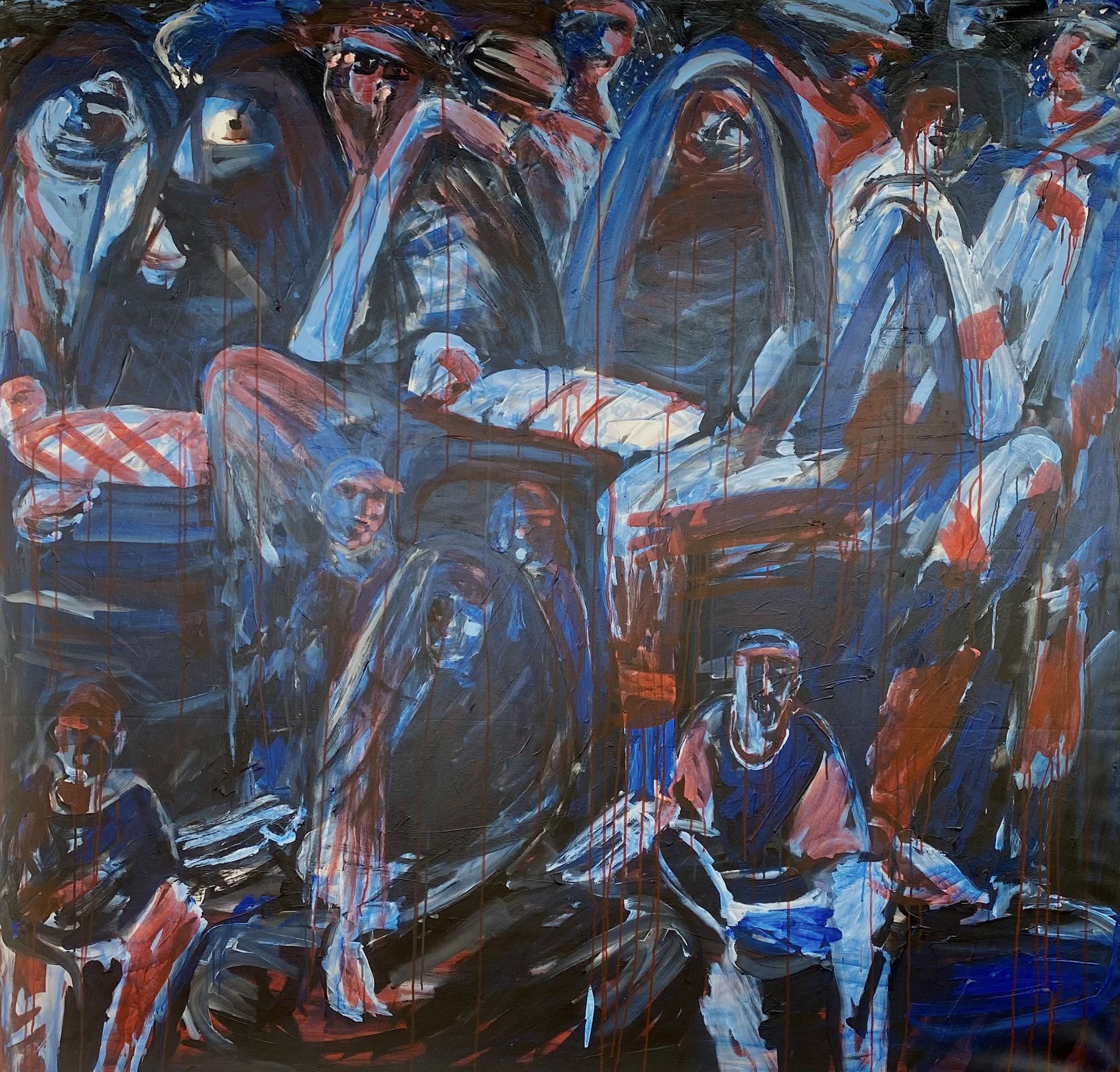
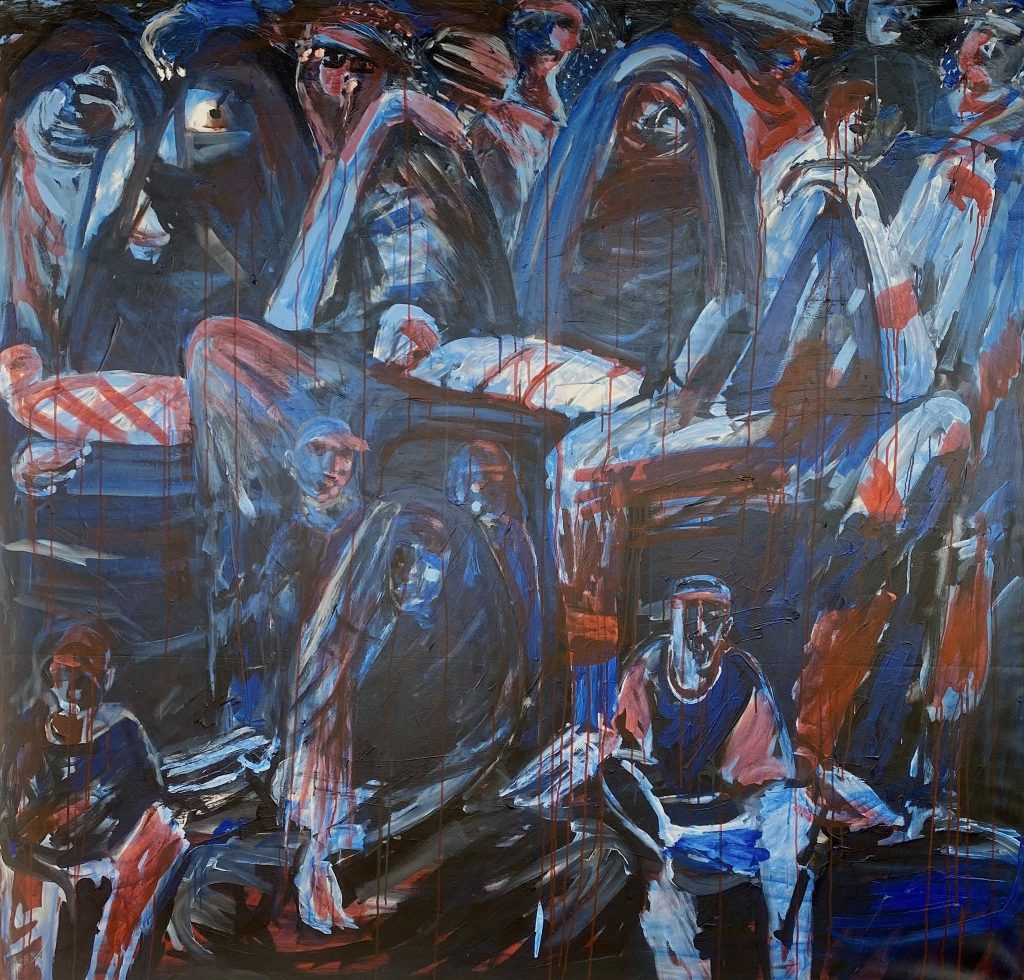
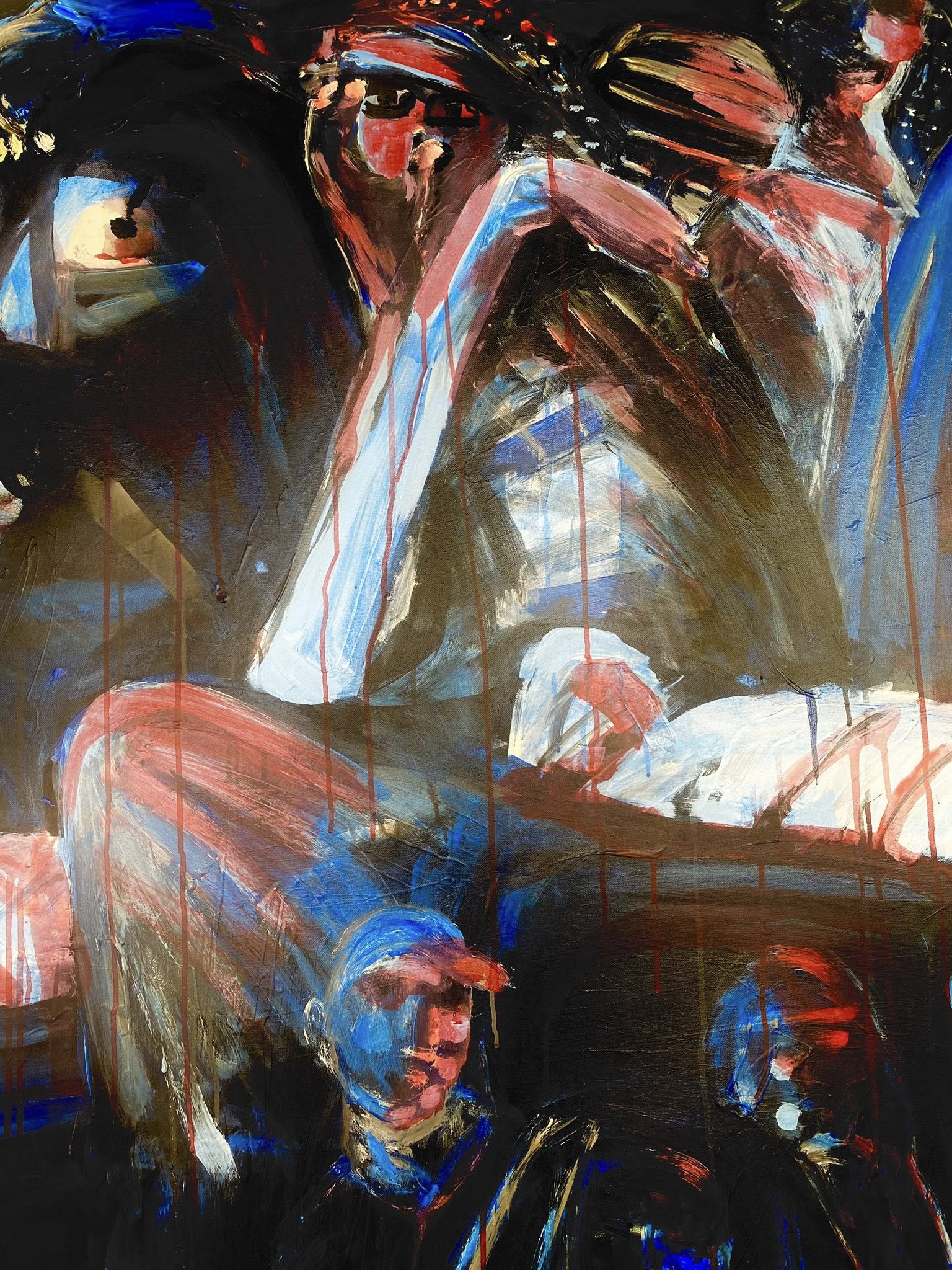
These were the words of Egyptian artist Abdel Razek Okasha, who has lived more than half his life in Paris, yet never forgot his Arab identity, his cause, and his belonging. Just as he painted for Palestine abroad, he now resists illness at home, continuing to create his latest body of work—among them a powerful painting titled “Genocide: The Al-Ahli Hospital.” A massive acrylic on canvas (2 × 2 meters).
The title “Genocide: The Al-Ahli Hospital” carries a direct weight of pain and protest. It doesn’t hide behind metaphor; it boldly declares itself as a visual testimony to a full-fledged crime. The deliberate use of the word genocide places us squarely in the heart of the event, not as a fleeting incident, but as a collective extermination.
This painting belongs to the school of contemporary expressionism—not aimed at photographic realism, but at conveying human tragedy through splintered color, fragmented form, and emotionally charged linework.
The artist deploys a sharp, symbolic triadic palette: blue, red, and black.
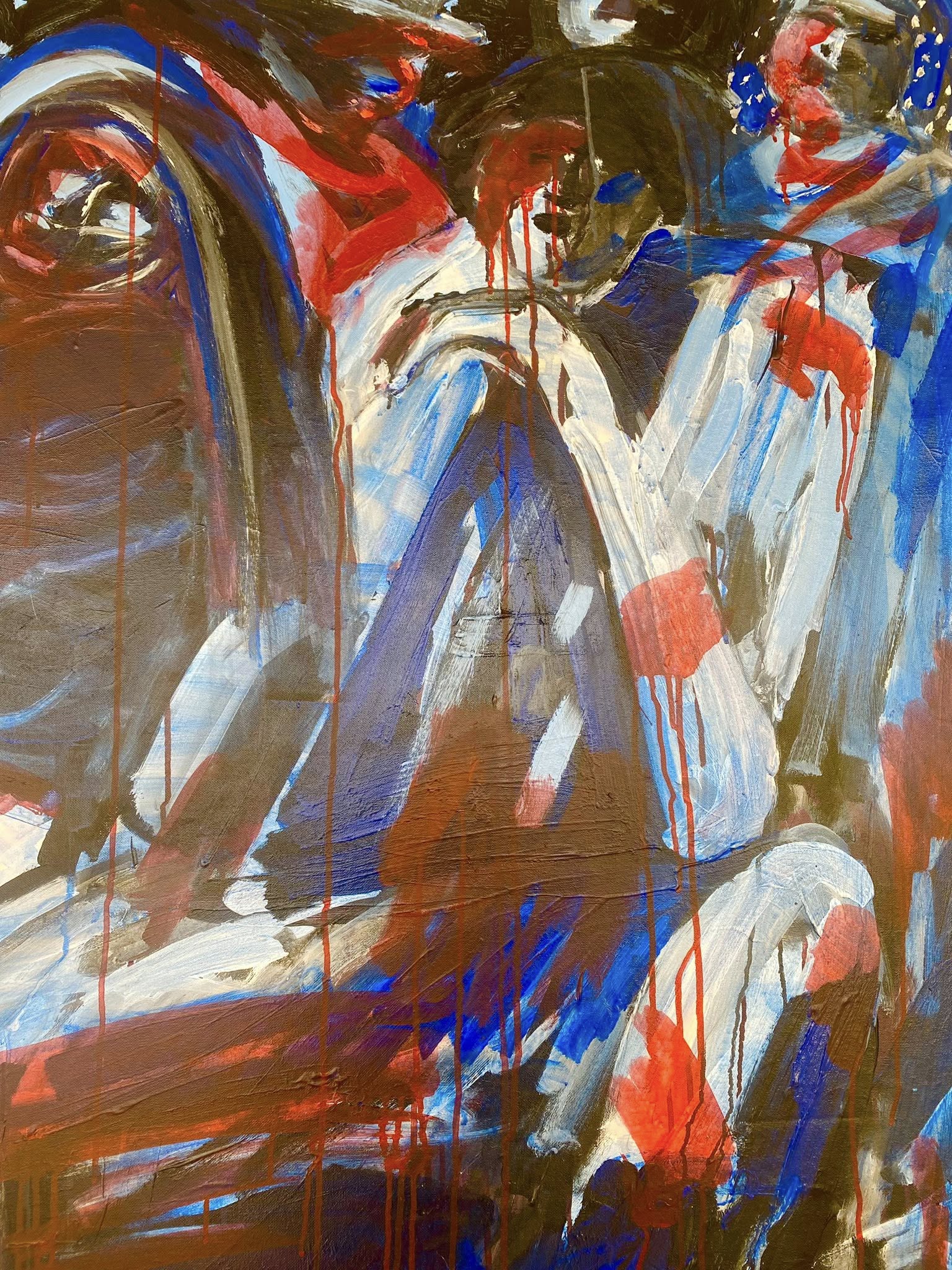
Red—the color of blood—pours from bodies, from eyes, from the void itself, as if bleeding cannot be stopped. It shrouds tiny corpses in their cradles.
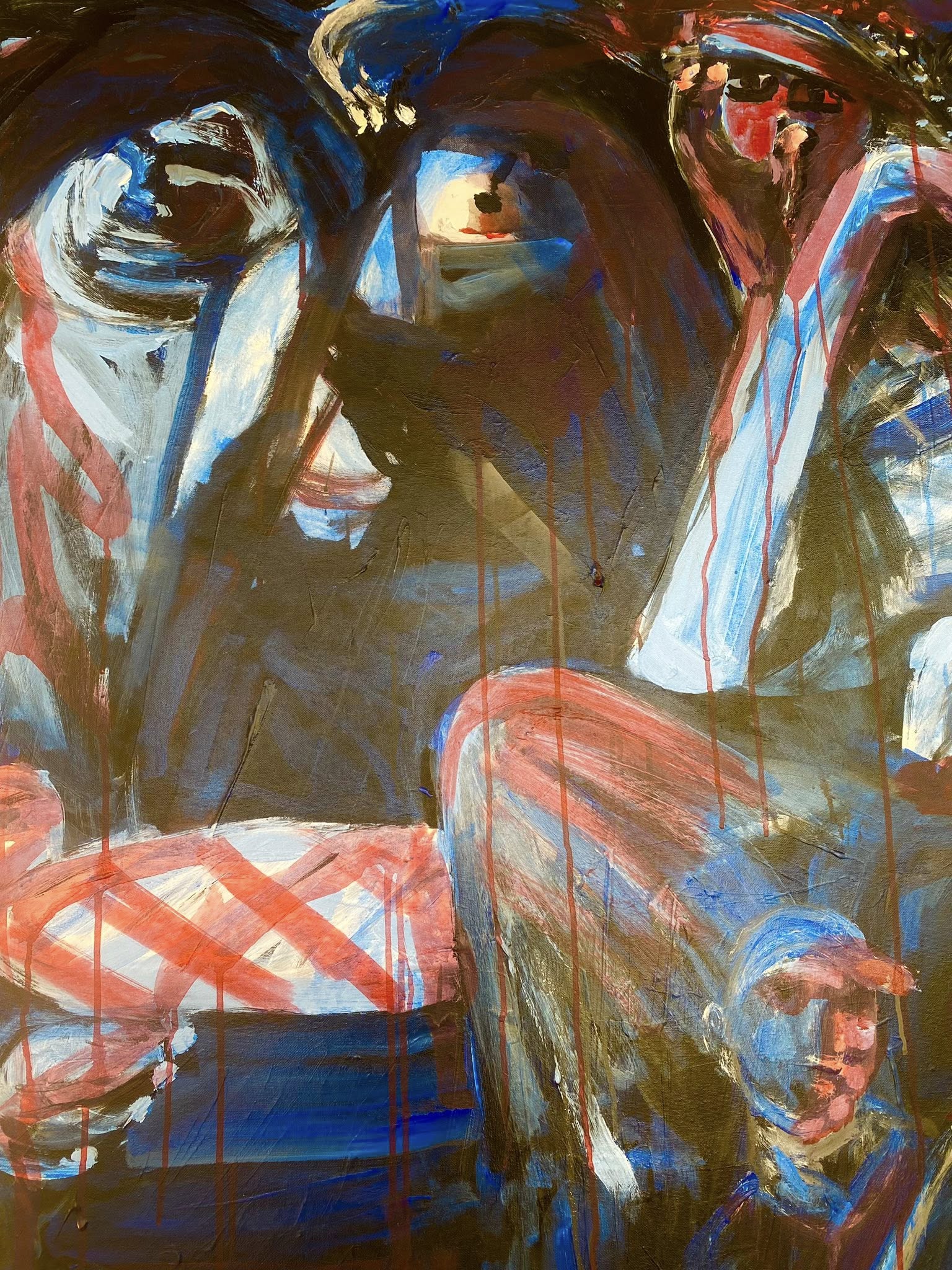
Blue—abundant and cold—represents death’s chill, enveloping corpses stretched on gurneys, or spirits suspended between sky and earth.
Black dominates—the moral and spiritual darkness cloaking a world that remains silent in the face of atrocity.
Okasha employs a dynamic, undulating style, where forms repeat and shatter across a vast square canvas. It evokes the chaos after the blast, the merging of screams with silence, pain with shock. There is no singular focal point; rather, overlapping centers emerge: a stunned face, a lifeless child, a bent elder, women sitting with bundles of death in their laps, a woman embracing a shadow. This composition generates a horrifying visual chaos—the chaos of indiscriminate death.
Acrylic, with its fast-drying properties, is used here to produce a dripping effect. The paint appears to bleed off the bodies, to stream from the brush, just as truth bleeds from the human tragedy depicted.
All are victims.
In this painting, victimhood appears in myriad forms:
Infants wrapped in white gauze streaked with red—evoking both medical bandages and funeral shrouds.
Women, their features erased by grief, become shadows of screams no one will hear.
Men with bowed backs hold or support bodies, as if bearing the collapsing memory of a nation.
Eyes do not meet the viewer but drift into voids, or vanish entirely—as if even the dead can no longer face what has befallen them.
We, the viewers, witness their pain in silence.
We stand with the painting’s victims—yet we too are victims, unseen, awaiting our turn to be painted.
On October 17, 2023, the Al-Ahli (Baptist) Hospital in Gaza was struck by a deadly airstrike that killed hundreds of civilians, mostly women and children. The hospital had been a refuge for those fleeing the Israeli assault. The massacre shocked the world and stands as a documented war crime against humanity and the Palestinian people.
This painting is part of a body of testimonial works. The artist does not merely depict the event—he paints his inner wound in response to it.
He does not offer us a story but a visual cry.
Every detail reveals an artist who is shaken, enraged, devastated. That’s what gives the work its overwhelming power.
This is not merely a visual document of the Al-Ahli massacre—it is a symbolic act of resistance.
Okasha here moves beyond traditional aesthetics into what might be called the aesthetics of human rage.
This painting puts the world on trial, condemns its silence, and says—through the language of color—what words could never fully express.
قراءة نقدية: خالد سليمان طريق الحرير اليوم ـ تونس ـ ربما لا نبالغ إن قررنا أن فيلم “دار العرس” هو أحد أكثر الأفلام الكوميدية رقيًا التي افتقدتها السينما التونسية منذ…
من طوقاي إلى طريق الحرير: لقاء القاهرة يفتح آفاقًا جديدة للحوار الثقافي بين روسيا والعالم الإسلامي
القاهرة – 15 سبتمبر 2026 التقى الدكتور أشرف أبو اليزيد، الأمين العام لمؤتمر الصحفيين الأفارقة ورئيس تحرير سلسلة «إبداعات طريق الحرير» في القاهرة، صباح اليوم، وفدًا من مجموعة الرؤية الاستراتيجية…
 thesilkroadtoday