 thesilkroadtoday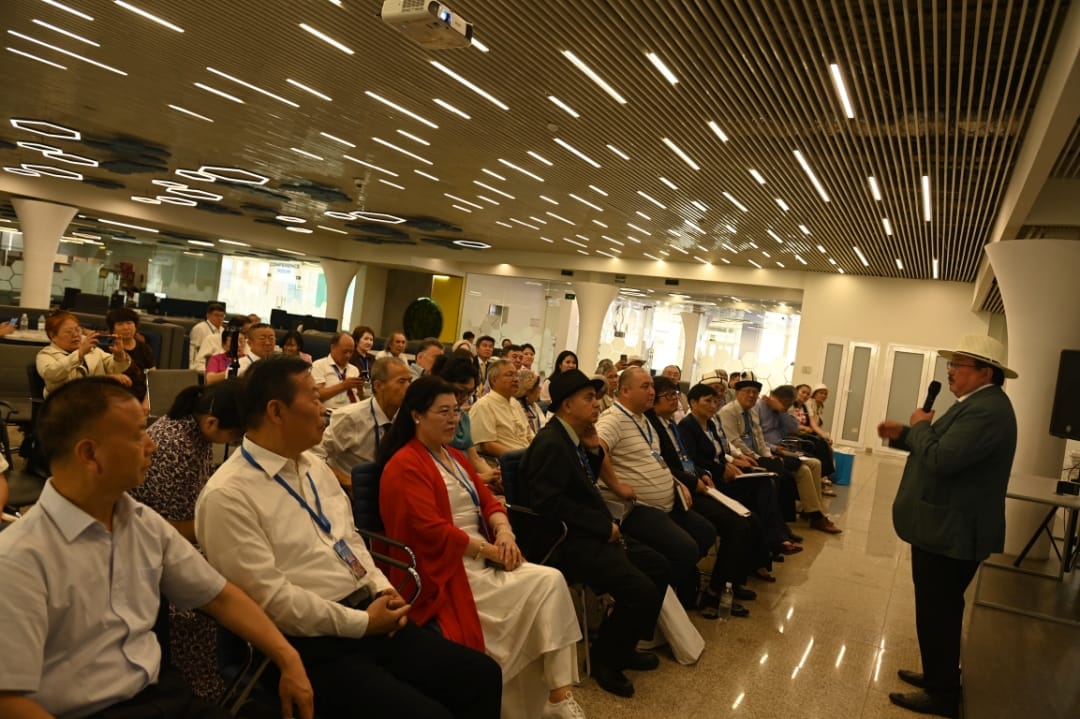
Hong Kong Literature Award Ceremony Held in Grand Style in Almaty, Central Asia

Almaty, Kazakhstan — July 26, 2026: Under the midsummer skies of Almaty, surrounded by snow-capped mountains and inspired by the enduring poetic spirit of the Silk Road, the closing ceremony and international awards gala of the 6th Silk Road International Poetry and Art Festival was held at the Almaty City Library in Kazakhstan.
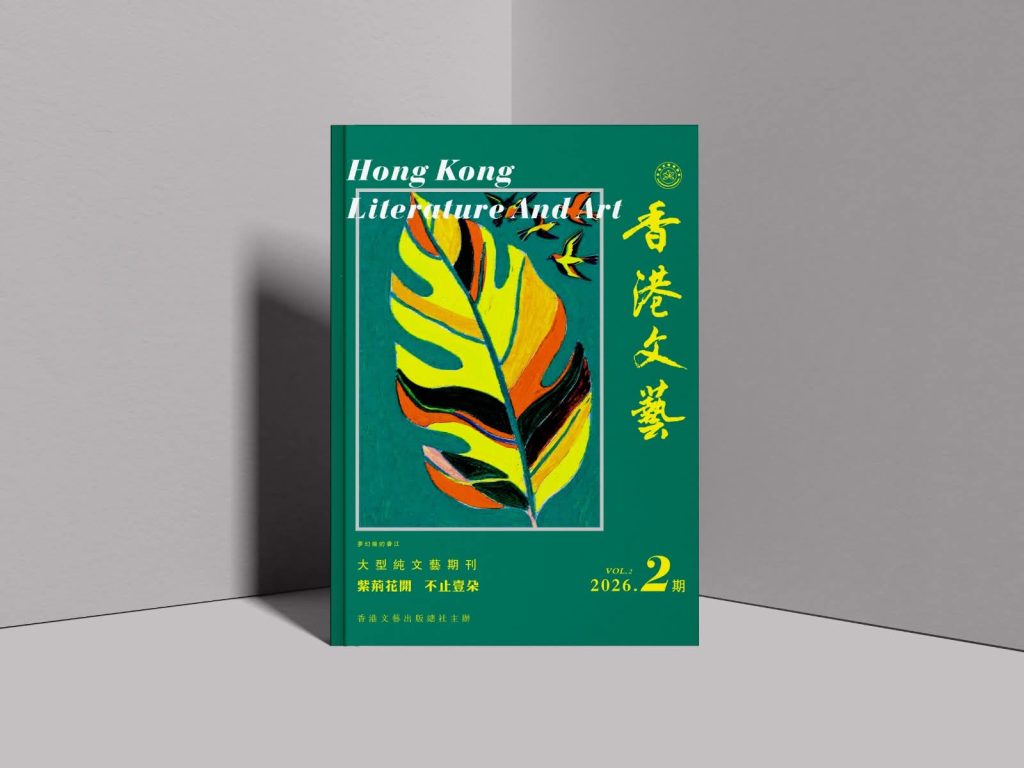
A major international literary honor, the Hong Kong Literature and Art Award, established by Hong Kong Literature, a large-scale bimonthly literary magazine published by Hong Kong Literature Publishing House, was formally announced and presented during the ceremony. On behalf of Mr. Zhang Jianguang, President of Hong Kong Literature, and Mr. Tan Yantong, Editor-in-Chief, Chinese representatives Cao Shui, Vice President of the Hong Kong Academy of Literature and Art Research; Wang Fangwen, President of the Silk Road International Poetry and Art Festival; and Liu Xunfu, President of the Beijing China Oriental Poetry, Calligraphy and Painting Academy, presented honorary certificates to three distinguished poets whose careers have been devoted to promoting dialogue among civilizations along the Silk Road: Ulugbek Yesdaulet of Kazakhstan, Ashraf Aboul-Yazid of Egypt, and Altynai Temirova of Kyrgyzstan.

The presentation marked a significant cultural bridge between Hong Kong and the literary communities of Central Asia and the Arab world, highlighting the growing role of literature in strengthening international cultural dialogue.
The 6th Silk Road International Poetry and Art Festival was jointly organized by a range of international literary and cultural institutions, including the UN World Silk Road Forum, the Silk Road International Poets Federation, the World Union of Turkic Writers, the Great Poetry Movement, the BRICS Writers Association, the International Writers Association, World Poets magazine, and other organizations. The festival brought together nearly one hundred poets, writers, scholars, and cultural figures from more than ten countries, including China, Kazakhstan, Uzbekistan, Kyrgyzstan, Tajikistan, Turkmenistan, Russia, Egypt, Türkiye, Azerbaijan, and Armenia.
Based in Almaty, a major crossroads of the Central Asian Silk Road, the week-long festival used poetry as a vehicle for intercultural dialogue. Its program included keynote speeches, international literary awards, new-book launches and translation exhibitions, public book donations, a World Peace Poetry Recitation Conference, and extensive literary and cultural field trips across Central Asia. Participants visited historic Silk Road sites in Uzbekistan and Kazakhstan, tracing the layers of civilizations that once connected East and West while drawing inspiration for new literary creations.
The Hong Kong Literature and Art Award became one of the most distinctive moments of the closing ceremony. Following a joint evaluation by the festival organizing committee and Hong Kong Literature, Ulugbek Yesdaulet, Ashraf Aboul-Yazid, and Altynai Temirova were selected in recognition of decades of international cultural and literary work.
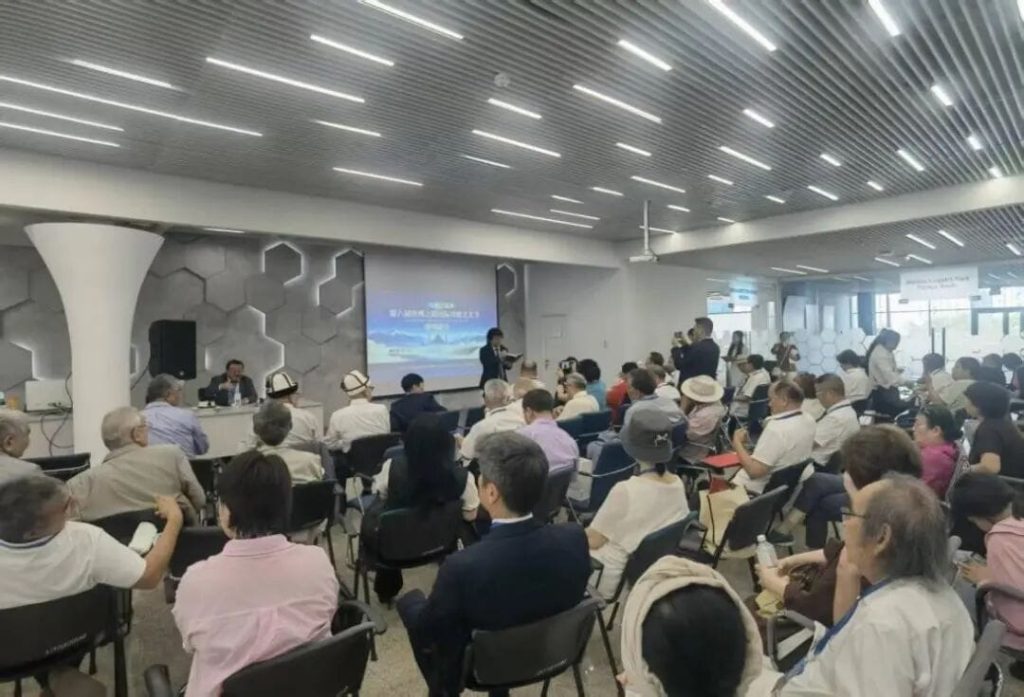
Cao Shui and Wang Fangwen jointly presided over the award presentation and read written messages from Zhang Jianguang and Tan Yantong. The messages emphasized that the ancient Silk Road was not merely a commercial route but also a road of intellectual exchange, literary communication, and mutual understanding. The three laureates, through decades of crossing linguistic and geographical boundaries, have contributed to dialogue among different literary traditions and embody the magazine’s cultural ideal of allowing every civilization to express its own beauty while creating a space in which different forms of beauty can flourish together.
Cao Shui also introduced the history of the Hong Kong Literature and Art Award and noted that the certificates were designed by renowned Chinese sculptor Zhang Guoliang.
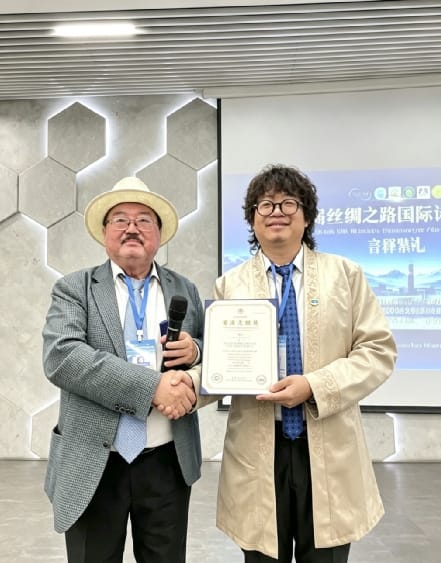
Receiving their certificates and medals of the Great Poetry Movement, the three laureates each delivered words of appreciation. Ulugbek Yesdaulet described the award’s presentation in Almaty as an important symbol of closer ties between Central Asian literature and the Chinese-language literary world of Hong Kong. He expressed his commitment to further promoting translation and exchange between Turkic and Chinese poetry.

Ashraf Aboul-Yazid, the Egyptian poet, journalist, translator, President of the Asian Journalists Association, Secretary-General of the Congress of African Journalists, Editor-in-Chief of The Silk Road Today, and Africa Coordinator of the Great Poetry Movement, emphasized the potential of Hong Kong Literature as a platform for expanding Arab–Chinese literary cooperation. He proposed continued collaboration in publishing joint Arab–Chinese poetry anthologies and organizing exchanges among poets, allowing Arab and Eastern poetic traditions to meet and resonate along the Silk Road.

Altynai Temirova, the Kyrgyz poet, playwright, and translator, said that the honor would encourage a new generation of Central Asian poets to explore Silk Road themes and use poetry to express a shared vision of peace and coexistence.
Three Literary Bridges Across the Silk Road
The three laureates represent important literary traditions within the wider Silk Road cultural sphere.
Ulugbek Yesdaulet, a renowned Kazakh poet, playwright, and translator, is former Chairman of the Writers’ Union of Kazakhstan and Chairman of the World Union of Turkic Writers. A recipient of major national literary distinctions and the title of National Honored Artist, he studied journalism at Moscow State University and is regarded as one of the important figures in the development of modern free verse in Kazakhstan. He has published numerous poetry collections and literary works and has played a longstanding role in organizing Central Asian literary dialogue and promoting exchanges between Turkic and Chinese literary traditions.
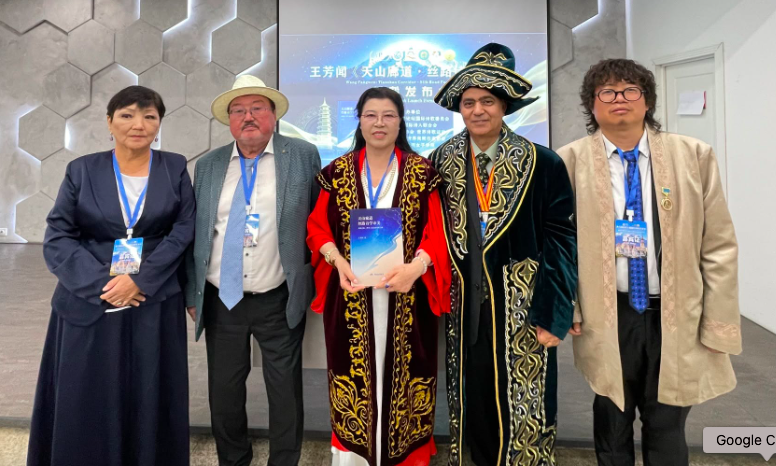
Ashraf Aboul-Yazid is a veteran Egyptian poet, journalist, literary translator, and cultural figure. Over more than three decades, he has worked extensively in international cultural communication and has published more than forty volumes of poetry, fiction, and literary criticism. His works have appeared in more than ten languages. His activities have included literary translation, international publishing, journalism, and the development of the Silk Road Literature project. During the festival, his Arabic translation of Chinese poet Cao Shui’s epic Epic of the Eurasian Continent was published in Egypt, creating another channel of literary exchange between China and the Arab world.
Altynai Temirova, a Kyrgyz poet, playwright, and translator, is the Kyrgyzstan Coordinator of the Great Poetry Movement, a member of PEN International, and a prominent member of the Writers’ Union of Kyrgyzstan. A graduate of the Maxim Gorky Literature Institute in Moscow, she has written six original plays staged by national theaters in Kyrgyzstan and has devoted many years to multilingual literary translation involving Chinese, Russian, English, and German. She has also organized literary exchanges, joint Silk Road field trips, bilingual poetry publications, and international poetry exhibitions.
Hong Kong Literature Extends Its Literary Reach
Published by Hong Kong Literature Publishing House, Hong Kong Literature is a bimonthly literary journal with international standard serial number ISSN 2618-0839. Edited by Tan Yantong, with Cao Shui serving as Deputy Director of its Editorial Board, the magazine is distributed in mainland China, Hong Kong, Macao, Taiwan, and overseas Chinese communities.
The journal presents poetry, fiction, essays, literary criticism, screenwriting, calligraphy, painting, photography, and translated world literature. Its editorial philosophy emphasizes literary quality and aesthetic value while creating an open platform for writers from different countries and linguistic backgrounds.
In recent years, Hong Kong Literature has increasingly focused on international Silk Road literary cooperation, working with poetry festivals, literary organizations, and writers’ associations on international literary field trips, joint publications, bilingual special editions, and literary awards.
The presentation of the Hong Kong Literature and Art Award in Almaty represents an important expansion of this strategy, bringing a Hong Kong-based Chinese-language literary platform into sustained dialogue with Central Asian and Arab literary circles.
A Wider Cultural Program
The award ceremony was accompanied by several major literary initiatives. The Arabic edition of Cao Shui’s Epic of the Eurasian Continent, translated by Ashraf Aboul-Yazid and published in Egypt, was officially presented. The epic has been translated into twelve languages and circulated internationally.
Wang Fangwen’s theoretical study Silk Road Poetics: Aesthetic Studies of Silk Road Poetry in the Tianshan Corridor was also highlighted following its publication by a bilingual Australian publisher. In addition, the bilingual poetry anthology Camel Shadows on the Silk Road, edited by Wang Fangwen and translated by Cao Shui, brought together selected works by poets from more than seventy countries.
A public donation ceremony added books, calligraphy, and paintings to the collection of the Almaty City Library. During the World Peace Poetry Recitation Conference, Chinese and international poets jointly presented original works inspired by the Silk Road and the ideals of peace and human coexistence.
The festival’s literary delegation also traveled through historic sites in Uzbekistan and Kazakhstan, revisiting the landscapes and cultural remains of the ancient Silk Road. These encounters generated new poetry shaped by the meeting of Chinese and Central Asian cultural imagination.
The Hong Kong Literature and Art Award ceremony in Almaty thus became more than an awards presentation. It represented a broader movement toward literary cooperation across Asia and beyond—linking Hong Kong, China, Central Asia, and the Arab world through poetry, translation, publishing, and sustained cultural dialogue.
In the spirit of the ancient Silk Road, the new literary bridges being built today carry not silk or spices, but words, memories, imagination, friendship, and the enduring hope that literature can bring civilizations closer together.