 thesilkroadtoday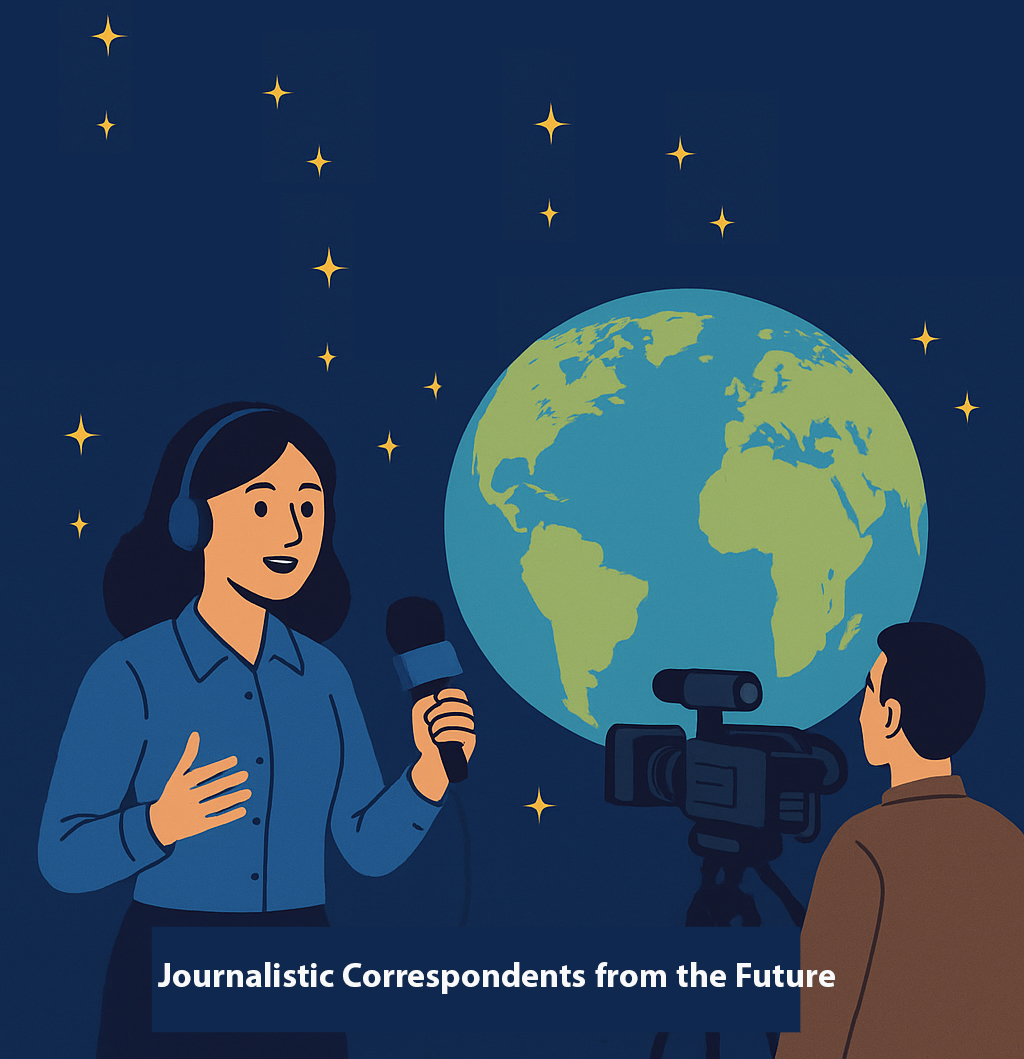
Victory cannot be achieved if goals are not united. Let me give you an example: imagine we are in a football match, but there are no goalposts. It would be impossible to score, no matter how skilled the players are, and the movement would descend into chaos.
This is where the desired change lies—in defining clear goals and planning how to achieve success by reaching them. The question then arises: who sets these goals?
We can agree, to begin with, on the importance of preserving cultural heritage, language, education, and identity, while also integrating new humanistic values into the collective consciousness. These goals are not merely aspirations of certain societies; they are shared by humanity at large. They are enshrined in international and regional constitutions, advocated by both divine and earthly faiths, and, above all, they respond to the very values for which humanity was created: cooperation in goodness, living in peace, and dreaming of a better future.
Therefore, I believe that a great responsibility rests on all of us—including journalists—to become what we may call “journalistic correspondents from the future.” They are the ones who herald the future through words and images, where science becomes a support and not a weapon of domination, where relationships are supportive and not bridges for conspiracies, and where translation serves as an active tool for the circulation of ideas, much like branches exchanging birds that sing a polyphonic melody revealing the beauty of the human horizon.
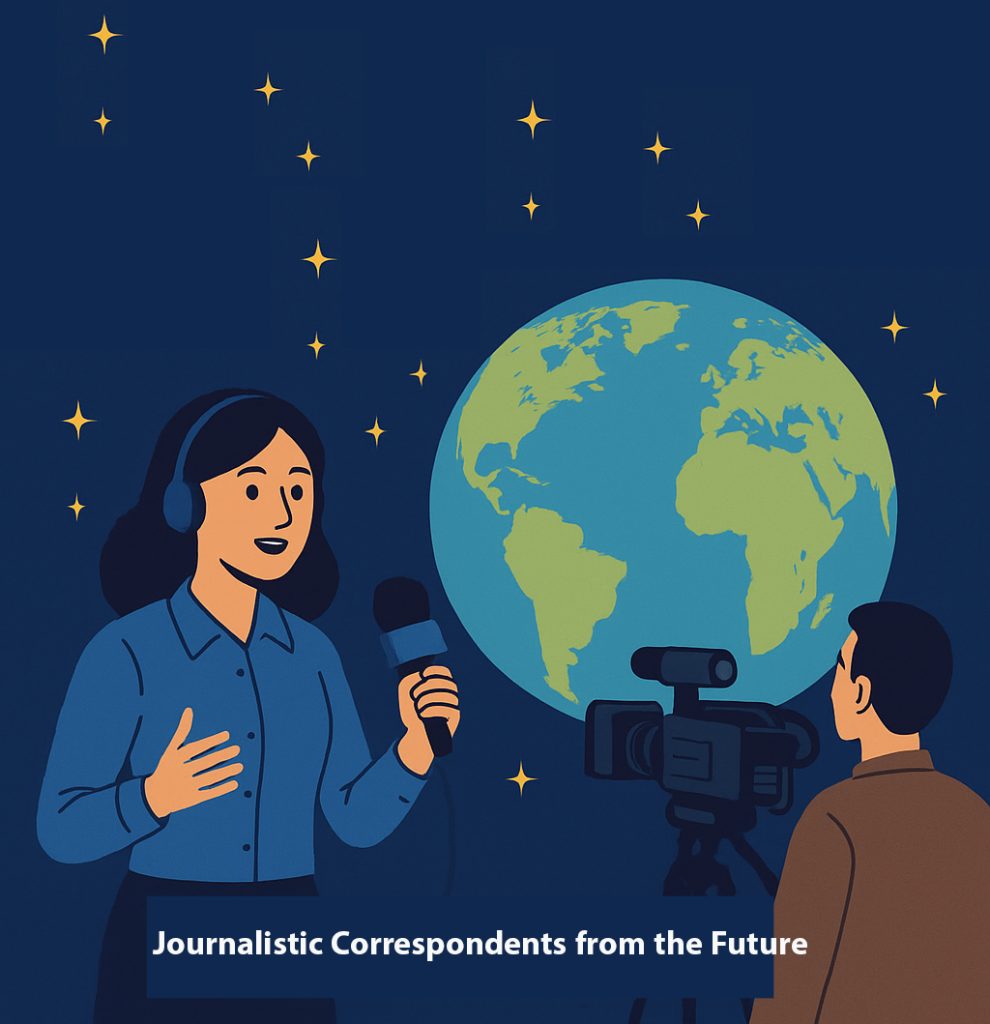 The mission of these “journalistic correspondents from the future” does not end with reporting the news or documenting events as they are; it goes beyond that to become a forward-looking vision. Their task is to link the present with what lies ahead, transforming the media from a mirror that merely reflects reality into a compass that guides toward tomorrow. They are called upon to practice journalism as a responsible act that balances integrity in documentation with the ability to inspire—speaking of crises as opportunities for change, and exposing wounds not to deepen the pain but to suggest remedies for healing.
They are the guardians of values that elevate human dignity, the creators of a new language of media discourse, one founded on knowledge instead of disinformation, dialogue instead of conflict, and unity instead of division. Just as an architect plans a new city or a scientist develops a vaccine to prevent disease, the journalist of the future builds bridges of trust among cultures and peoples, painting with words and images a humanistic canvas titled: Shared Life in One World.
These correspondents do not simply observe time—they participate in shaping it. They embody a “living memory” that preserves the heritage of the past, and a “conscious dream” that illuminates the horizon of the future.