
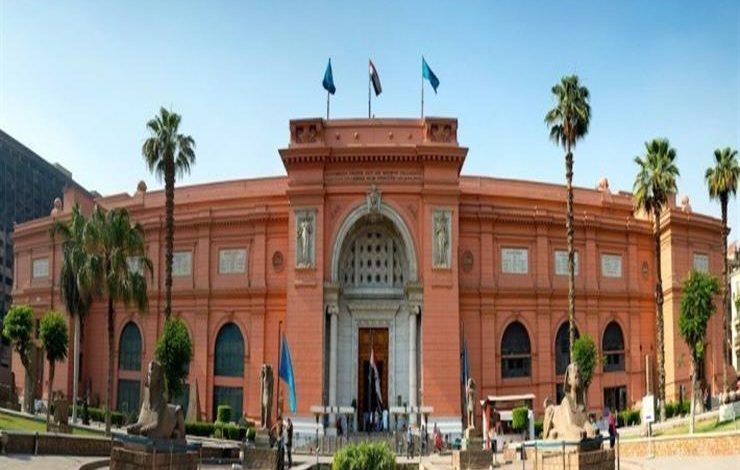
The Egyptian Museum in Tahrir…
The Spirit of Egypt, the Conscience of History, and the House That Never Closes
Dr. Hussein Bassir
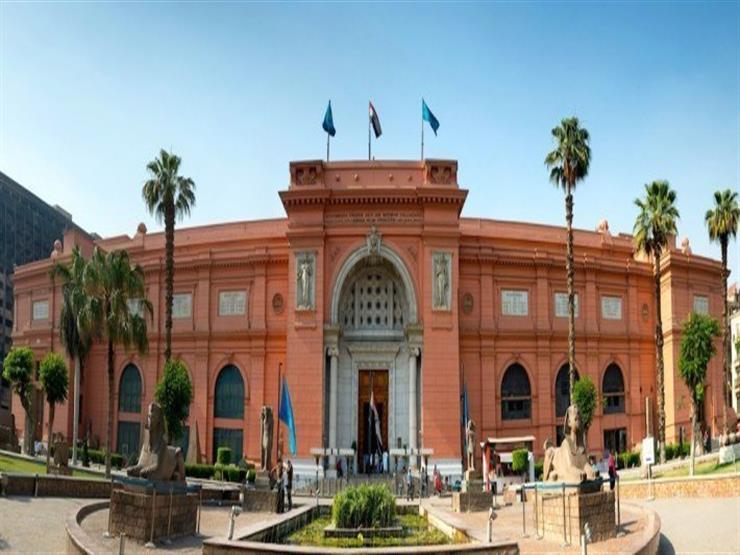
When you stand before the Egyptian Museum in Tahrir, you realize that you are facing a place that does not merely store antiquities—
it embraces history itself and safeguards the memory of humanity from the dawn of consciousness to the moment one of the greatest civilizations ever created reached its fullness.
This dignified rose-colored building is not stone laid upon stone; it is a beating heart in the body of Cairo—a heart that shaped the identity of modern Egypt, its awareness, its pride, and its sense that its civilization is not a bygone past, but a fundamental pillar of the world as we know it.
The Egyptian Museum was born in 1902, at a moment when the world was discovering Egypt with the wonder of a child learning to speak for the first time. It was in this museum that history spoke clearly and declared to the world: Here, the state was born. Here, the idea began. Here, humanity learned how to build, how to think, how to write, and how to dream.
The museum emerged at a time when it had to defend Egypt’s antiquities against theft, plunder, and smuggling. Egyptians had to prove to the world that their heritage was not a prize to be seized, but a human legacy that must remain rooted in its own context. From that day on, the Egyptian Museum became the first line of defense for the identity of the nation. The ordinary Egyptian—before the rest of the world—came to know that every statue in this place has a story, every object carries a soul, and every hall is a lesson in history that cannot be erased.
For more than a century, the museum has welcomed millions of visitors from all over the world, but it welcomed before them thousands of scholars who came seeking truth in the eyes of gods, kings, workers, and priests. Entire chapters of Egyptology were written in its galleries, and in its storerooms secrets were uncovered that had been known only to those who lived five thousand years ago.
This museum is not merely a museum—
it is a global university, an intellectual laboratory, and an irreplaceable repository of civilization.
 For more than a century, the museum has welcomed millions of visitors from all over the world, but it welcomed before them thousands of scholars who came seeking truth in the eyes of gods, kings, workers, and priests. Entire chapters of Egyptology were written in its galleries, and in its storerooms secrets were uncovered that had been known only to those who lived five thousand years ago.
The role of the Egyptian Museum extends far beyond displaying antiquities. It presents history in its original form, before interpretation reshaped it or modern narratives intervened. Here, the visitor sees statues untouched by oblivion, mummies defying death for eternity, and the tools that ancient Egyptians used in love, work, worship, and celebration.
Here, history is not preserved—
it is alive.
With the opening of the Grand Egyptian Museum, some imagined—perhaps with good intentions—that the old museum had completed its mission. But the truth is that the Egyptian Museum in Tahrir was not created to finish a role and then retire. It is a permanent institution and a foundational pillar of Egypt’s heritage landscape.
Across the world, historic museums stand alongside their modern counterparts, because the buildings themselves contain memories that cannot be relocated.
If the objects were moved, who could move the history of the scholars who walked these halls?
Who could transfer the spirit of the city that grew in its presence?
Who could recreate the echo formed over 123 years of discovery, science, and scholarship?
The Egyptian Museum in Tahrir is the museum of the world’s museums—
the first purpose-built museum for antiquities in modern history and, at one time, the only place through which the world knew ancient Egypt.
It is the book from which humanity read the first chapter of civilization,
and the window through which the world looked upon the most complete ancient story ever told.
For this reason, the Egyptian Museum must remain a museum—its function neither altered nor replaced, regardless of temptations or justifications. Changing it is not a change in a building; it is a wound in the nation’s memory and an erasure of a vital part of its scientific, cultural, and human history.
The Egyptian Museum cannot be replaced, because it is not matter—it is meaning.
Not walls—but identity.
Not a building—but living history.
And every time you enter it, you can almost hear Egypt speaking to you:
“Protect my soul… Preserve my memory…
Here I began, and here I must remain.”
The Egyptian Museum in Tahrir is Egypt—
and Egypt does not die