 thesilkroadtoday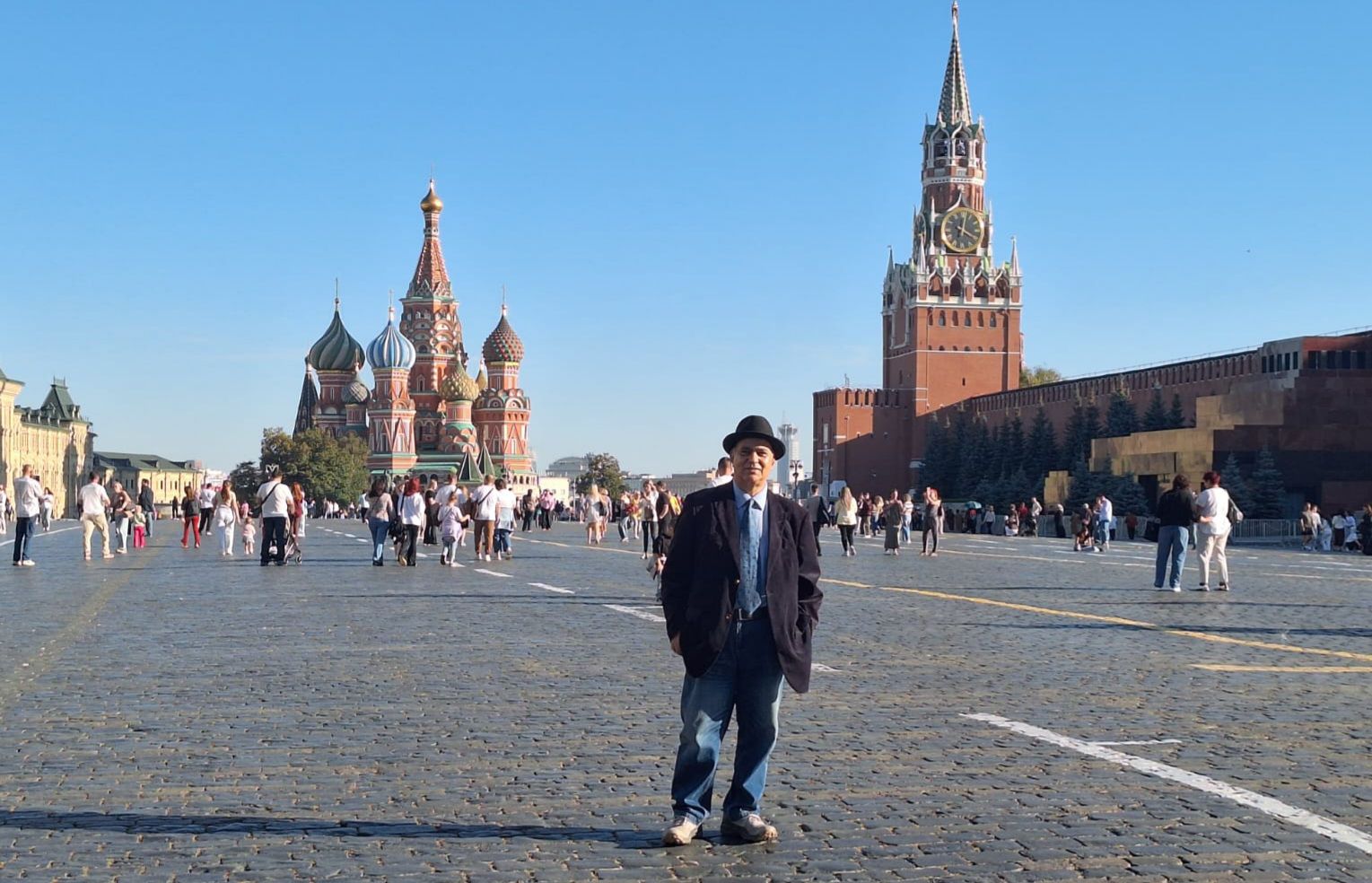
The year 2025 was rich in movement, travel, and multi-directional cultural work—a year in which geography intersected with creativity, and personal experience converged with public cultural action, grounded in a firm belief in the role of the word, art, and knowledge in building bridges among peoples.
Major Journeys of the Year: Moscow as a Turning Point
The Russian capital, Moscow, stood out as the most significant destination outside Egypt in 2025. Although I have visited Russia nearly twenty times, Moscow had previously been little more than a transit point on the way to Kazan, the capital of Tatarstan, one of the republics of the Russian Federation. My journeys in September and November, however, together compensated for that earlier passing presence and marked a turning point across multiple cultural and intellectual trajectories.
In Moscow, the Second Conference of the World Writers Organization (WOW) was convened, where I serve as Vice President. During the conference, I chaired a roundtable on media, held in parallel with the Forum of the World Peoples Association, where I delivered a lecture titled “Humanitarian Modernization as an Imperative of Sustainable Development.” I later returned to Moscow by official invitation from the Association as a keynote speaker at the International Press Meeting entitled “The Role of Journalism in a Changing World: How Media Shapes the Future,” attended by Andrey Yuryevich Belyaninov, Secretary-General of the Association. My lecture was subsequently published in a trilingual book (Arabic, English, and Russian) under the title Modern Journalism: Between the Fourth Estate and Digital Chaos.
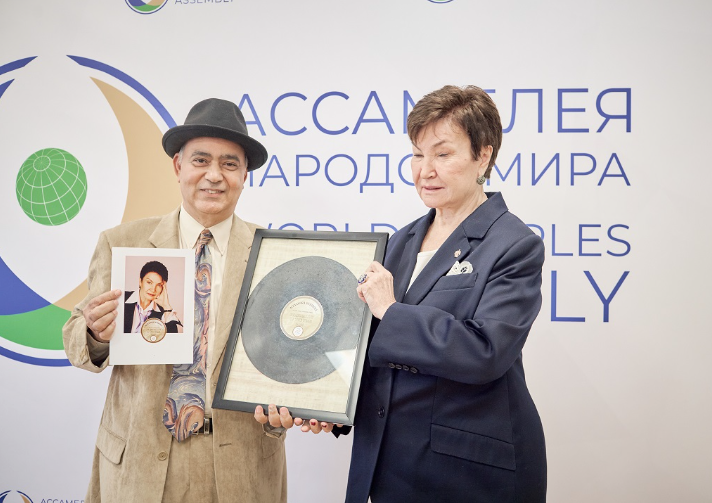
The Silk Road Literature Shield: Honoring Human Values
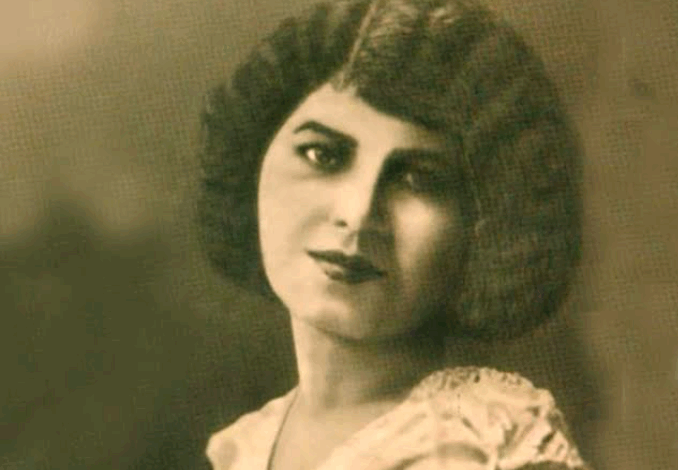
At the conclusion of the International Press Meeting, I announced the launch of the first edition of the Silk Road Literature Shield, awarded to the Cultural Personality of the Year on the occasion of the tenth anniversary of the Silk Road Literature Series. This year’s honor was bestowed upon Dr. Alexandra Ochirova—poet, philosopher, and UNESCO Goodwill Ambassador. The occasion was celebrated with her book Russian Cosmism, whose English edition, published within the Silk Road Literature Series, won the WOW Poetry Award.
Dr. Ochirova is a member of the Russian Academy of Arts and is internationally renowned for her role in promoting culture, dialogue, and human values. Her contributions to philosophy, poetry, and intercultural understanding continue to leave a profound impact on readers worldwide. With this award, the Silk Road Literature Series inaugurated a new annual tradition to honor cultural figures whose creative and intellectual works embody the spirit of peace, artistic excellence, and civilizational dialogue—affirming that creativity grounded in knowledge, compassion, and beauty represents the highest form of human communication.
The Silk Road Project: From Journey to Cultural Institution
The Silk Road Project began as journeys across its historic stations in 37 countries I visited, then evolved into an Arabic encyclopedia published by the Bibliotheca Alexandrina, a children’s series serialized weekly over four years in an Arab magazine under the title Majid’s Adventures on the Silk Road, a regular seminar in one of the most prominent Arab cultural magazines, and a series of authored and translated books.
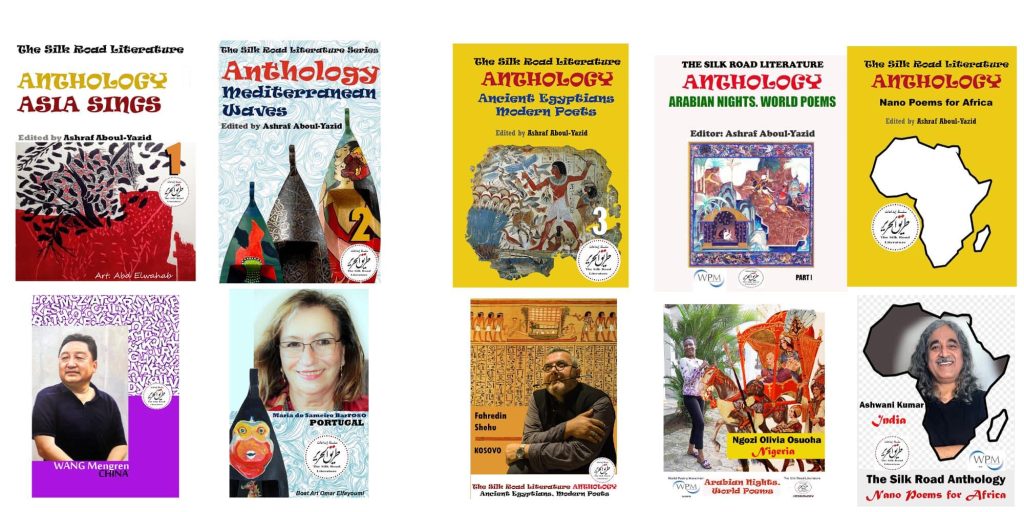
The project further expanded into the Silk Road Anthology, which produced volumes such as Asia Sings, Mediterranean Waves , Arabian Nights: World Poems, Ancient Egyptians and Modern Poets, and most recently Nano Poems for Africa, with the participation of hundreds of poets from across the continents of the world. The launch of The Silk Road Today website followed, creating a space for the global creative community, complemented by cross-border digital encounters—culminating in a cultural and humanistic award that carries this timeless name. Even the award I received this year—African Poet of the Year 2025—was granted by a festival bearing the name “Silk Road,” organized by China, with its latest edition held in Dubai.
Translation: Crossing Texts Between Languages
The year witnessed remarkable activity in the field of translation. I translated the novella I, Cleopatra by the Russian writer Inna Natcharova, and we celebrated together the launch of its bilingual edition (Arabic–Russian) in Moscow. I also translated the play Ibalé – The Broken Pot by the Nigerian playwright Easther Adelana. In addition, I completed the translation of The Epic of Eurasia by the Chinese poet Cao Shui, rendered from the English text by the American poet George Wallace, scheduled for publication in January 2026.
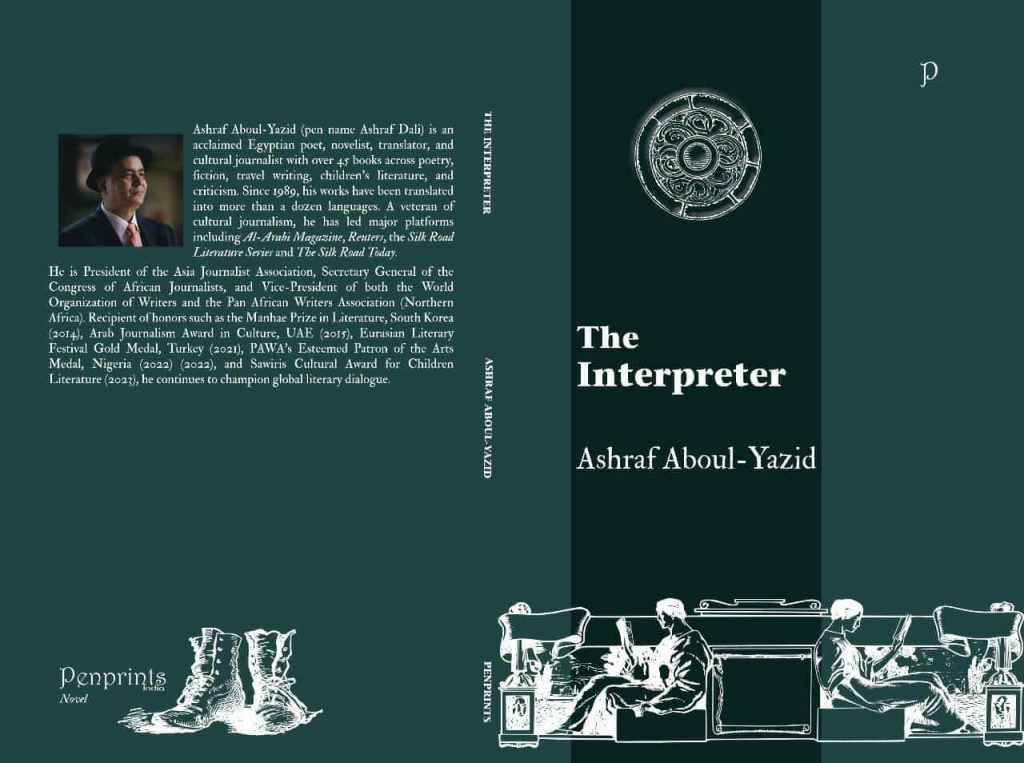
January will also see the English edition of my novel The Interpreter presented at the Kolkata Book Fair, following an agreement with the prestigious Indian publishing house Penprint to publish its English version.
Special Attention to Children’s and Young Adult Literature
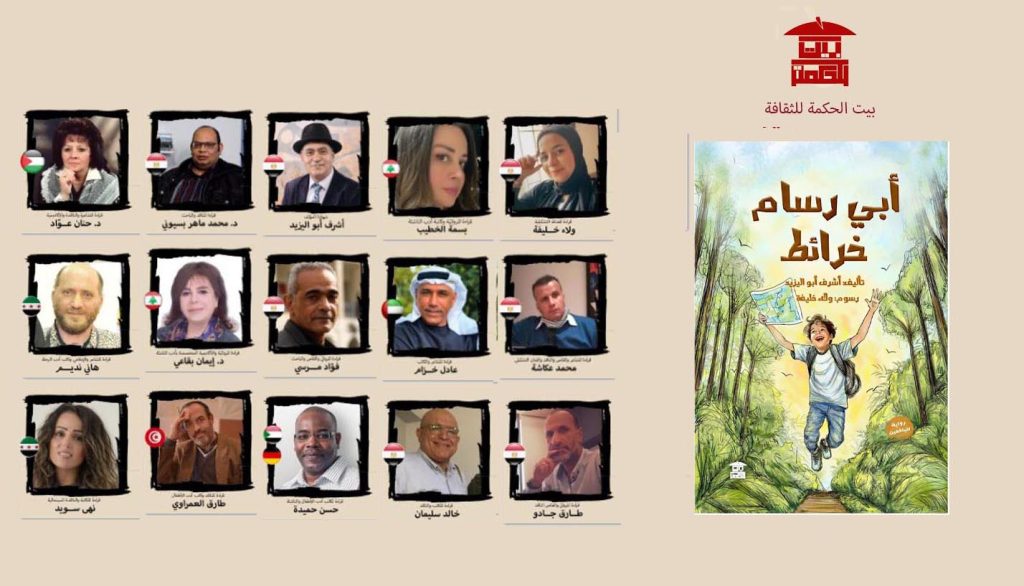
Children’s literature received particular care throughout the year. Following the publication of my book My Father, the Mapmaker by Bait Al-Hekma Publishing House, I gathered my poems for young readers—illustrated by the late artist Helmy El-Touni and previously published in scattered form—to appear collectively in an independent poetry volume titled The Poet. I also translated a third folk tale by the great Tatar poet Abdullah Tukay, entitled The Bride of the Lake and the Golden Comb, after previously translating two of his works, Shurale and The Goat and the Sheep, both published in the Arab Child’s Book series, from which each title once printed 128,000 copies before the series was discontinued.
Anthologies and World Poetry
My presence in the world of poetic anthologies shone through the landmark global publication The Nuclear Explosion: Selected Works by Poets Representing the Three Major Poetic Movements of Today’s World. This three-volume work brings together 36 poets from 18 countries across five continents and has been described by critics as the first global textbook of poetry. Within it, the poet Cao Shui translated ten of my poems into Chinese.
In India, the third edition of the Seven Languages Anthology, compiled and edited by the Indian poet and translator Meesna Chanu, was released. I edited the Arabic section, presenting fourteen Arab poetic voices in Arabic alongside my English translations.
Glad to see my poems finding a new voice in Marathi, within an anthology that brings together poets from across continents in a shared celebration of humanity and verse. This collection stands as a testament to the universality of poetry and the power of cultural dialogue beyond borders.
Additionally, a new book by researcher Dr. Mohamed Said was published, based on his doctoral dissertation titled Egyptian Journeys to India: The Literature of Ashraf Aboul-Yazid as a Model. The book offers an in-depth analytical study of Egypt’s presence in travel literature to India across historical periods, culminating in the distinctive experience of the Egyptian poet, novelist, and traveler Ashraf Aboul-Yazid.
 Media Presence and Cultural Encounters
Throughout the year, I met television audiences through several programs on Nile Cultural Channel, including Behind the Scenes, featuring a perspective on Korean cinema, and From Another Angle in April, where I discussed my book Naguib Mahfouz: The Narrator and the Artist on the occasion of its publication in English and Serbian. In June, I returned to Behind the Scenes to speak about The Cinema of Travel Literature, and in October, I was a guest on Bayt Al-Qasid, reflecting on my journey in poetry, fiction, and travel writing.
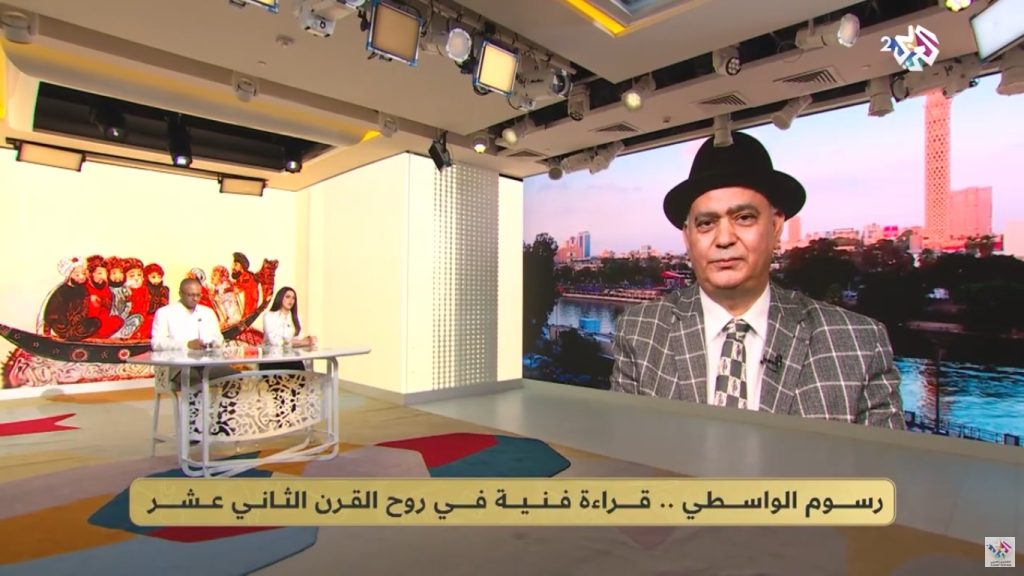
I was also hosted by Al Araby 2 Channel to discuss the art of miniatures and Al-Wasiti’s illustrations in Maqamat Al-Hariri.
I participated as well in several virtual events, including the Chandabhaga Poetry Festival (CPF) 2025, held on January 11–12 in the historic city of Konark, in collaboration with Centurion University and the Institute of Knowledge Societies (IKS). The festival featured dialogue sessions, intellectual discussions, and distinguished poetry performances by prominent poets from India and around the world, affirming poetry’s role as a bridge for human communication and cultural convergence.
Live Readings and Public Dialogues
Live encounters were shared between Benha and Cairo. The Literature Club at Benha Culture Palace discussed my poetry selection Poems, while the Poetry Section of the Egyptian Writers’ Union hosted a joint evening with poet Mohamed Okasha, moderated by poet Atef El-Gendy. At Beit Al-Hikma, writer Dr. Mohamed Maher Bassiouni led an extensive seminar on My Father, the Mapmaker, with the participation of twenty Arab creatives.
We also held two major cultural events at Darna Museum, founded by the distinguished visual artist and novelist Abdel-Razek Okasha. In the first, I reflected on my literary journey in an intellectual session moderated by Dr. Hussein Abdel-Basir, opening a dialogue on experience, writing, and their transformations. The second event celebrated the release of the Malayalam translation of my poetry collection Memory of Silence, within the framework of the First Afro-Asian Literary Forum, which brought together a select group of academics and critics from India and the Arab world—an encounter that embodied the spirit of cross-cultural dialogue and affirmed the word as a bridge for human connection.
Academic Achievement
The most significant personal milestone of the year was earning my PhD from the American University of Science and Technology in Delaware. My dissertation, titled Crisis Management in the Arabic Novel and Its Social Impact, examined the Arabic novel as an effective instrument of social change, analyzing narrative transformations from autobiography to complex novelistic structures. The dissertation is currently being prepared for publication as a book in 2026.
Alongside my affiliation with the World Poetry Movement (WPM) founded by Colombian poet Fernando Rendón, the Great Poetry Movement (GPM) launched by Chinese poet Cao Shui, and the World Organization of Writers (WOW) chaired by Russian poet Margarita Al, I have been honored to engage in multiple cultural and institutional pathways, all united by a deep belief in the role of the word in shaping human consciousness.
I was pleased to receive honorary membership in the Palestinian PEN Club, founded and chaired in Jerusalem by poet Dr. Hanan Awwad, in recognition of a cultural journey that views creativity as an act of resistance and a means of preserving identity. I was also honored to be elected Vice President of the Pan-African Writers Association (PAWA) for North Africa, headquartered in Accra, a responsibility that opens new horizons for dialogue among African creative voices.
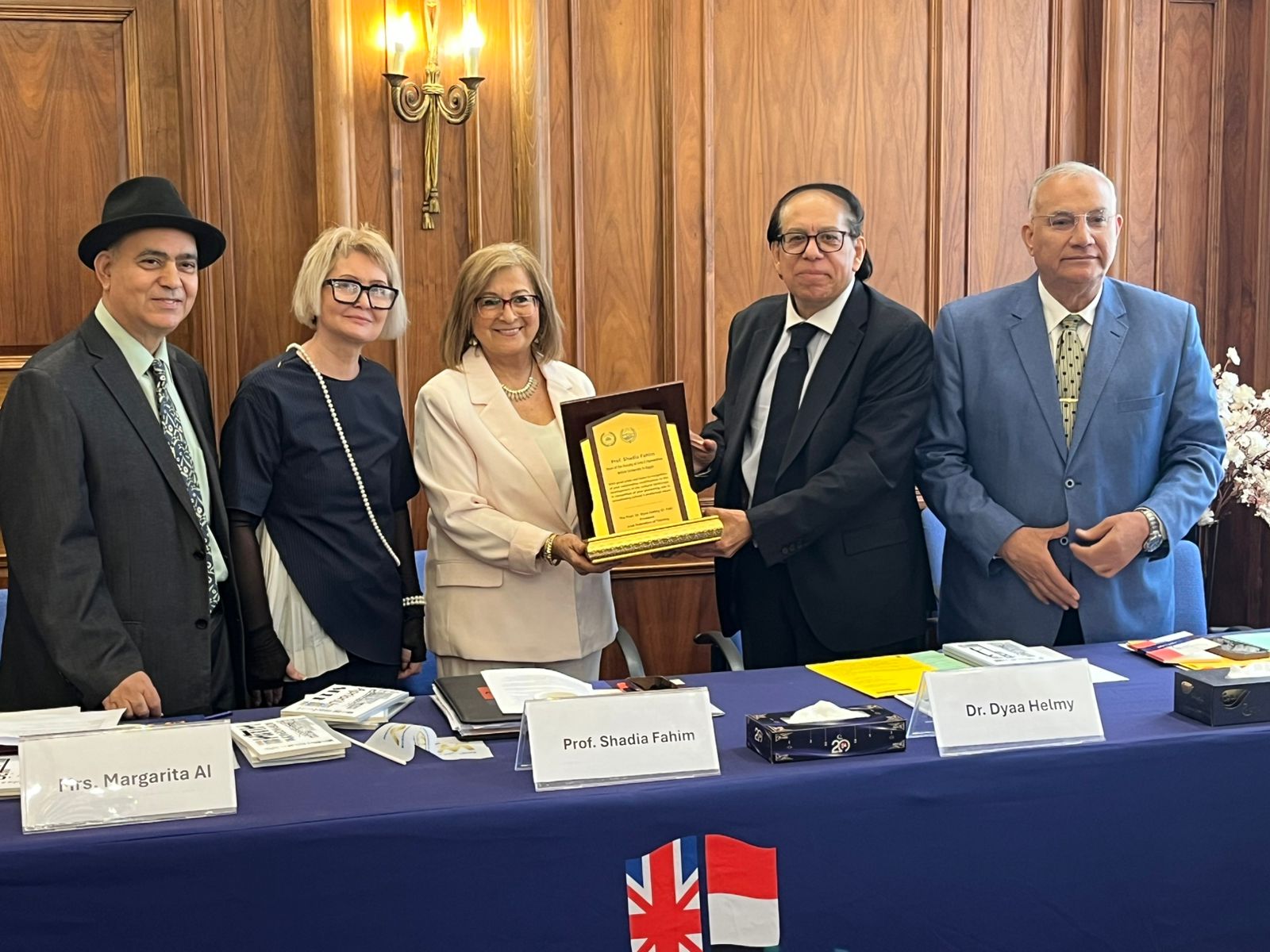
In the same spirit, I serve as Secretary-General of the Congress of African Journalists (CAJ), which publishes a monthly English-language magazine from Nigeria, viewing journalism as a space for enlightenment and cross-border dialogue. This path is further completed by my membership in the Scientific Council of the Arab Union for Training in Cairo, affiliated with the League of Arab States and chaired by Dr. Diaa Helmy, where thought intersects with training, and knowledge with practice, in service of the Arab human being.
Thus, 2025 was a year of intensity, reflection, and tireless work—a year in which journeys converged with texts, translation with dialogue, and academic research with cultural action. As a new year dawns, hopes are renewed for greater giving, and for culture to remain an open human bridge, and for the word to continue as a light guiding us toward understanding, peace, and beauty.