
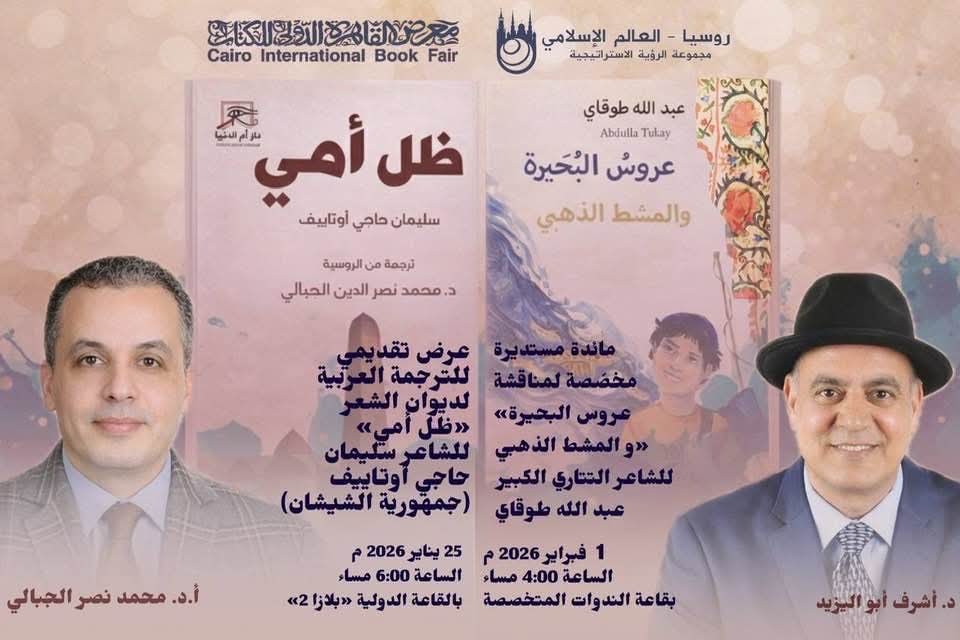
 As part of the events of the Cairo International Book Fair, and under the umbrella of cross-border cultural dialogue, the Specialized Seminars Hall will host, at exactly 4:00 p.m. on Sunday, February 1, a new cultural seminar marking the second meeting within the Strategic Vision Project: Russia and the Islamic World, following the remarkable success of the first meeting.
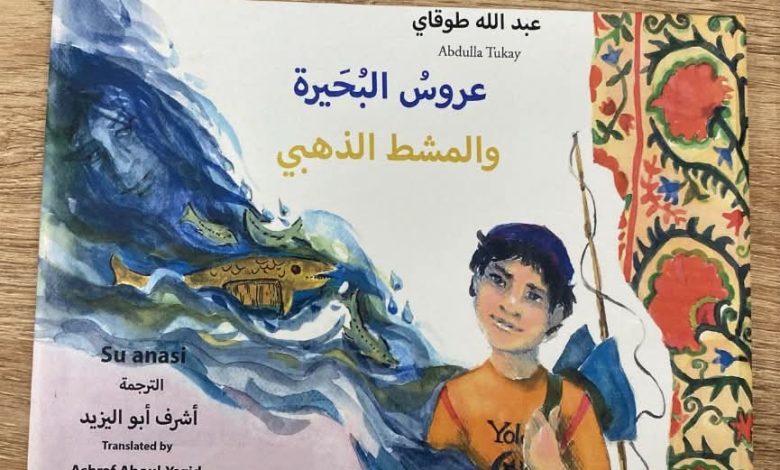
This seminar will take the form of a roundtable discussion dedicated to examining the translated literary work “The Bride of the Lake and the Golden Comb,” one of the most prominent texts by the great Tatar poet Abdullah Tukay, a leading figure of Tatar and Islamic literature in Russia. The work has been translated into Arabic by the Egyptian poet and novelist Dr. Ashraf Aboul-Yazid, in a rendition that preserves the poetic spirit and the mythical and symbolic dimensions of the original text, reintroducing it to the Arab reader within its aesthetic and human context.
In this regard, Mr. Marat Gatin, Assistant to the President of the Republic of Tatarstan, stated:
“The organization of these two consecutive events in Cairo affirms the depth of cultural relations between Russia and the Islamic world, and reflects our belief in the role of literature and translation as a genuine bridge for dialogue and understanding among peoples. Cairo, with its history and cultural stature, represents an ideal platform for introducing the Arab reader to the literary heritage of Tatarstan—foremost among it the creativity of Abdullah Tukay—whose works embody shared human values that transcend borders and languages.”
Gatin added that the two meetings constitute a practical step within a long-term strategic vision aimed at strengthening Tatarstan’s cultural presence in the Arab world and opening new horizons for cooperation in the fields of literature, thought, and the arts.
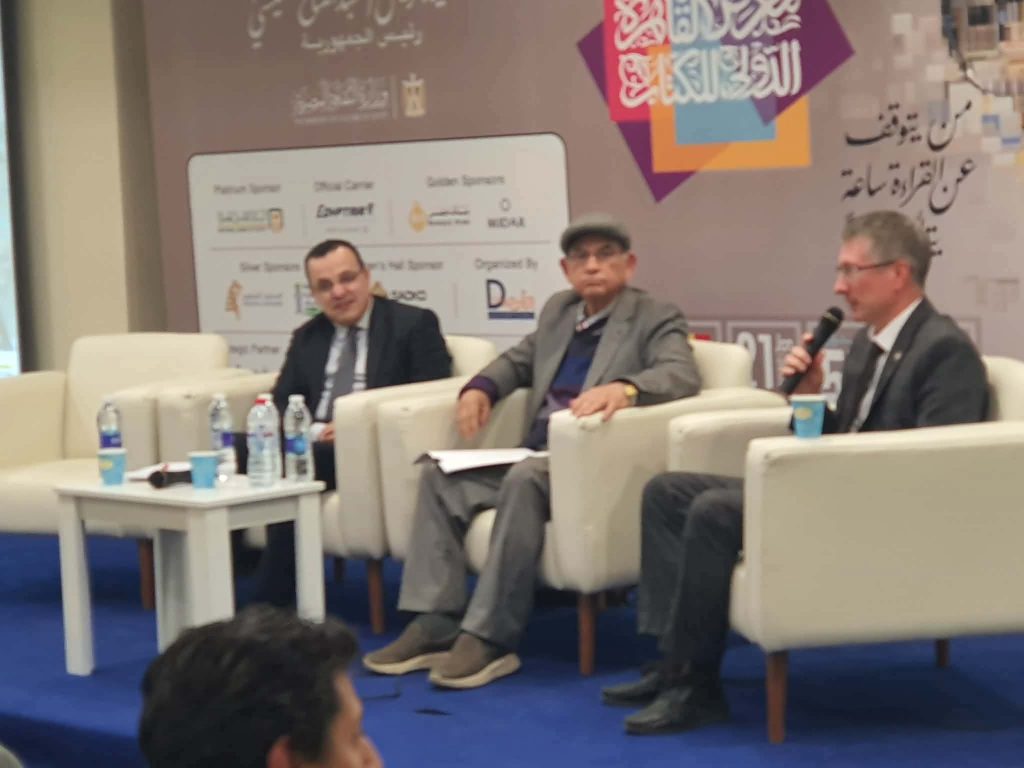
The session will be moderated by writer Ahmed Qarni, with the participation of a select group of specialists in literature and translation. The book will be discussed by Dr. Makarem Al-Ghamri, Professor of Russian Literature, and writer Ali Qotb, in a critical reading that addresses the text’s aesthetic and cultural dimensions, and the significance of its presence in Arabic within the context of literary interaction between Russia and the Islamic world.
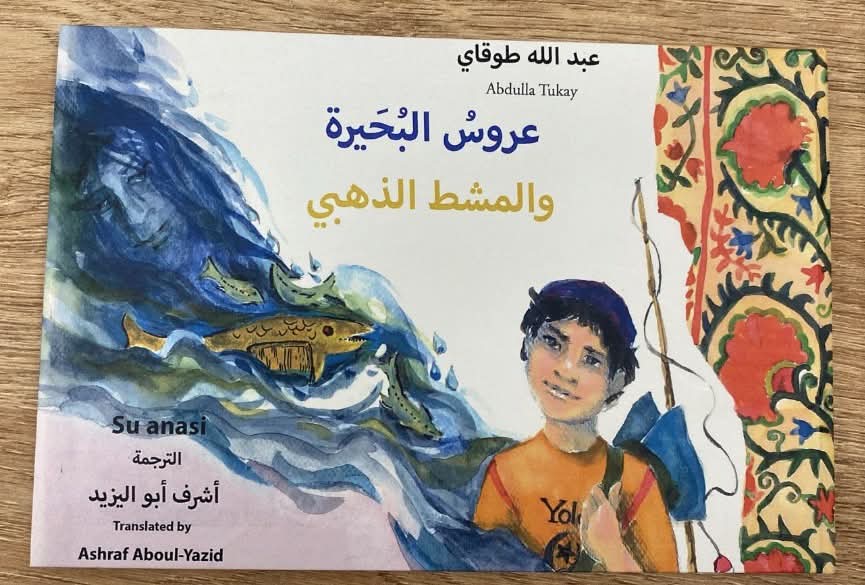 This work is an extension of a comprehensive translation project, through which Dr. Ashraf Aboul-Yazid has previously translated two other works by Abdullah Tukay into Arabic: “Shurale” and “The Goat and the Ram.” This further strengthens the presence of Tatar literature in the Arabic library and reveals the richness of the folkloric and mythical imagination in the cultures of the Volga peoples.
The story of “The Bride of the Lake” (СУ АНАСЫ – Водяная) unfolds in a narrative poetic form, recounted by a rural boy who describes a hot summer day spent swimming and playing, before a moment of innocence turns into a terrifying encounter with a mythical creature—the “Water Bride”—who suddenly appears carrying her shimmering golden comb. Driven by greed and curiosity, the boy steals the comb, setting off a tense chase filled with fear and remorse, which ends with the comb’s return to its owner and leaves the child with a profound moral lesson about the sanctity of theft and respect for others’ property.
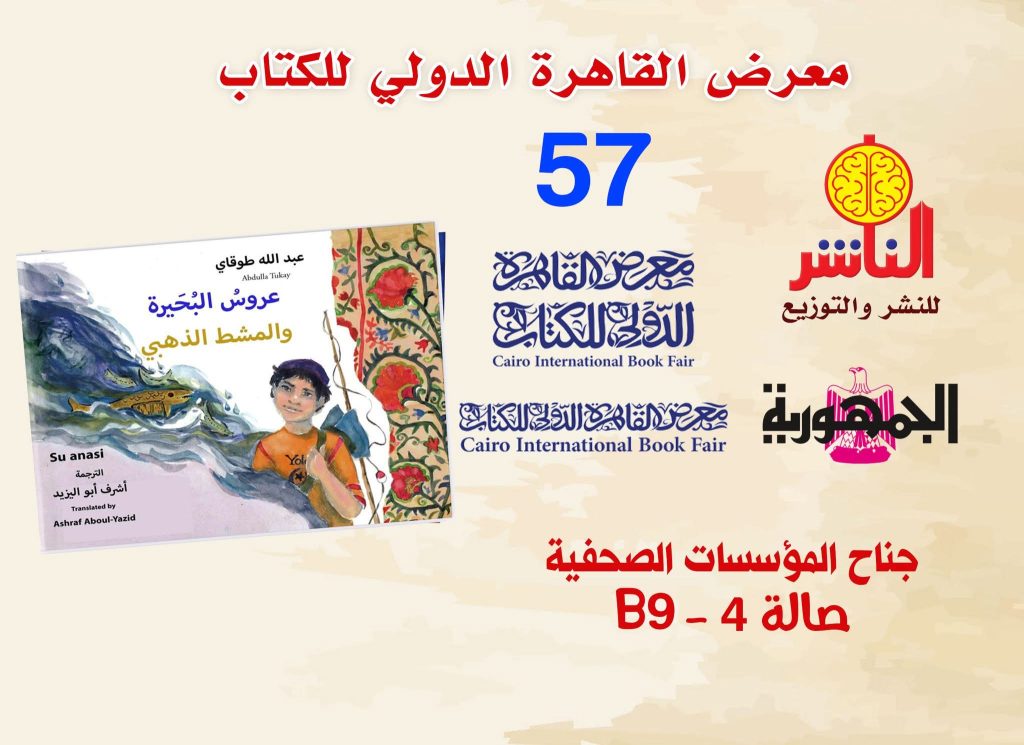
The poem is distinguished by its symbolic and ethical depth, where myth intertwines with moral education, and fear with repentance, in a text that combines the beauty of poetic imagery with the depth of a human message. This is what the seminar seeks to highlight, both in terms of the work’s literary value and its cross-cultural significance. The book has been published in the Silk Road Creations series by the publisher and is available at the Press Institutions Pavilion at the fair.
 Through its discussions and perspectives, this seminar underscores the pioneering role of the Cairo International Book Fair as a platform for civilizational dialogue and a vibrant space for bringing world literatures closer to the Arab reader, deepening bridges of cultural understanding among peoples through translation as an indispensable creative and cognitive act in today’s world.