True poetry is always a metaphysical experiment, an attempt to crack reality from within, at its a priori foundations. The poetic word, awakened to life, is thinking matter, woven from light, time, and memory.
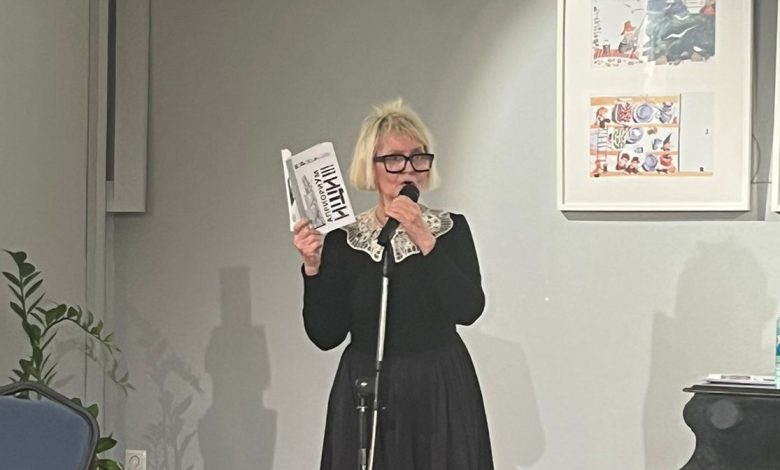
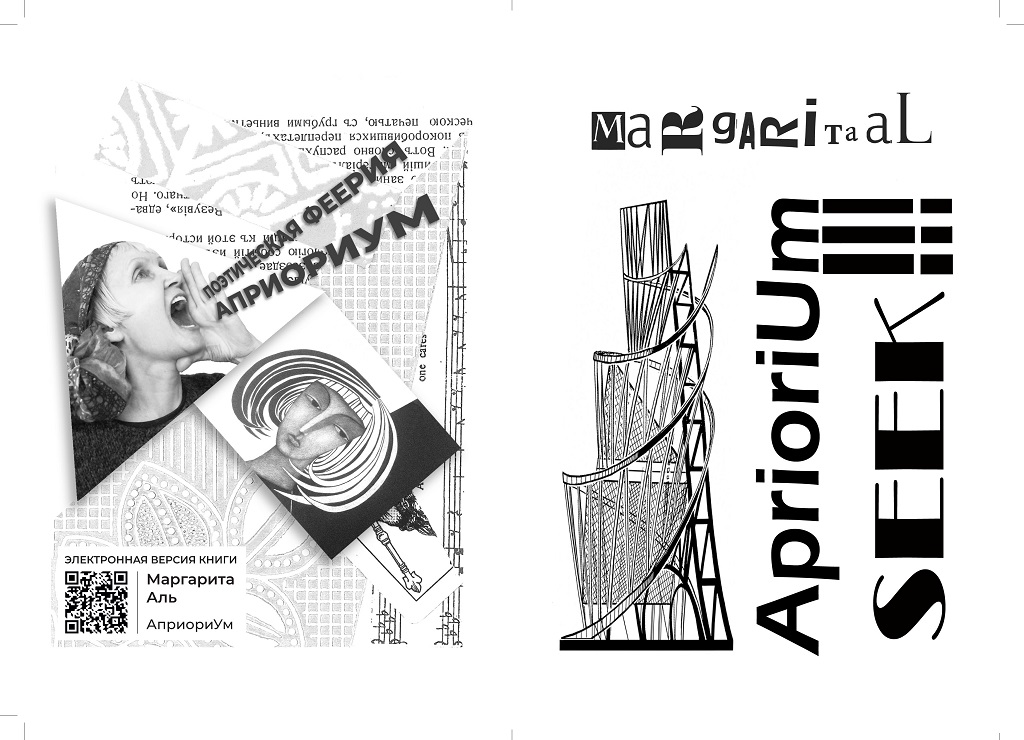
Such is the nature of the book AprioriUm, the third in the transformative series “Seek”—a quantum laboratory of the spirit, where the elusive is captured in language, and through this act, a new poetic Universe is born. Here, the author is both an alchemist of rhythm and an architect of monads, the building blocks of cosmic consciousness in a new era.
AprioriUm is the name of the ether in which a poetic miracle occurs—not in the way of Khlebnikov, but in dialogue with him. Traditional narrative is impossible here, for this is not about linearity but about super-memory. It resonates with the vibration found in Kozyrev’s formula on time as a source of energy, in Tsiolkovsky’s dream of intelligent matter, and in Fyodorov’s philosophy, where love triumphs over death.
Unlike Nietzsche’s nihilistic transgression, here emerges a different kind of superhuman: not a will to power, but an ethics of participation. The poet does not speak—she prays, “kissing the curls of silver gardens,”and ascends“in the voice-lollipop” above the Earth. This is poetry where “nothing superfluous, only love.” What Russian cosmists called superhuman—overcoming death—is not through force, but through tenderness and light.
AprioriUm is a space where the word comes alive, becoming a bridge between worlds. In poetry, as in philosophy, there is a passage from limited human perception to the universal. Poetry transcends boundaries, engages with the eternal questions of existence, meaning, and infinity, sounding beyond logical schemes. It is a navigational system across worlds, where “eternity is the spring of time,” where space holds the invisible, and the word carries the “code of eternity.”
The poems are structured along a scale of the subtlest states of matter—from solid to Bose-Einstein condensate. This is quantum poetics, where thought scatters into particles—“hearts, stamens, pistils”—only to reassemble into the crystal of language. Not minimalism, but the poetic fission of the atom of time. Al’s vertical eight-step ladder—from phantasmagoria to synergy—is the ascent of the word through the states of being.
It has been half a year since great poet Alexandrovich Kedrov left us. When a poet who discovered the laws of the poetic universe and stepped into the radiant sea of the starry alphabet dies, the world loses its balance. Reality trembles like fabric torn from its foundation. I feel his departure as a trial for being itself: how can we remain without the conductor of silence, who expanded pure reason into a poetic cosmos? He left us a vast legacy—keys to a portal through which we may see with the eyes of the Universe.
Here, the poet is not an observer but an operator of space. She is a pioneer whose microscope is consciousness itself, and whose subject of study is being. How does one hold the eternal in the finite? How does one enter infinity without losing oneself? The answer is one: only through poetry. Language becomes an organ of memory and an organ of insight.
Margarita Al is a rare poet. She cannot be compared. She embodies reflection, clairvoyance, the art of living in the tension between eternity and the moment, between inhalation and exhalation.
I congratulate Margarita Al on this new poetic experiment.
At first glance, it may seem minimalistic—but this is only the surface. Beneath lies poetic quantization. Thought fragments into primal particles, primary atoms, and then—before the reader’s eyes—it reassembles. This is not imagery but contemplation, a form of vision dreamed of by the visionaries of the Silver Age.
Margarita Al was foretold in many of the theoretical works of the Futurists. They were not allowed to bring this poetry to its culmination. But the 21st century has taken up their voice. And now it speaks: “I am a clay lump, moo, moo, my friend language…”—at the frequency where poetry becomes the only language of immortality.


 AprioriUm is the name of the ether in which a poetic miracle occurs—not in the way of Khlebnikov, but in dialogue with him. Traditional narrative is impossible here, for this is not about linearity but about super-memory. It resonates with the vibration found in Kozyrev’s formula on time as a source of energy, in Tsiolkovsky’s dream of intelligent matter, and in Fyodorov’s philosophy, where love triumphs over death.
 I congratulate Margarita Al on this new poetic experiment.