

Margarita Al’s poetry collection unfolds as a lyrical meditation on consciousness, language, and the fragile border between captivity and transcendence. From the opening poem, the reader enters a space where breath, word, and image converge. The poetic voice does not merely narrate experience; it enacts it. Her lines often move as if inhaling and exhaling—an organic rhythm that reflects both inner turbulence and spiritual seeking.
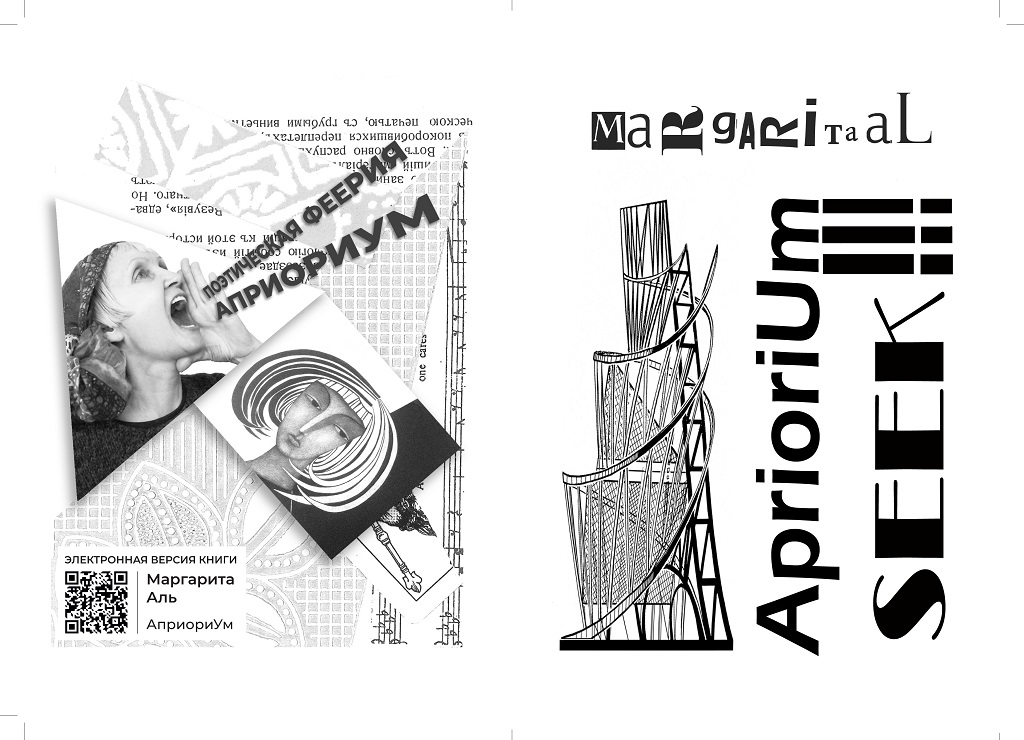 Margarita Al’s poetry collection unfolds as a lyrical meditation on consciousness, language, and the fragile border between captivity and transcendence. From the opening poem, the reader enters a space where breath, word, and image converge. The poetic voice does not merely narrate experience; it enacts it. Her lines often move as if inhaling and exhaling—an organic rhythm that reflects both inner turbulence and spiritual seeking.
One of the most striking features of the book is its metaphysical atmosphere. Margarita Al writes from within heightened states of awareness: tea becomes ritual, conversation becomes revelation, and silence becomes architecture. In poems such as those centered on tea-drinking or intimate gatherings, the ordinary moment is transformed into a ceremonial act. The domestic sphere is elevated into a site of metaphysical exchange. This technique situates her within a lineage of poets who see the sacred in the everyday, yet she does so with a distinctly contemporary sensitivity.
The motif of captivity and release recurs with notable insistence. The speaker moves “from captivity to captivity,” suggesting that freedom is never absolute but always transitional. The poems inhabit thresholds: between word and silence, self and other, homeland and elsewhere, memory and immediate sensation. This tension generates emotional intensity without descending into despair. Instead, Margarita Al treats captivity as a paradoxical condition of creativity—an enclosure that generates resonance.
Linguistically, her style leans toward compression and incantation. The syntax often flows in long, breath-like sequences, where clauses accumulate rather than conclude. This creates a sensation of continuity, as though the poem resists closure. There is little interest in conventional narrative structure. Instead, meaning arises through repetition, sonic echoes, and the layering of images. Words burn, years are exposed, hours approach—time itself becomes animate. The poems frequently anthropomorphize abstract forces, making temporality, memory, and longing tactile.
A central strength of the collection is its sensory dimension. Breath, dust, pollen, height, and warmth appear not as decorative imagery but as structural elements. The poet’s attention to physical sensation grounds the philosophical reflections. The reader does not encounter abstraction alone; one feels the texture of the air, the heat of speech, the closeness of another presence. This embodiment keeps the poetry accessible even when its conceptual reach expands.
The interplay between intimacy and universality also defines the book’s impact. Although many poems appear addressed to a “you,” this second person functions on multiple levels. At times it suggests a beloved; at other times it evokes a reader, a homeland, or even language itself. The ambiguity is deliberate and fruitful. It allows the text to oscillate between private confession and collective invocation. The lyric “I” never isolates itself; it remains porous, seeking dialogue.
Structurally, the collection demonstrates coherence through recurring motifs rather than linear progression. Images of ascent and depth—height and abyss—create a vertical axis that mirrors the spiritual striving of the speaker. There is a sense of leaning over an edge, of bending toward something vast and unseen. Yet this precarious posture is accompanied by resilience. The poems do not dramatize collapse; they dramatize approach.
Another significant dimension of Margarita Al’s poetry is its inter-textual resonance. While the collection stands firmly in its own voice, it echoes traditions of Russian modernism and mystical lyricism. The tone recalls poets who treat language as both wound and remedy. However, Margarita Al avoids imitation. Her diction is uncluttered, her metaphors immediate. The poems do not rely on heavy symbolism; instead, they build symbolic weight gradually through repetition and context.
Emotionally, the book operates through intensity rather than spectacle. There are no grand declarations or overt political statements. The drama is internal, almost microscopic. Yet this restraint heightens the impact. The quietness becomes charged. The reader senses that beneath each image lies an undercurrent of longing—longing for connection, for clarity, for release from fragmentation.
If one were to identify a challenge within the collection, it might lie in its density. The absence of narrative anchors requires attentive reading. Some readers may desire clearer transitions or more explicit thematic development. However, this density is also the book’s virtue. It invites re-reading. Each return reveals new associations and deeper tonal shifts.
Ultimately, Margarita Al’s poetry offers a contemplative journey rather than a declarative statement. It affirms the transformative power of language without idealizing it. Words can burn; speech can wound; yet articulation remains necessary. The act of writing becomes both vulnerability and resistance.
The collection stands as a meditation on presence—on being fully within the moment while simultaneously aware of its fragility. It asks what it means to breathe within language, to inhabit time without surrendering to it. Through sensory detail, metaphysical reflection, and emotional precision, Margarita Al crafts a poetic space that is at once intimate and expansive.
In this space, the reader is not merely an observer but a participant in the ritual of meaning-making. The poems do not close with finality; they continue to echo, like the aftertaste of tea or the warmth of a voice lingering in memory. Such resonance is the lasting achievement of this book: it transforms reading into encounter, and encounter into quiet transformation.
Dr. Ashraf Aboul-Yazid,
Secretary General, CAJ