Head of the Arabic Department, Faculty of Arts – Benha University, Egypt
Narrating Pain …The Pain of Narration
In his short story collection The Sixth Floor, Meyxoş Abdullah weaves pain as the central thread binding together the beads of his narrative necklace. Each story becomes a state of suffering—physical, emotional, psychological—through which he unveils intertwined human, social, and national concerns. His fiction mirrors issues that preoccupy humankind across time and place.
The collection is largely shaped by anguish, loss, absence, and intricate personal relationships rendered with artistic depth. Physical pain merges with spiritual and psychological torment; intellectual suffering intertwines with philosophical and existential anxiety. Through this fusion, Abdullah raises profound human questions: the departure of the body and the endurance of the soul; the burden of lived suffering and the temptation of death as release; self-sacrifice in defense of the Homeland; guilt and remorse; incurable illness; the struggle between Good & Evil, reason and madness; poverty and wealth; exile and longing. It is as though every story is a condition of pain, and every condition of pain a story in itself.
Forms of Pain in the Collection
The Sixth Floor comprises eleven stories, each embodying a distinct manifestation of suffering:
The Sixth Floor – The death of the wife and mother, Salmi.
The Commander’s Dream – Battle against the enemy and the martyrdom of Wasif.
Confessions of a History Teacher – The martyrdom of a student.
Happiness Engraved on Stone – The martyrdom of heroes.
The Sacred Lie – An incurable illness.
The Madman Bipala – Madness and the loss of reason.
The Quarry – Physical and psychological hardship.
My Brother-in-Law’s Honor – Jealousy, envy, and hatred.
The Flood – Destruction and death by drowning.
The Prayer That Comes with the Rain – Exile and yearning.
Cotton Candy – War and bodily mutilation.
The Sixth Floor
The events of The Sixth Floor open with the death of Sonam, the beloved wife of Hazi and the tender mother of Salim. The narrator paints a somber, sorrow-laden tableau of the devastation left by death, its heavy shadows falling upon both husband and son—especially upon the seven-year-old child who cannot yet comprehend the nature of mortality. He persistently asks about his mother and the reason for her absence. The father attempts to console him, saying that though her body has departed, her soul remains with them at home. Yet the child’s pain continues to churn within him despite these reassurances: he fears his father may remarry, and he fears the cold earth embracing his mother in her grave.
The son also fears that his mother’s soul might lose its way after they move to live in the capital, Baku. He writes their new address on a small scrap of paper and leaves it on her grave—yet forgets to include the apartment floor. The father later reads the note and swallows a wave of pain and sorrow. He had convinced his child that the mother’s soul would follow them wherever they went and dwell with them. And so he chooses to live within this gentle lie, completing what the boy forgot to write: the floor number—the sixth floor—the very title the author selects for his story, and ultimately for the entire collection, revealing the symbolic weight behind it.
The lexicon of pain dominates The Sixth Floor. Among its most prominent words and expressions are: death, absence, weeping, bleeding, fear, pain, cemetery, helplessness, heartbreak, kissing his mother’s grave, victim.
If the pain in The Sixth Floor reflects an intimate emotional human condition, then in The Commander’s Dream it manifests as battlefield courage. Brave soldiers and a valiant commander endure suffering as they fight the enemy to liberate their land. Despite wounds, relentless cold, accumulated ice, and the enemy’s superior numbers and weapons, they stand firm. Commander Heiflanq is troubled by the disappearance of Wasif, one of his bravest men. He feels guilt for losing him. In a dream, Wasif calls out: “Commander, I am cold. Come and take me away.” Awakening in anguish, he searches the last battlefield and finds Wasif’s lifeless body among the rocks, his eyes open, as though still waiting for his leader.
Again, the vocabulary of suffering prevails: fighters, shells, cannons, enemy, attack, retreat, battle, darkness, exhaustion, dragging their feet, heavy bombardment, mortar rounds, flying stones, enemy fire, wound, injury, the missing, the unknown, anxiety, corpses, cold and frost, bullet, gunfire, falling to the ground, holding back tears.
Confessions of a History Teacher
Pain is likewise evident in Confessions of a History Teacher, from its very first line. The writer sketches his protagonist as “a thin, exhausted teacher with white hair, walking with heavy steps toward the cemetery at the edge of the village.”
This artistic portrayal transforms the imagined narrative into a deeply human text pulsing with life. It transcends mere consumption by reading; instead, it lingers, conveying experience, inviting empathy, and creating a complete emotional and intellectual encounter.
The narrative repeatedly presents the aging teacher, weakened by frailty and illness, barely able to rise from his bed—yet determined to visit the grave of his former student Ibrahim, now a martyred hero. Once worried about the boy’s future, he now confronts a destiny marked by bravery, sacrifice, and devotion in defense of the homeland.
The vocabulary of pain dominates Confessions of a History Teacher. Among its most striking words and expressions are: thin, exhausted, white hair, heavy steps, cemetery, terrible pains, difficult, his ailing soul, the grave of the martyred soldier, the cemetery gate, pain in his legs, severe pain, trembling, shaking hands, shivering, gravely ill, condolences.
Happiness Engraved on Stone
In Happiness Engraved on Stone, the title suggests joy, yet this is a deliberate artistic irony. The story unfolds as a dialogue between a grandson and his grandfather. The boy asks about the place to which he has been taken, and the grandfather replies: “This is the Alley of the Martyrs, my son.” The engraved images, we later learn, belong to brave soldiers of the homeland who sacrificed their lives in its defense. They earned the honor of martyrdom, and their memory was immortalized by carving their faces upon the walls and naming the alley after them. Once again, the lexicon of suffering prevails: martyrs, death, wars, destruction, silence.
In The Sacred Lie, we encounter the image of a man bedridden, hovering at the edge of death, as his wife offers him medicine. The protagonist’s name—Mr. Kamal—is deeply ironic. “Kamal,” meaning perfection, has become diminished, enslaved by illness, his cancer-ravaged body stripped of wholeness and vitality.
The narrator opens by describing his ordeal: Mr. Kamal suffers from a grave disease—cancer that has spread through his body and drained his strength. His wife, Nushaba, keeps vigil beside him. As his condition worsens, he longs to see his close friend Ghazi. He asks his son Fouad to summon him, for the father is dying. “His eyes looked misty and tired, his face pale and ashen… From time to time I looked at him; when our eyes met, I saw a flood of light fading deep within them.”
Despite doctors and medicine, recovery is impossible. The cancer is entrenched; his throat is swollen, his chest distended, his breathing labored. The vocabulary of pain saturates the story: suffering, grave illness, bitterness, severely ill, feeling unwell, lying in bed, wrinkled hand, inner choking grief, darkness, mirage, trembling, incurable disease, tears gathering in my eyes, cannot breathe, fading light in his eyes, he will die, shouting “You will not die!”, desperate pleading, confusion, indifference, evil, I cry and cry, my father is dead.
The Madman Bipala
If pain in the previous stories is largely physical, in The Madman Bipala it becomes psychological and mental. Bipala, known as “the madman,” is fifty years old, thin, unkempt, red-eyed, clad in old clothes, barefoot in torn, dirty socks stuffed with scraps of rubber. He walks on his toes and harms no one.
Alienated from his world, dwelling in another of his own making, Bipala cannot connect with others. He inhabits chaos, anger, and inner turmoil. The villagers dismiss him: “He has no عقل; he errs.” Yet the narrator penetrates his inner world, revealing that his visible madness conceals a hidden intelligence unrecognized by those around him. Thus the story opens with an invocation: “O mad Bipala… you were the wisest madman in the world.”
Again, the lexicon of pain prevails: madness, frailty, torn, filthy, anxiety, annoyance, folly, harmful actions, injury to the heart, killing kittens, stones hurled at him, possessed by a demon, wounded by words, blind rage, harassment, doom, hell, blood streaming from head and eyes, terrible noise, headache, stabbing to death, suffering and bewilderment.
The Quarry
“The Quarry” stands among the most harrowing of these stories in its portrayal of pain. Suffering announces itself from the very title. A quarry is a place carved into the mountain, where stone is hewn from rock. It is work of the harshest kind—extracting raw matter from the earth’s ribs, a labor that demands brute strength, heavy machinery, and sharp instruments to split stone with drills or explosives, all in pursuit of mineral wealth destined for construction and industry.
It is bitterly ironic that the story’s hero is named Saeed—“happy.” Happiness never once crossed his threshold. He died wretched, his skull split in two by a falling stone from the very quarry that consumed his life.
From the outset, the narrative binds itself to the weight of toil. The narrator tells us: “Each time he returned home, he would swear he would never go back to that cursed quarry, that he would find another job. But when the grace period granted by his creditors expired, he opened his eyes to find himself once more carrying stones in the pit, heart sunk in dust.”
Saeed suffers both bodily and inwardly. His physical pain springs from the quarry itself—from the stones he wrenches from the earth and shoulders until they bruise his flesh and powder his face with white grit. Those same stones will later descend upon his head. His inner torment is born of debt: the crushing burden of money owed, the impossibility of repayment. It corrodes his days, steals his sleep, blackens the world before his eyes. At moments he longs for death as deliverance from the daily grind and the tyranny of obligation—then remembers his two young daughters and his wife, and reproaches himself for the thought.
As days pass, his anguish deepens. One evening, after loading two large trucks with stone, the driver of a third asks him to exceed the permitted weight. It is late; no one will notice. In return, he offers five manats. Saeed is poor. He must pay his debts. He agrees.
He pulls on his gloves and lifts a stone from the ground, hurling it onto the truck bed. Then another. Exhaustion weighs upon him; each stone feels heavier than the last. As the pile rises, so does the distance between earth and truck. He props a stone beneath his feet to gain a little height. He is utterly spent, in no mood for speech. The driver senses it, rests a hand on his shoulder, murmurs: “Not much left—three or four more will do.”
Darkness gathers. The stone he raises above his head trembles in his grip. Summoning his final strength, he tries to cast it into the truck. In that instant, the stones stacked beneath his feet shift. Before he can steady himself, he falls to his knees. A heavy rock crashes onto his head. The fine white dust that coated his hair turns crimson in a heartbeat. His mouth meets the earth. For the last time, he searches for the driver with his eyes.
The driver kneels, pressing a handkerchief to the wound. “It’s nothing—don’t be afraid. Your head is bleeding a little. I’ll take you to the hospital. Be strong, brother.”
But the blood flows faster. Saeed’s voice grows faint, ragged.
Gathering what remains of his strength, he slips a hand into his pocket and withdraws a small bundle wrapped in paper. He presses it into the driver’s palm and whispers: “This is the money for the two trucks I loaded. If you can, add yours to the list of debts and give it to them… ask them to settle what they owe.”
Then his limp body slides from the driver’s grasp and sinks onto the dusty ground. From deep within him rises a final, barely audible groan.
Saeed’s pain came to an end. Death in the quarry marked the close of his long pilgrimage through hardship. In the final throes of dying, he drew from his pocket the little money he possessed and entrusted it to the driver of the third truck, asking him to deliver it to his daughters and his wife—together with the wages owed for loading the truck—so their debt might be repaid. The body’s journey had ended, yet the burden of debt clung to him even in his last agony, shadowing him as his soul departed.
In this manner, Meyxoş Abdullah relies on concentrated narrative flashes in his short story collection—brief, piercing scenes that illuminate lives marked by suffering, tragic experience, or haunting memory. The lexicon of pain dominates the tale. Words and images accumulate like blows: the cursed quarry; carrying stones; debt; hell; suffering; death; choking bitterness; self-reproach; stones hurled; arms numbed by endless labor; barely able to stand; wiping sweat from his neck; clothes clinging, soaked through; dust filling his lungs; a failing heart; the bite of cold; violent coughing; a poor man; dust-stained trousers; unbearably heavy stones; exhaustion; streaming blood; a rasping voice; supplication; bewilderment; a barely audible moan; pitch darkness; an exploding blaze; coma; poor, sorrow-stricken faces.
The Honor of My Son-in-Law
In “The Honor of My Son-in-Law,” sorrow takes a different shape. Rustam’s wife dies, leaving him with six sons and a daughter, whom he marries to a young man named Isa from a neighboring village. Isa is handsome, industrious, and financially secure. Rustam and his daughter Zarifa are content with the match. Yet the five brothers cannot bear Isa; they see him as a black serpent in their midst.
Rustam’s ardent affection for his son-in-law—his constant praise, his oaths sworn by Isa’s life—unwittingly fans the embers of jealousy in his sons. The more he extols Isa, the more their resentment hardens. Zarifa finds herself torn between two fires: she loves her husband and she loves her brothers, unwilling to forsake either. It becomes, as the story suggests, a struggle between fire and water.
With time, the brothers’ envy swells into something darker. One day, while visiting her father’s house, Zarifa overhears them plotting to kill her husband. Fear seizes her. She confides in her father, who comes to understand that his open fondness has inflamed their jealousy—and that such jealousy may end in bloodshed.
The sons’ murderous intent robs the father of sleep and peace. Yet he gathers them and reminds them that the man they envy is the guardian of their sister’s honor, the protector of their family’s name. Therefore, his place among them must be one of dignity and esteem.
Here, too, the vocabulary of pain pervades the narrative: death; black serpent; unbearable anguish; hatred of the husband; helplessness; murder; disgrace; grave anxiety; prison; the ruin of a family; jealousy; bloodshed; bitterness in the father’s voice; tears; a man’s shout; bowed heads; the broken voice of Zarifa; quiet weeping; hiding behind her husband.
The Flood
In “The Flood,” suffering announces itself in the title. Rain has fallen without ceasing for three days. Waters surge and spill over, drowning the village until it becomes a vast, murky lake. Amid this collective calamity emerges a more intimate tragedy: a mother who loses her son to the raging torrent, pleading with an officer to save her child.
Nor is she alone in grief. One mother stretches trembling hands toward her lost little boy, who cries “Mother, Mother!” as the waters swallow his voice. Elsewhere, a young girl clings desperately to a tree, weeping, afraid to slip into the muddy current that would sweep her away to a drowning death.
Thus, in each story, pain is not merely an event—it is an atmosphere, a force that engulfs bodies and souls alike.
The narrator paints a scene steeped in anguish—a breath-suspending tableau of mothers losing their children, stranded by the raging flood that swept through their village. Fear, panic, and pain thicken the air. The torrent surges on; rain falls without mercy; darkness presses in. Terror grips the villagers, doubling when the waters invade their homes and rise to their very necks. Houses disappear beneath the flood. Rescue teams arrive at last, ferrying the survivors to higher, safer ground.
The language of suffering dominates the story: the deluge; the village swallowed by floodwaters; relentless rain; a sharp knife of dread; a mother weeping, stretching out trembling hands; a child crying, screaming “Mother, Mother!”; a missing daughter; desperate pleas for help; muddy waters; a frightened girl clinging and weeping; sobs that will not subside; horrific moments; tears streaming down her cheeks; panic; a terrifying, heart-rending spectacle.
The Prayer That Comes with the Rain
In “The Prayer That Comes with the Rain,” the pain is inward, psychological. The protagonist suffers exile in the city, far from his mother whom he left behind in the village. He is consumed by longing for her, haunted by memories of their old rural home. Work absorbs him; anxieties hold him back from visiting. He tries to persuade her to live with him in the city, but she belongs to the countryside and cannot love the urban life.
He recounts his struggle: his father died young, and the burden of caring for his mother and five younger sisters fell upon his shoulders as the eldest son. From an early age, he labored tirelessly from morning until night—sleep deprived, underfed. By day he earned whatever he could for a crust of bread; by night he studied and read. In those years he wondered whether the time would ever come when he might repay the long debt of sleepless nights with rest. Years passed. Against all odds, he completed his education, secured a position, bought an apartment in the city, and built a family—while illness shadowed their lives.
This is a tragic tale of a mother and her eldest son, bound by an unbreakable tie, especially in raising the daughters after the husband and father’s death. They shared a long road of sacrifice. The mother endured hunger to feed her children, lived for their worries, stood beside them until they stood on their own feet, ready at last to care for her frailty and guard her old age. Yet the illness that consumed her was fiercer than their devotion. Even as pain tormented her, she continued to ask about them, urging them gently to return to their homes and families. When her condition worsened, she ceased eating and could no longer speak—until her eldest son arrived from the city. Soon after, she passed away, leaving a wound in the hearts of her children and in the hearts of those who read her story.
The vocabulary of pain dominates the narrative, with key words and phrases including: (distance, fears, elderly, hardships, my father passed away, burden, the suffering was not easy, ravaged by illness, unable to rise from bed, critically ill, deeply anxious, frail, tears, swollen blue veins in her arms, trembling withered skin, distressing me, deteriorating condition, afflicted with cancer, tortured lady, writhing in pain, fear, worry, unable to speak, greeted me with tears in their eyes, sisters bursting into loud sobs, agonizing, quivering, she will suffer being buried under the rain, choked with tears, even in her final agony my mother worried for us, we carried the coffin on our shoulders, my mother was crying).
As seen above, Meyxoş Abdullah employs a rich linguistic register of suffering, where each word conveys an emotional state, a human moment, or a deeply personal feeling—sometimes visible, sometimes hidden.
Girls’ Spinning
In the story Girls’ Spinning, the narrative begins with happiness, yet it is fleeting and quickly turns to tragedy. The tale portrays a small, happy family: Norlan, an army officer; his devoted wife Anajan; and their only daughter, Nurtaj. Life was peaceful until war upended their world. The father became absent and anxious, leaving the child confused. She could not comprehend war but sensed its disruption when her father failed to bring her gifts. Her mother explained the battles, the invading enemy, and the heroic efforts of her father and his fellow soldiers to defend their homeland. The story transforms from joy to sorrow through the terrors of war and the child’s longing for her brave father. Upon his return, his face scarred, arms wounded, and body blackened by soot, he conceals a gift for his daughter behind his back.
Key phrases reflecting the story’s pain include: (war, anxiety, panic, reluctance, missing her father, battles, rifle, smoke and fog, sound of bombs, tanks, artillery, wounded soldiers, frightened, seeking refuge with mother, hiding tears, covered in soot, intersecting scars).
Ultimately, the short story collection does not dwell on comfort, security, or peace, but rather presents unique facets of human suffering. Diverse characters and narrative voices depict highly personal emotional and psychological experiences. Each character embodies a distinct form of pain; each narrative voice is a soul expressing suffering—physical, psychological, and existential. Through these stories, Meyxoş Abdullah’s vision of the world and human relationships is realized. The narrator is present, authoritative, and omniscient in most tales, for Meyxoş Abdullah writes, suffers, confides, imagines, and empathizes with his characters, sharing in their daily struggles and battles. His voice guides readers to engage deeply with central characters who endure human experiences with lasting impact. Even when characters die symbolically or appear as witnesses to suffering, they reveal profound insights into human emotion and the philosophy of living with pain. This heavy burden renders death a path to relief; hence, mortality dominates many stories, marking the end of suffering and offering release from relentless pain.
A close reading and critical analysis of the narratives reveals the spectrum of pain that flows from joy to sorrow, from calm to turmoil, from stability to displacement, and from peace to war. The stories unveil sacrifices and wounds that remain unhealed within the characters’ souls—souls that persist vividly in the narrative even after other figures have departed, leaving profound imprints upon them.
Each of the eleven stories paints a realistic tableau, reflecting facets of life shrouded in suffering, grief, and contemplation. The author employs a direct, incisive language and a firmly established lexicon of expressions that convey both visible and hidden pain, enriched by dense figurative imagery, offering the reader a deeply evocative, expressive energy.
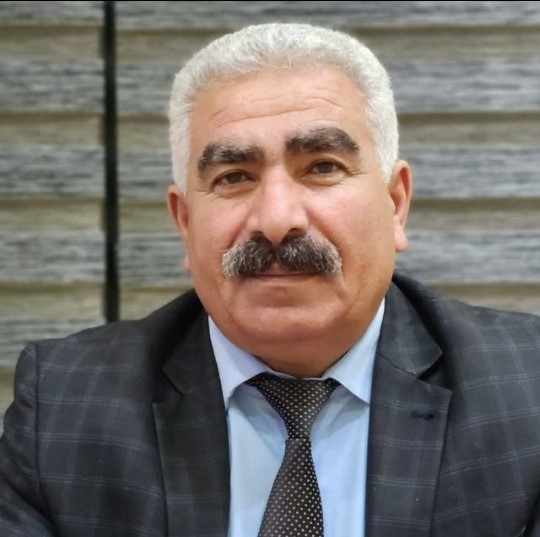
ميخوش عبدالله
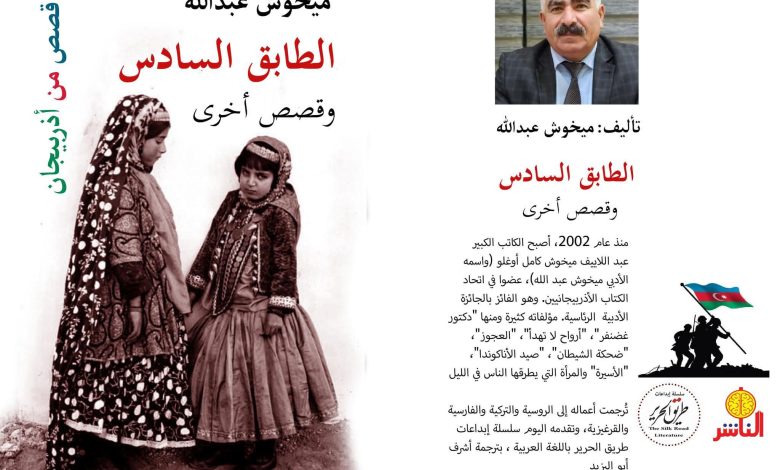
Abdullaev Meyxoş Kamil oghlu, known by his pen name Meyxoş Abdullah, was born on February 2, 1962, in the village of Khalilabad, Jalilabad district, Azerbaijan. Although he is widely recognized as a writer, his formal profession is in economics. He became a member of the Union of Azerbaijani Writers in 2002 and was awarded the Presidential Literary Prize. Among his most notable works are Doctor Gadhanfar, Restless Souls, The Old Man, The Devil’s Laugh, Hunting the Anaconda, The Captive, and The Woman Left Alone at Night. His works have been translated into Arabic, Turkish, Russian, Persian, Turkmen, and Kyrgyz.
This paper on the short story collection of Meyxoş Abdullah was presented today at the Unity Conference during a seminar held at the Misr Public Library in Banha. The seminar focused on the works translated by Dr. Ashraf Aboul-Yazid and published within the Silk Road Literature series.




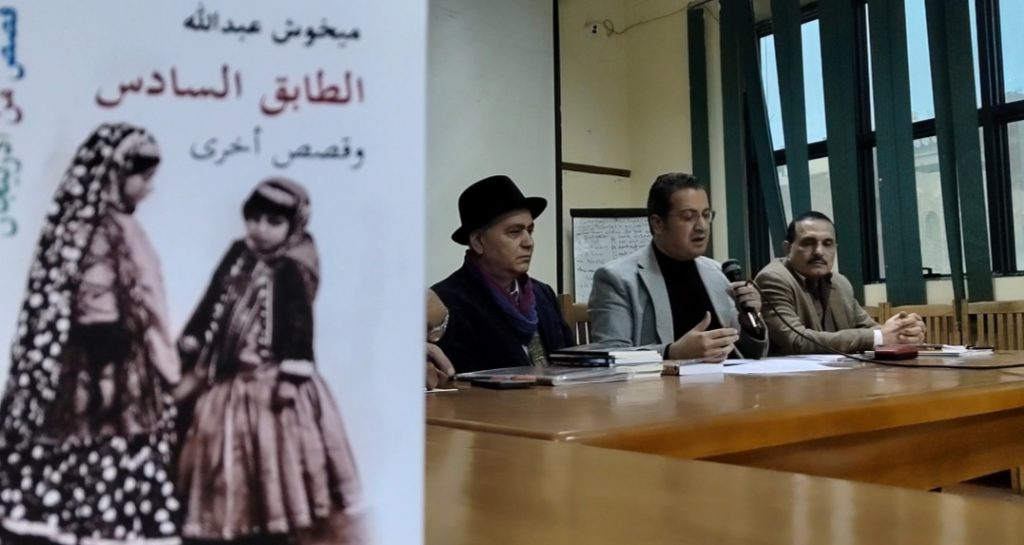 This paper on the short story collection of Meyxoş Abdullah was presented today at the Unity Conference during a seminar held at the Misr Public Library in Banha. The seminar focused on the works translated by Dr. Ashraf Aboul-Yazid and published within the Silk Road Literature series.