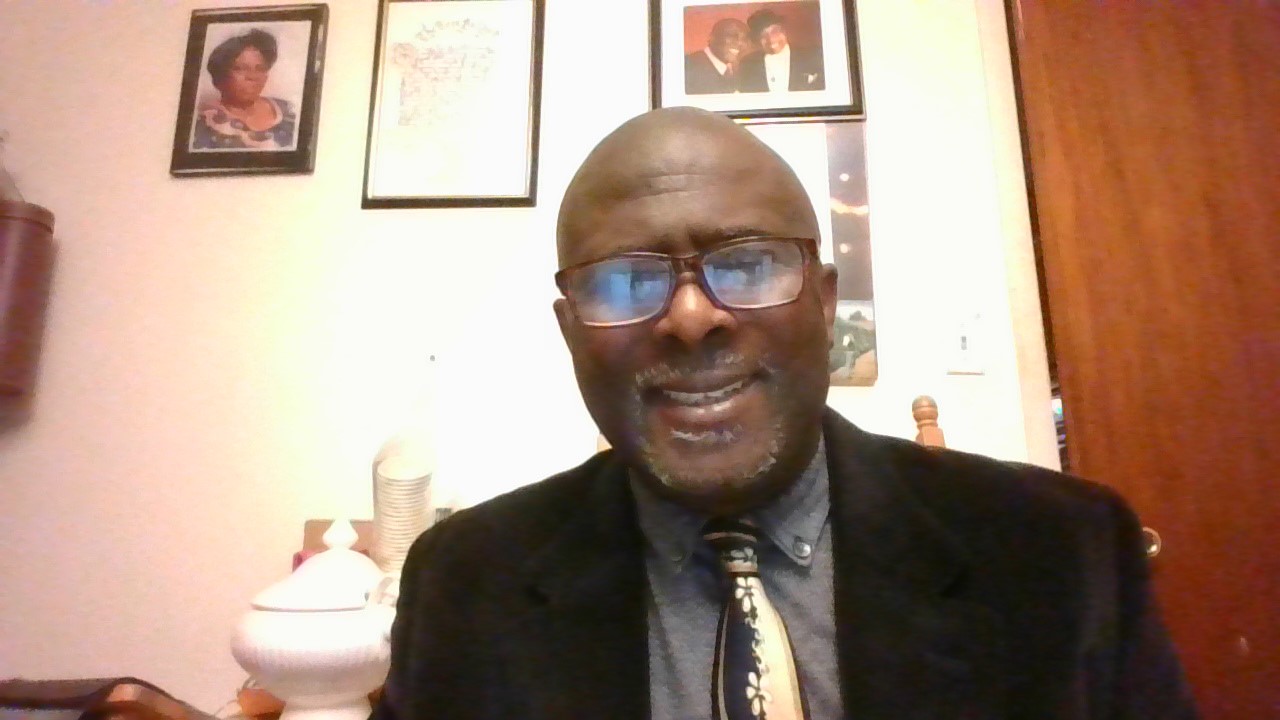
A multi-book launch for Reverend Dr. Elizabeth Ango Fomuso Ekellem, a versatile Cameroonian scholar, psychologist, poetess, engineer, and theologian. During this event, hosted by the Pan-African Writers Association, Dr. Ango and co-author Melvis Chongong introduceda suite of educational resources focused on systems intelligence and social-emotional learning. These works aim to combat teacher burnout and student disengagement by providing frameworks to navigate complex institutional pressures and digital shifts, such as AI. Dr. Ango explains that her decision to host a book launch instead of a traditional party stem from her introverted nature and her deep commitment to addressing societal gaps through writing. The gathering features heartfelt testimonials from family and colleagues who praise her multidisciplinary brilliance and her role as a “powerhouse” in both academic and spiritual spheres.
This book is devoted to our common ancestors, Pah John Munang and Paulina Tsiambom Munang, both of blessed memories. When they carried their children into uncertain tomorrows, they could not have imagined that generations later their descendants would gather at this delicate convergence, united by a shared devotion to education. Their courage planted what we now cultivate.
To celebrate a 50th birthday milestones, most of us would choose a “birthday bash” a fleeting celebration of the years gone by. Rev. Dr. Ango Ekellem chose a different path: a “Book Bonanza.” Rather than a single evening of revelry, she launched a library, inviting us to look closer at the architecture of our own lives.
As a seasoned intellectual who navigates the precision of mathematics and engineering alongside writing, the deep empathy of chaplaincy and psychology, Dr. Ango’s 50-year milestone—her Jubilee—is far more than a personal anniversary. In the biblical tradition, Jubilee represents a year of debt cancellation and restoration. For Dr. Ango, this year marks the launch of a movement: a “living curriculum” designed to help professionals and families transition from merely surviving to truly understanding the systems they inhabit. Through upcoming workshops in underserved communities, her work seeks to turn technical insight into a blueprint for human flourishing.
Burnout: Systemic Error and Not a Personal Flaw
At the heart of Dr. Ango’sSystems Intelligence Guideco-authored with Ms. Melvis ChungongAsongweis a radical reframing of professional exhaustion. In our current culture, burnout is often treated as an individual’s inability to “cope” or “be resilient,” placing the burden of recovery on the person already drowning. Dr. Ango through this book invites us to see this not as a personal failure, but as a “pattern pressure” within a flawed architecture.
She identifies a specific systemic crisis within education, where teachers are transformed into “dumping bags.” Caught in the middle of three relentless forces—administrative demands, parental pressure, and stagnating pay—educators begin to lose their vitality.
“Teachers are like dumping bags… you are being bummed from the administration, you are being bummed by the parents, and you are sitting in the middle… you start living in the gray zone… the burnout you do not recognize.”
This “gray zone” is a state of existence wherein one is simply waiting for a pension to escape. By shifting the blame from the individual to the system, Dr. Ango performs a revolutionary act of self-preservation. She teaches that the resolution to burnout isn’t found in more “coping,” but in understanding the system well enough to detach ourselves from its friction.
High-Performance:The Danger of Over-Functioning
One of the most insidious forms of collapse described in Dr. Ango’s work is “Scenario One.” Herein, the professional appears, by all outward metrics, to be the gold standard of efficiency. They arrive before sunrise, answer emails at midnight, and maintain a perfectly formatted environment.
The Invisible Collapse: For these individuals, identity often fuses with performance. They don’t just do their jobs; they become their output. This “acceleration” is actually a phase of burnout known as compensatory overdrive. In this state, the nervous system never “downshifts” into rest; it remains perpetually activated.
The Cost of Optimization: While leadership trusts them and parents admire them, the over-functioning professional is often suffering from severe sleep compromise and a narrowing of emotional capacity. Their nervous system is perpetually “scanning” for the next problem even during moments of supposed leisure. Because this type of burnout looks like high performance, it remains invisible until the final, total collapse occurs.
Breaking the “Survival Mode” Cycle in the Diaspora
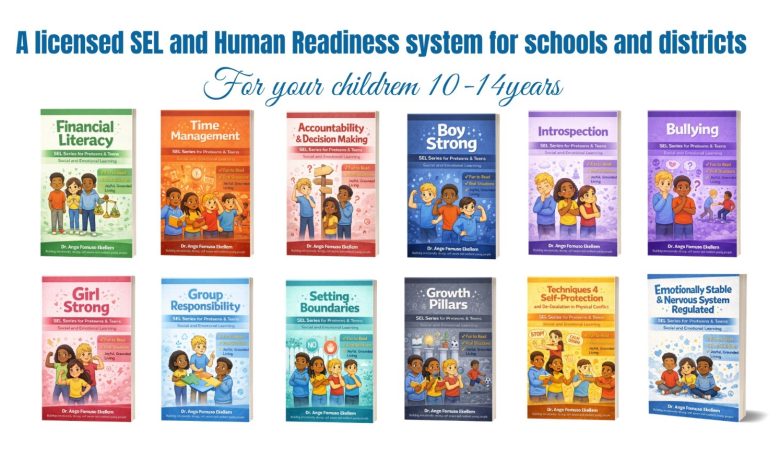
Dr. Ango’s Social and Emotional Learning (SEL) series addresses a profound cultural tension within the first-generation diaspora. Many African families arrive in new lands with a foundation that is “theory-oriented” and “deeply intelligent,” built on a heritage of academic rigor. However, the transition often forces parents into a “survival mode” focused primarily on paying bills and keeping safe.
In this rush to survive, many families fall short of providing the emotional grounding their children need. This has led to the rise of the “NEET” group—those Not in Education, Employment, or Training, aged 15 to 29. These young people often move from one interest to the next without settling, overwhelmed by information but lacking emotional regulation.
Dr. Ango emphasizes a critical window: the ages of 10 to 14. This is the stage where children must be grounded in emotional regulation and time management to face the “Era of AI.” There must be a balance between high academic theory and the practical “learning styles” required for success in a globalized, digital world.
The “$200 Silence”—Checking on the Generators of Joy
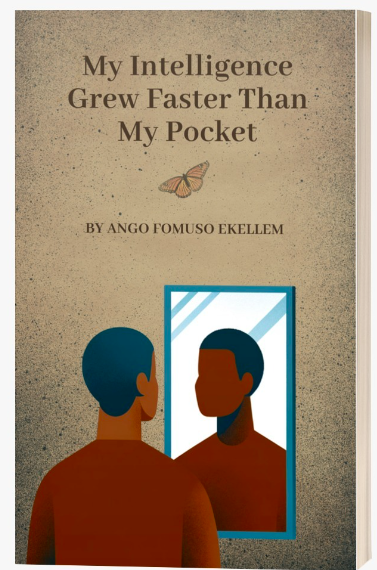
In her poignant work The $200 Silence, Dr. Ango explores the weight of silence within communities. We often dismiss a lack of support or a friend’s absence as a lack of care, or worse, we internalize it as a “black man thing”—a form of internalized stigma. She challenges us to see that this silence is frequently a mask for people who are “dying in silence” under the weight of pain or hidden sickness.
“There are some people who are the generators of joy, but nobody checks in on them. They try and hopelessly one day they just shut down and that’s it.”
The takeaway is the necessity of the “reality call.” True community requires us to detach from our own emotional ego—the part of us that feels offended when someone doesn’t show up for us—so we can see that they are drowning. Sometimes, a simple “I see you” emoji is more valuable than a demand for presence; it acknowledges the struggle without adding to the noise they are already fighting.
Carrefour—The Rare Intersection of Brilliance and Humility
Central to Dr. Ango’s identity is the concept of “carrefour,” French term for an intersection. In her life, this is the rare meeting point where her STEM background—mathematics and engineering—converges with her creative writing, spiritual and psychological callings.
This intersection proves that brilliance and compassion are not mutually exclusive. She models a life where one approaches “mathematics with precision, engineering with innovation, and the gospel with clarity.” This is mastery seasoned with humility—the ability to be a “fearless inquirer” into technical systems while remaining deeply committed to the sanctity of the human soul.
Conclusion: The Architecture of Growth
As Dr. Ango enters her Jubilee year, she views her work not merely as a collection of books, but as an ancestral inheritance. She dedicates this milestone to the courage of her ancestors, Pa John Munang and Paulina Chibo Munang, whose “courage planted what we now cultivate.”
For her, education is the “architecture of growth”—the profession that shapes every other profession. By launching these frameworks, she is not just celebrating 50 years; she is providing a steady reference for when schools tremble and systems fracture.
Her life’s work challenges each of us to audit our own internal systems. As we navigate the patterns of our own life, asking ourselves: Are we merely coping with the pressures of our environment, or do we truly understand the system in which we are? Understanding the pattern is the first step toward reclaiming our joy and building a legacy through writing that lasts.
By Bill F. Ndi, President Pan African Writers Association and Professor at Tuskegee University, Alabama USA





 Burnout: Systemic Error and Not a Personal Flaw