 thesilkroadtoday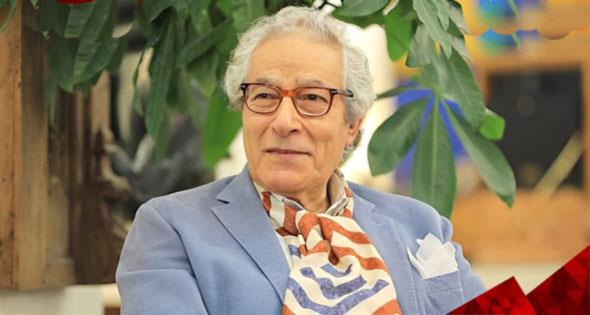
By Dr. Hussein Bassir
Great awards are not measured by their financial value, but by the meaning they carry and the legacy they recognize. Among Egypt’s cultural honors, the Nile Award remains one of the most prestigious, carrying the name of the river that gave birth to one of the world’s oldest civilizations. It is granted to those whose contributions become part of the cultural memory of the nation. Therefore, the recognition of the great Egyptian artist and former Minister of Culture Farouk Hosny with the Nile Award in the Arts represents more than a cultural announcement; it is a moment of reflection on the role of creativity in shaping the history and identity of civilizations.
Since the dawn of Egyptian civilization, the ancient Egyptians understood that art was never merely decoration or luxury. It was a path toward eternity. The sculptor who carved a statue, the painter who decorated the walls of a tomb, and the architect who built a temple were not simply creating objects of beauty; they were preserving memory and challenging the passage of time. In ancient Egypt, beauty was connected with truth, harmony, and immortality. Art was a sacred language through which humanity could communicate with the divine and preserve its achievements for future generations.
From this profound understanding of the power of art, the journey of Farouk Hosny can be viewed as a modern continuation of Egypt’s ancient artistic spirit. He began his career as a visual artist, carrying a unique vision of color, form, and space. Before becoming Minister of Culture, he was already a creator searching for beauty through his paintings. Even during his years in public service, he never abandoned the sensitivity of the artist. He remained connected to the world of creativity, believing that culture was not a secondary activity but one of the fundamental pillars of a nation’s strength.
During his tenure as Minister of Culture, Farouk Hosny contributed to the development of Egypt’s cultural landscape. His period witnessed efforts in expanding museums, supporting artistic institutions, encouraging cultural activities, and strengthening fields such as visual arts, theater, music, cinema, publishing, and translation. His experience remains an important chapter in the modern history of Egyptian culture and continues to inspire discussion about the relationship between culture, leadership, and society.
The true measure of any public figure is not only the decisions made during a position of authority, but the lasting impact left behind after leaving that position. Power is temporary, but creativity endures. After his years of public service, Farouk Hosny returned to his first love: the studio and the canvas. Like every true artist, he continued his artistic journey, proving that creativity is not a profession with retirement, but a lifelong dialogue between the artist and the world around him.
The Nile Award represents recognition of a complete artistic and cultural journey, not simply for one achievement or one moment. It honors decades of dedication that brought together artistic creativity, cultural leadership, and public responsibility. Such recognition reflects the importance of celebrating individuals who contribute to the intellectual and aesthetic development of society.
The humanitarian dimension of this honor adds another layer of significance. By dedicating the financial value of the award to Abu El Reish Children’s Hospital, Farouk Hosny emphasized that culture cannot be separated from human responsibility. True art does not exist in isolation from society; it carries compassion, empathy, and a commitment to improving human life.
Throughout history, great civilizations have honored their artists, thinkers, and builders because they understood that civilizations are not created by rulers alone. They are created by all those who contribute to knowledge, beauty, and imagination. Ancient Egypt preserved the names of architects, craftsmen, scribes, and artists because it recognized their essential role in building the cultural identity of the nation. Today, honoring a major Egyptian artist continues this ancient tradition of celebrating those who enrich the human experience.
Farouk Hosny represents a distinctive model of an artist who combined the freedom of creativity with the discipline of administration. His journey reflects the complex relationship between art and society, between individual expression and national cultural responsibility. His name has become closely associated with an important period in Egyptian cultural history, and his artistic and institutional contributions will remain part of the ongoing conversation about Egypt’s modern cultural identity.
In the end, the Nile Award does not create the value of Farouk Hosny; rather, it recognizes a value that was built over decades of work, creativity, and commitment to beauty. True recognition is not created by ceremonies or speeches, but by the ability to leave a lasting mark on the memory of people and nations.
Farouk Hosny’s name joins the eternal symbolism of the Nile: continuity, creativity, and renewal. Egypt, a civilization that discovered thousands of years ago that beauty is a path to immortality, continues to affirm that honoring its artists means honoring its own cultural soul and preserving its future as much as its past.