 thesilkroadtoday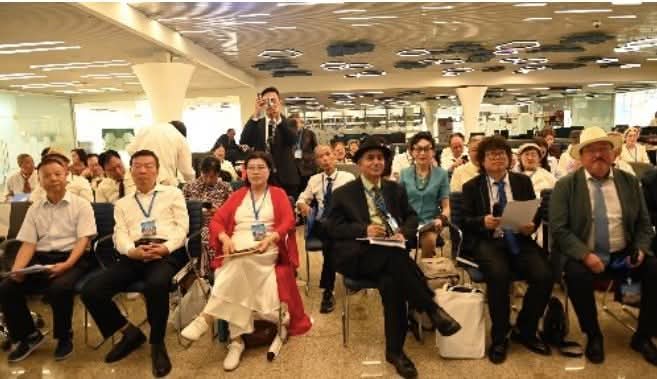
In the midsummer of July, snow‑capped peaks tower over the northern foot of the Tianshan Mountains, while Almaty brims with greenery and vibrant cultural vitality. On July 26, the 6th Silk Road International Poetry Art Festival was held at the Almaty City Library and drew to a successful close. Rooted in Central Asia, the pivotal hub of the ancient Silk Road, the event built a bridge for civilizational dialogue through poetry. It brought together literary figures from Asia, Europe and Africa, inherited the millennium‑old cultural heritage of the Silk Road, forged a poetic path of peace, and fully demonstrated the unique dynamism of inter‑civilizational integration along the Silk Road in the new era.
Co‑organizers of this session include the United Nations World Silk Road Forum, the International Federation of Silk Road Poets, the World Association of Turkic‑Speaking Writers, the World Poetry Movement, the BRICS Writers’ Association, the Grand Poetic Movement, the International Writers’ Association, and World Poets Magazine, among other authoritative international literary institutions. Nearly one hundred poets, writers and cultural scholars from more than ten countries — China, Kazakhstan, Uzbekistan, Kyrgyzstan, Tajikistan, Turkmenistan, Russia, Egypt, Türkiye, Azerbaijan, Armenia and others — attended the grand‑scale, wide‑reaching and highly‑professional international literary gala.
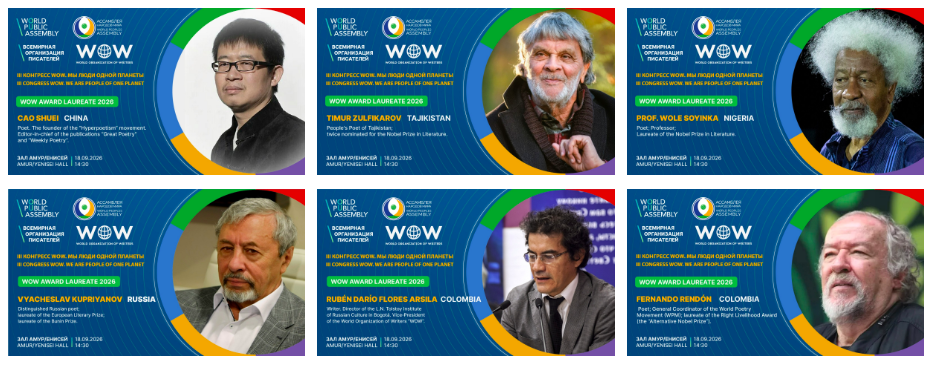
Key Chinese and foreign guests including Wang Fangwen, Ulugbek Yesdaulet, Ashraf Abdel‑Yazid, Cao Shui, Altynai Temirova and Sirojiddin Rauf delivered speeches at the opening ceremony.
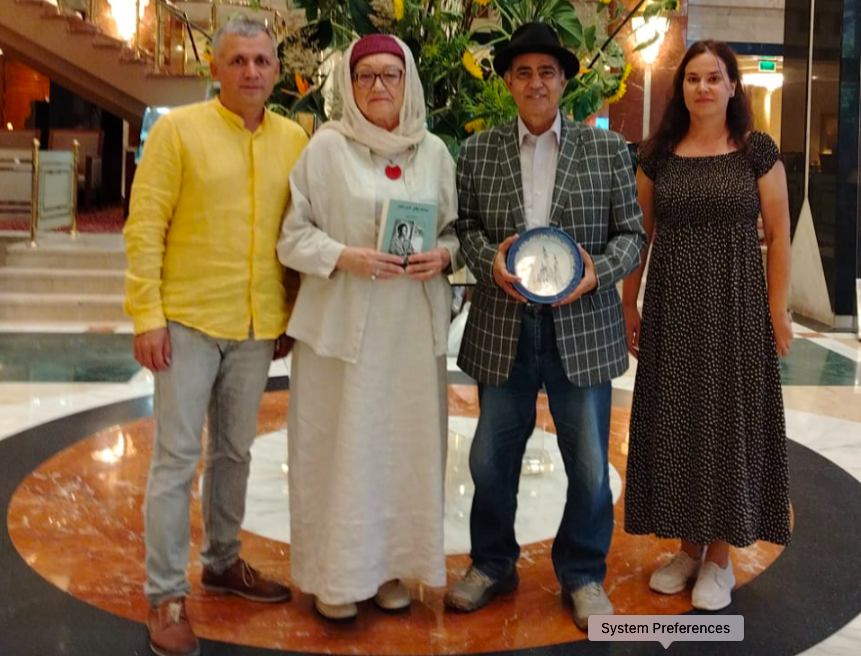
A solemn awards ceremony was held, hosted jointly by Cao Shui, Chen Hong, Wang Fangwen and Ulugbek Yesdaulet. A variety of prestigious international awards were presented to leading literary and artistic figures across nations for their dedication to Silk‑Road‑themed literature and promotion of inter‑civilizational mutual learning. Honorary Chairperson certificates were conferred upon Ulugbek Yesdaulet, Ashraf Abdel‑Yazid, Sultan Akimovich Rayev, Altynai Temirova, Usman Azim, Abdukakhor Qasim and Kurbandurdy Orazov. Among them, Ulugbek Yesdaulet, Ashraf Abdel‑Yazid, Cao Shui and Sultan Akimovich Rayev received the World Silk Road Outstanding Cultural Contribution Award. Cao Shui, Wang Fangwen and Ulugbek Yesdaulet were jointly awarded the Egyptian Golden Papyrus International Poetry Prize. Cao Shui, Ashraf Abdel‑Yazid, Wang Fangwen and Dong Faliang won the Kazakhstan Abay Poetry Prize. Ashraf Abdel‑Yazid and Altynai Temirova were awarded the Medal of the Grand Poetic Movement.
Additional international honours were bestowed: the Egyptian Arab Oscar Poetry Award went to seven Chinese poets: Wang Fangwen, Ling Xiaochen, Dong Faliang, Ma Yongbo, Liu Xunfu, Cao Bo and Cao Shui. The Hong Kong Literature and Art Award was granted to three foreign poets: Ulugbek Yesdaulet, Ashraf Abdel‑Yazid and Altynai Temirova. Poet Yiye Hongchen won the Top‑Ten Chinese‑Language Work Award of the 5th World Parental‑Affection Poetry Prize organised by the Interstellar Poets Organisation. Meanwhile, comprehensive literary‑artistic awards including the Silk Road Laureate Poet Award, the Golden Camel Award, the Silver Camel Award, the Gold Award for Poetry Collections, as well as gold prizes for poetry films, calligraphy‑and‑painting works and photography were presented in tribute to global Silk‑Road‑themed creators.
New‑book launches, translated‑works exhibitions and public‑welfare book donations took place on‑site, alongside a ceremony for donating calligraphy‑and‑painting artworks to the Almaty City Library. The Arabic‑language edition of Cao Shui’s epic Epic of the Eurasian Continent was officially released. Translated into twelve languages, it stands as a landmark work of contemporary Chinese literature going global. Wang Fangwen’s theoretical monograph Aesthetic Studies of Silk‑Road Poetics along the Tianshan Corridor was published, filling a gap in systematic research on Silk‑Road poetics. Silk Road Camel Shadows, compiled by Wang Fangwen and translated by Cao Shui, collecting fine works by poets from over seventy countries, has won wide acclaim.
Responding to the July Peace Initiative of the World Poetry Movement, the festival hosted a World Peace Recital. Chinese and foreign poets recited classic texts from ancient and modern times as well as new field‑inspired compositions, conveying the vision of peaceful coexistence and bringing the awards session to a close.
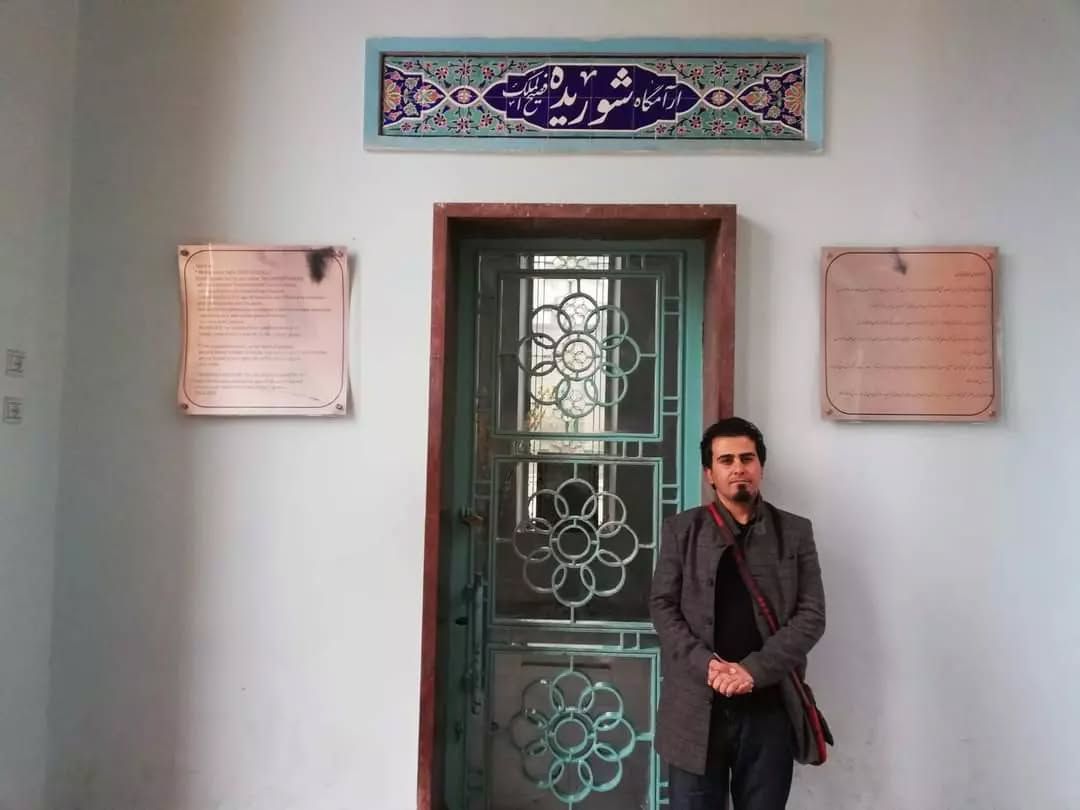
Running for one week, the poetry festival featured in‑depth cross‑border Silk‑Road field trips. The poet delegation visited museums, cultural venues and ancient heritage sites in Tashkent and Samarkand of Uzbekistan, as well as museums, celebrity former residences and snow‑capped natural landmarks in Almaty. By exploring the origins of Silk‑Road civilisations in situ, participants created a large body of poetic works imbued with patriotic sentiments and global vision, carrying forward the Silk‑Road spirit of peace, tolerance and mutual appreciation.
Rooted in Central Asia, connecting Eurasia and radiating across the globe, the 6th Silk Road International Poetry Art Festival opens channels for civilisational exchange through poetry, revives the timeless vitality of Silk‑Road cultural heritage, deepens people‑to‑people exchanges between China and foreign lands, advances mutual learning among diverse civilisations, and continuously infuses poetic strength into world peace and common development.