 thesilkroadtoday
TASHKENT, Uzbekistan — One of Uzbekistan’s most enduring literary institutions, Sharq Yulduzi (The Star of the East), returns with its 2026 No. 1 issue, reaffirming the magazine’s long-standing role as a meeting place for Uzbek, Central Asian and international literature, poetry, translation, criticism and the arts.

Published continuously since 1932, Sharq Yulduzi is more than a literary journal: it is part of the cultural memory of Uzbekistan. Founded by the Writers’ Union of Uzbekistan, the magazine has, across generations, provided a platform for writers and poets while connecting Uzbek literature with the wider Russian-speaking and international literary worlds.

The new issue, edited by Sirojiddin Rauf, with Klavdiya Panchenko as deputy editor-in-chief and Dilorom Murotova as executive secretary, presents an extensive panorama of contemporary prose and poetry alongside translations, literary criticism, cultural history and reflections on music and the visual arts.
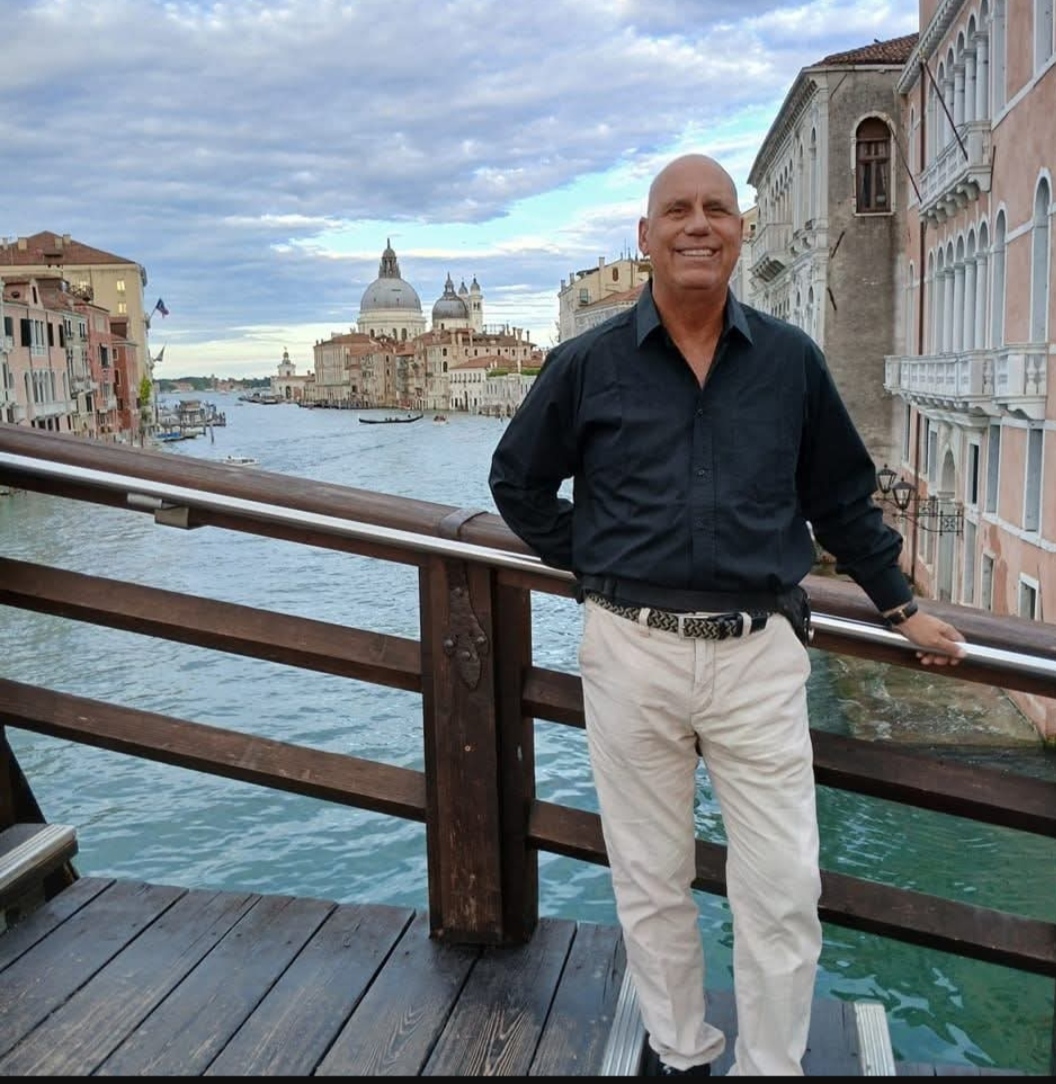
Its prose section opens with Viktor Goroshin’s “To London for Pendants,” a novel excerpt that moves between university life, America and the unpredictable encounters of modern existence. Goroshin, a writer, journalist and television and radio presenter who lives in Atlanta, brings to the issue a narrative shaped by migration, cultural displacement and the ironic observation of human behavior.
The prose selection also includes Igor Almechitov’s “Labyrinths of Life,” a series of stories; Alexander Kogmogorov’s short story “Khabibka”; and Vita Sapphire’s “Lizka and Isabella.” Together, these works demonstrate the magazine’s continuing commitment to fiction that explores individual experience against the complex background of contemporary society.
Poetry occupies another important place in the issue. Sergey Gordin, Efim Fogel, Shukhrat Yakubov and Tamila Khabieva contribute poems that move through love, artistic destiny, truth, suffering and the mysterious power of human desire. Among them, Gordin’s “Every Artist Is a Faust” and Fogel’s “Love Is Beyond the Years” suggest the philosophical and existential dimensions characteristic of the magazine’s poetic pages.
A particularly significant feature is the magazine’s translation section, which reinforces Sharq Yulduzi’s identity as a bridge between literary cultures. Works by Muhammad Ismail, Bakhtiyar Kayumov, Khursid Dustmuhammad and Khosiyat Rustamova appear in translation, allowing Uzbek literary voices to reach readers in another linguistic environment.
Among these contributions is the poetry of Khosiyat Rustamova, presented through translations by Nikolai Ilyin. Her poems, including “In the Soulless Space Leaves Were Whirling,” “The Snake Cannot Shed Its Venom” and “The Prisoner,” combine striking imagery with reflections on mortality, freedom, suffering and resilience.
Rustamova is presented as a poet, novelist, playwright and translator, and a member of both the Writers’ Union of Uzbekistan and the Writers’ Union of Azerbaijan. Born in 1971 in the Namangan region, she graduated from Tashkent State University, now the National University of Uzbekistan, and has also completed advanced literary studies in Uzbek philology. She currently serves as editor-in-chief of Kitab Dunyasi (The World of Books) newspaper.
Her poem “The Prisoner” offers a particularly powerful meditation on freedom. Its central paradox is that physical liberation does not necessarily produce happiness: the prisoner leaves behind chains and confinement, gains access to earth, sky and water, yet remains haunted by memory and the wounds of the past. In this way, the poem transforms political or physical captivity into a broader reflection on the psychological meaning of freedom.
The issue also includes the section “For the First Time in Sharq Yulduzi,” featuring Yulia Shutova’s story “Plastic Garden,” expanding the journal’s literary geography and introducing new voices to its readership.
The magazine’s anniversary and historical materials add another dimension. Writers and researchers revisit figures including Nikolai Rubtsov, Alisher Navoi, and Mikhail Saltykov-Shchedrin, while essays examine Rubtsov’s connection with Tashkent and the performing legacy of V. Teregulov. The section “Caravan of History” extends the journal’s literary mission into cultural memory, including an article on Japanese people in Uzbekistan during 1940–1950.
The arts and intellectual sections broaden the issue further. Kamil Mukhamadzhiyanov writes on the traditions of maqom in vocal music; Alina Kutluchurina considers new perspectives in Uzbek art; and Lyudmila Kan explores Korean melodies in the works of Uzbek composers. Literary criticism includes studies of love, death and freedom in Khosiyat Rustamova’s poetry, as well as the image of the East in Russian-language prose.
The issue closes with a rich collection of critical and cultural essays, including discussions of poetry, novels, books and contemporary literary creation. In this structure, Sharq Yulduzi demonstrates that a literary magazine can function simultaneously as an archive of cultural memory, a laboratory for new writing and a bridge between languages and civilizations.
Nearly a century after its establishment, Sharq Yulduzi continues to carry its name with particular significance. Like a star guiding a caravan across the vast landscapes of Central Asia, the journal connects generations of writers, languages and literary traditions.
The 2026 No. 1 issue is therefore not simply a collection of texts. It is a cultural map of Uzbekistan and its literary surroundings—one in which prose, poetry, translation, criticism, music, art and history travel together.
Published in Tashkent by the Writers’ Union of Uzbekistan, Sharq Yulduzi remains a vital window into the evolving literary imagination of Uzbekistan and the wider Central Asian region.