 thesilkroadtoday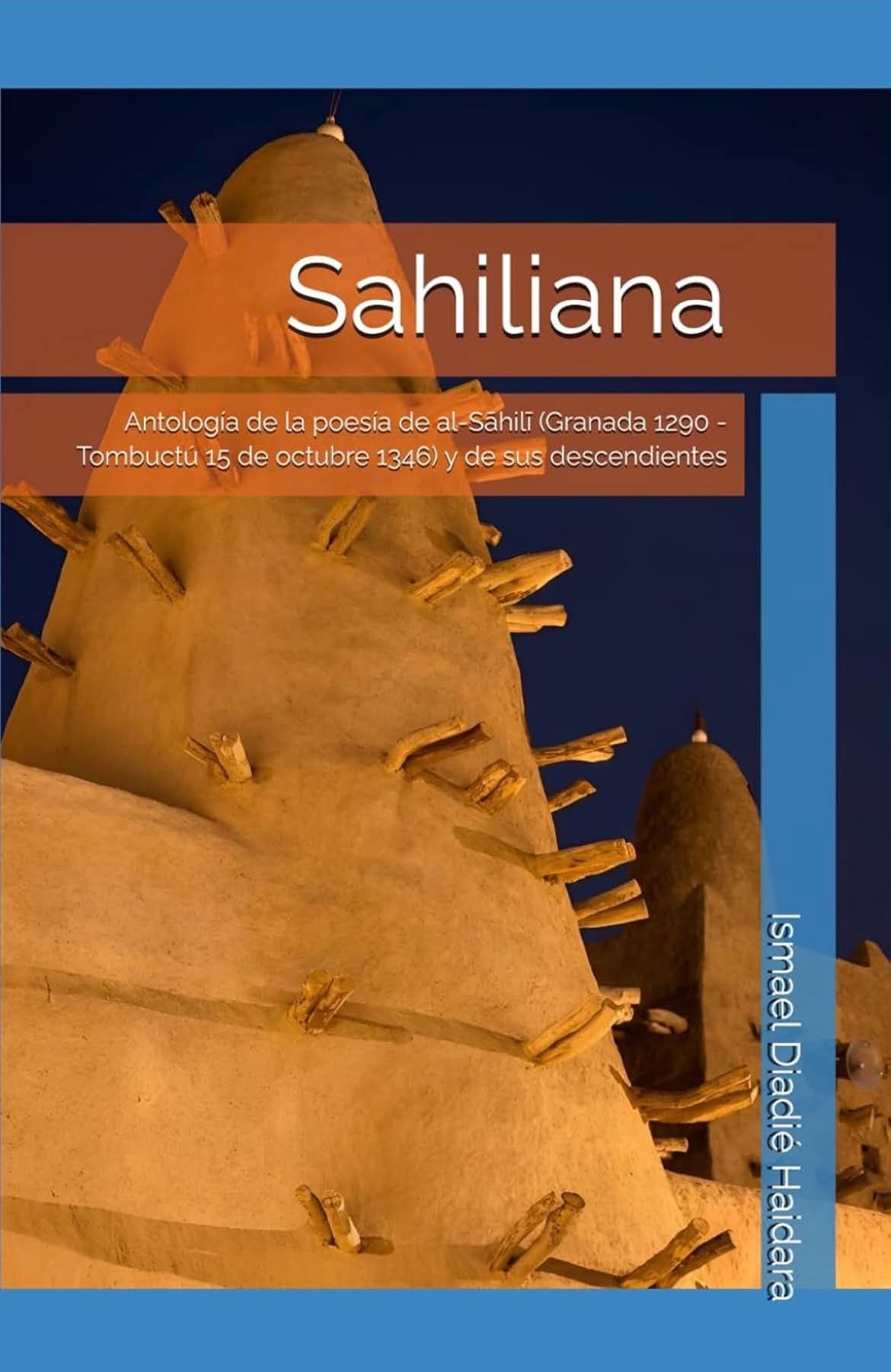
Tombouctou, Mali — 2026 — The Fondo Kati Tombouctou has published SAHILIANA: Antología de la poesía de Es-Sahili y de sus descendientes (680 años de poesía), a remarkable anthology tracing nearly seven centuries of poetic creation within the family lineage of the celebrated Andalusian scholar, poet and polymath Abū Isḥāq Ibrāhīm ibn Muḥammad ibn Ibrāhīm al-Sāḥilī al-Anṣārī al-Gharnāṭī, widely known as Es-Sahili.
The book Sahiliana: Anthology of the Poetry of Es-Sahili and His Descendants (680 Years of Poetry), published by Fondo Kati Tombouctou in 2026, traces an extraordinary poetic lineage spanning nearly seven centuries, beginning with Abu Ishaq al-Sahili (Granada, 1290 – Timbuktu, October 15, 1346), the celebrated Andalusi poet, architect, and intellectual who became an important figure in the cultural history of Mali and Timbuktu. Bringing together the poetic heritage of al-Sahili and his descendants, the volume presents poetry as a living family tradition carried across generations and geographies, linking al-Andalus, West Africa, and the wider intellectual world of the Sahara.
The book is further enriched by a preface written by His Excellency Abdurrahman Baby, Ambassador of Mali to Spain, and an afterword by Dr. Reynaldo Fernández Manzano, a distinguished scholar of Andalusi music, whose contribution places the poetic legacy within the broader cultural and musical heritage of al-Andalus and its enduring connections with Africa.
Published in 2026, the volume presents the poetic heritage of a family whose intellectual and literary continuity reaches back 680 years, from the death of Es-Sahili in Timbuktu on 15 October 1346 to the present day.
The anthology places this extraordinary lineage within the broader history of families whose genealogical and intellectual continuity has endured for centuries.
Among the world’s best-known examples is the family of Confucius, whose principal present-day representative, Kong Chuichang, born in 1975, is traditionally regarded as a direct descendant of Confucius in the 79th generation. Since 2009, he has served as the traditional ritual representative of the Confucian family in Taiwan, a lineage extending approximately 2,500 years.
Another celebrated example is the family of Jalāl al-Dīn Muḥammad Rūmī, known as Mawlānā Rūmī (1207–1273). Among his contemporary descendants is Esin Çelebi Bayru, Rūmī’s 22nd-generation descendant and Vice President of the International Mevlana Foundation. The Foundation is currently headed by her brother, Faruk Hemdem Çelebi.
It is within this remarkable global tradition of enduring intellectual and cultural lineages that the family of Es-Sahili occupies a distinctive place.
From Granada to Timbuktu: A Living Intellectual Lineage
The family of Abū Isḥāq Ibrāhīm ibn Muḥammad ibn Ibrāhīm al-Sāḥilī al-Anṣārī al-Gharnāṭī represents a bridge between al-Andalus and West Africa, between Granada and Timbuktu, and between the medieval Islamic intellectual world and its continuing literary heritage.
Over the generations, members of this lineage have distinguished themselves in a remarkable range of fields. They included poets, jurists, historians, medical scholars and authors, genealogists, geographers and Sufi thinkers, contributing to the intellectual and cultural life of the societies through which the family passed.
The new volume focuses specifically on one dimension of this extensive heritage: poetry.
Rather than attempting to encompass the entire intellectual production of the family, SAHILIANA offers an anthology devoted to poetic works produced across successive generations. In doing so, it presents poetry as a particularly vivid means of observing the transmission of memory, identity, knowledge and spiritual reflection from one generation to another.
The Kati Manuscript Heritage
The Es-Sahili lineage is also inseparably connected with one of the most important manuscript traditions associated with Timbuktu: the Fondo Kati.
The descendants of Miriem Es-Sahili, who married Mahmud Kati, son of ʿAlī b. Ziyād al-Qūṭī of Toledo, have been associated with the preservation and custody of the Kati family manuscript collection.
The Fondo Kati is renowned for its extraordinary documentary heritage, comprising 12,741 manuscripts preserved through generations. These manuscripts constitute an exceptional record of the intellectual, cultural, religious, historical and scientific life of the Islamic societies of West Africa and their connections with the wider Mediterranean and Andalusian worlds.
Against this background, SAHILIANA is more than an anthology of poems. It forms part of a broader effort to make visible a living cultural genealogy, one in which manuscripts, family memory and literary creation have survived together across centuries.
680 Years of Poetry
The title SAHILIANA evokes both the name of Es-Sahili and the continuity of the literary tradition associated with his descendants. Its subtitle — 680 Years of Poetry — emphasizes the extraordinary chronological depth of the collection.
The publication demonstrates that cultural heritage is not necessarily confined to monuments, isolated manuscripts or historical figures. It can also survive through family transmission, literary practice and the continued creation of new works.
In this sense, the Es-Sahili lineage offers an exceptional case study in the continuity of knowledge between Andalusia, North Africa and the Sahel, while highlighting Timbuktu’s historic role as a meeting point of cultures, intellectual traditions and trans-Saharan networks.
A Contribution to the Preservation of Literary Memory
The publication of SAHILIANA by Fondo Kati Tombouctou contributes to the preservation and dissemination of a poetic heritage that might otherwise remain dispersed across generations, manuscripts and family archives.
By bringing together selected poetry from Es-Sahili and his descendants, the anthology gives readers an opportunity to encounter the family not only as a historical genealogy but as a continuing literary voice.
The volume also invites a wider reflection on the relationship between genealogy and cultural memory. While the Confucian and Rumi families demonstrate how intellectual and spiritual legacies can survive through long genealogical lines, the Es-Sahili family adds a distinctive African and Andalusian dimension to this global history of inherited cultural traditions.
From Granada to Timbuktu, and from the fourteenth century to the twenty-first century, the story recorded in SAHILIANA is ultimately a story of continuity: continuity of poetry, scholarship, memory and identity.
Publication
Title: SAHILIANA: Antología de la poesía de Es-Sahili y de sus descendientes
Subtitle: 680 años de poesía
Publisher: Fondo Kati Tombouctou
Place: Tombouctou, Mali
Year: 2026
Subject: Poetry, genealogy, Andalusian heritage, Timbuktu, manuscript culture, Sufi and Islamic intellectual traditions
The book is available through .
SAHILIANA stands as a literary testament to an extraordinary 680-year journey — a journey in which poetry became one of the enduring vessels through which a family preserved its memory and continued to contribute to the cultural history connecting Andalusia, the Maghreb and Timbuktu.