 thesilkroadtoday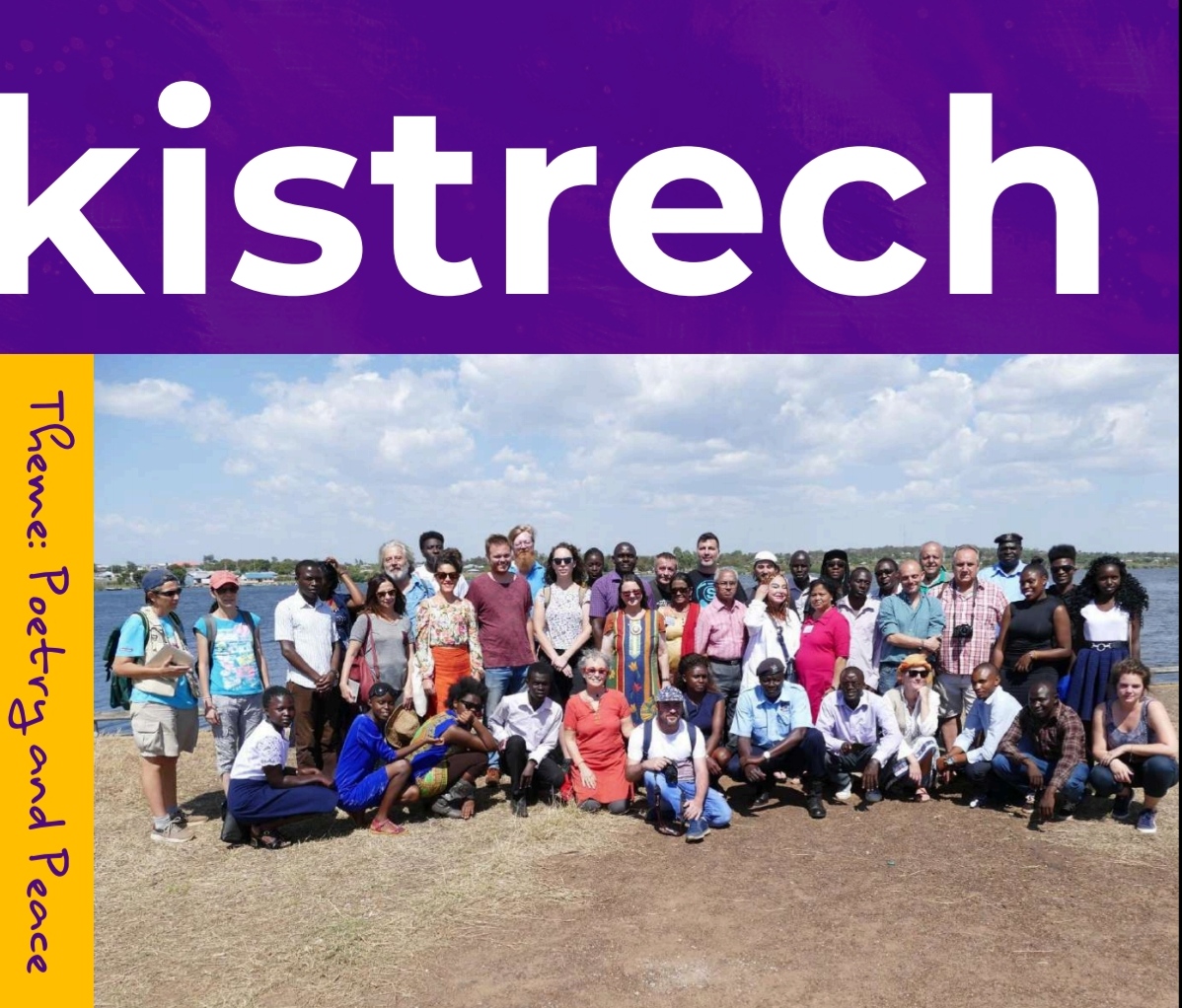
“We want poetry to build bridges of love, kindness and human understanding” — Christopher Okemwa
Cairo, The Silk Road Today:
JAMBO! The greeting is Kenyan, but the poetic conversation unfolding at the 12th Kistrech International Poetry Festival is unmistakably global.
From Kenya to Syria, Saudi Arabia, Egypt, Ireland, Italy, Japan, Poland, Galicia and Hungary, poets are converging on Kistrech in a celebration that treats poetry not merely as literature, but as a meeting place for cultures, languages and human experience.
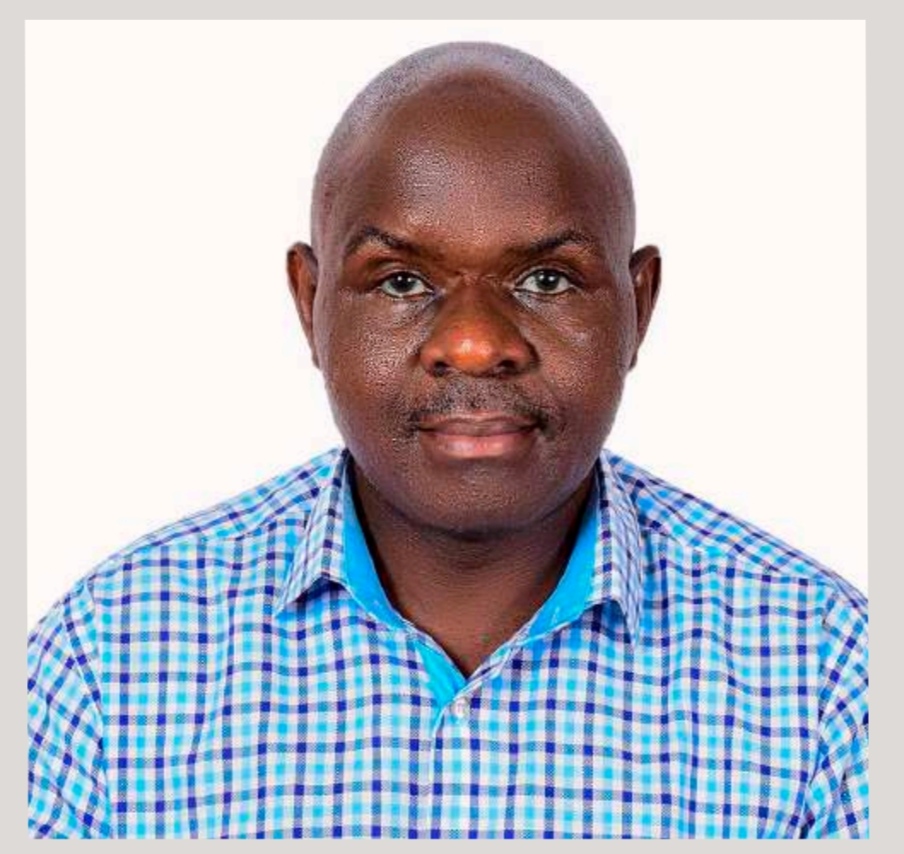
To discover what makes this edition particularly special, we spoke with Dr. Christopher Okemwa, Director and Editor of the Kistrech International Poetry Festival, about the festival’s international journey, its new voices, its expanding cultural partnerships and this year’s distinguished Literary-Bridge Award.
“This is one of our most exciting editions”
Q: Christopher, what makes the 12th edition of Kistrech special?
Christopher Okemwa: This year’s festival is one of our most exciting editions because of the quality and calibre of the poets joining us. We have an exceptionally stimulating line-up, with distinguished poets arriving from different continents.
Kistrech has always believed that poetry should cross borders. This year, we are seeing that philosophy become a reality through the diversity of our participants.
We are particularly delighted to welcome poets from countries that are represented at Kistrech for the first time. That gives this edition a special sense of discovery.
A first from Saudi Arabia — and a remarkable literary voice
Q: One of the notable firsts this year is Saudi Arabia. Tell us about Hatem Al-Shahri.
Okemwa: Indeed. We are very proud to welcome Hatem Al-Shahri, our first poet from Saudi Arabia.
Hatem is an accomplished literary figure who has authored 18 books. His work has received significant international recognition. Among his honours are the Ibn Arabi International Award in Spain in 2024 for his collection Where Does All These Deaths Go?, the Stockholm Cultural Award in Sweden in 2024, and the Best Translated Foreign Author Award in Germany in 2025, presented by the German Association for Literature and Translation.
His presence adds an important new dimension to our literary dialogue between Kenya and the Arab world.
From Syria to Kenya: a veteran of the Arab literary world
Q: Another major Arab presence is the Syrian poet Hani Nadeem.
Okemwa: Hani Nadeem brings enormous experience not only as a poet but also as an editor, journalist and cultural professional.
He has served as CEO of Kararees Media, an adviser at the UAE Ministry of Culture, Editorial and Advertising Director at Horizon Draft, Editorial Director at Alef International, Founding Editor-in-Chief of Elaph Newspaper, and Editorial and PR Director at Al-Turath Foundation in Saudi Arabia.
He holds a Bachelor’s degree in Journalism from Damascus University and a Master’s degree in Linguistics from Baghdad University.
We are delighted to say: Welcome to Kenya, Hani Nadeem!
Ireland, Italy and Japan enter the Kistrech story
Q: This year also brings several countries to Kistrech for the first time.
Okemwa: Yes, and that is one of the things that makes this edition so exciting.
For the first time, we welcome a poet from Ireland, Bernadette Gallagher. We are grateful to Culture Ireland for awarding her a travel grant that has enabled her participation. We hope this will be the beginning of a continuing cultural and poetic exchange between Ireland and Kenya.
Italy is another important first. Since the festival began, we have not previously had an Italian poet. This year, thanks to the support of the Italian Cultural Institute in Nairobi, we welcome Professor Elisa Biagini. We sincerely appreciate this support and hope it will lead to a lasting literary and artistic partnership between Italy and Kenya.
And then there is Japan.
We have never before had a Japanese poet at Kistrech, so it is a particular joy to welcome Yusuke Miyake, an internationally renowned poet and translator and winner of the Gendai-Tanka Criticism Award in 2012.
We hope Yusuke will introduce our poets and audiences to the traditions of Renshi, Haiku and Japanese traditional poetry.
Poland returns with another distinguished voice
Q: Poland has already established a presence at Kistrech.
Okemwa: Absolutely. We have previously welcomed the great Polish poets Dariusz Lebioda in 2018 and Professor Marta Eloy Cichocka in 2024.
This year, we are honoured to welcome Anna Maria Stępień, an award-winning poet and cultural promoter. Her poetry received second place in a poetry contest organized by the Writers’ Society in Kumanovo, North Macedonia, in 2025, and she won the prose category of the 5th International Literary Competition Literary Asia 2025 in March 2026.
We are very happy to welcome her to Kistrech.
Galicia, Hungary and the language of translation
Q: The festival’s European map continues to expand.
Okemwa: Yes. From Spain, we previously welcomed Miguel Rodríguez Monteavaro in 2014. From Galicia, we have had Yolanda Castaño in 2022 and Moncho Iglesias Míguez in 2024.
This year, Galicia is represented by Genaro da Silva, who has won several literary prizes for his poetry books and works as an editor and translator of poetry between Spanish, Galician and Portuguese.
Hungary also returns to Kistrech. After welcoming Turczi István in 2022, we now welcome Dániel Levente Pál, who has received numerous literary, artistic and professional awards in Hungary and internationally.
Dániel is particularly interesting because he is a bilingual author writing simultaneously in Hungarian and English. During the festival, he will launch his bilingual English/Kiswahili poetry collection, Butterfly, Stone, Knife (2026), published by Nsemia Inc.
For us, this is exactly what Kistrech is about: languages meeting languages, cultures meeting cultures.
“Poetry can build bridges”
Q: This year you are also honouring an Egyptian poet with a special award. Why Dr. Ashraf Aboul-Yazid?
Okemwa: We are delighted to honour Dr. Ashraf Aboul-Yazid (Ashraf Dali) with the Literary-Bridge Award 2026 for his distinguished service to world literature.
He is a poet, novelist, journalist, translator, editor and cultural bridge-builder whose sustained work has contributed significantly to the advancement, dissemination and preservation of world literature.
His career reflects the very spirit of Kistrech: connecting literary traditions across geographical and linguistic boundaries.
We therefore invite everyone to join us in celebrating Dr. Ashraf Aboul-Yazid and his contribution to world literature.

Beyond poetry: building lasting cultural partnerships
Q: You have repeatedly mentioned cultural institutions such as Culture Ireland and the Italian Cultural Institute. How important are such partnerships?
Okemwa: They are extremely important. A literary festival is not sustained by poets alone. It needs institutions, cultural organizations and individuals who believe in cultural exchange.
When an institution supports a poet’s journey from one continent to another, it is not simply paying for a trip. It is helping two cultures meet.
We would therefore welcome continued partnerships with Culture Ireland, the Italian Cultural Institute in Nairobi and similar institutions around the world.
What do you hope visitors will take home from Kistrech?
Okemwa: I hope they take home joy.
I hope they take home excitement, laughter and new friendships. Most importantly, I hope poetry opens our hearts to tender human feelings, love and kindness.
Our world needs more opportunities for people to meet beyond political and geographical boundaries. Poetry gives us that opportunity.
At Kistrech, we want our visitors to feel that, although we may speak different languages and come from different continents, we share something profoundly human.
One festival, many worlds
The 12th Kistrech International Poetry Festival thus arrives not simply as another entry in the calendar of international literary events, but as a living map of poetic encounters.
A Syrian editor-poet meets a Kenyan audience. A Saudi writer crosses a new literary bridge. Ireland and Italy make their Kistrech debuts. Japan introduces the traditions of Haiku and Renshi. Poland, Galicia and Hungary strengthen existing connections. And Egypt’s Dr. Ashraf Aboul-Yazid is honoured for a lifetime of building bridges through literature and translation.
Perhaps that is the most powerful message of Kistrech: poetry does not erase our differences; it teaches us how to meet through them.
And, as Dr. Christopher Okemwa reminds us, the invitation is simple: Jambo — welcome to Kistrech, welcome to Kenya, and welcome to the world of poetry.