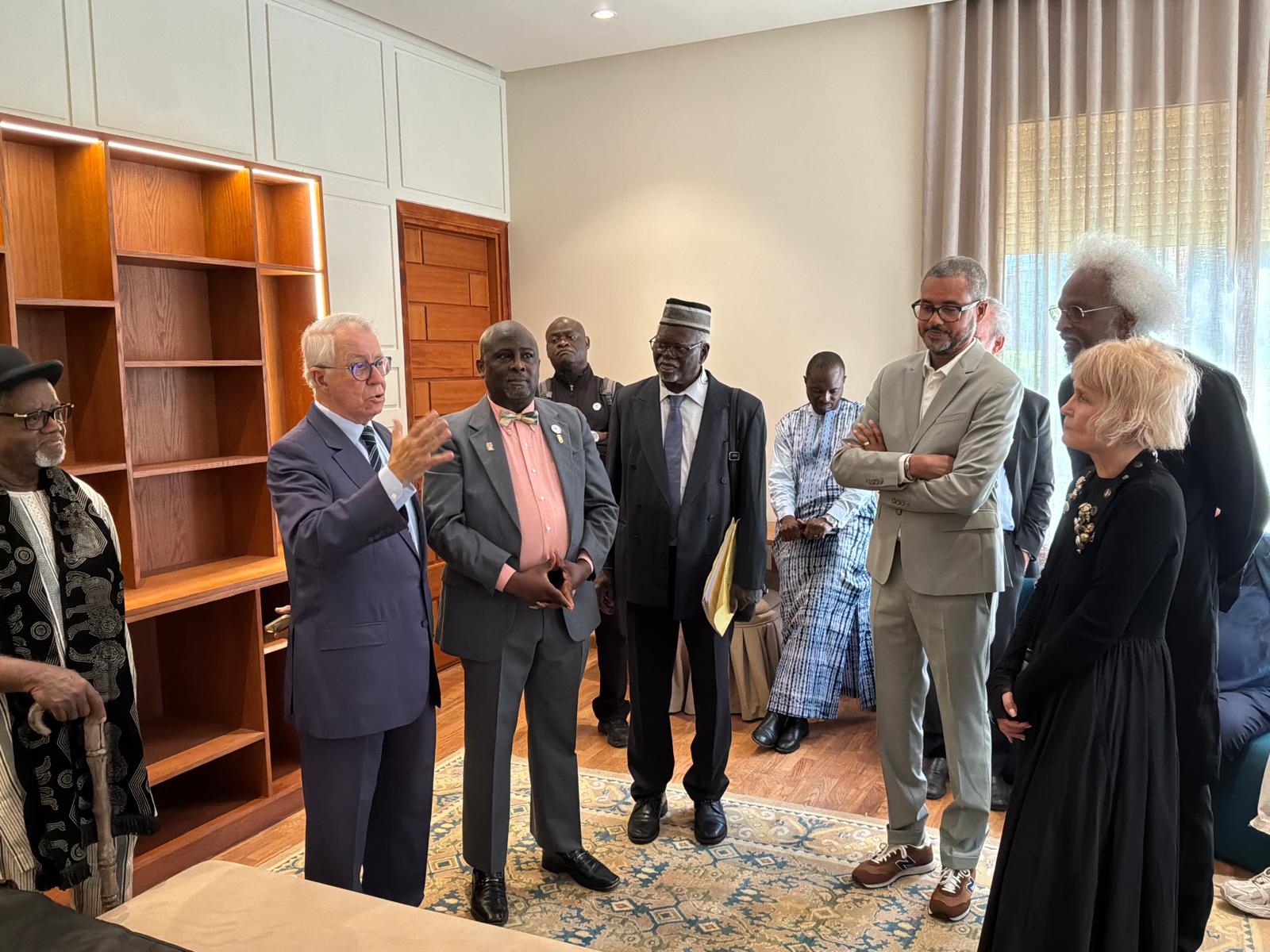
Soyinka at 40: Three Nobel Laureates Celebrate the Opening of the House of the Worlds of the Book
By Bill F. Ndi, President of the Pan African Writers Association (PAWA), Director of International Programs and Professor of Modern Languages, Communication, and Philosophy at Tuskegee University, Alabama, USA. Your Excellency, Permanent Secretary of the Academy of the Kingdom of Morocco, Professor Abdeljalil Lahjomri, Distinguished Nobel Laureates: Professor Wole Soyinka, Professor JMG Le Clézio, and Professor Michel Kodjo Boko, Your Excellencies Ministers of Government and Members of the Diplomatic Corp, Eminent Members of this notable body, esteemed writers, scholars, readers, publishers, and friends of literature from across Africa and the world, I bring you greetings from Tuskegee University, and on behalf of General Mark A. Brown who, last year, in this same venue, addressed this esteemed body. I, also, bring you greetings from the office of the President of The Pan African Writers Association. Today, we stand at the intersection of memory and destiny. We gather to celebrate two remarkable milestones: the fortieth anniversary of the historic Nobel Prize in Literature awarded to Wole Soyinka, the first Black African laureate in literature, whose achievement in 1986 affirmed the rightful place of African voices in the universal republic of letters; and the opening of the World House of Books, a new home for humanity’s stories, knowledge, imagination, and collective memory. Forty years ago, the recognition bestowed upon Wole Soyinka was not merely a personal triumph. It was a victory for Africa’s storytellers, poets, playwrights, intellectual traditions, and creative spirit. His Nobel Prize opened doors for generations of African writers and demonstrated to the world that African experiences, philosophies, histories, and dreams belong not at the margins, but at the very heart of global literature. As we celebrate this legacy, we are equally honored to pay tribute to Jean-Marie Gustave Le Clézio, recipient of the 2008 Nobel Prize in Literature. A writer of extraordinary depth and sensitivity, Le Clézio has spent his literary life exploring themes of migration, cultural encounters, human dignity, memory, and the enduring relationship between people and place. His works have consistently championed the voices of those often overlooked by history and have reminded us that literature serves as a bridge between cultures and civilizations. Through his profound humanism and openness to the diversity of the world’s cultures, he has enriched global literature and advanced the values of dialogue, understanding, and respect that unite humanity. As we celebrate the enduring legacy of Wole Soyinka, forty years after his historic Nobel Prize in Literature, and honor the distinguished writer J. M. G. Le Clézio, we also pay tribute to a man whose life’s work reminds us that knowledge is not only a pursuit of truth, but a service to humanity. The man alluded to is Professor Michel Kodjo Boko, a distinguished African scholar whose life’s work has combined scientific excellence, public service, and a profound commitment to humanity. Through his contributions to climate science and sustainable development, Professor Boko has helped deepen our understanding of one of the defining challenges of our age: climate change and its consequences for peace, security, and human well-being. Professor Boko stands as a testament to the power of ideas. If Wole Soyinka reminds us of the liberating force of literature, and J. M. G. Le Clézio of the universal reach of the human imagination, Michel Kodjo Boko reminds us that science, too, is an act of hope, a bridge between knowledge and responsibility, between understanding and action. Yet our gathering today is not only about honoring past achievements. It is about embracing a responsibility to the future. The opening of the World House of Books is therefore both timely and profound. A house of books is more than a building. It is a sanctuary of knowledge, a meeting place of civilizations, a repository of memory, and a bridge between generations. It symbolizes the conviction that books remain among humanity’s most powerful instruments for education, peace, cultural understanding, and social transformation. As we reflect on these historic milestones, let us move beyond celebration to commitment. Let every government invest boldly in libraries, literacy, publishing, translation, and the arts. Let educational institutions place books at the center of learning and intellectual development. Let publishers create opportunities for emerging voices. Let cultural organizations preserve literary heritage while supporting innovation. Let parents raise readers, and let communities nurture the culture of reading. The greatest tribute we can pay to Wole Soyinka, to Jean-Marie Gustave Le Clézio, and to all those whose words have illuminated our world, is not praise alone. It is to ensure that no child is denied access to books, no language is deprived of its written legacy, no library stands empty, and no worthy story remains untold. Today, I call upon Africa and the international community to launch a new literary renaissance: to build libraries where there are none, to strengthen publishing industries where they struggle, to translate works across cultures and languages, to preserve indigenous knowledge, and to make reading a continental movement and a global priority. To the young writers of Africa and the world, I offer a simple message: write courageously. Tell your stories with honesty, imagination, and conviction. Challenge injustice. Preserve memory. Celebrate diversity. Inspire hope. The future of literature belongs to voices that are authentic, fearless, and committed to truth. Let the World House of Books become not merely a monument, but a movement: A movement for knowledge over ignorance. A movement for culture over division. A movement for dialogue over prejudice. A movement for books over barriers. And a movement for the enduring power of the written word to transform humanity. On behalf of the Pan African Writers Association, I invite the world to join us in this mission: Read. Write. Publish. Preserve. Inspire. The next Nobel laureate is already among us. The next great African story is waiting to be told. And through the World House of Books, may future generations discover the shared humanity that unites us all. Long live African literature. Long live the culture of reading. Long live the power of books to transform the world.…
 thesilkroadtoday