 thesilkroadtoday
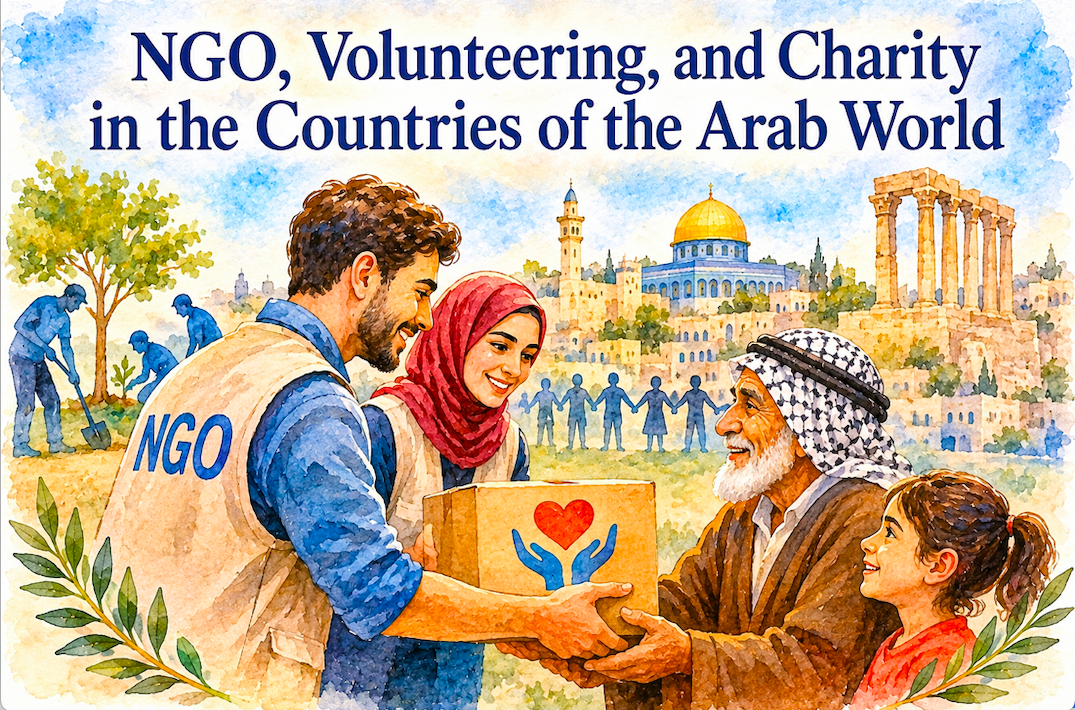
The World Peoples Assembly will host a roundtable discussion entitled “NGO, Volunteering, and Charity in the Countries of the Arab World” on 9 November 2026, from 15:00 to 17:00, at its Representative Office in Jordan.
The meeting will bring together international experts and representatives of civil society institutions to examine the vital contribution of non-governmental and non-profit organizations, volunteer networks, charitable institutions, and other forms of community self-organization to socio-economic development across the Arab world. It will also explore ways to strengthen their role, improve the visibility of their activities, and develop more effective approaches to assessing their impact.
Civil society as a driver of social development
Non-profit organizations play an increasingly important role in addressing social challenges at local, regional, and national levels. They often work in areas where market mechanisms cannot provide adequate solutions and where public institutions may be unable to respond quickly enough to emerging needs.
Beyond delivering essential services and humanitarian support, these organizations serve as an important link between governments and civil society. Their practical experience and expertise can contribute to improving social policies, while their activities create employment opportunities and encourage citizens to participate in constructive community initiatives.
Their flexibility also makes NGOs an important source of social innovation. Initiatives developed in response to specific local needs can offer models that are later expanded and adapted to wider regional or national contexts.
The importance of NGOs is particularly evident at the local and regional levels. Their close connection with communities allows them to understand changing needs and respond more effectively. Through their work, they help improve access to social services, support local communities, contribute to better urban environments, and create opportunities for residents to organize themselves, identify shared problems, and participate in finding solutions.

International expertise and perspectives
The roundtable will be moderated by Vyacheslav Ivanov, Chief Expert at the Center for Research on Civil Society and the Nonprofit Sector, National Research University “Higher School of Economics,” Russia.
The speakers will include:
- Raúl J. Henriquez, Director and Secretary-General of the Social and Economic Council (SER), Curaçao, Netherlands.
- Apostolos Xyrafis, Secretary-General of the International Association of Economic and Social Councils and Similar Institutions (AICESIS), Greece.
- Irina Mersiyanova, Director of the Center for Research on Civil Society and the Nonprofit Sector at the National Research University “Higher School of Economics,” Russia.
- Elena Topoleva-Soldunova, Director of the Agency for Social Information; Chairwoman of the Commission for the Development of the Non-Profit Sector of the Civic Chamber of the Russian Federation; Deputy Chairwoman of the Council for Guardianship in the Social Sphere under the Government of the Russian Federation; and member of the Expert Council under the Government of the Russian Federation.
- Hedi Ben Salah, President of the Association of Graduates of Russian Universities in Tunisia (ATDIUS), Tunisia.
- Mohammad Almutairi, Country Representative of the International Organization for Volunteerism, Kuwait.
- Marina Volkova, Head of the Happiness Department at the World Peoples Assembly and Head of the CSCR Centre for Socio-Cultural and Integrated Rehabilitation, “Happiness Aggregator.”
- Khalil Hamada Mohammed Jabbarin, documentary filmmaker and producer, Jerusalem.
The diverse professional backgrounds of the participants will bring together perspectives from research, public policy, international institutions, volunteer organizations, social rehabilitation, and cultural production.
Key questions: Recognition, transparency and impact
The roundtable will address several essential questions concerning the present condition and future potential of civil society institutions in Arab countries:
- What is the actual and potential role of NGOs and other forms of public self-organization in the Arab world?
- How can their contribution to socio-economic development be evaluated, and what additional incentives could strengthen their impact?
- How can NGOs move beyond limited public visibility and ensure that their activities are transparent, accessible, and understandable to society and relevant stakeholders?
- What mechanisms are needed to establish reliable statistical records of NGO activities and monitor the development and condition of the non-profit sector?
These questions reflect a broader need to recognize civil society organizations not merely as service providers, but as essential partners in development, social participation, and community resilience.
Building on international research experience
An important outcome anticipated from the discussions is the collection of recommendations that can support a more systematic understanding of NGOs and other institutions of public self-organization across the Arab world.
The initiative also envisages the establishment of a working group tasked with developing a methodology for researching and monitoring these organizations, taking into account relevant Russian experience.
In particular, the proposed approach will draw on the work of the Center for Research on Civil Society and the Non-Profit Sector at the National Research University “Higher School of Economics” in Russia. Since 2006, the Center has conducted monitoring of the state of civil society, providing research experience that may offer valuable insights for developing comparable approaches in Arab countries.
Adapting this experience to the specific social, economic, and institutional contexts of the Arab world could help establish a stronger evidence base for understanding the non-profit sector, identifying its needs, and evaluating its contribution to development.
From dialogue to practical cooperation
The roundtable aims to move beyond a general discussion of the importance of volunteering and charitable work towards practical recommendations, research cooperation, and institutional mechanisms that can strengthen civil society.
By bringing together international experts and representatives of organizations from different countries, the meeting underscores the importance of transparency, reliable information, and constructive partnerships between public institutions and independent organizations.
Ultimately, a stronger and more visible non-profit sector can help communities address their challenges, expand social participation, and contribute to more inclusive and sustainable development throughout the Arab world.
20 key words: