 thesilkroadtoday
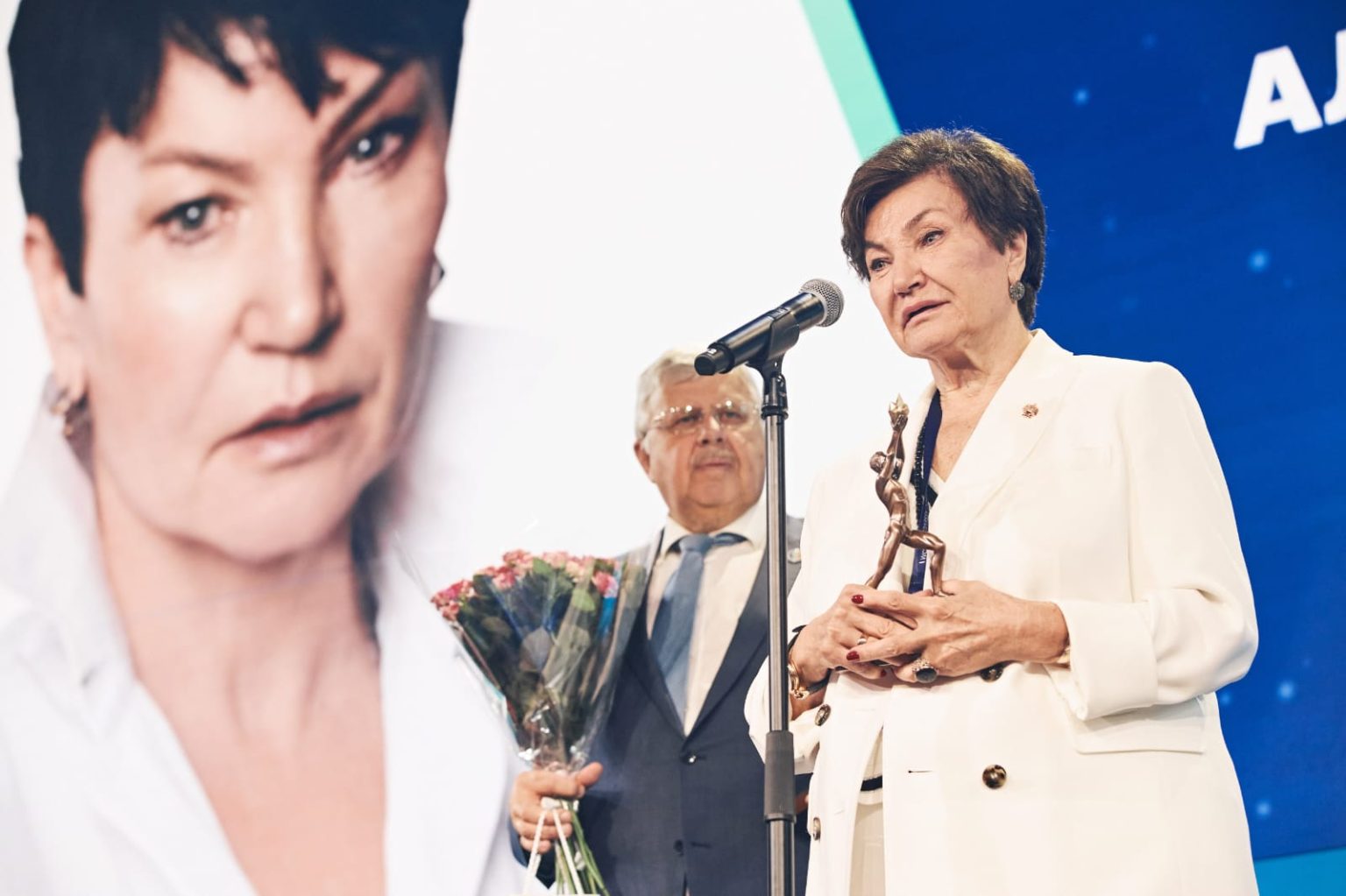
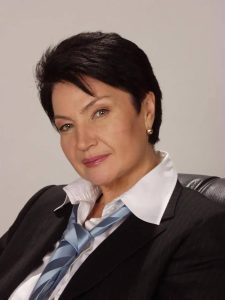
Alexandra Vasilyevna Ochirova
Co-Chair of the Supreme Advisory Council and Member of the General Council of the World Peoples Assembly. Member of the State Commission of the Russian Federation for UNESCO Affairs and UNESCO Goodwill Ambassador (Russia). Poet, stateswoman, political and public figure, scholar, Doctor of Philosophical Sciences, Academician of the Russian Academy of Arts, and Deputy of the State Duma of the Federal Assembly of the Russian Federation (First Convocation).
Alexandra Vasilyevna is the founder and President of the country’s first non-governmental women’s organisation, the International Women’s Centre, which was nominated for the Nobel Peace Prize in 1995. The Centre is known for its innovative projects and programmes in the social sphere, addressing the status of children, women, and families in society, as well as issues of social security.
She is a laureate of the Lenin Komsomol Prize in the field of science and has been awarded the Medal “For Labour Valour”, the Order of Honour, and the Order of Friendship.
Today, Alexandra Vasilyevna focuses on the humanitarian problems of modern civilisation and the place of the human being within it. She is the author of scholarly works and poetry collections, and a member of the Writers’ Union of Moscow and the International Union of Journalists.
—
Alexandra Vasilyevna, what is happiness for you? How do you experience it?
People experience happiness in different ways. It is a very important category that is directly related to the human being. Many ancient thinkers, in different countries and at different times, addressed this subject. Given my philosophical education, the knowledge I acquired has left its mark on my understanding of happiness.
At earlier stages of development, this understanding was more closely tied to what a person does, to discoveries in science, culture, and education, and to the formation of such a community as the family. Different periods in the development of humankind differed from one another, both in their opportunities and in what remained in people’s minds. Yet, to this day, wishing someone happiness remains an essential part of every celebration. It is just that everyone’s happiness is their own and is not always similar to that of others.
For me personally, happiness means harmony, because much depends on how a person’s life has unfolded. For example, I cannot speak about what I have not experienced. It would have been a great happiness for me to have parents, but I lost them when I was only five years old. Probably, those who have parents would say, when answering such questions, that happiness is having one’s parents by one’s side, especially for a child.
In the recollections of a very famous thinker, in response to a similar question, it was said: “To know what happiness is, you must first know what unhappiness is.” I could use that as an answer, but I have always felt happy. This is because the environment in my formative years—the space in which I grew up—was shaped by the beautiful Russian countryside and books. I always felt that I was a person with the opportunity to develop my thoughts in accordance with what I read in books, what I learned at school, and, later, through my education. I am also very happy in my family.
Family is like the institution described in the well-known Marxist work on family, private property, and the state, in which these issues were examined. It is presented as a structure that has survived over very long periods because it has endured as a basic unit of society, doing much to ensure that a person’s development moves upwards.
The possibilities and functions of the family have changed, not only in relation to its members but also in relation to society, the state, and so on, because the family is an important strategic resource. Many people, when asked about happiness, believe that family and children are happiness itself. And they are right.
I think that harmony among all the components of the civilisational space in which we live is necessary for happiness to become truly accessible to the understanding and feelings of every person on Earth, so that it is not associated with negative emotions. I also think that happiness needs to be meaningfully conceptualised in relation to the emotional state of the human soul. It is a value in itself.
As an example, I will cite the philosophical statement that goes back to Aristotle: “There is nothing in the mind that was not first in the senses.”
In the hierarchy of categories related to the human being as the measure of all things, happiness occupies an enormous place. You can immediately see whether a person is happy or not; you can immediately feel it. I adhere to the definition expressed by Lev Nikolaevich Tolstoy. He said that happiness is serving others and also having the ability to respect yourself from within.
Why did I mention feelings? Because happiness is not the result of an external influence; it comes from within me. It is the feeling that a person is happy, something that everyone can understand.
When we say that we inherit traditions, values, and faith from previous generations, we must carry forward not only the understanding but also the feeling of happiness, so that it continues. When I began to engage with these problems and reflect on them, I called this “a new emotional and moral order.”
I want all people to be happy.
In a world that has become increasingly dangerous, what must we do?
When we talk about the need to do something about what is happening in the world today—a world that has become very dangerous, both in the East and in the West—we must understand that the world has become more integrated than ever, yet it has ceased to be manageable.
This entire interconnected system should be directed primarily towards eradicating war and hunger. I see this as the task of all countries and all peoples. The presence of these realities in the lives of individuals and of humanity as a whole will not allow us to say that either the individual or humanity is happy.
Today, the human being has been practically removed from the mainstream of what is happening in the world and in individual countries, unlike in the ancient conception in which the human being was the measure of everything, as Protagoras said.
In the context of Western consumer-society values, with the development of such structures and even with the advancement of technological progress—which has managed to outpace human development—the individual is increasingly becoming a secondary mechanism and is sinking into conditions of mere survival, whereas they should be at the centre.
The human being is not only a biosocial being of the earthly plane; they are also a cosmic-earthly being, because even a puddle on the ground does not form without the sky. Everything is deeply interconnected.
One thinker said that when a person stood upright and acquired an erect posture, the second feature that distinguished them from the rest of the animal world was their brain: their ability to think and learn endlessly.
A person should live in such a learning environment, continually develop themselves, and pass on to future generations what they have acquired. This meaningful spiral, this whirlwind in which a person lives, should never end. But there is a danger that it might all come to an end.
In your view, what should a person do to ensure that this does not happen?
I think that, given that the human being has acquired an upright posture, the main thing is to use their brain. We must remember that some of the cells responsible for its activity may die off if they are not engaged.
Therefore, it is so important to restore the central place of the human being in civilisation and to endow people with a kind of freedom that does not interfere with the freedom of others: the freedom to do what they would like to do, developing the abilities that nature and God have given them.
A person should not be restricted in the creative process or in anything that concerns their everyday life and their entire existence. Categories such as morality and truth must be the main regulators, for they are the most strategic resources for the development of both the individual and society. Everyone must understand this, because such ideas have emerged in all civilisations and among all peoples.
At certain stages of a person’s formation and enrichment, something always emerges and something remains. Culture is the most meaning-generating sphere. It is the primary sphere of human activity. It contains not only what language provides; it also carries values that help govern this world, raise our children properly, and ensure the continuity between generations among all peoples, so that they do not disappear.
This brings us closer to the understanding that happiness is closely related to the concepts of the meaning of life and the ideal, although the ideal can never become reality. And if a person stops respecting themselves from within, they can never be called happy.
Religious documents, tablets, the Bible, and the commandments all make clear what a person must never do: kill, envy, and so on. I cannot say that the wars waged throughout the entire existence of humankind, over hundreds of years, have contributed to this.
But a person must be able to defend their values.
Moreover, civil society has already taken shape in many countries and should have its place in making decisions that concern everyone. This voice must be expressed professionally and responsibly, and such important categories as security and responsibility, time and space, must be considered together.
The policies pursued around the world and diplomatic contacts must not ignore what civil society wants, what it must not lose, and what every individual must not lose.
This is an area in which the intrinsic value of human life must become a priority—a standard enshrined in all constitutions and reflected in all interactions, both within countries, between the state and civil society, and at the interstate level.
I cannot say that this is currently the case.
I would like to live in a civilisation of meaning and not have to note the risks that overwhelm the world and every individual’s life. These risks are found in the family, in educational processes, and in entertainment activities, when we go and listen to things that are not what we could carry away in our hearts, souls, and minds. They also relate to ensuring standards of quality of life.
What do you see as the main prerequisites for arriving at a civilisation of meaning? What steps should humanity take?
I think strategic resources must be engaged. Happiness is a strategic category, but it must be meaningfully conceptualised.
It is not just the pictures that children draw. Children always express something to which adults should pay attention. But this must also be meaningfully conceptualised by the people who make decisions.
Right now, I cannot say that a moral component is present. To maintain the stability of development, military alliances and interstate relations are formed, but morality is almost never taken into account. And yet, it is the strongest and highest category inherent to the human species.
Again, I will recall my beloved Lev Tolstoy. All his novels, as well as those of Dostoevsky, were devoted to this category. Lev Nikolaevich reflected on what morality is. It should be present in practically all types of human activity, including science and even trade.
Our development is nothing other than the clarification and dissemination of morality.
Morality is the responsibility of every individual; it should also be present in legislation. Politics has many definitions: as the art of the possible, as a “dirty business”… but it must cease to be that if we want to preserve humanity.
It should become the regulator expressed by Kant in these words:
“Two things fill the mind with ever new and increasing wonder and awe, the more often and more steadily we reflect upon them: the starry heavens above me and the moral law within me.”
This is what we should follow. Civilisation must have a human face.
Whenever meanings collapsed in human history, a spiritual and moral crisis arose. Civilisations then collapsed from within, and the human personality broke down.
We are now on the threshold of such a crisis. We can see fascism, nationalism, intolerance—anything you like. The spiritual arsenal must rid itself of these things.
Scientific and technological progress has outpaced human progress and pushed the human being aside. Digitalisation, through legislation and by providing step-by-step and time-based access to certain services—primarily information services—has indeed made the world truly connected, as the Internet did.
But in this space, you can often encounter fakes, distortions, and the replacement of truth with something highly subjective and not coming from entirely pure hands.
A person needs to think about how to correct this and understand that, after all, humanity created artificial intelligence and all five generations of modern cybernetics.
These developments must be approached thoughtfully, without allowing AI to reach the level of decision-making that concerns everyone. The principle of responsibility in the use of these tools must be clearly defined, so that the brain does not stop developing and so that the child’s organism, which uses computerisation in learning processes, does not suffer.
I have participated in several very serious conferences concerning the governance of the world and the incorporation of cybernetic capabilities and artificial intelligence.
And still, those who conceived these developments—very prominent figures—agreed that the next stage of civilisation should have humanitarian and technological characteristics, not the other way around.
The human being must remain at the centre.
The roles of public organisations and information are great. Information, as a connecting link in all systems, must be filled with the most important categories: truth and morality.
Alexandra Vasilyevna, you said that sometimes it is necessary to defend your moral values at the state level. How, in your opinion, can this be done peacefully?
This should always be done peacefully, whenever possible.
Not losing one’s identity is one of the main goals for both the individual and humanity. On the other hand, one must know the strategic resources of development.
Diversity is a strategic resource—not when one culture absorbs another, but when it gives another culture the opportunity to develop.
For example, consider the Great Silk Road. There is even a Silk Road Committee within UNESCO. In those caravanserais, it was not just trade deals that took place. Mutual exchange and interconnectedness were also strategic resources.
Poets and doctors travelled in the caravans; they exchanged knowledge and returned home. One could say that through interaction, the world developed, states were formed, and languages evolved.
But there is a very serious matter: identity.
If we look at the colonial period, we will see how identity was broken. But pre-revolutionary Russia developed according to the principle of Eurasianism. In my view, this was facilitated by the way peoples were settled, and despite a number of problems, there was no goal of one people destroying another.
The Soviet Union is an example. It contains much that could be used for the interaction of cultures and the preservation of languages and traditions. This is because identity is a key category for both the individual and civilisation.
Of course, there are other interests as well. They are formed on a completely different basis: national superiority and conquest.
History is a very varied and multilayered process, and this diversity emerged precisely because of interaction. One of the key reasons is the interaction between cultures.
Diversity is simply a strategic resource, just like continuity.
All these categories must be brought together and offered to the multipolar world so that humanitarian modernisation can proceed, and so that the direction of development that exists in a person’s mind is not broken. So that there are no lost generations. So that a person thinks like a human being.
Who could take on this initiative?
The people themselves should take on this initiative.
I believe that Russia, in its proposals to the world, has very often presented principles that could be followed.
The world is very diverse and structured in many different ways; it has different modes of production and regimes. But I think that what exists in Russia can be used by the whole world.
It is the diversity of peoples who, despite all their differences, have survived and defended their common independence through very difficult trials.
We need not speak of these trials here, but humanity should remember them.
I think that the multipolar world absolutely cannot be built without Russia.
We need a form of governance that is adequate and appropriate to this situation. This complex and holistic world needs a corresponding form of governance, because the simple cannot govern the complex.
We need to ensure that all the risks and challenges that exist today, at different levels of human civilisation and in different countries, are transformed, through subsequent development, into priority goals that lead to sound decisions.
—
Media volunteers of the “Invisible Wings” Corps
—
Featured quotation
“The human being is not only a biosocial being of the earthly plane; they are also a cosmic-earthly being, because even a puddle on the ground does not form without the sky. Everything is deeply interconnected.”