 thesilkroadtoday
By Inna Nacharova, Russia
“…However you twist it,
however you turn it,
Nefertiti
still exists.”— Yevgeny Yevtushenko
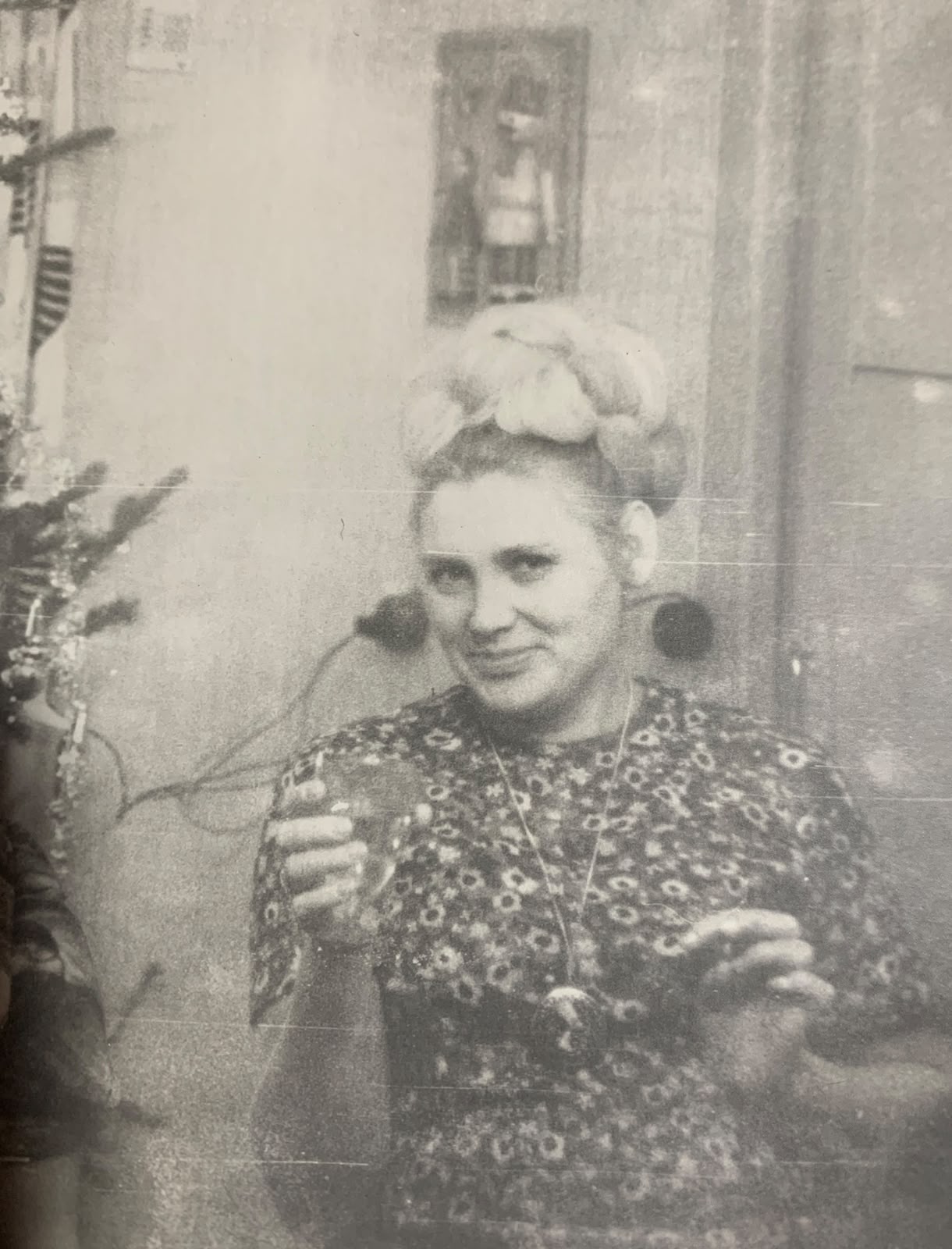
Recently, while going through my family archive at home, I came across a photograph of my mother at a New Year’s celebration. Around her neck was a pendant bearing the profile of the legendary ancient Egyptian Queen Nefertiti. I was six years old at the time. The photograph immediately brought back some poetic lines about Nefertiti that I remembered:
“However you twist it, however you turn it, Nefertiti existed. However you twist it, however you turn it, Nefertiti still exists.”
In 1963, the Soviet poet Yevgeny Yevtushenko wrote this poem. It was also the year in which he was nominated for the Nobel Prize in Literature. In his poem Nefertiti, Yevtushenko reflects on how, beside her beauty, even the power of the Pharaoh seems fragile and incomplete. In the final lines, he emphasizes that Nefertiti’s image has survived through the centuries and continues to reach out to us today. The poet uses repetition (“however you twist it, however you turn it”) to underline the eternity and unchanging nature of the image of the ancient Egyptian queen.
The “Cotton King,” James Simon, financed the archaeological excavations in Egypt conducted by Ludwig Borchardt. These excavations produced magnificent results. Among the numerous discoveries were plaster sculptural portraits of members of Akhenaten’s family and a painted limestone bust of his principal wife, Nefertiti, preserved in extraordinarily good condition.
Simon financed the expedition entirely on his own and, as a private individual, concluded an agreement with the Egyptian government stipulating that the German share of the finds would become his personal property.
Yet it is not only the discovery of an almost perfectly preserved bust that seems miraculous. The woman depicted in it appears almost alive. By modern standards, she is just as beautiful as she was in the time when she lived. Millennia have passed, and we have come to understand that people’s admiration for the harmony of human features does not depend on the period in which a person lived.
When Borchardt himself saw the sculptural bust of Nefertiti, he wrote: “This is impossible to describe; it must be seen.”
After the end of the Second World War, Soviet soldiers brought a bust of Nefertiti to the USSR, where it spent some time as a guest at the Hermitage Museum. No, it was not the famous painted bust discovered by Borchardt, but another one: without its headdress and painted decoration, known as the Small Bust.
It is said that the celebrated Soviet sculptor Vera Mukhina, the very artist who created the famous monument Worker and Kolkhoz Woman, wept when she looked at this smaller bust of Nefertiti. She gazed at the queen while tears streamed down Vera Ignatyevna Mukhina’s face.
Then she asked the exhibition organizers for permission to touch the bust. When they agreed, she closed her eyes and slowly moved her fingers across the queen’s beautiful face. Afterwards, she said: “I could never achieve this.” The sculptural technique, with its carefully rendered surface textures, had created the illusion of a completely living face.
In the 1950s, it was decided to return to the German people the artworks that had been taken to the USSR after the Second World War. Before their return, an exhibition was organized in Moscow in 1958, where all visitors had the opportunity to see the bust of Nefertiti.
Soviet people loved genuine beauty.
A real surge of interest in the ancient Egyptian Queen Nefertiti came later, during the 1970s. In 1966, the Polish film Pharaoh was released. It was a grand, spectacular production featuring extraordinarily beautiful actors. Following its release, “Egyptian-style eyeliner” became fashionable among Soviet women.
In 1972, Ivan Yefremov’s novel Thais of Athens was published. More importantly, the exhibition Treasures of Tutankhamun’s Tomb (1973–1974) took place in Moscow, Leningrad, and Kyiv. Although Nefertiti herself was not featured in the exhibition, public interest in that period of ancient history increased dramatically.
This fascination also inspired artists. For example, craftsmen at the Konakovo Factory created their own original busts of Nefertiti.
During the 1970s, pendants depicting the ancient Egyptian queen genuinely became popular in the USSR. They were part of a broader fascination with “Egyptian style” and exotic motifs that swept across the country during that period.
These pendants were usually medallions featuring Nefertiti’s profile in relief. They were worn on long chains, with the manufacturer’s mark and price stamped on the reverse. Such pendants were often purchased as stylish and unusual accessories, complementing both everyday outfits and evening attire.
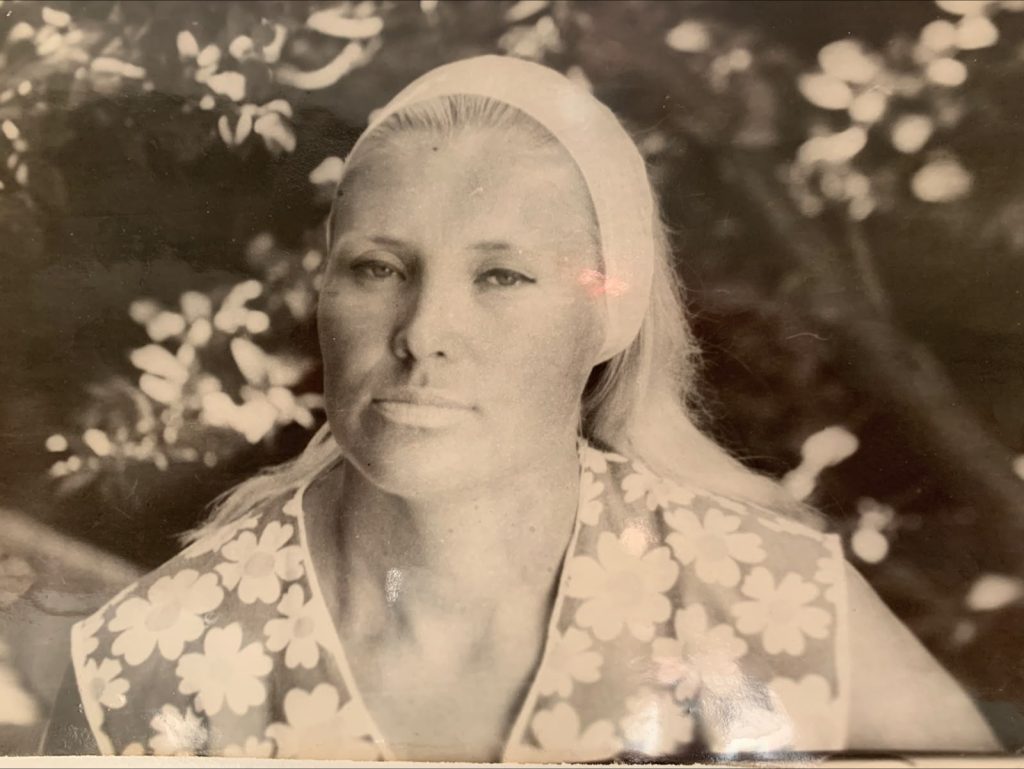
And so my mother wore one of these pendants with an elegant Polish-made outfit when she welcomed the New Year 1973 alongside my father and their friends in the distant town of Nefteyugansk, in the northern Tyumen region. At the time, they were working on the construction of the Druzhba gas pipeline.
It was also during this period that an ironic expression emerged in the USSR, echoing a famous line from Ivan Krylov’s fable The Quartet:
“And you, my friends, however you sit, will never make musicians!”
The Soviet version went something like this:
“And you, my friends, however you twist and turn, you will never make Nefertitis!”
The joke reflected the extraordinary popularity of the ancient Egyptian queen, who was regarded as the very ideal of beauty. The meaning was simple: no matter how people changed their positions or tried to rearrange themselves, they could never become Nefertiti. She possessed a unique and indescribable harmony that ordinary people could never attain.
People often tell me that my profile resembles Nefertiti’s. And I like hearing that. Even if the resemblance is only distant, it is a pleasure to share something, however small, with the most beautiful queen of all time.
After all, it is no coincidence that my favourite poet, Yevgeny Yevtushenko, chose to write about her in the present tense:
“However you twist it,
however you turn it,
Nefertiti
still exists.”