 thesilkroadtoday
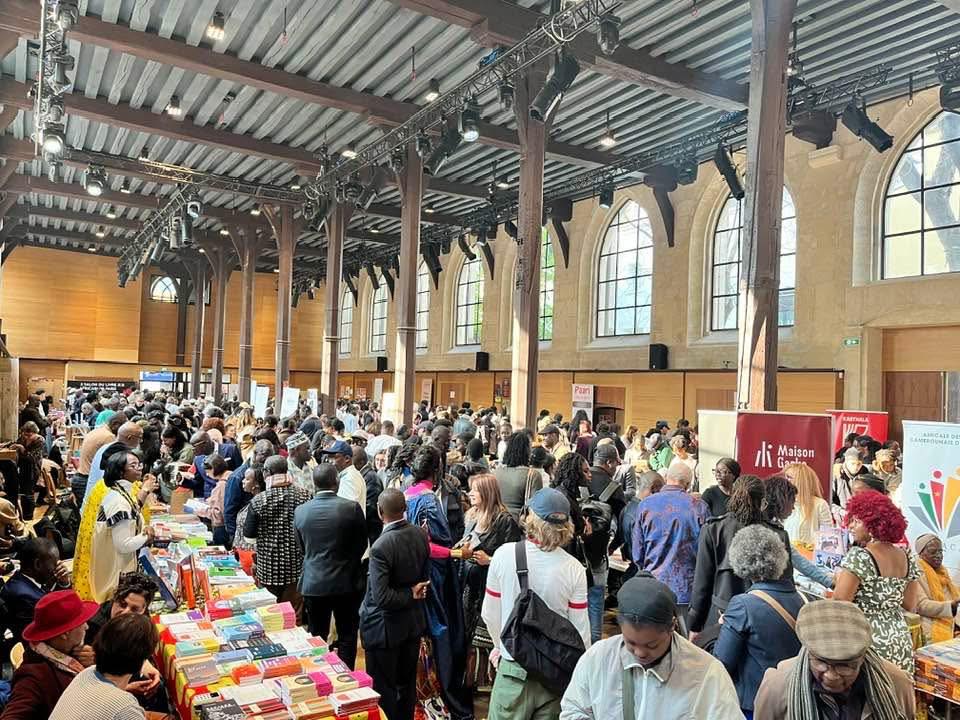
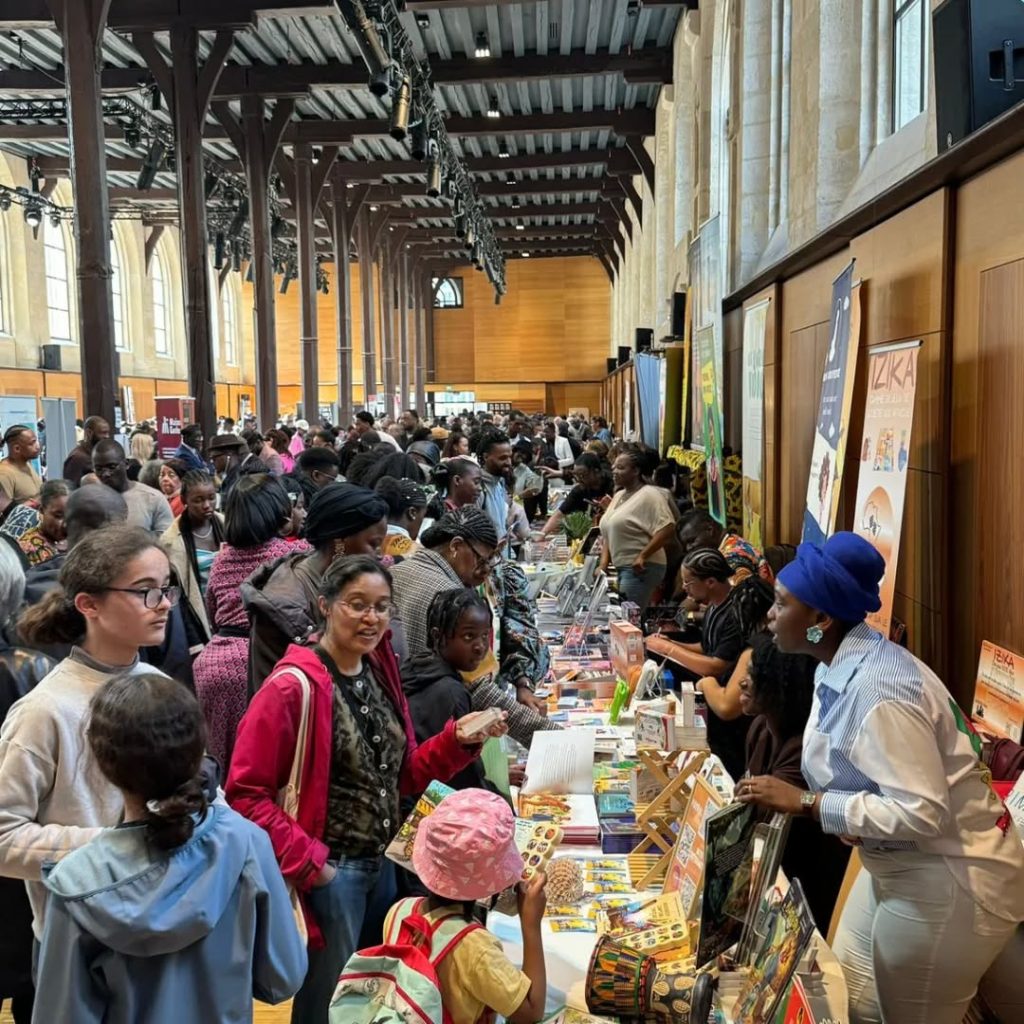
The 5th edition of the African Book Fair in Paris is hosted at the historic Réfectoire des Cordeliers, located at 15 rue de l’École de Médecine, in the heart of Paris’s 6th arrondissement. Under the theme “African Youth,” the fair reaffirms its position as the largest European gathering dedicated to African and Afro-descendant literature.
Bringing together nearly 400 authors and 150 publishers from Africa, Europe, the Americas, and the Caribbean, the event serves as a vibrant crossroads for literary exchange, cultural dialogue, and intellectual engagement. Despite last-minute organizational challenges, including a change of location, the organizers have ensured a rich and dynamic program across two prestigious venues in the Odéon–Saint-Germain-des-Prés district.
The main exhibition is at the Réfectoire des Cordeliers, a landmark of the French Revolution, while conferences and roundtable discussions will be held at the Hôtel de l’Industrie, an iconic 19th-century building inaugurated by Emperor Napoleon III and historically notable as one of the first electrified buildings in Paris.
This year’s edition highlights African youth, with Benin as the guest of honor and Angola as the special guest country. The program included conferences, debates, professional meetings, and book signings, offering a unique platform to explore the cultural, economic, and social dynamics shaping the African continent today.
Two major literary awards will punctuate the event: the Grand Prix Afrique, awarded on March 21, and the Prix du Beau Livre Africain de la Maison de l’Afrique, presented on March 22. .
The fair also featured an impressive lineup of internationally acclaimed authors, alongside many emerging voices from across Africa and the diaspora, representing around twenty countries and the full spectrum of the book industry.
Poet Arwa Ben Dhia wrote a comment on her participation this edition of the African Book Fair in Paris:
“It was a wonderful African Book Fair yesterday, where I had the pleasure of showcasing and signing my books published by Éditions du Cygne and Mindset Editions. I was also delighted to reconnect with old friends and meet new ones, including my Senegalese publisher, Senegaal NJAAY Mag’, who has published two books for which I had the honor of writing the prefaces. The Association Apulivre was also present. It was truly a memorable and enriching experience.”
Senegalese publisher Babacar Ndiaye has announced the publication of the poetry collection A Street in Cairo by the poet Ashraf Aboul-Yazid, in French, by Senegal Njaay Editions, expressing his gratitude to the Tunisian poet Arwa Ben Dhia, who suggested the book for publication by the house.
In an official message, the publisher expressed his appreciation for this nomination, stating that the publishing house values the trust placed in it by entrusting it with the works of the distinguished Egyptian poet Ashraf Aboul-Yazid. He explained that the reading committee received the manuscript with great enthusiasm and formally approved it after review. He added that the poetic strength of the texts—reflected in Arwa Ben Dhia’s preface and in the translation by the poet’s daughter—perfectly matched the editorial vision of the publishing house, which seeks to promote outstanding poetic voices in the Francophone sphere. He also confirmed that the house will promote this remarkable work at upcoming literary events, foremost among them the African Book Fair in Paris, where the collection will be presented as a poetic bridge between Arab, African, and French cultures.
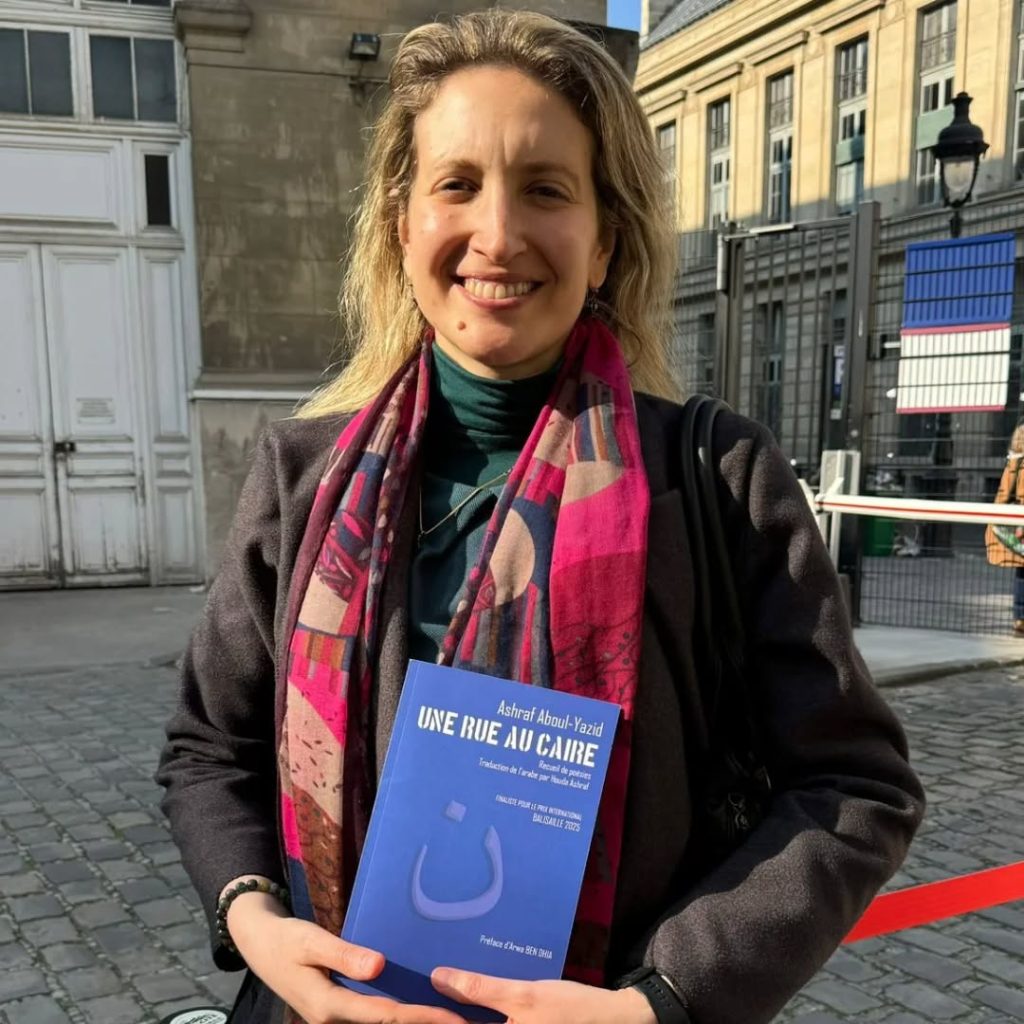
Poet Arwa Ben Dhia believes that the poems combine density with transparency, evoking themes of exile and nostalgia, while also criticizing war and fanaticism and celebrating love in poems such as Sixty Love Letters to Her. She concludes that reading A Street in Cairo resembles strolling along an Egyptian street where harshness and beauty coexist, and where the sounds of the city transform into poetic music that unites people despite distances.
On April 13, the results of the first stage of the International Poetry Invention Prize 2025 were announced. In this fourth edition, the reading committee selected thirteen poetry collections in French and six in Creole from a total of 135 submitted collections—110 in French and 25 in Creole. Among the shortlisted works was A Street in Cairo by the Egyptian poet Ashraf Aboul-Yazid, a selection of poems translated into French by his daughter Hoda Ashraf, a student at the Faculty of Archaeology at Cairo University. The nomination of the collection marks a notable moment for translated Arabic literature, placing contemporary Egyptian poetry within the context of Francophone literary dialogue and confirming the presence of Arab voices in international competitions that seek to renew poetic expression and highlight its human horizons.
The French translation represents the eleventh linguistic milestone in the international journey of the anthology A Street in Cairo. The book includes selected poems from six of the poet’s collections published between 1989 and 2024: Whisper of the Sea, Shells, Memory of Silence, Above the Path of Death, Memory of Butterflies, and Poems. These selections have been published in independent editions across four continents and in several languages, including Spanish, German, Turkish, Sindhi, Persian, Urdu, Serbian, Russian, Malayalam, and English. With the publication of the French edition, this multilingual poetic project becomes further testimony to poetry’s ability to cross cultural borders. Each translation does not merely convey words; it recreates the poetic experience within a new linguistic context, making the collection resemble a literary map where cultures intersect—from Cairo to Asia, Europe, Africa, and the Americas—allowing readers to encounter a shared human resonance that transcends linguistic differences.
 Egyptian poet and writer Ashraf Aboul-Yazid is considered one of the most prominent contemporary Arab literary voices, combining poetry, fiction, cultural journalism, and travel writing. He has published numerous poetry collections, short story volumes, and critical works, and has participated in international literary festivals while contributing to the introduction of Arabic literature to readers from diverse cultures. Throughout his career he has received several awards and honors, including the Manhae Grand Prize for Literature in South Korea, the Arab Journalism Award in the United Arab Emirates, the Gold Medal of the Eurasian Literary Festival in Turkey, Egypt’s Sawiris Cultural Award, and the World Organization of Writers Medal in Russia for translation. His name has also been associated with cross-cultural projects, including his role as editor-in-chief of the international cultural magazine The Silk Road Today, dedicated to dialogue among civilizations. His literary works have been translated into multiple languages and have become the subject of academic studies, enabling his poetry to reach a wide readership beyond the Arab world. In his poems, philosophical reflections blend with details of everyday life, while place, memory, exile, and the human condition appear as central themes reflecting the vision of a poet who views the world through the eyes of a traveler in search of meaning.
The collection A Street in Cairo is also expected to participate in the African Book Fair in Paris, a major cultural event aimed at promoting African and Francophone literature in the heart of the French capital. According to the publisher, the book’s journey begins in Dakar, where it is being released this week by Senegal Njaay Editions, before traveling to Paris, where it will be presented within the fair’s program bringing together publishers, writers, and translators from around the world. This participation represents a new step in the collection’s international path, offering it the opportunity to meet new readers and introduce Arabic poetry within an African and Francophone cultural context.
Thus, the book continues its symbolic journey—from a lively Cairo street to global literary spaces—affirming that poetry can travel farther than geography, and that a sincere word can connect cities, languages, and cultures.
Beyond its cultural significance, the African Book Fair in Paris stands as a key platform for cooperation and exchange, aligned with the mission of promoting African creativity, strengthening cultural ecosystems, and encouraging global partnerships.
Open to all audiences, the event warmly invites readers, families, and professionals alike to celebrate the richness and diversity of African literature.