 thesilkroadtoday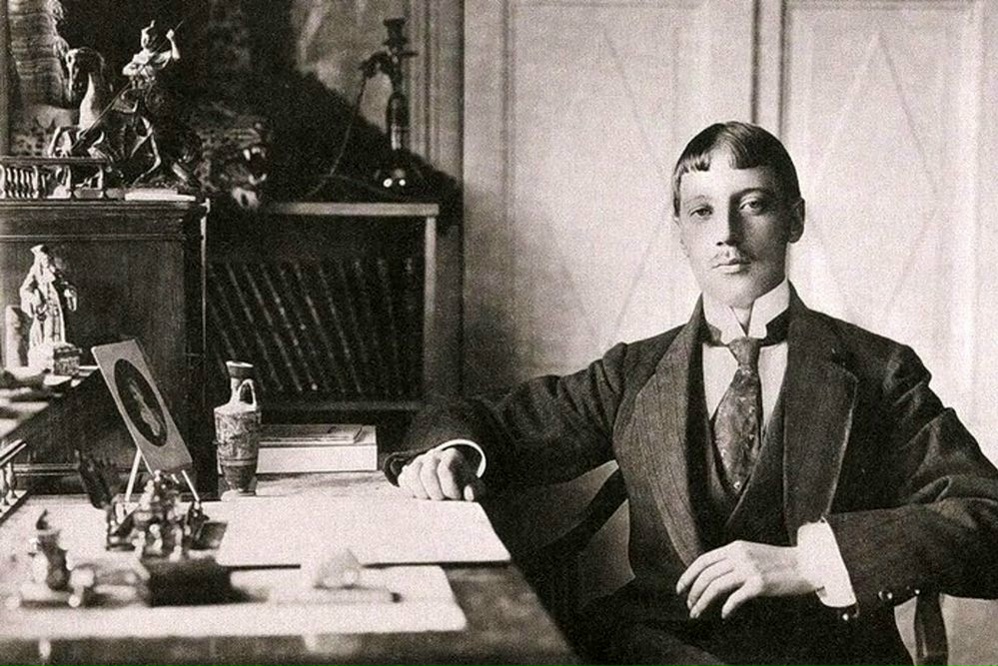
By Olga Medvedko
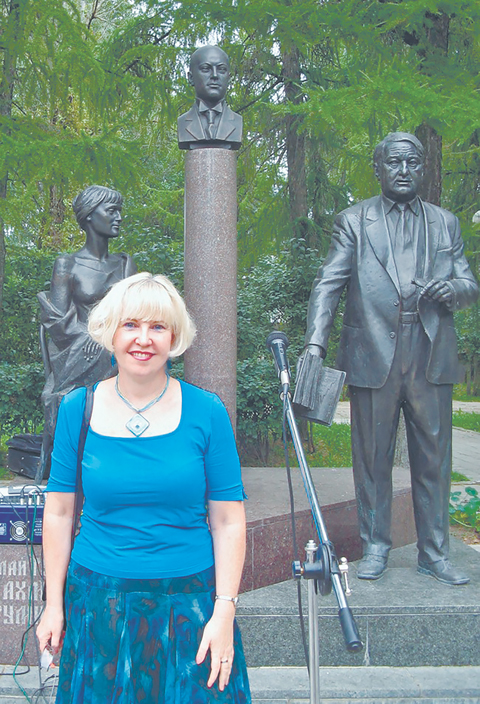
Photo by Sergey Medvedko
This year marks the 140th anniversary of the birth of the poet Nikolai Gumilyov—a soldier, traveler, literary critic, founder of Acmeism, and mentor to many poets. When we speak of him, we inevitably recall his tragic fate: on August 26, 1921, he was executed by decision of the Petrograd Cheka, accused of participating in the Petrograd Combat Organization and the counterrevolutionary Tagantsev conspiracy. Gumilyov always scorned death. Legends were told of his reckless courage—he seemed to play hide-and-seek with death all his life, tempting it:
“When at last I end / This game of cache-cache with grim death, / The Creator will turn me / Into a Persian miniature.”
For Gumilyov, this deadly duel ended tragically and suddenly at the age of 35. Yet he had planned to live long. He intended to title his last book, The Pillar of Fire, “Midway Through the Earthly Journey,” implying he expected to live at least to seventy. But fate decreed otherwise. His “lost tram” derailed.
He was a brilliant personality and a man of many talents, yet it was as if a dark fate pursued him. He was among the first to be executed, and only rehabilitated seventy years later. But the years of oblivion could not erase the memory of the poet—it lived on and continues to live. There were always brave individuals who, defying authorities and risking their lives, preserved the poems and archives of the executed poet to pass them on to us.
For many years, Gumilyov’s name was not even mentioned. Even during the “thaw” of the 1960s, nothing changed—he remained censored and excluded from literature and readers. Uncomfortable questions arise: what danger did Gumilyov and his work pose to the state? Who needed to create his image as an enemy? Why did one of the brightest talents of the Silver Age become a forbidden figure of the twentieth century?
The eternal question of the “reds” and the “whites” in Russian history also emerges. Gumilyov himself wrote shortly before his death:
“What mortal anguish it is / To come and wait in vain. / And if I’ve fallen into the Cheka? / You know I am not red! / To come and wait in vain— / Perhaps there is no strength left. / You know I am not red, / But neither white—I am a poet…”
Since his death, the Russian people have undergone a long journey in rethinking our history and its heroes. Today we see in Gumilyov not an “enemy,” but a Russian man, an outstanding poet, and an honest officer faithful to his convictions. For us and future generations, he is a source of national pride and an embodiment of Russia’s idea: loyalty to duty, oath, and faith; sacrifice for others; devotion to the homeland.
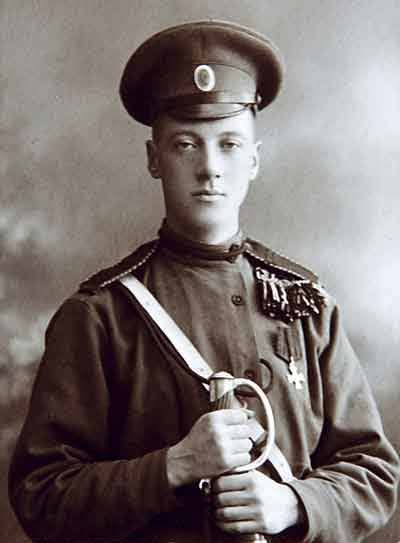
Who, if not Gumilyov, is a true hero of our time? He is revered as a great poet of the Silver Age, a brave warrior, volunteer, patriot, and twice a recipient of the St. George Cross. In his work and life shines the image of a knight “without fear or reproach.” He was also the father of the distinguished scholar Lev Gumilyov, who advanced the concept of Eurasianism.
When does a person—especially a great poet—continue to live after death? Only when something ties them to the earth: a grave, a monument, a museum. Gumilyov has no grave. He was executed somewhere near Petrograd, and today there are at least five possible burial sites. There is neither a monument nor a museum in Moscow or St. Petersburg. Only in the Tver region, near Bezhetsk, in the village of Gradnitsy, is there a “House of Poets” museum—the ancestral estate of the Lvov-Gumilyov family.
The idea of creating a Gumilyov Society arose long ago, driven by a sense of justice. It is time to repay the debt of memory to Gumilyov—a poet and a brave hero who dared to stand against unlawful власть and Bolshevik terror.
Back in the 1990s, lawyer Sergey Luknitsky spoke about the need for such a society. He devoted twenty years of his life to Gumilyov’s rehabilitation but sadly passed away in 2008 at the age of 54. His last words to me were: “Finish what I couldn’t.” I promised him. His loss was irreparable, but the work had to continue. Together with poet Andrey Korovin, we initiated the Gumilyov Society.
The tradition of Gumilyov evenings at the Central House of Writers began in 2011, ahead of the poet’s 125th anniversary, when we discovered that no one in Russia planned to commemorate the date. Hundreds of people—young and old—came in streams to our event. The large hall could not accommodate everyone; people sat on the steps. We consider that evening the birth of the Gumilyov Society. For fifteen years now, we have held annual Gumilyov evenings on his birthday.
One of our goals was also to establish a Gumilyov Museum. In Bezhetsk, there is a memorial house where his family moved in 1917. In 2019, we learned that the memorial apartment was being sold. There was no time to hesitate—we had to act or lose the chance forever. I used my own money to purchase half of the apartment. Later, with public support, we acquired the rest. In August 2021, the Museum and Exhibition Center “House of the Gumilyovs” opened. Today, it is an important cultural venue hosting exhibitions, lectures, and festivals.
As Andrey Korovin once noted, there is still no museum of Gumilyov in Moscow or St. Petersburg. Attempts have been made to create films about him, but none have materialized. His life—a mix of adventure, love, patriotism, and tragedy—is a gift for storytellers. Yet no major film exists.
After many appeals, in 2021 permission was finally granted to erect a monument to Gumilyov in Kronstadt, where he was born. Russia has many monuments to poets like Akhmatova, Blok, Yesenin, and Tsvetaeva—but none yet to Gumilyov in Moscow or St. Petersburg. One hopes that by his 150th anniversary, a worthy monument will be erected.
He truly deserves it. Yet perhaps the monument is needed not for him, but for us—for Gumilyov has already built his eternal monument in his poetry, his life, and his martyrdom.