Greek Poetry Featured at International Festival in Iași


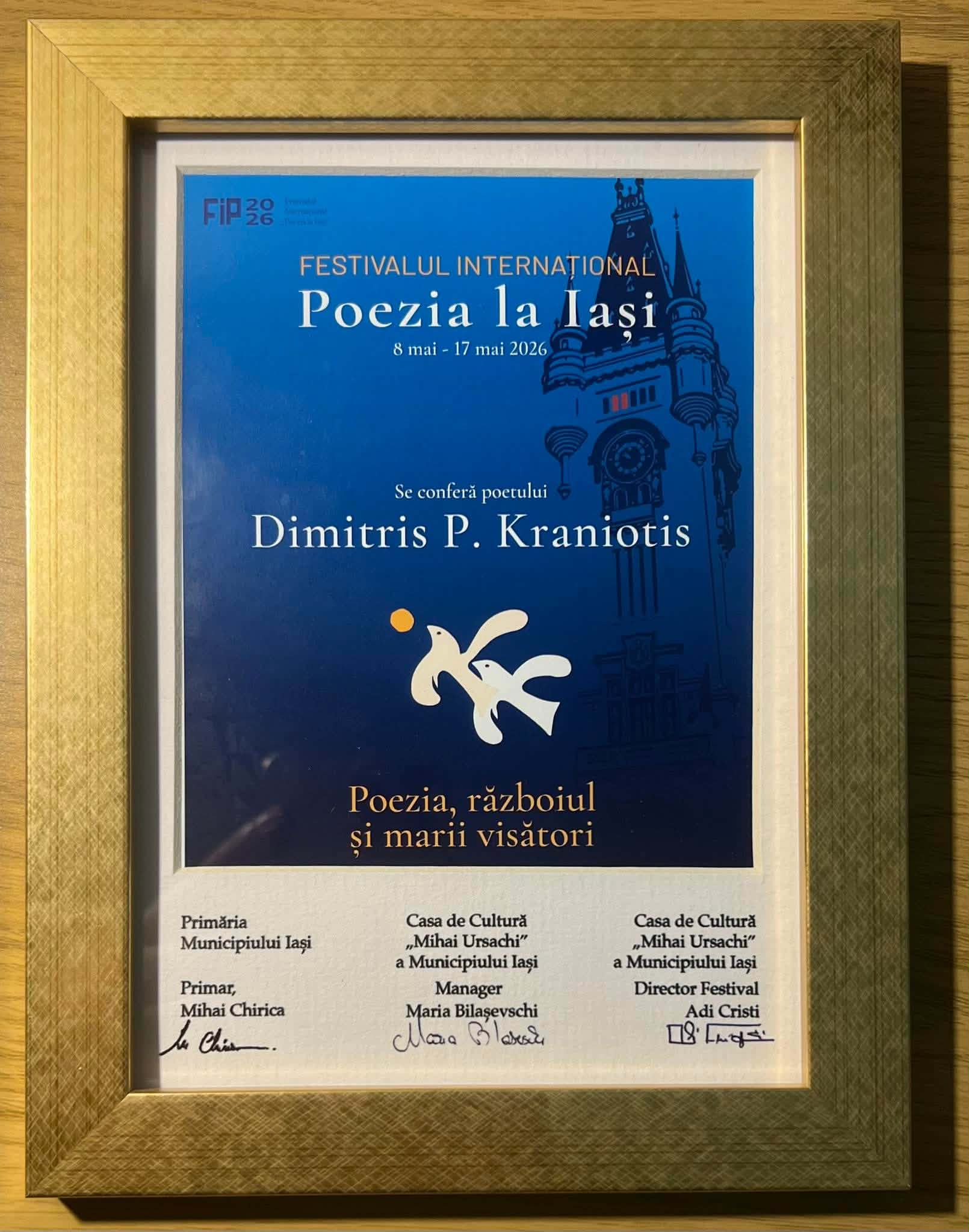
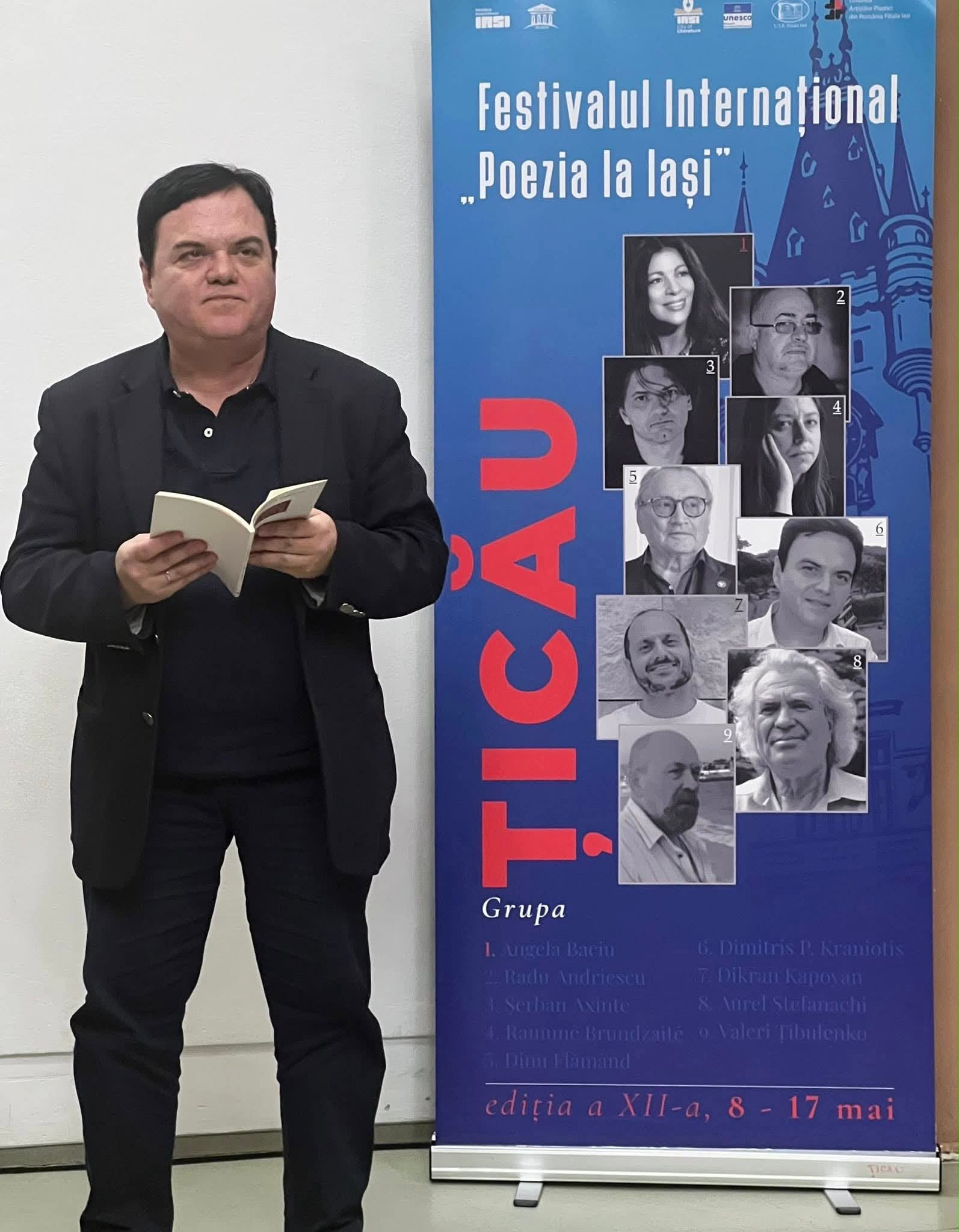
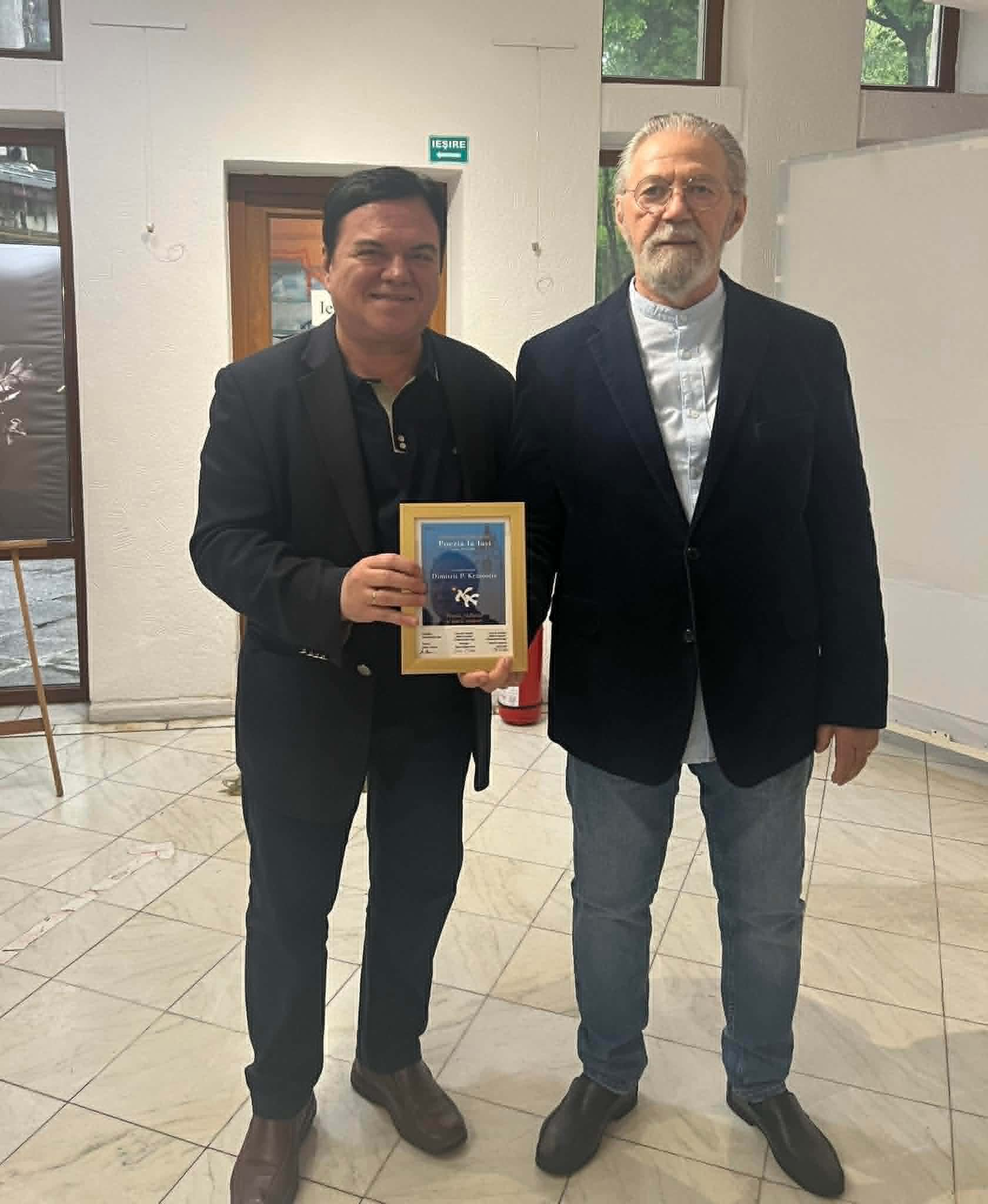
Poems by Dimitris P. Kraniotis were translated into Romanian by the distinguished translator Cătălina Frâncu and published in the anthology of the XII International Festival “Poezia la Iași,” held in Iași from May 8 to 17, 2026.
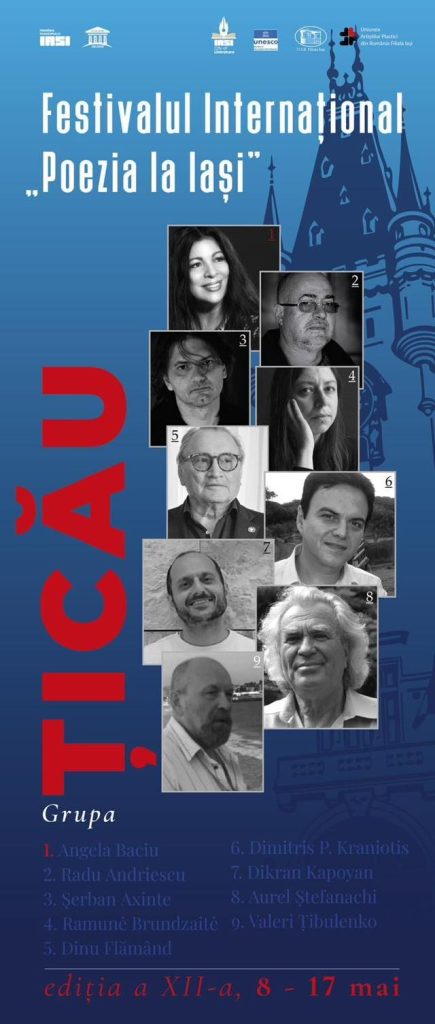
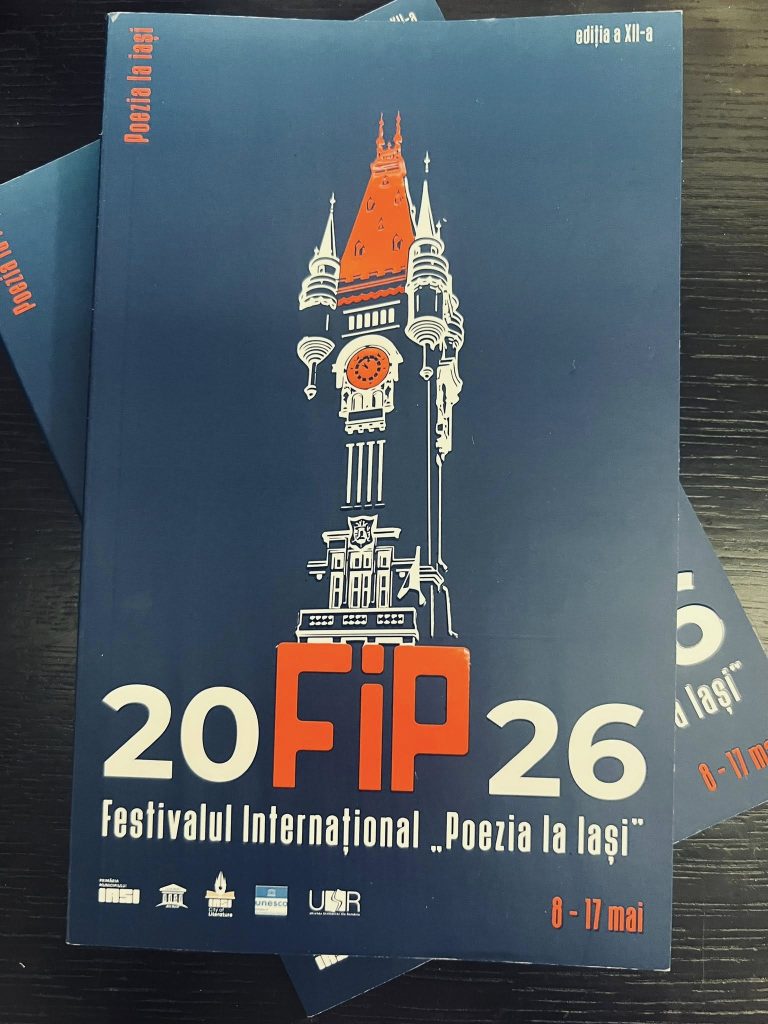
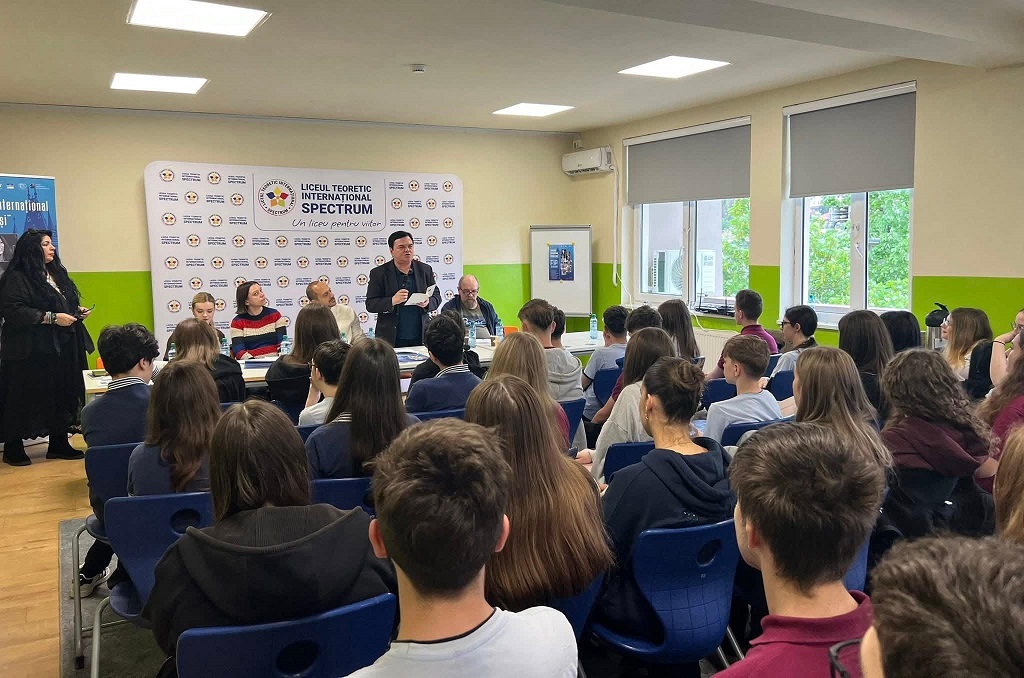
The festival, regarded as one of the important international poetry events in Eastern Europe, gathered dozens of poets, translators, critics, and literary voices from various countries in a broad cultural program dedicated to contemporary world poetry and intercultural dialogue.

The inclusion of Dimitris P. Kraniotis in the official anthology highlights the growing presence of contemporary Greek poetry within international literary exchange. Through the Romanian translations by Cătălina Frâncu, festival readers were introduced to poetic works reflecting human experience, cultural memory, and lyrical reflection.

Organized by the Casa de Cultură „Mihai Ursachi” and Romanian cultural institutions, the festival featured poetry readings, anthology presentations, translation sessions, literary discussions, and meetings between poets and audiences throughout the city of Iași.

The official anthology issued during the festival serves as a literary document preserving the voices of participating international poets and emphasizing the continuing role of translation in building bridges between cultures and languages.

The XII edition of “Poezia la Iași” reaffirmed the city’s reputation as a significant European center for poetry and international cultural communication, bringing together literary traditions from different parts of the world in a shared celebration of art and language.
Dimitris P. Kraniotis

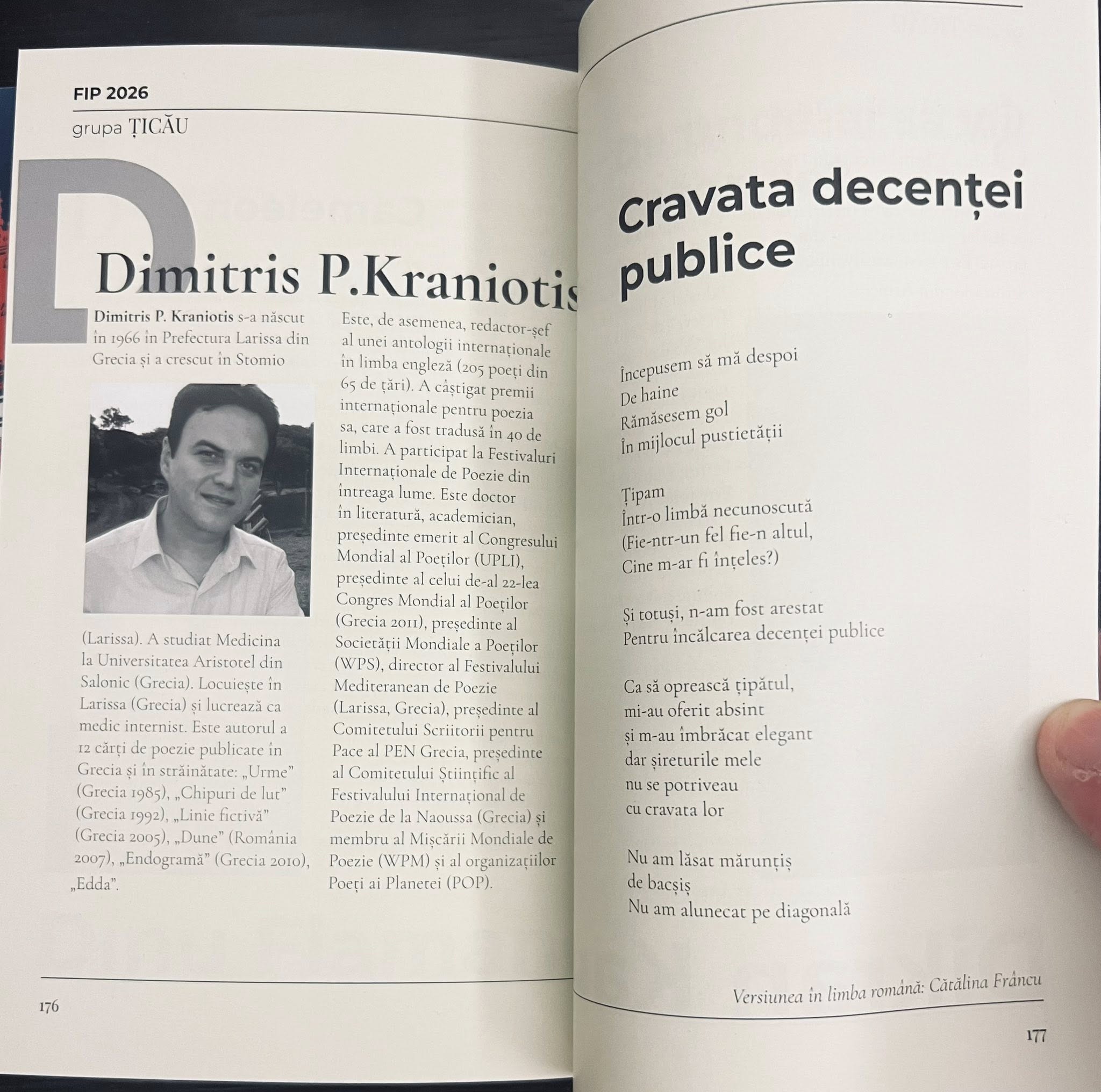
Dimitris P. Kraniotis was born in 1966 in Larissa Prefecture in Greece and grew up in Stomio (Larissa). He studied Medicine at the Aristotle University of Thessaloniki (Greece). He lives in Larissa (Greece) and works as a medical doctor (internal medicine specialist physician). He is the author of 12 poetry books in Greece and abroad: “Traces” (Greece 1985), “Clay Faces” (Greece 1992), “Fictitious Line” (Greece 2005), “Dunes” (Romania 2007), “Endogram” (Greece 2010), “Edda” (Romania 2010), “Illusions” (Romania 2010), “Leaves Vowels” (Italy 2017), “Tie of Public Decency” (Greece 2018), “Minus one” (Spain 2022), “Wrinkles in the Coffee” (Greece 2024) and “Hearing the Same Sound” (Kosovo 2025). He is also the Editor-in-chief of an international anthology in English (205 poets from 65 countries). He has won international awards for his poetry which has been translated into 40 languages. He participated in International Poetry Festivals around the World. He is Doctor of Literature, Academician, President Emeritus of the World Congress of Poets (UPLI), President of the 22nd World Congress of Poets (Greece 2011), President of the World Poets Society (WPS), Director of the Mediterranean Poetry Festival (Larissa, Greece), Chairman of the Writers for Peace Committee of PEN Greece, President of Scientific Committee of the International Poetry Festival of Naoussa (Greece) and member of World Poetry Movement (WPM) and Poets of the Planet (POP).
 

Tie of public decency

I began to strip off

My clothing

Till I remained naked

In the middle of nowhere

Shouting

In a unknown tongue

(One way or another,

Who would have understood me?)

Yet they didn’t arrest me

For violation of public decency

To stop the shouts

They treated me to absinthe

And dressed me to the hilt

But my shoe-laces

Didn’t coordinate

With their tie

I didn’t leave any change

For a gratuity

I didn’t fall diagonally

Related Posts

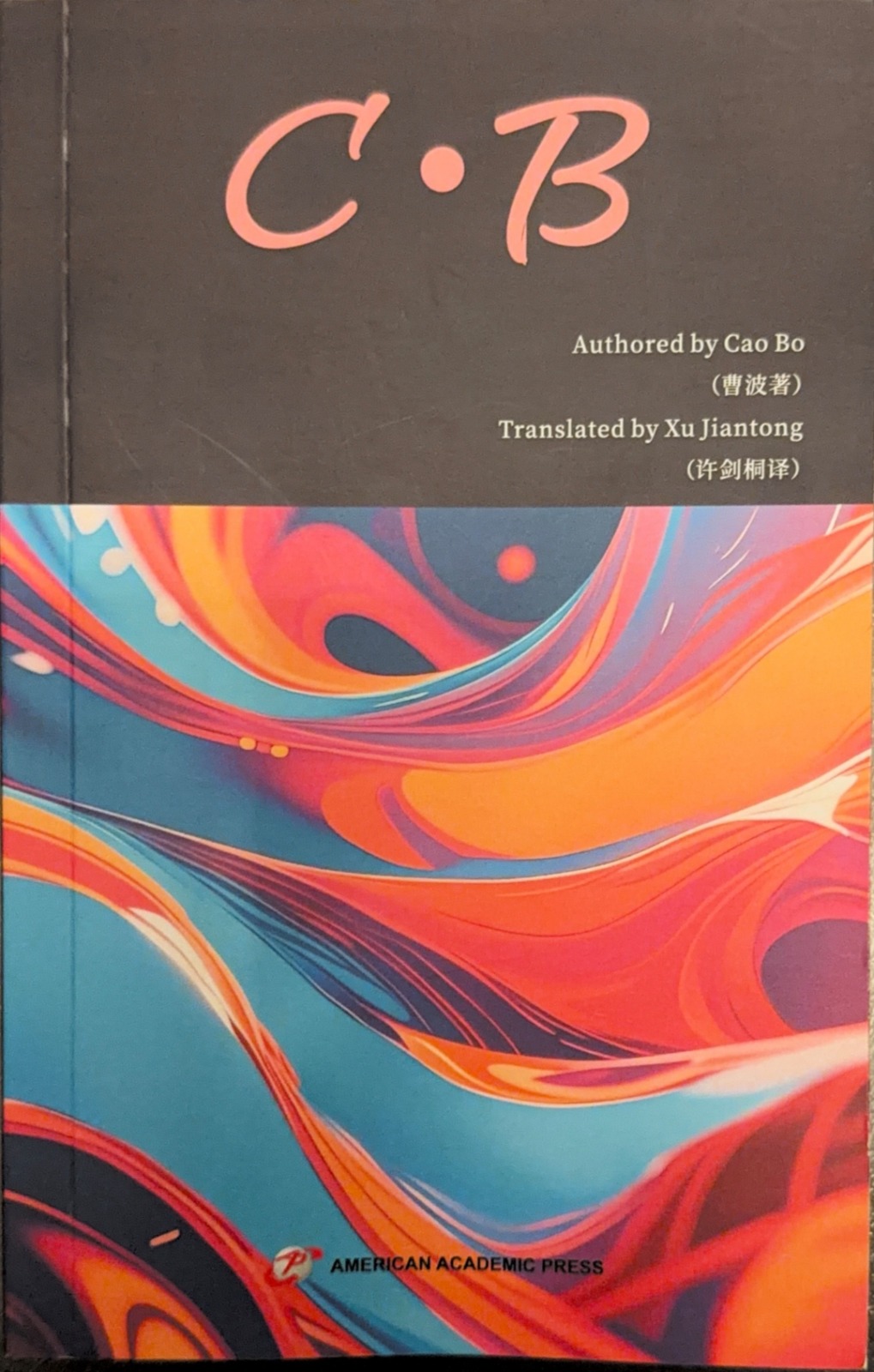
Three Sisters, One Gun: Cao Shui’s The Three Wild Yak Sisters 

The Three Wild Yak Sisters By Cao Shui Translated by Fiori Picco Cao Shei’s The Three Wild Yak Sisters belongs to his six-volume Kekexili Animal Kingdom, a bestiary of the Tibetan Plateau for children, never simplified for them. It opens in a village on the Kekexili grasslands, where the hunter Losang boasts that no animal has ever escaped his rifle, and his wife Yangzong embroiders blankets so finely that bees pause to look. Their pride, though, is three daughters: Wangmo, who dances well enough to make gentians sway; Medo, whose singing draws marmots out of their burrows; and Qionda, whose dramyin makes passing clouds forget where they were going. The happiness lasts two pages. Driving their flock deeper for grass, the girls sing and dance, and the music draws a pack of wolves three days hungry. As the wolves close in, a voice from the sky offers three wild yak hides. The sisters crawl inside; the hides become their bodies; they lower their horns and drive the pack away. But the hides will not come off. The voice states the bargain: their father has killed so many creatures that the mountain god is offended; the sisters must guard Kekexili’s treasure until tears of repentance wash the dust from their hearts. What follows has the clean, repeating architecture of oral tale: three visits to the hidden valley, three gifts, an inexhaustible milk horn, a sewing kit that weaves black nomad tents out of air, a comb that turns white hair black, and three thefts by the village idler Jeb, each won by exploiting Yangzong’s kindness. The escalation is well judged. Jeb’s third trick aims not at a gift but at the secret itself, and the secret, once spilled, brings the father into the valley with his rifle. The climax is the real achievement. Losang shoots the three yaks charging the thief, then learns what he has done. The mountain god’s sentence, when you raise your gun, think of the animals that died at your muzzle, were they not someone’s beloved children, is the ethical centre of the whole series, and it is spoken without a syllable of sermon. That the sisters revive only when his tears fall on them may seem sentimental to a Western reader; read as Buddhist logic it is exact: remorse is not a feeling but a substance that can wash something clean. Its weakness is Yangzong, whose blindness mainly serves to make her need her daughters’ guidance, and whose grief is described more often than felt. The daughters, too, are vivid as performers and thin as persons, existing to be transformed, tested and restored. This is a limitation of the folk form the author chose, not a failure of feeling. Fiori Picco’s Italian edition, with Alessia Picco’s illustrations, has carried it far beyond the plateau. Its final grace is perfect: Jeb, punished rather than killed, is turned into a kiang, the wild donkey who guards the valley in the sisters’ place and who stars in the next volume of the series. Cruelty is not destroyed here. It is put to work. Brief Biography of Cao Shui  Cao Shui, also Shawn Cao (born in Jun 5, 1982), is a Chinese poet, novelist, screenwriter and translator. He is a representative figure of Chinese Contemporary Literature. He leads the Great Poetry Movement. His most notable works includes Epic of Eurasia, the already mentioned trilogy and Princess Snow Leopard. So far 60 books of Cao Shui have been published, including 10 poem collections, 5 essay collections, 10 novels, 7 translations, 18 fairy tales and 100 episodes TV series and films. He has won more than 100 literary awards worldwide. His works have been translated into 30 languages. He is also chief editor of Great Poetry, executive editor in chief of World Poetry, Asian coordinator of World Poetry Movement, coordinator of BRICS Writers Association, executive president of the Silk Road International Poetry Festival, Chairman of Beijing International Poetry Film Festival. Currently he lives in Beijing, and works as a professional writer and screenwriter. 三姐妹,一支枪:评曹谁《野牦牛三姐妹》 曹谁《野牦牛三姐妹》属于他的六卷本《可可西里动物王国》系列 —— 一部写给孩子的青藏高原动物志,而且难得地,没有为孩子简化半分。故事从可可西里草原上的一座小村庄开始:猎人洛桑夸口说,凡被他看见的动物,没有一只逃得过他的枪;妻子央宗织出的藏毯花纹精细到蜜蜂飞过都要停下来看一眼。不过夫妇俩真正的骄傲,是三个女儿:旺姆的舞姿美得能让格桑花跟着摇摆;梅朵的歌声能把土拨鼠从洞里引出来;琼达的六弦琴能让路过的白云忘了自己要去哪里。 这样的幸福只维持了两页纸。为了给羊群找到更深的草场,三姐妹一路唱唱跳跳,歌声琴声引来了一群饿了三天三夜的狼。狼群逼近时,天上传来一个声音,扔给她们三张野牦牛皮。三姐妹钻了进去,皮便长成了她们的身体;她们低下头,用角把狼群顶了回去。可是,皮再也脱不下来了。那个声音提出了条件:她们的父亲杀生太多,触怒了山神;三姐妹从此要替山神守卫可可西里的财富,直到忏悔的泪水洗净心灵的尘埃。 接下来是口传故事那种干净而循环的骨架:三进山神谷,三件宝物 —— 取之不尽的牛角奶桶、能把牦牛绳在空中织成黑帐篷的针线包、能把白发梳黑的牛角梳;以及村里无赖杰布的三次行骗,每一次都是靠央宗的善良得手。递进的层次安排得很准:杰布第三次要的不是宝物,而是秘密本身;而秘密一旦说出口,就把父亲连同他的猎枪一起带进了山谷。 高潮才是这本书真正的成就。洛桑朝冲向窃贼的三头野牦牛开了枪,然后才知道自己做了什么。山神的那句话 —— 当你举起猎枪的时候,想想那些死在你枪口下的动物,它们何尝不是别人心爱的孩子 —— 是整个系列的伦理内核,而且通篇没有一个字在说教。三姐妹只有在他的泪水落到身上才变回人形,这在西方读者看来也许过于感伤;可若按佛教的逻辑来读,它精准无误:忏悔在这里不是一种情绪,而是一种能够把东西洗净的实体。 作品的弱点在央宗:她的失明主要用来让她不得不倚仗女儿引路,她的悲伤也多是 “被叙述”,而非 “被感受到”。三个女儿同样如此 —— 作为舞者、歌者和琴手,她们鲜活;作为人,她们单薄,存在的意义就是被变形、被试炼、被复原。这是作者所选择的民间故事形式的局限,而不是感受力的失败。 菲奥里・皮克(雪莲)的意大利文译本,配上阿西娅・皮克的插图,已经把这本书带到了高原之外很远的地方。它最后的恩典小而完美:杰布没有被杀死,而是被惩罚变成一头藏野驴 —— 接替三姐妹守卫山谷的那头野驴,也是系列下一部的主角。残酷在这里没有被消灭,而是被派上了用场。

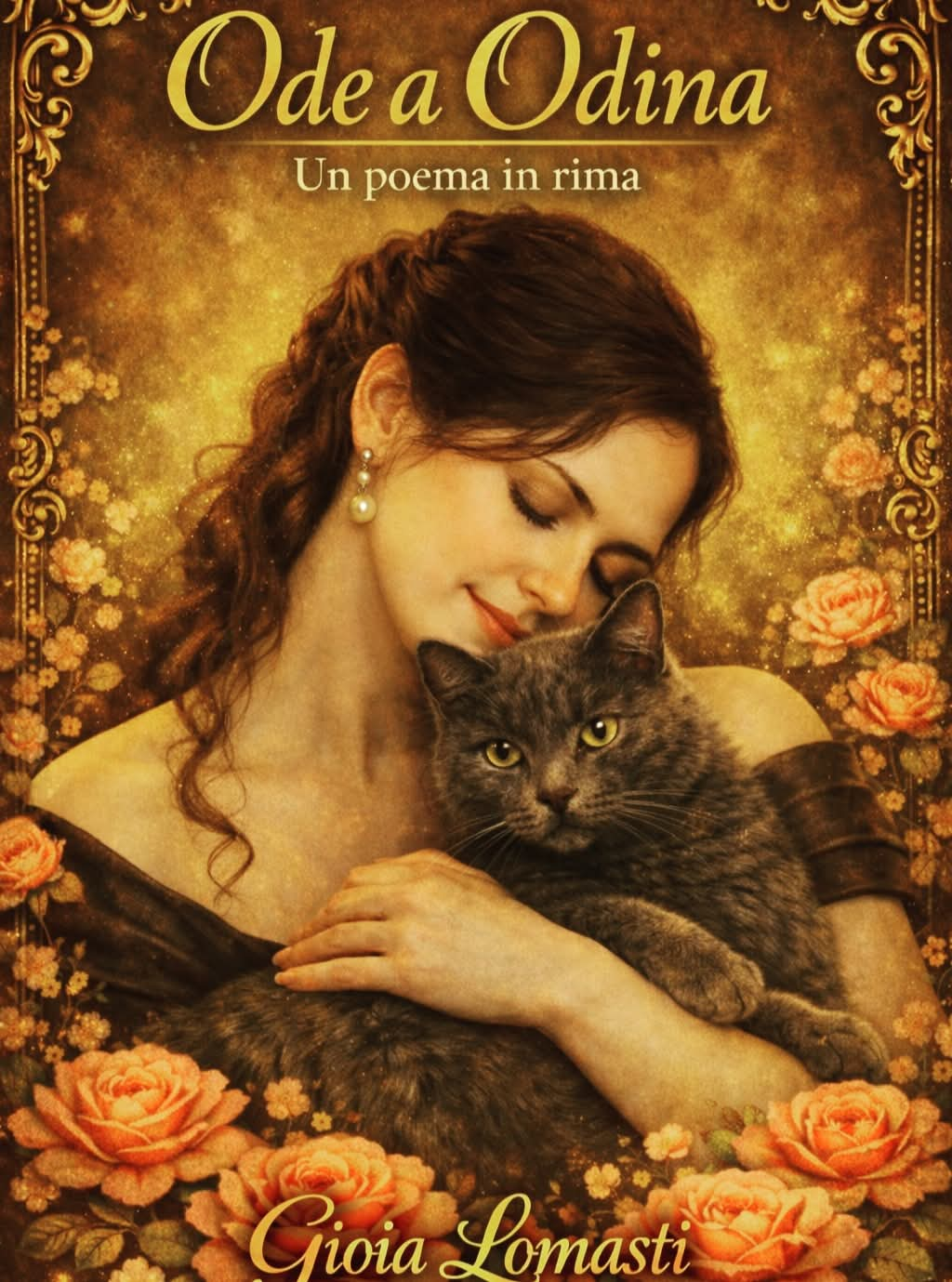
Gioia Lomasti’s Ode to Odina – A Poem in Rhyme Celebrates the Unconditional Love of Companion Animals

A poetic tribute to the bond between humans and animals, the new book will be available from December 2026 through Amazon, major online bookstores, and bookshops. A quiet encounter, a…

اترك تعليقاً

لن يتم نشر عنوان بريدك الإلكتروني. الحقول الإلزامية مشار إليها بـ *