 thesilkroadtoday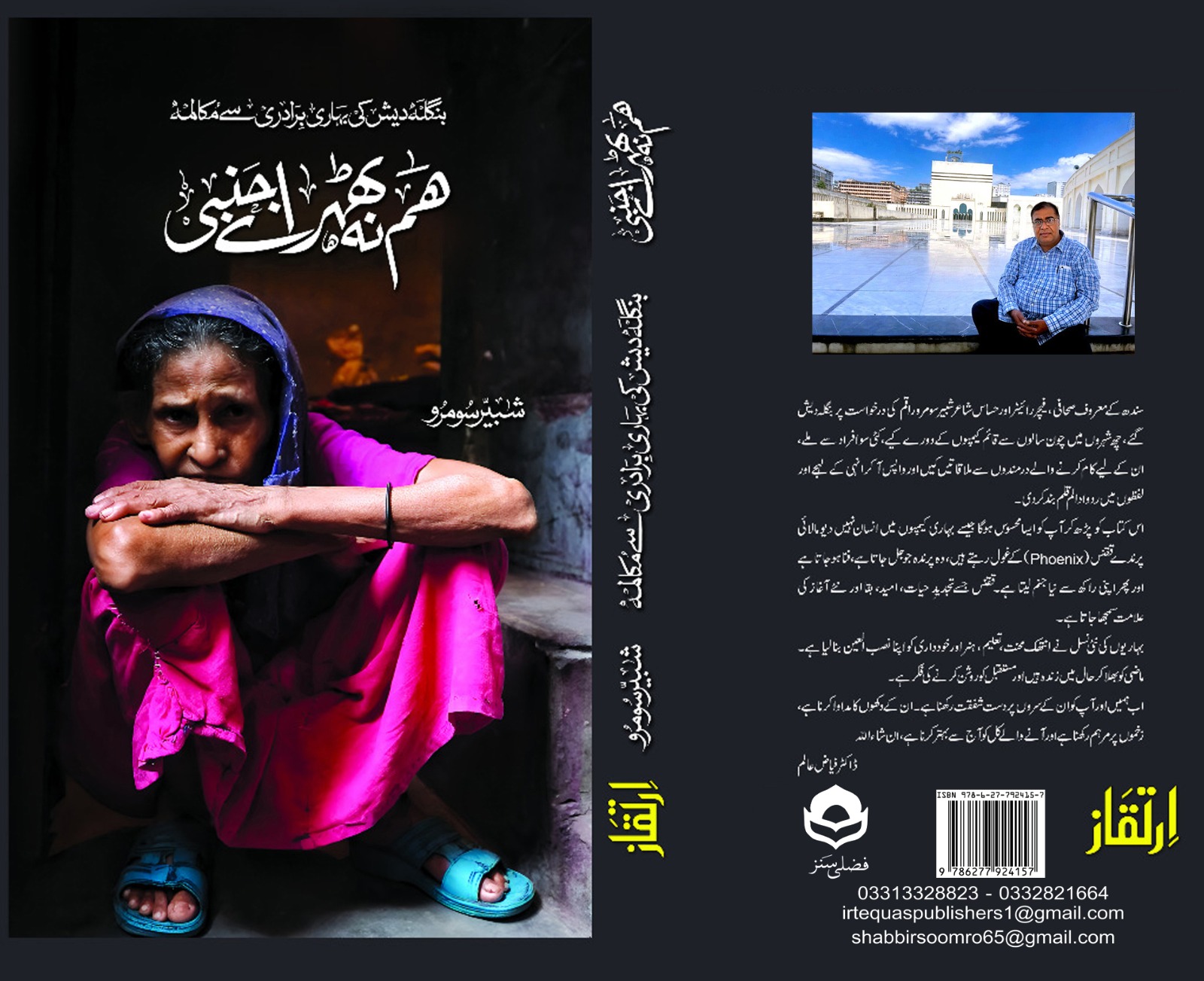
Shabbir Soomro’s journey through Bangladesh reveals a community seeking not migration, but belonging
DHAKA — For generations, the Bihari community of Bangladesh carried a dream across the wounds of history: to return to Pakistan, the country they once believed to be their homeland. Today, that dream is changing.
Between mid-October and the first week of November, Pakistani journalist, poet and editor Shabbir Soomro travelled extensively through Bangladesh, visiting six major cities—two or three days in each, and in some places four. Once part of East Pakistan, these cities are now home to some of the country’s largest Bihari settlements.
Soomro was hosted by OBAT Helpers, one of the major non-governmental organizations working for the welfare of the Bihari community. His journey took him deep into the camps where thousands of families have spent decades living in cramped quarters, carrying a history that has never entirely found a home.
He met hundreds of residents—men and women, elderly people and young people—and recorded video interviews with more than ninety of them. Their testimonies form the human heart of his account.
To Soomro, the camps resemble “open-air prisons”: their inhabitants are technically free to move, work and live their lives, yet poverty, overcrowding, limited employment and social marginalization have imposed invisible walls around their existence.
A small room may shelter six, eight, or even ten members of a single family. When a family becomes slightly more prosperous, its members may rent a neighboring room when one becomes available, moving an elderly parent, a married son, or another working family member there. Such modest changes can transform an otherwise unbearable space into something marginally more livable.
Yet for the overwhelming majority, survival remains a daily struggle.
A significant legal turning point came in 2008, when Bangladesh’s highest court, responding to petitions brought by members of the community, granted Biharis living in Bangladesh partial citizenship rights. The campaign for voting rights and national identity cards had been driven in large part by a generation of young people born in the camps, including students from Geneva Camp who refused to allow their community to remain politically invisible.
Since then, some Biharis who have managed to improve their economic circumstances have gradually left the camps, moving into other neighborhoods of Bangladeshi cities. But most families have remained trapped by poverty, limited employment opportunities and the high cost of ordinary urban life.
What Soomro encountered during his journey, however, was not merely a story of deprivation. It was also the story of a profound change in aspiration.
After speaking with residents in Bihari camps across Bangladesh and holding extensive discussions in Dhaka with representatives of organizations working for the community, one message emerged with striking clarity:
Biharis no longer dream of going to Pakistan.
Instead, many now want Bangladesh and Pakistan to cooperate on a practical humanitarian solution: the gradual abolition of the camps and the rehabilitation of Bihari families within ordinary urban communities across Bangladesh.
Their aspiration is no longer to cross a border. It is to cross an invisible social boundary.
They want homes rather than camps, neighborhoods rather than segregated settlements, and the opportunity to live as part of the wider Bangladeshi society alongside the Bengali majority.
For decades, some Bihari organizations had maintained that the community should be transferred to Pakistan for permanent settlement. Soomro’s encounters suggest that this narrative is changing. The voices he heard point toward a new understanding of belonging—one rooted not in an imagined return to an ancestral homeland, but in the possibility of building a dignified future where generations have actually been born and raised.
Upon returning to Pakistan, Soomro transformed his observations and conversations into an Urdu-language book, Hum Na Thehray Ajnabi—a title that evokes the haunting condition of people who have lived for generations between memory, nationality and belonging.
The book challenges the old narrative surrounding the Bihari question. Its central revelation is both simple and profound: the community is no longer asking where it should be sent. It is asking where, within the society it already inhabits, it can finally belong.
The Bihari story, therefore, may be entering a new chapter.
The dream of Pakistan is fading—not necessarily because Pakistan has ceased to matter, but because the meaning of home has changed.
For a new generation, home is increasingly the place where their children were born, where their memories were formed, and where they hope to live without the walls of a camp defining who they are.
From migration to integration, from camps to communities, from an inherited dream to a future of their own—the Biharis of Bangladesh are rewriting their story.