 thesilkroadtoday
The September 2026 edition of CAJ International Magazine arrives at a moment when Africa is being asked difficult questions — and, more importantly, when Africans are offering their own answers.
Across these pages, our writers travel from Nigeria to Eswatini, Johannesburg to Malawi, Egypt to Tunisia, examining the forces shaping the lives of our peoples. The result is a powerful reminder that Africa’s future cannot be understood through economics or politics alone. It is also a story of culture, faith, identity, freedom, creativity and human resilience.
The cover story, “Budget of Faith 2026” by Michael Adeboboye, Editor in Chief, examines one of the most striking realities of contemporary Nigeria. In 2026, with food inflation at 20.31% and government palliatives lagging, Nigeria is running a second budget funded by faith. Churches, mosques, and African Indigenous Churches are feeding millions through tithes, zakat, and volunteer networks. From Cardinal Onaiyekan’s welfare drives to Bishop Oyedepo’s “covenant recovery” food banks, and NSCIA’s Muslim Care Initiative led by Sheikh Bala Lau, religious institutions have become the last safety net. They deliver faster and with more trust than the state.
Yet the story raises a critical question: when faith communities become the last line of welfare, how should governments respond? Faith can strengthen society, but it cannot permanently replace the responsibility of the state. Adeboboye’s report reveals both a lifeline and a rebuke, demanding transparency, partnership, and urgent reforms to restore the social contract.
Beyond Nigeria, this edition turns to resources and sovereignty. In Tanzania, our correspondent Mutayoba Arbogast reports that the country holds 57.54 TCF of natural gas reserves — enough for more than 50 years. With 80% of current consumption going to power generation, TPDC projects offshore production to begin by 2034. Adoption for cooking and transport remains slow due to cultural perceptions and infrastructure costs. Yet natural gas is affordable and cleaner, and central to Tanzania’s plan to reach 8,000MW by 2030. The story is a reminder that development must be measured not only by reserves and revenue, but by how communities access and benefit.
Elsewhere, our coverage of Eswatini’s Umhlanga Reed Dance explores the continuing conversation between tradition and modernity. Culture is never simply a memory of the past. It is a living space where identity is celebrated, questioned and sometimes contested. The same tension appears in Johannesburg, where political competition is inseparable from the struggle over economic opportunity, public services and accountable governance.
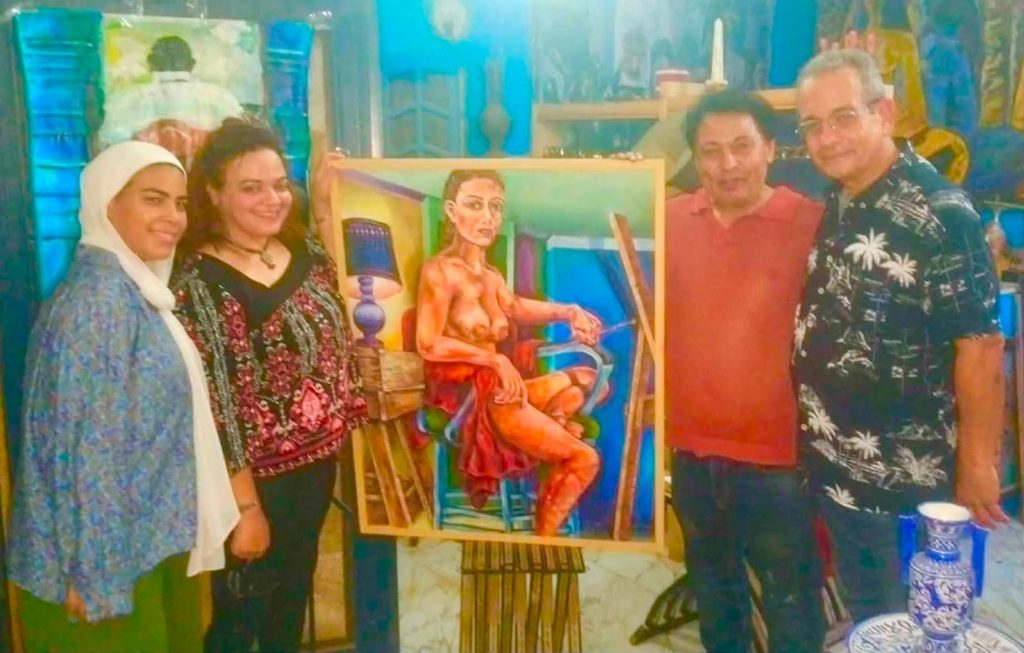
From Malawi’s rare earths boom to the visual language of Amal Ahmed Mostafa’s art, from Egyptian television’s cultural diplomacy* to the music of Africa celebrated in Tunisia, we encounter creativity as communication across borders.

But freedom, too, demands our attention. Our examination of the pressures facing opposition parties in several African countries reminds us that democracy is more than an election day ritual. Its true test lies in whether citizens can speak, organize, criticize and compete without fear. The editorial.

Dr. Ashraf Aboul-Yazid, CAJ Secretary General, narrates his latest travel to Mongolia, a homeland for poetry, music and memory

This September edition therefore presents Africa — and the wider world — not as a continent waiting for answers from elsewhere, but as a continent engaged in a profound conversation with itself.
In CAJ International Magazine, we believe journalism must remain part of that conversation. Our responsibility is not merely to report events, but to listen carefully, question honestly and connect experiences across borders.
Africa is changing. Its institutions are being tested, its cultures are being rediscovered, its resources are being contested, and its young generations are demanding a larger role in shaping tomorrow.
The essential question is not whether change is coming. It is whether we will have the wisdom, courage and imagination to shape it together