 thesilkroadtoday
A Poet’s Testimony to a Generation That Kept Culture Alive
By Silk Road Literature Series | 2026
There are places where geography becomes memory, and where memory becomes literature.
Khan Khentii is one of those places.
In the cultural landscape of Mongolia, Khan Khentii is more than a region of mountains, rivers, steppe and ancestral memory. It is also a living cultural space connected to the literary imagination of D. Natsagdorj, one of Mongolia’s foundational modern poets and a central voice of the country’s cultural consciousness.
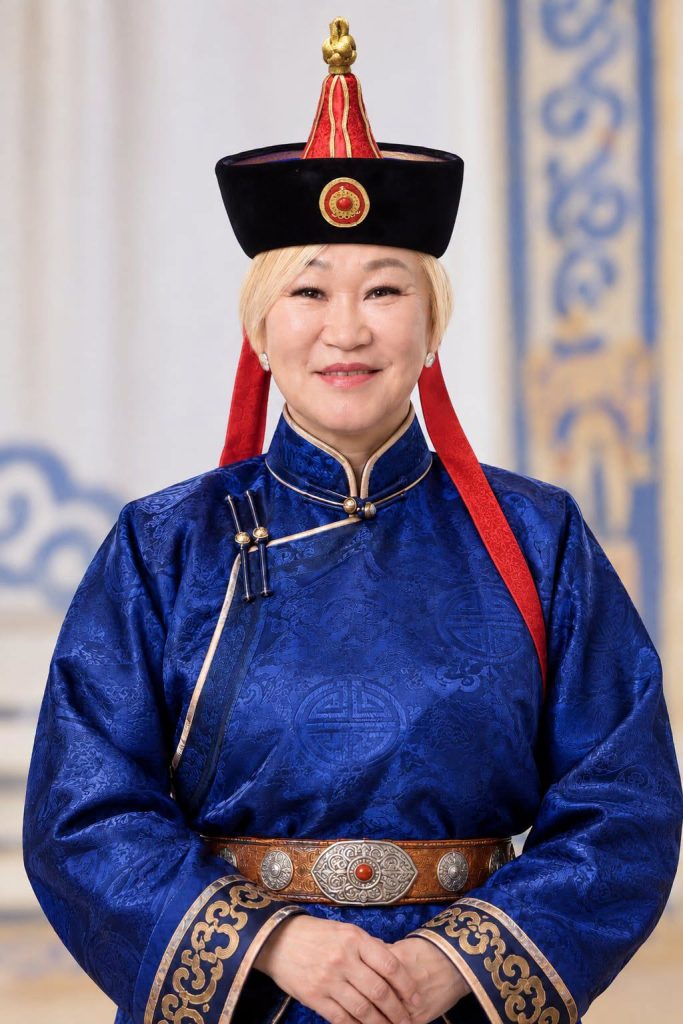
It is from this landscape of poetry, heritage and collective memory that Mongolian poet Purevjavyn Gerelt-Od offers a deeply personal testimony about a generation of cultural workers who, during some of the most difficult years for local cultural institutions, refused to allow the light of culture to go out.
Her recollection takes us back to the early 2000s—and even further, to 1993, when she first encountered the cultural workers of Batnorov.
At that time, the Cultural Centre of Batnorov was led by Buyankhishig, a distinguished cultural worker of Mongolia, while her brother Badral, also a distinguished cultural figure, worked as a music teacher. Gerelt-Od remembers them not simply as professionals, but as members of a family whose lives were deeply intertwined with culture and whose example helped shape a younger generation.
In 1993, Gerelt-Od attended, for the first time, a performance by the artists of the Batnorov Cultural Centre in Öndörkhaan. The experience moved her so deeply that she wrote a report about the performance for the regional newspaper Uragshaa.
Buyankhishig read the article, contacted the young writer and expressed her appreciation. A professional relationship was born, but so was a friendship—one that would accompany Gerelt-Od through important stages of her cultural career.
After completing her studies and returning home, Gerelt-Od was appointed director of the Cultural Centre of Bayan-Khutag. Among those who welcomed and encouraged her was Buyankhishig.
Then came the difficult year 2000.
Across Mongolia, many cultural centres were struggling to survive. Some had closed their doors; others suffered from a lack of staff and resources. Cultural work, once supported by established institutions, had entered an uncertain new era.
But in Bayan-Khutag, culture did not surrender.
Gerelt-Od recalls working with music teacher P. Bi-Mandakh and librarian Lkhagva, doing almost everything themselves to keep their cultural centre functioning. They repaired windows, cut wood, made fires for heating, cleaned the building, prepared announcements late into the night, cut thousands of letters from coloured paper until their fingers blistered, drew pictures, rehearsed and directed performances, served as hosts—and even sold their own tickets.
This was culture without luxury.
Culture sustained by hands.
Culture sustained by conviction.
And perhaps most importantly, culture sustained by people who believed that a cultural centre was not merely a building, but a place where a community could recognize itself.
The Yamaha 540 and a Village’s Hope
One of Gerelt-Od’s most vivid memories is the arrival of the centre’s first Yamaha 540 musical instrument.
To bring it back to the district, the cultural workers travelled 18 kilometres. When they returned, local officials, workers and residents—including the district governor and accountant—came out to welcome them in a festive atmosphere.
The arrival of the instrument became something larger than a technical acquisition. It was experienced almost as a sign of the future—a small but tangible promise that cultural life could be renewed.
At gatherings of cultural workers, Buyankhishig continued to encourage the younger generation, urging them to make their voices heard and supporting them generously with advice and practical guidance.
For Gerelt-Od, these were formative years.
2002: When Poetry Filled the Hall
Only two years later, in October 2002, Gerelt-Od presented her first independent artistic programme, “Father Mountain” (Aav Uul), at the Khan Khentii ensemble.
The hall was packed.
Even the parking area outside could no longer accommodate the arriving cars.
Among the performers were the young girls of the Emotion-2 group—children in only the third and fourth grades—whose energetic performance electrified the audience and brought spectators to their feet.
Behind such moments stood a network of people who believed in culture.
Gerelt-Od remembers local leaders and supporters, including E. Enkhkhyag, Tsergee, and Demberelsaikhan, among many others who encouraged the arts and helped cultural initiatives take root.
A Generation That Chose to Serve Culture
Gerelt-Od’s testimony is ultimately not only about herself, nor even about one cultural centre.
It is a tribute to a generation.
A generation that worked to shape people through culture; to raise the aesthetic and cultural awareness of citizens; and to protect, preserve and transmit Mongolia’s national heritage and traditions while allowing room for renewal.
She recalls colleagues such as D. Baatartsogt, Ts. Boldbaatar, Jargal, Gan-Erdene, Evlegjavzmaa, and many others who walked beside her during those years. Some of the colleagues from that period, including Kharchu Boldbaatar, Ch. Delgersüren, and morin khuur player Bolor-Erdene, continue to serve the cultural sector.
Their story is inseparable from the cultural memory of Khan Khentii.
And that memory resonates naturally with the literary legacy of D. Natsagdorj.
Natsagdorj’s poetry gave Mongolia an enduring language for homeland, landscape, identity and belonging. His famous vision of the homeland transformed geography into emotion and national memory. In Khan Khentii, the landscape is not merely something to be described; it is something to be lived, remembered and passed from one generation to another.
The work of Gerelt-Od and her generation belongs to this same continuum—not because they sought to imitate Natsagdorj, but because they served the same essential cultural principle: that a nation’s landscape, language, memory and artistic traditions must remain alive in the lives of its people.
“One Voice, One Strength”
Looking back from 2026, Gerelt-Od describes the years 2000–2026 as a luminous chapter in the shared history of those who devoted themselves to the culture and arts of their homeland.
She sums up their collective spirit in a simple but powerful expression:
“When we speak, our voice is one.
When we move, our strength is one.”
These were years, she says, when people sometimes forgot their own family lives in their devotion to the public; years in which friendship and solidarity brought cultural workers together.
Her tribute is addressed especially to Buyankhishig and Badral, whose example remained a source of inspiration, and to the wider cultural community of Khan Khentii.
The Silk Road of Memory
For Silk Road Literature Series, stories such as Gerelt-Od’s are important because the Silk Road is not only a route across geographical borders.
It is also a route of memory.
It travels through poems, songs, instruments, books, cultural centres, teachers, artists and generations.
From the mountains and steppes of Khan Khentii to the pages of Natsagdorj, from the modest cultural centres where young artists once struggled to keep the lights on to the international literary exchanges of today, Mongolia continues to demonstrate that cultural heritage survives not only through institutions, but through people.
People who repair windows.
People who cut wood.
People who write announcements through the night.
People who teach children music.
People who fill theatres.
People who write poems.
And people who believe that culture, once carried from one generation to another, can never truly disappear.
Khan Khentii remembers.
Natsagdorj continues to speak.
And a new generation carries the song forward along the Silk Road.